Samsung Galaxy A56 5G
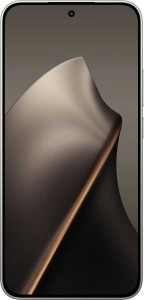
Xiaomi 15T Pro

Samsung Galaxy A56 5G Xiaomi 15T Pro

Overview

Welcome to our in-depth spec comparison between the Samsung Galaxy A56 5G and the Xiaomi 15T Pro. These two Android smartphones may share a similar form factor and some core features, but they take strikingly different approaches when it comes to raw processing power, camera capabilities, and charging technology. Whether you are weighing up everyday usability or chasing top-tier performance, this side-by-side breakdown will help you determine which device truly fits your needs.

Common Features

  • Both phones are waterproof with an IP rating.
  • Neither phone has a rugged build.
  • Neither phone can be folded.
  • Both phones feature an OLED/AMOLED display.
  • Both phones have branded damage-resistant glass.
  • HDR10 support is available on both phones.
  • HDR10+ support is available on both phones.
  • Always-On Display is available on both phones.
  • Both phones have a touchscreen.
  • Neither phone has a secondary screen.
  • Both phones come with 12GB of RAM.
  • Both phones have an integrated LTE modem.
  • Both phones use big.LITTLE CPU technology with 8 threads.
  • Both phones have a multi-lens main camera with optical image stabilization.
  • Both phones feature a CMOS sensor with phase-detection autofocus.
  • Both phones have continuous autofocus during video recording.
  • Both phones support fast charging.
  • Neither phone has a removable battery.
  • Both phones have stereo speakers but no 3.5mm audio jack.
  • Both phones support 5G, NFC, USB Type-C, and have a fingerprint scanner.
  • Neither phone has an external memory slot.
  • Both phones include clipboard warnings and location privacy options.

Main Differences

  • Weight is 198g on Samsung Galaxy A56 5G and 210g on Xiaomi 15T Pro.
  • Thickness is 7.4mm on Samsung Galaxy A56 5G and 8mm on Xiaomi 15T Pro.
  • IP rating is IP67 on Samsung Galaxy A56 5G and IP68 on Xiaomi 15T Pro.
  • French Repairability Index is 8.4 on Samsung Galaxy A56 5G and 8.1 on Xiaomi 15T Pro.
  • Screen size is 6.7″ on Samsung Galaxy A56 5G and 6.83″ on Xiaomi 15T Pro.
  • Pixel density is 385 ppi on Samsung Galaxy A56 5G and 447 ppi on Xiaomi 15T Pro.
  • Resolution is 1080x2340px on Samsung Galaxy A56 5G and 1280x2772px on Xiaomi 15T Pro.
  • Refresh rate is 120Hz on Samsung Galaxy A56 5G and 144Hz on Xiaomi 15T Pro.
  • Dolby Vision support is present on Xiaomi 15T Pro but not available on Samsung Galaxy A56 5G.
  • Screen protection is Gorilla Glass Victus on Samsung Galaxy A56 5G and Gorilla Glass 7i on Xiaomi 15T Pro.
  • Internal storage is 256GB on Samsung Galaxy A56 5G and 1024GB on Xiaomi 15T Pro.
  • AnTuTu benchmark score is 932,578 on Samsung Galaxy A56 5G and 2,718,159 on Xiaomi 15T Pro.
  • The chipset is Samsung Exynos 1580 on Samsung Galaxy A56 5G and MediaTek Dimensity 9400 Plus on Xiaomi 15T Pro.
  • Geekbench 6 multi-core score is 3,893 on Samsung Galaxy A56 5G and 8,969 on Xiaomi 15T Pro.
  • Main camera megapixels are 50, 12, and 5 MP on Samsung Galaxy A56 5G and 50, 50, and 12 MP on Xiaomi 15T Pro.
  • Front camera resolution is 12MP on Samsung Galaxy A56 5G and 32MP on Xiaomi 15T Pro.
  • Maximum video recording is 2160p at 30fps on Samsung Galaxy A56 5G and 4320p at 30fps on Xiaomi 15T Pro.
  • Optical zoom is not available on Samsung Galaxy A56 5G, while Xiaomi 15T Pro offers 5x optical zoom.
  • RAW photo shooting is not supported on Samsung Galaxy A56 5G but is supported on Xiaomi 15T Pro.
  • Battery capacity is 5000 mAh on Samsung Galaxy A56 5G and 5500 mAh on Xiaomi 15T Pro.
  • Charging speed is 45W on Samsung Galaxy A56 5G and 90W on Xiaomi 15T Pro.
  • Wireless charging is not available on Samsung Galaxy A56 5G but is available on Xiaomi 15T Pro.
  • A charger is not included with Samsung Galaxy A56 5G but is included with Xiaomi 15T Pro.
  • LDAC audio support is absent on Samsung Galaxy A56 5G but present on Xiaomi 15T Pro.
  • Microphone count is 2 on Samsung Galaxy A56 5G and 3 on Xiaomi 15T Pro.
  • Wi-Fi support goes up to Wi-Fi 6 on Samsung Galaxy A56 5G, while Xiaomi 15T Pro also supports Wi-Fi 7 and Wi-Fi 6E.
  • Bluetooth version is 5.3 on Samsung Galaxy A56 5G and 6.0 on Xiaomi 15T Pro.
  • SIM configuration is 2 SIM and 2 eSIM on Samsung Galaxy A56 5G, and 2 SIM only on Xiaomi 15T Pro.
  • An infrared sensor is absent on Samsung Galaxy A56 5G but present on Xiaomi 15T Pro.
  • Android version is Android 15 on Samsung Galaxy A56 5G and Android 16 on Xiaomi 15T Pro.
Specs Comparison
Samsung Galaxy A56 5G

Samsung Galaxy A56 5G

Xiaomi 15T Pro

Xiaomi 15T Pro

Design:
water resistance Waterproof Waterproof
weight 198 g 210 g
thickness 7.4 mm 8 mm
width 77.5 mm 77.9 mm
height 162.2 mm 162.7 mm
volume 93.0217 cm³ 101.39464 cm³
Ingress Protection (IP) rating IP67 IP68
French Repairability Index 8.4 8.1
has a rugged build
can be folded

In terms of overall form factor, both phones are remarkably close in footprint — virtually identical in height and width — but the Samsung Galaxy A56 5G is noticeably slimmer at 7.4 mm versus 8 mm for the Xiaomi 15T Pro, and lighter at 198 g compared to 210 g. That 12-gram difference and 0.6 mm gap may sound trivial on paper, but in daily use they translate to a more pocketable feel and less fatigue during extended one-handed use — a real-world advantage for users who prioritize handling comfort.

On water resistance, both are rated Waterproof, but the distinction matters: the A56 carries an IP67 rating, meaning it can withstand submersion up to 1 meter for 30 minutes, while the 15T Pro steps up to IP68, which typically covers deeper or longer submersion as certified by the manufacturer. For most users, IP67 is more than sufficient for rain, splashes, and accidental drops in shallow water — but if water exposure is a genuine concern, the 15T Pro's IP68 offers a meaningful edge.

Finally, the French Repairability Index slightly favors the A56 at 8.4 versus 8.1 for the 15T Pro, suggesting marginally better long-term serviceability. Overall, the A56 wins on ergonomics and repairability, while the 15T Pro holds a clear advantage in water resistance certification. Which edge matters more depends entirely on the user's priorities.

Display:
Display type OLED/AMOLED OLED/AMOLED
screen size 6.7" 6.83"
pixel density 385 ppi 447 ppi
resolution 1080 x 2340 px 1280 x 2772 px
refresh rate 120Hz 144Hz
has branded damage-resistant glass
Gorilla Glass version Gorilla Glass Victus Gorilla Glass 7i
supports HDR10
supports HDR10+
Always-On Display
supports Dolby Vision
Has a secondary screen
has a touch screen

Both phones use OLED/AMOLED panels, so the baseline visual quality — deep blacks, vivid colors, power-efficient dark mode rendering — is shared. The real separation emerges in resolution and pixel density: the Xiaomi 15T Pro pushes 1280 x 2772 px at 447 ppi, a substantial step above the A56's 1080 x 2340 px at 385 ppi. At normal viewing distances this gap is subtle, but on a 6.83″ screen it becomes more perceptible when reading fine text or viewing detailed images — the 15T Pro's display will simply appear crisper.

The motion smoothness story also favors the 15T Pro, with a 144Hz refresh rate versus 120Hz on the A56. The practical difference between these two is minor for everyday scrolling, but gamers and users sensitive to animation fluidity will notice the edge. More meaningfully, the 15T Pro adds Dolby Vision support on top of the HDR10+ that both phones share, broadening its compatibility with premium streaming content from platforms that master in Dolby Vision — a genuine advantage for media consumption.

Where the A56 holds its own is glass protection: Gorilla Glass Victus is a higher-tier protection standard than the Gorilla Glass 7i found on the 15T Pro, offering better scratch and drop resistance. Still, taken as a whole, the 15T Pro claims a clear display advantage — sharper resolution, higher refresh rate, and broader HDR format support — making it the stronger choice for users who prioritize screen quality above all else.

Performance:
internal storage 256GB 1024GB
RAM 12GB 12GB
AnTuTu benchmark score 932578 2718159
Chipset (SoC) name Samsung Exynos 1580 MediaTek Dimensity 9400 Plus
GPU name Xclipse 530 Immortalis G925
CPU speed 1 x 2.9 & 3 x 2.6 & 4 x 1.95 GHz 1 x 3.73 & 4 x 3.3 & 3 x 2.4 GHz
Geekbench 6 result (multi) 3893 8969
Geekbench 6 result (single) 1360 2874
GPU clock speed 1300 MHz 1300 MHz
Has integrated LTE
RAM speed 3200 MHz 10667 MHz
semiconductor size 4 nm 3 nm
Supports 64-bit
Has integrated graphics
Uses big.LITTLE technology
CPU threads 8 threads 8 threads
Uses HMP
maximum memory bandwidth 51.2 GB/s 85.3 GB/s
maximum memory amount 12GB 24GB
uses multithreading
DDR memory version 5 5
L3 cache 4 MB 12 MB

The performance gap between these two devices is not subtle — it is generational. The Xiaomi 15T Pro runs on the MediaTek Dimensity 9400 Plus, a cutting-edge 3 nm flagship chip, while the Samsung Galaxy A56 5G relies on the Exynos 1580, a mid-range 4 nm processor. The benchmark numbers make the difference impossible to ignore: the 15T Pro scores 2,718,159 on AnTuTu versus 932,578 for the A56 — nearly three times higher. Geekbench 6 tells the same story, with the 15T Pro delivering more than double the single-core and multi-core scores. In practice, this translates to faster app launches, smoother multitasking under heavy load, and a far more capable experience in demanding games or video editing tasks.

Memory architecture compounds this advantage further. Both phones carry 12 GB of RAM at the base configuration, but the 15T Pro's RAM runs at a significantly faster 10,667 MHz versus 3,200 MHz on the A56, and its memory bandwidth reaches 85.3 GB/s compared to 51.2 GB/s. Paired with a larger 12 MB L3 cache (versus 4 MB), the 15T Pro can feed its CPU and GPU data far more efficiently — reducing bottlenecks in sustained workloads. The 15T Pro also offers configurations up to 24 GB RAM and ships with up to 1 TB of internal storage, dwarfing the A56's 256 GB ceiling.

The A56 is a capable mid-range performer that handles everyday tasks with ease, but users with demanding workflows — gaming, AI-powered features, or heavy multitasking — will find it in a fundamentally different league than the 15T Pro. The 15T Pro holds an overwhelming and unambiguous performance advantage across every meaningful metric in this category.

Cameras:
megapixels (main camera) 50 & 12 & 5 MP 50 & 50 & 12 MP
wide aperture (main camera) 1.8 & 2.2 & 2.4f 1.6 & 3 & 2.2f
Has a dual-lens (or multi-lens) main camera
megapixels (front camera) 12MP 32MP
has built-in optical image stabilization
video recording (main camera) 2160 x 30 fps 4320 x 30 fps
Has a dual-tone LED flash
number of flash LEDs 1 1
has a BSI sensor
has a CMOS sensor
has continuous autofocus when recording movies
Has phase-detection autofocus for photos
supports slow-motion video recording
has a built-in HDR mode
has manual exposure
has a flash
optical zoom 0x 5x
has manual ISO
has a serial shot mode
has manual focus
has a front camera
Has laser autofocus
Shoots 360° panorama
has manual white balance
shoots raw
has touch autofocus
has manual shutter speed
can create panoramas in-camera
wide aperture (front camera) 2.2f 2.2f
Has timelapse function
Has a front-facing LED flash
has a dual-lens (or multi-lens) front camera
supports HDR10 recording
supports Dolby Vision recording
has a front-facing camera under the display
Has a RGB LED flash
has 3D photo/video recording capabilities

Starting with the rear camera system, the headline megapixel counts look similar on the surface, but the composition of each triple-camera array tells a very different story. The Samsung Galaxy A56 5G pairs its 50 MP main sensor with a 12 MP ultrawide and a modest 5 MP depth lens, offering 0x optical zoom. The Xiaomi 15T Pro, by contrast, deploys a 50 MP main, a 50 MP telephoto, and a 12 MP ultrawide, delivering a genuine 5x optical zoom — a capability the A56 simply cannot match. Optical zoom preserves image quality at range in a way digital zoom cannot, making the 15T Pro substantially more versatile for travel, events, or any scenario where the subject is at a distance.

The main sensor aperture also favors the 15T Pro at f/1.6 versus f/1.8 on the A56 — a wider opening that admits more light and is advantageous in low-light conditions. Video recording is another area of clear separation: the A56 tops out at 4K at 30 fps, while the 15T Pro reaches 8K at 30 fps and adds HDR10 recording support. For videographers or content creators who want maximum resolution and dynamic range in their footage, that gap is significant. The 15T Pro also supports RAW image capture, giving photographers full control in post-processing — a feature absent on the A56.

The front camera follows the same pattern: the 15T Pro offers a 32 MP selfie sensor versus 12 MP on the A56, a meaningful difference for those who prioritize selfie sharpness or video calls. Both phones share a solid foundation — OIS, phase-detection autofocus, slow-motion, and manual controls — but the 15T Pro's advantages in telephoto versatility, video ceiling, RAW support, and front camera resolution give it a decisive overall edge in the camera category.

Operating system:
Android version Android 15 Android 16
has clipboard warnings
has location privacy options
has camera/microphone privacy options
has Mail Privacy Protection
has theme customization
can block app tracking
blocks cross-site tracking
has on-device machine learning
has notification permissions
has media picker
Can play games while they download
has dark mode
has Wi-Fi password sharing
has battery health check
has an extra dim mode
has focus modes
has dynamic theming
can offload apps
Has customizable notifications
has Live Text
has full-page screenshots
supports split screen
gets direct OS updates
has PiP
Can be used as a PC
Has sharing intents
has a child lock
Supports widgets
Is free and open source
Has offline voice recognition
has voice commands
Tracks the current position of a mobile device
is a multi-user system
has Quick Start

Across the entire operating system feature set provided, these two phones are functionally identical — with one exception that actually matters: the Xiaomi 15T Pro ships with Android 16, while the Samsung Galaxy A56 5G launches on Android 15. Out of the box, the 15T Pro is one OS generation ahead, meaning it arrives with the latest platform-level security patches, potential performance refinements, and any new user-facing features Google introduced in Android 16 before the A56 receives its eventual update.

Beyond that version gap, the shared feature parity is striking. Both phones offer the same privacy toolkit — location controls, camera and microphone permission management, and app tracking blocks — as well as identical productivity and convenience features: split-screen multitasking, Picture-in-Picture, dynamic theming, widgets, offline voice recognition, and on-device machine learning. Neither phone gets direct OS updates straight from Google, meaning both rely on their respective manufacturers for update delivery, which somewhat levels the Android 16 advantage over time once Samsung pushes the update to the A56.

Given the near-total feature overlap, this category is essentially a tie in practical terms. The 15T Pro holds a minor, time-limited edge by shipping on a newer Android version today — relevant for users who want the latest platform immediately — but this advantage is likely to erode once the A56 receives its Android 16 update.

Battery:
battery power 5000 mAh 5500 mAh
has wireless charging
Supports fast charging
charging speed 45W 90W
comes with a charger
has a removable battery
Has an ultra power-saving mode
has a battery level indicator
has a rechargeable battery

The Xiaomi 15T Pro pulls ahead in every meaningful battery dimension. Its 5,500 mAh cell edges out the A56's 5,000 mAh — a 10% larger reserve that, all else being equal, translates to a modest but real extension of screen-on time before reaching for a charger. For heavy users pushing through a full day of navigation, streaming, or gaming, that buffer can make the difference between needing a top-up in the evening or not.

The charging speed gap is where the 15T Pro truly distinguishes itself. At 90W wired charging versus the A56's 45W, the 15T Pro can theoretically replenish its larger battery in roughly half the time — a compelling advantage for anyone with a busy schedule or who regularly charges on the go. The 15T Pro also supports wireless charging, a convenience the A56 entirely lacks, adding flexibility for users with Qi-compatible pads at home or the office. Notably, the 15T Pro also includes a charger in the box, while the A56 does not — a practical cost consideration at purchase time.

Both phones share sensible fundamentals: fast charging support, an ultra power-saving mode for emergencies, and non-removable rechargeable batteries. But the 15T Pro holds a clear and well-rounded advantage in this category — more capacity, dramatically faster wired charging, wireless charging support, and a bundled charger all point decisively in its favor.

Audio:
has a socket for a 3.5 mm audio jack
has stereo speakers
has LDAC
has aptX Lossless
Has a radio
number of microphones 2 3

Shared ground first: neither phone includes a 3.5 mm headphone jack, so both users are committed to wireless or USB-C audio, and both feature stereo speakers for an immersive listening experience without headphones. The absence of a radio on either device is equally consistent. For casual listening straight from the phone, the two are functionally equivalent at this level.

The key differentiator for wireless audio enthusiasts is LDAC support, which the Xiaomi 15T Pro has and the Samsung Galaxy A56 5G lacks. LDAC is Sony's high-resolution Bluetooth codec, capable of transmitting up to three times the data of standard SBC Bluetooth — meaning users with compatible LDAC headphones or earbuds will hear significantly more detail and less compression when streaming music wirelessly on the 15T Pro. For the A56, wireless audio is limited to lower-fidelity codec options, which is a real limitation for audiophiles investing in quality wireless headphones.

The microphone count also tips toward the 15T Pro, with 3 microphones versus 2 on the A56. More microphones enable better noise cancellation, improved spatial audio capture for video, and cleaner voice pickup during calls — a subtle but practical edge for anyone who records content or takes frequent calls in noisy environments. Taken together, the 15T Pro holds a clear audio advantage, driven primarily by LDAC support and the additional microphone.

Connectivity & Features:
release date March 2025 September 2025
has 5G support
Wi-Fi version Wi-Fi 4 (802.11n), Wi-Fi 5 (802.11ac), Wi-Fi 6 (802.11ax) Wi-Fi 4 (802.11n), Wi-Fi 6E (802.11ax), Wi-Fi 6 (802.11ax), Wi-Fi 5 (802.11ac), Wi-Fi 7 (802.11be)
SIM cards 2 SIM, 2 eSIM 2 SIM
Bluetooth version 5.3 6
has an external memory slot
Has USB Type-C
USB version 2 2
has NFC
download speed 5100 MBits/s 7300 MBits/s
Has a fingerprint scanner
has emergency SOS via satellite
has crash detection
is DLNA-certified
has a gyroscope
supports ANT+
Has a heart rate monitor
has GPS
has a compass
supports Wi-Fi
Has an infrared sensor
has an accelerometer
has a cellular module
Has a barometer
has an HDMI output
Uses 3D facial recognition
Has an iris scanner
Stylus included
supports Galileo
Has motion tracking
Has optical tracking
Has a built-in projector

Wireless connectivity is where the Xiaomi 15T Pro demonstrates a forward-looking advantage. Its Wi-Fi stack tops out at Wi-Fi 7 (802.11be) and includes Wi-Fi 6E, while the Samsung Galaxy A56 5G maxes out at Wi-Fi 6 (802.11ax). Wi-Fi 7 delivers significantly higher throughput, lower latency, and better performance in congested environments — and the practical ceiling reflects in the cellular download speeds too: the 15T Pro reaches 7,300 Mbits/s versus 5,100 Mbits/s on the A56. Similarly, the 15T Pro's Bluetooth 6 is a generation ahead of the A56's Bluetooth 5.3, offering improved connection stability, range, and energy efficiency with compatible accessories.

SIM flexibility is one area where the A56 holds a notable edge: it supports 2 physical SIMs plus 2 eSIMs, compared to the 15T Pro's 2 physical SIMs only with no eSIM support. For frequent travelers or users who juggle personal and work lines — especially those who rely on digital carrier switching — the A56's dual eSIM capability is a meaningful practical advantage. The 15T Pro also uniquely includes an infrared sensor, allowing it to function as a universal remote control for TVs and other IR-compatible appliances — a niche but genuinely useful feature the A56 lacks.

On the shared essentials — 5G, NFC, USB Type-C, GPS, gyroscope, and fingerprint scanner — both phones are fully equipped and evenly matched. Overall, the 15T Pro claims the stronger connectivity profile thanks to Wi-Fi 7, faster download speeds, and newer Bluetooth, but users who prioritize eSIM flexibility will find the A56's dual-eSIM support a compelling counterpoint.

Miscellaneous:
has a video light
Has sapphire glass display
Has a curved display
Has an e-paper display

The Miscellaneous spec group reveals complete parity between the Samsung Galaxy A56 5G and the Xiaomi 15T Pro. Both include a video light, and neither features a sapphire glass display, a curved display, or an e-paper display. There is no differentiator to speak of within the data provided for this category.

This is a tie — the two phones are identical across every spec listed here, and no advantage can be assigned to either device on this basis alone.

Comparison Summary & Verdict

After examining every specification, a clear picture emerges for each device. The Samsung Galaxy A56 5G stands out as a well-rounded mid-range choice: it is lighter, thinner, supports dual eSIM, and earns a slightly higher repairability score, making it an appealing option for users who prioritize a compact, practical daily driver. The Xiaomi 15T Pro, on the other hand, dominates in nearly every performance metric, offering a significantly more powerful MediaTek Dimensity 9400 Plus chipset, a 144Hz higher-resolution display with Dolby Vision, 8K video recording, 5x optical zoom, 90W fast charging with wireless charging, Wi-Fi 7, Bluetooth 6.0, and up to 24GB of RAM. If you demand flagship-level power and a richer multimedia experience, the Xiaomi 15T Pro is the clear step up. If you prefer a lighter, more repairable phone with eSIM support at a likely lower price point, the Samsung Galaxy A56 5G remains a solid and sensible choice.

Samsung Galaxy A56 5G
Buy Samsung Galaxy A56 5G if...

Buy the Samsung Galaxy A56 5G if you want a lighter, slimmer phone with dual eSIM support and a higher repairability score at what is likely a more accessible price point.

Xiaomi 15T Pro
Buy Xiaomi 15T Pro if...

Buy the Xiaomi 15T Pro if you want flagship performance, a sharper 144Hz display with Dolby Vision, 5x optical zoom, 8K video, 90W wired and wireless charging, and Wi-Fi 7 support.