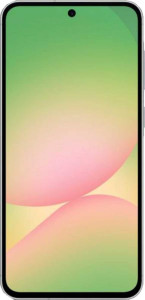
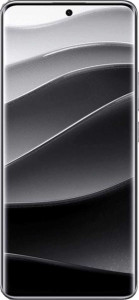
Both screens are similarly sized OLED/AMOLED panels with a 120Hz refresh rate, and both support HDR10 and HDR10+, so the baseline experience is comparable. The meaningful gaps emerge in sharpness and brightness. The Redmi Note 14 Pro Plus renders at 1220 x 2712 px with a pixel density of 446 ppi, versus the A56's 1080 x 2340 px at 385 ppi. That 61 ppi difference is visible — text and fine detail appear crisper on the Redmi, particularly at close reading distances.
The brightness gap is the most dramatic differentiator here. The Redmi Note 14 Pro Plus is rated at 3000 nits of typical brightness, compared to 1200 nits on the Galaxy A56 5G — a 2.5x advantage. In practical terms, this means the Redmi's display remains far more legible under direct sunlight, where the A56 may require shade or manual adjustments. The Redmi also adds Dolby Vision support, expanding HDR-compatible content from streaming platforms, though the day-to-day impact of this depends on the user's media habits. The A56, meanwhile, offers Gorilla Glass Victus protection, while the Redmi steps up to Gorilla Glass Victus 2, which is rated to handle harder surface drops more reliably.
The Redmi Note 14 Pro Plus holds a clear edge in this category. Its sharper resolution, substantially higher brightness, newer glass protection, and added Dolby Vision support combine to make it the stronger display across nearly every measurable dimension. The A56 is no slouch, but it does not match the Redmi on any individual display specification compared here.