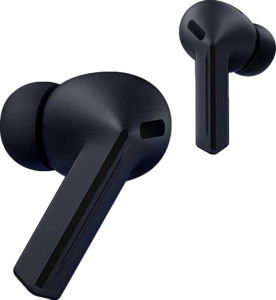
Samsung Galaxy Buds 3 FE
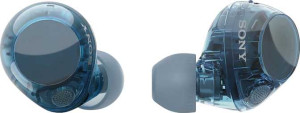
Sony WF-C710N

Samsung Galaxy Buds 3 FE Sony WF-C710N

Overview

Choosing between the Samsung Galaxy Buds 3 FE and the Sony WF-C710N means weighing up two capable true wireless earbuds that share a surprisingly similar foundation. Both offer active noise cancellation, fast charging, and a comfortable in-ear fit — yet they diverge in areas that could matter most to you, including battery endurance, audio codec support, and spatial audio capability. Read on as we break down every key specification to help you find your perfect match.

Common Features

  • Both products use an in-ear fit.
  • Both products are sweat resistant.
  • Both products are wireless with no cables.
  • Neither product is a neckband earbud style.
  • Neither product includes wingtips.
  • Neither product has RGB lighting.
  • Both products have stereo speakers.
  • Neither product has a UV light.
  • Both products have active noise cancellation (ANC).
  • Both products have passive noise reduction.
  • Both products share the same frequency range of 20 Hz to 20000 Hz.
  • Neither product supports Dolby Atmos.
  • Neither product has a neodymium magnet.
  • Both products have a charging case battery life of 21.5 hours.
  • Both products have a charge time of 1.5 hours.
  • Neither product supports wireless charging.
  • Both products have a battery level indicator.
  • Both products have a rechargeable battery.
  • Both products support fast pairing.
  • Both products have a USB Type-C connector.
  • Neither product supports LDAC, LDHC, Bluetooth LE Audio, aptX Adaptive, aptX Low Latency, or aptX HD.
  • Both products have an ambient sound mode.
  • Both products feature in/on-ear detection.
  • Both products include a find device feature.
  • Both products support fast charging.
  • Neither product can read notifications.
  • Both products have a mute function.
  • Both products can be used as a headset.
  • Both products have a control panel placed on the device.
  • Both products have a noise-canceling microphone.

Main Differences

  • The Ingress Protection rating is IP54 on the Samsung Galaxy Buds 3 FE and IPX4 on the Sony WF-C710N.
  • The weight is 10 g on the Samsung Galaxy Buds 3 FE and 10.4 g on the Sony WF-C710N.
  • The driver unit size is 11 mm on the Samsung Galaxy Buds 3 FE and 5 mm on the Sony WF-C710N.
  • Spatial audio support is present on the Samsung Galaxy Buds 3 FE but not available on the Sony WF-C710N.
  • Battery life is 8.5 hours on the Samsung Galaxy Buds 3 FE and 12 hours on the Sony WF-C710N.
  • Battery life with ANC enabled is 7 hours on the Samsung Galaxy Buds 3 FE and 8.5 hours on the Sony WF-C710N.
  • The Bluetooth version is 5.4 on the Samsung Galaxy Buds 3 FE and 5.3 on the Sony WF-C710N.
  • AAC codec support is present on the Sony WF-C710N but not available on the Samsung Galaxy Buds 3 FE.
Specs Comparison
Samsung Galaxy Buds 3 FE

Samsung Galaxy Buds 3 FE

Sony WF-C710N

Sony WF-C710N

Design:
Fit In-ear In-ear
Ingress Protection (IP) rating IP54 IPX4
water resistance Sweat resistant Sweat resistant
weight 10 g 10.4 g
has no wires or cables
are neckband earbuds
wingtips included
has RGB lighting
has stereo speakers
has UV light
Has a display

In terms of physical design, the Samsung Galaxy Buds 3 FE and the Sony WF-C710N are nearly identical on paper: both are wireless, in-ear earbuds with no neckband, no wingtips, and stereo playback. Neither adds visual flair through RGB lighting or a display. The weight difference is negligible — 10 g vs 10.4 g — and in practice, neither will feel meaningfully heavier during extended wear.

The one area where these two diverge is ingress protection. The Galaxy Buds 3 FE carries an IP54 rating, while the WF-C710N holds an IPX4 rating. Both offer equivalent splash and sweat resistance (the ″4″ suffix), but the ″5″ in Samsung's rating adds a layer of dust resistance — meaning fine particles like sand or dust are actively blocked. Sony's ″X″ indicates no tested dust protection. For gym or indoor use this is irrelevant, but for outdoor or dusty environments, the Buds 3 FE offers a measurable, real-world advantage.

Edge: Samsung Galaxy Buds 3 FE. The designs are functionally equivalent across almost every dimension, but the superior IP54 dust-and-splash rating gives the Buds 3 FE a durability edge over the WF-C710N's IPX4 in more demanding environments.

Sound quality:
has active noise cancellation (ANC)
has passive noise reduction
driver unit size 11 mm 5 mm
lowest frequency 20 Hz 20 Hz
highest frequency 20000 Hz 20000 Hz
supports spatial audio
has Dolby Atmos
has Dirac Virtuo
has a neodymium magnet

Both earbuds share the same 20 Hz–20,000 Hz frequency range — the standard bounds of human hearing — and both feature active noise cancellation alongside passive noise reduction. On those fronts, neither holds a structural advantage. The more telling differentiator is driver size: the Samsung Galaxy Buds 3 FE uses an 11 mm driver, more than twice the 5 mm driver found in the Sony WF-C710N. Larger drivers generally move more air, which tends to translate into fuller bass reproduction and a more expansive perceived soundstage — though driver size alone does not guarantee superior tuning.

Where the gap becomes unambiguous is spatial audio. The Buds 3 FE supports spatial audio, while the WF-C710N does not. Spatial audio creates a three-dimensional, room-like listening experience particularly valued when watching films or playing games, and it meaningfully differentiates the two for multimedia use cases beyond standard music playback.

Edge: Samsung Galaxy Buds 3 FE. The combination of a significantly larger 11 mm driver and exclusive spatial audio support gives it a clear advantage in this category. The WF-C710N matches it on ANC and frequency range, but trails on the specs most likely to influence perceived sound depth and immersion.

Power:
Battery life 8.5 hours 12 hours
Battery life of charging case 21.5 hours 21.5 hours
Battery life (ANC) 7 hours 8.5 hours
charge time 1.5 hours 1.5 hours
has wireless charging
Has a solar power battery
has a battery level indicator
has a rechargeable battery

The charging case tells an identical story for both — each delivers 21.5 hours of total battery life including top-ups, and both recharge fully in 1.5 hours. At the earbud level, however, the gap is meaningful. The Sony WF-C710N runs for 12 hours on a single charge versus 8.5 hours for the Samsung Galaxy Buds 3 FE — a 41% advantage that translates to roughly one and a half extra hours of listening per day before needing to return the buds to the case.

Under ANC — where battery drain accelerates on any earbud — the disparity persists. Sony manages 8.5 hours with ANC active, while Samsung drops to 7 hours. For users who rely on noise cancellation throughout a workday, that difference could determine whether the earbuds make it to the end of a long shift without a mid-day recharge. Since both share the same case reserve, the Sony simply stretches each charge cycle further before drawing on that reserve.

Edge: Sony WF-C710N. With a notably longer per-earbud runtime in both standard and ANC modes — and identical case capacity and charge times — the WF-C710N is the clear winner for endurance-focused users.

Connectivity:
has fast pairing
Has USB Type-C
Bluetooth version 5.4 5.3
has LDAC
has LDHC
has Bluetooth LE Audio
has aptX Adaptive
has aptX Low Latency
has aptX HD
has aptX
has aptX Lossless
has aptX Voice
has Auracast
maximum Bluetooth range 10 m 10 m
supports Bluetooth pairing using NFC
Can be used wirelessly
has AAC

Across most connectivity parameters, these two earbuds are functionally identical — same 10 m Bluetooth range, fast pairing, USB-C, and no support for advanced codecs like LDAC or any aptX variant. The Samsung Galaxy Buds 3 FE runs on Bluetooth 5.4 versus the Sony WF-C710N's Bluetooth 5.3, a generational step that brings incremental improvements to connection stability and power efficiency — real, but unlikely to be perceptible in everyday use.

The more practically significant difference is codec support. Sony adds AAC, which Samsung omits entirely. AAC is the default high-quality audio codec on Apple devices, meaning iPhone users pairing with the WF-C710N will benefit from better audio transmission efficiency compared to falling back on the baseline SBC codec. For Android users, the gap narrows considerably, as AAC's performance varies by device and implementation.

Edge: Sony WF-C710N. The newer Bluetooth version on the Buds 3 FE is a slim advantage, but AAC support is the more impactful real-world differentiator — particularly for Apple ecosystem users — and tips the balance in Sony's favor for this category.

Features:
release date August 2025 March 2025
has ambient sound mode
has in/on-ear detection
has find device feature
Supports fast charging
can read notifications
has a mute function
can be used as a headset
control panel placed on a device
Has voice prompts
travel bag is included
Has an in-line control panel
Has a temperature sensor
Has a built-in camera remote control function

This is a rare case of a complete feature-for-feature tie. Every single spec in this group — from ambient sound mode and in-ear detection to fast charging, on-device controls, voice prompts, and even an included travel bag — is identical between the Samsung Galaxy Buds 3 FE and the Sony WF-C710N. These are all meaningful conveniences: ambient mode lets users stay aware of surroundings without removing the buds, in-ear detection enables automatic playback pause, and fast charging ensures a quick top-up when time is short.

Verdict: Dead tie. There is no differentiator to call in this category. Whichever product a user leans toward based on sound quality, battery, or connectivity, features will not be a deciding factor.

Microphone:
has a noise-canceling microphone

The microphone data provided for both earbuds is limited to a single shared spec: each features a noise-canceling microphone. This is a meaningful baseline — call clarity in noisy environments depends heavily on the mic's ability to isolate the user's voice from background sound, and both the Samsung Galaxy Buds 3 FE and the Sony WF-C710N meet that standard.

Verdict: Tied. With only one data point available and both products matching on it, this category cannot differentiate the two. Users prioritizing call quality in detail would need to look beyond these specs for further information.

Comparison Summary & Verdict

After a thorough side-by-side review, both earbuds prove themselves as solid all-rounders, but each has a distinct edge. The Samsung Galaxy Buds 3 FE stands out with its larger 11 mm driver unit, spatial audio support, and a slightly newer Bluetooth 5.4 standard, making it the stronger pick for listeners who crave an immersive soundstage. The Sony WF-C710N, on the other hand, delivers a clear advantage in battery life — offering 12 hours of playback and 8.5 hours with ANC active, compared to 8.5 and 7 hours respectively — and adds AAC codec support for improved wireless audio quality on Apple devices. If longevity between charges and Apple ecosystem compatibility are your priorities, the Sony is the smarter choice. If spatial audio and a wider driver are what you seek, lean toward the Samsung.

Samsung Galaxy Buds 3 FE
Buy Samsung Galaxy Buds 3 FE if...

Buy the Samsung Galaxy Buds 3 FE if you want spatial audio support and a larger 11 mm driver for a more immersive listening experience.

Sony WF-C710N
Buy Sony WF-C710N if...

Buy the Sony WF-C710N if you need longer battery life and AAC codec support, especially if you use Apple devices.