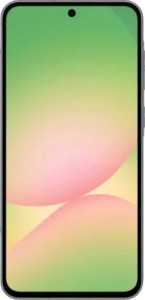
Samsung Galaxy F56 5G
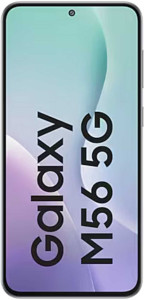
Samsung Galaxy M56 5G

Samsung Galaxy F56 5G Samsung Galaxy M56 5G

Overview

Welcome to our in-depth specification comparison between the Samsung Galaxy F56 5G and the Samsung Galaxy M56 5G. These two mid-range contenders from Samsung share a remarkably similar DNA, from their identical displays and processors to their battery configurations. Yet subtle distinctions exist that could matter to the right buyer. Read on as we break down every key specification to help you decide which of these 5G-ready smartphones best fits your needs.

Common Features

  • Both phones weigh 180 g.
  • Both phones share the same thickness of 7.2 mm.
  • Both phones feature an OLED/AMOLED display with a 6.74″ screen size.
  • Both phones have a pixel density of 382 ppi and a resolution of 1080 x 2340 px.
  • Both phones support a 120Hz refresh rate.
  • Damage-resistant Gorilla Glass Victus protection is present on both phones.
  • HDR10 display support is not available on either phone.
  • Both phones are powered by the Samsung Exynos 1480 chipset paired with the Xclipse 530 GPU.
  • Both phones come with 8GB of RAM and 256GB of internal storage.
  • Both phones achieved the same Geekbench 6 multi-core score of 3398 and single-core score of 1161.
  • Both phones feature a triple main camera system with 50, 8, and 2 MP sensors.
  • Both phones have a 12MP front camera.
  • Optical image stabilization is available on both phones.
  • Both phones support video recording at 2160p 30fps.
  • Both phones run Android 15 and share the same privacy and theme customization options.
  • Both phones have a 5000 mAh battery with 45W fast charging support.
  • Wireless charging is not available on either phone.
  • A charger is not included in the box with either phone.
  • A 3.5mm audio jack is not present on either phone, and neither phone has stereo speakers.
  • Both phones support 5G, Wi-Fi 6 (802.11ax), Bluetooth 5.3, USB Type-C, dual SIM, and a download speed of 3790 Mbits/s.
  • NFC is not available on either phone.

Main Differences

  • HDR10 video recording is supported on the Samsung Galaxy F56 5G but not available on the Samsung Galaxy M56 5G.
Specs Comparison
Samsung Galaxy F56 5G

Samsung Galaxy F56 5G

Samsung Galaxy M56 5G

Samsung Galaxy M56 5G

Design:
weight 180 g 180 g
thickness 7.2 mm 7.2 mm
width 77.3 mm 77.3 mm
height 162 mm 162 mm
volume 90.16272 cm³ 90.16272 cm³
has a rugged build
can be folded

When it comes to design, the Samsung Galaxy F56 5G and the Samsung Galaxy M56 5G are, in every measurable sense, identical twins. Both weigh 180 g, share the same 7.2 mm thickness, and match on width (77.3 mm), height (162 mm), and even calculated volume (90.16 cm³). In practice, this means a user picking up either device would feel no perceptible difference in hand — the balance, pocket feel, and one-handed usability are effectively the same.

Neither phone offers a rugged build or a foldable form factor, positioning both squarely as standard candy-bar smartphones aimed at mainstream consumers rather than outdoor enthusiasts or early adopters of flexible displays. The 7.2 mm profile is respectably slim for a mid-range device, suggesting neither phone sacrifices too much internal space for battery or cooling, yet remains comfortable for daily carry.

This group is a complete tie. There is no design-based differentiator between the F56 5G and M56 5G — a purchasing decision cannot be made on form factor or physical dimensions alone. Buyers should look to other specification groups, such as display, performance, or camera, to find meaningful distinctions between these two models.

Display:
Display type OLED/AMOLED OLED/AMOLED
screen size 6.74" 6.74"
pixel density 382 ppi 382 ppi
resolution 1080 x 2340 px 1080 x 2340 px
refresh rate 120Hz 120Hz
has branded damage-resistant glass
Gorilla Glass version Gorilla Glass Victus Gorilla Glass Victus
supports HDR10
supports HDR10+
Always-On Display
supports Dolby Vision
Has a secondary screen
has a touch screen

Both the Samsung Galaxy F56 5G and the Samsung Galaxy M56 5G sport an identical display setup: a 6.74″ OLED/AMOLED panel running at 1080 x 2340 px with a pixel density of 382 ppi. That density sits comfortably in the sharp-enough zone for a mid-range screen — individual pixels are imperceptible at normal viewing distances, and the AMOLED technology delivers the deep blacks and vibrant colors the panel technology is known for.

The 120Hz refresh rate is a genuinely useful inclusion at this price tier, translating to noticeably smoother scrolling and more responsive touch interactions compared to standard 60Hz displays. Both phones are also protected by Gorilla Glass Victus, one of the more robust scratch- and drop-resistant coatings available, which adds meaningful day-to-day durability without a case. The absence of HDR10, HDR10+, or Dolby Vision support means neither device will unlock premium HDR content on streaming platforms, a minor but notable ceiling for media enthusiasts.

As with the Design category, this group is a complete tie — every display specification is mirrored exactly across both models. The screen experience a user gets on the F56 5G will be indistinguishable from the M56 5G, so display quality offers no grounds for choosing one over the other.

Performance:
internal storage 256GB 256GB
RAM 8GB 8GB
Chipset (SoC) name Samsung Exynos 1480 Samsung Exynos 1480
GPU name Xclipse 530 Xclipse 530
CPU speed 4 x 2.75 & 4 x 2.05 GHz 4 x 2.75 & 4 x 2.05 GHz
Geekbench 6 result (multi) 3398 3398
Geekbench 6 result (single) 1161 1161
GPU clock speed 1300 MHz 1300 MHz
Has integrated LTE
RAM speed 3200 MHz 3200 MHz
semiconductor size 4 nm 4 nm
Supports 64-bit
DirectX version DirectX 12 DirectX 12
Has integrated graphics
Uses big.LITTLE technology
CPU threads 8 threads 8 threads
Uses HMP
maximum memory bandwidth 51.2 GB/s 51.2 GB/s
OpenCL version 2 2
memory channels 4 4
maximum memory amount 12GB 12GB
uses multithreading
DDR memory version 5 5
L3 cache 4 MB 4 MB

Under the hood, the Samsung Galaxy F56 5G and Samsung Galaxy M56 5G are powered by the exact same silicon: the Samsung Exynos 1480, built on a 4 nm process. The 4 nm fabrication node matters because it directly influences both performance efficiency and thermal management — smaller transistors mean the chip can do more work while generating less heat and consuming less power than older process nodes. Paired with 8 GB of DDR5 RAM running at 3200 MHz, both phones are well-equipped for smooth multitasking and app switching in everyday use.

The benchmark numbers tell a consistent story: a Geekbench 6 multi-core score of 3398 and a single-core score of 1161 place both devices firmly in capable mid-range territory — sufficient for social media, streaming, casual gaming, and most productivity tasks, though not a match for flagship-tier chips. On the graphics side, the shared Xclipse 530 GPU clocked at 1300 MHz with DirectX 12 support handles mainstream gaming competently, while the 51.2 GB/s memory bandwidth ensures data moves quickly enough to avoid bottlenecking the CPU in demanding workloads.

For the third consecutive group, this is an unambiguous tie. Every performance metric — chipset, RAM configuration, benchmark scores, GPU, and memory architecture — is identical across both models. Performance alone gives buyers no reason to favour one over the other.

Cameras:
megapixels (main camera) 50 & 8 & 2 MP 50 & 8 & 2 MP
wide aperture (main camera) 1.8 & 2.2 & 2.4f 1.8 & 2.2 & 2.4f
Has a dual-lens (or multi-lens) main camera
megapixels (front camera) 12MP 12MP
has built-in optical image stabilization
video recording (main camera) 2160 x 30 fps 2160 x 30 fps
Has a dual-tone LED flash
number of flash LEDs 1 1
has a BSI sensor
has a CMOS sensor
has continuous autofocus when recording movies
Has phase-detection autofocus for photos
supports slow-motion video recording
has a built-in HDR mode
has manual exposure
has a flash
optical zoom 0x 0x
has manual ISO
has a serial shot mode
has manual focus
has a front camera
Has laser autofocus
Shoots 360° panorama
has manual white balance
has touch autofocus
has manual shutter speed
can create panoramas in-camera
wide aperture (front camera) 2.2f 2.2f
Has timelapse function
Has a front-facing LED flash
has a dual-lens (or multi-lens) front camera
supports HDR10 recording
supports Dolby Vision recording
has a front-facing camera under the display
Has a RGB LED flash
has 3D photo/video recording capabilities

The camera systems on the Samsung Galaxy F56 5G and Samsung Galaxy M56 5G are nearly identical: both feature a triple rear camera array led by a 50 MP main lens at f/1.8, supplemented by an 8 MP and a 2 MP shooter, alongside a 12 MP front camera. Shared highlights include optical image stabilization (OIS) — genuinely useful for reducing blur in handheld shots and stabilizing video — as well as phase-detection autofocus, continuous autofocus during recording, and 4K video capture at 30 fps. Manual controls for ISO, exposure, focus, and white balance round out a solid feature set for users who like to shoot beyond auto mode.

Digging into the data, one meaningful difference surfaces: the F56 5G supports HDR10 video recording, while the M56 5G does not. HDR10 recording captures a wider dynamic range in footage, preserving more detail in bright highlights and deep shadows — a tangible advantage when shooting in high-contrast environments like outdoor scenes or indoor/outdoor transitions. It also means HDR10 content recorded on the F56 5G can be played back with full fidelity on compatible displays, whereas the M56 5G's video output is limited to standard dynamic range.

This is the first group in this comparison where a clear, if narrow, edge emerges. The F56 5G holds the advantage in cameras strictly due to its HDR10 recording support. For users who prioritize video quality — particularly those who shoot in varied lighting — this distinction is worth noting. All other camera capabilities are evenly matched.

Operating system:
Android version Android 15 Android 15
has clipboard warnings
has location privacy options
has camera/microphone privacy options
has Mail Privacy Protection
has theme customization
can block app tracking
blocks cross-site tracking
has on-device machine learning
has notification permissions
has media picker
Can play games while they download
has dark mode
has Wi-Fi password sharing
has battery health check
has an extra dim mode
has focus modes
has dynamic theming
can offload apps
Has customizable notifications
has Live Text
has full-page screenshots
supports split screen
gets direct OS updates
has PiP
Can be used as a PC
Has sharing intents
has a child lock
Supports widgets
Is free and open source
Has offline voice recognition
has voice commands
Tracks the current position of a mobile device
is a multi-user system
has Quick Start

Running Android 15 out of the box, both the Samsung Galaxy F56 5G and Samsung Galaxy M56 5G arrive with Samsung's current software generation and a robust privacy framework. Granular controls for location, camera, and microphone access, combined with app tracking blocks and clipboard warnings, reflect the stronger user-facing privacy toolkit that has become standard in modern Android. Neither phone receives direct OS updates — meaning updates are routed through Samsung's own release schedule rather than pushed immediately from Google — a shared limitation that privacy-conscious or security-focused buyers should keep in mind.

On the productivity and usability front, the feature set is comprehensive for the segment: split-screen multitasking, Picture-in-Picture, dynamic theming, offline voice recognition, and on-device machine learning are all present on both devices. The inclusion of on-device ML is particularly noteworthy as it enables smarter camera processing, text recognition via Live Text, and voice commands without requiring a constant cloud connection — a meaningful day-to-day convenience and a privacy benefit in one.

Every OS-level specification is mirrored exactly across both models, making this another complete tie. The software experience — its capabilities, its privacy posture, and its limitations — will be indistinguishable between the F56 5G and M56 5G. Buyers cannot use the operating system category to differentiate these two devices.

Battery:
battery power 5000 mAh 5000 mAh
has wireless charging
Supports fast charging
charging speed 45W 45W
comes with a charger
has a removable battery
has a battery level indicator
has a rechargeable battery

A 5000 mAh battery is a well-established sweet spot for mid-range smartphones — large enough to comfortably support a full day of mixed use for most people, and the capacity shared by both the Samsung Galaxy F56 5G and Samsung Galaxy M56 5G. Paired with the power-efficient 4 nm Exynos 1480 chipset established in the Performance group, this capacity should translate into reliable endurance rather than just a headline number.

Recharging is equally matched: both phones support 45W fast charging, which sits at a practical upper-mid tier — fast enough to recover meaningful battery percentage in short charging windows, without reaching the extreme wattages of flagship devices that can stress battery longevity over time. One shared caveat worth flagging is that neither phone ships with a charger in the box, meaning buyers will need to source a compatible 45W adapter separately to actually benefit from that charging speed. Wireless charging is absent on both, which is a typical trade-off at this segment.

Battery is yet another complete tie. Capacity, charging speed, and every other battery-related attribute are identical across the F56 5G and M56 5G. Endurance and charging convenience will be the same on both devices, leaving this category with no influence on a purchasing decision.

Audio:
has a socket for a 3.5 mm audio jack
has stereo speakers
has aptX
has LDAC
has aptX HD
has aptX Adaptive
has aptX Lossless
Has a radio

Audio is where both the Samsung Galaxy F56 5G and Samsung Galaxy M56 5G show their clearest shared limitations. Neither device includes a 3.5 mm headphone jack, which pushes all wired listening toward USB-C adapters — an extra accessory most buyers will need to purchase separately. More notably, neither phone features stereo speakers, meaning media playback through the built-in speaker will be mono only, a noticeable step down from the richer, more immersive soundstage that stereo setups provide even on budget devices.

For wireless audio enthusiasts, the picture is equally lean. The absence of aptX, LDAC, aptX HD, aptX Adaptive, or aptX Lossless support means neither phone can transmit high-resolution audio over Bluetooth — playback through wireless headphones will be capped at standard Bluetooth audio quality. Listeners using premium Bluetooth headphones that support these codecs will not be able to unlock their full potential on either device.

Predictably, this group is a complete tie — but unlike the ties seen in Design, Display, and Performance, this one reflects a shared set of constraints rather than shared strengths. Neither the F56 5G nor the M56 5G has an audio advantage over the other, and buyers for whom audio quality is a priority should factor these shared omissions into their decision.

Connectivity & Features:
release date May 2025 April 2025
has 5G support
Wi-Fi version Wi-Fi 4 (802.11n), Wi-Fi 5 (802.11ac), Wi-Fi 6 (802.11ax) Wi-Fi 4 (802.11n), Wi-Fi 5 (802.11ac), Wi-Fi 6 (802.11ax)
SIM cards 2 SIM 2 SIM
Bluetooth version 5.3 5.3
Has USB Type-C
USB version 2 2
has NFC
download speed 3790 MBits/s 3790 MBits/s
upload speed 1280 MBits/s 1280 MBits/s
Has a fingerprint scanner
has emergency SOS via satellite
has crash detection
is DLNA-certified
has a gyroscope
supports ANT+
Has a heart rate monitor
has GPS
has a compass
supports Wi-Fi
Has an infrared sensor
has an accelerometer
has a cellular module
Has a barometer
has an HDMI output
Uses 3D facial recognition
Has an iris scanner
Stylus included
supports Galileo
Has motion tracking
Has optical tracking
Has a built-in projector

Connectivity on both the Samsung Galaxy F56 5G and Samsung Galaxy M56 5G follows the same pattern seen throughout this comparison — a well-rounded mid-range package shared identically across both devices. Wi-Fi 6 (802.11ax) support is the headline here, delivering faster throughput and better performance in congested network environments compared to older Wi-Fi standards, while Bluetooth 5.3 ensures stable, energy-efficient wireless peripheral connections. 5G support future-proofs both phones for faster cellular networks where available, and the theoretical download speed of 3790 Mbits/s reflects the upper ceiling of the modem rather than guaranteed real-world performance.

One notable shared absence is NFC, which rules out contactless payments and quick device pairing via tap on both phones — a meaningful omission for users who rely on mobile payment platforms. On the sensor side, the standard suite of gyroscope, accelerometer, compass, and GPS — with Galileo satellite support adding extra positioning accuracy — covers all practical navigation and motion-tracking needs for everyday apps and gaming. The USB 2.0 standard on the Type-C port is functional but limits wired data transfer speeds, a minor but real constraint for users who frequently move large files between their phone and a computer.

This group concludes as a complete tie. Every connectivity specification and sensor capability is mirrored exactly between the F56 5G and M56 5G, including their shared limitations around NFC and USB speed. Neither device holds any advantage in this category.

Miscellaneous:
has a video light
Has sapphire glass display
Has a curved display
Has an e-paper display

The Miscellaneous category for the Samsung Galaxy F56 5G and Samsung Galaxy M56 5G is a short one, and the data it contains is entirely uniform. Both phones include a video light — essentially the rear flash doubling as a torch during video recording — a practical utility feature rather than a differentiator. Neither device features a curved display, an e-paper screen, or sapphire glass protection, all of which are characteristics typically reserved for niche or premium segments well above this price tier.

The absence of a curved display keeps both phones firmly in conventional flat-screen territory, which the majority of users actually prefer for ease of screen protector application and reduced accidental edge touches. Skipping sapphire glass is equally expected at this level — that material carries significant manufacturing cost and appears almost exclusively on luxury smartwatches and ultra-premium phones.

This group is a complete tie, with no specification offering either the F56 5G or M56 5G any advantage over the other. Given the limited scope of the data points here, Miscellaneous carries little weight in any purchasing decision between these two models.

Comparison Summary & Verdict

After examining every specification, the Samsung Galaxy F56 5G and the Samsung Galaxy M56 5G are extraordinarily close matches. Both deliver the same 6.74″ 120Hz OLED display with Gorilla Glass Victus protection, the same Exynos 1480 chipset with 8GB of RAM and 256GB storage, and an identical 5000 mAh battery with 45W fast charging. The sole distinguishing factor is that the Galaxy F56 5G supports HDR10 video recording, while the M56 5G does not. If capturing HDR10 video content is a priority for you, the F56 5G holds a clear edge. If HDR10 recording is not a concern, both phones are functionally equivalent and your choice may come down to pricing or availability in your region.

Samsung Galaxy F56 5G
Buy Samsung Galaxy F56 5G if...

Buy the Samsung Galaxy F56 5G if HDR10 video recording is important to you, as it is the only feature that sets it apart from the otherwise identical M56 5G.

Samsung Galaxy M56 5G
Buy Samsung Galaxy M56 5G if...

Buy the Samsung Galaxy M56 5G if HDR10 video recording is not a priority for you and you are looking for an equivalent experience, potentially at a different price point.