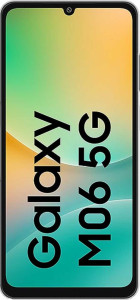
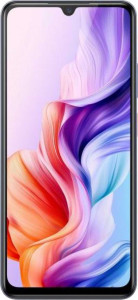
On the surface, both phones look nearly identical in their camera setups — 50 MP main sensor, 8 MP front camera, 1080p/30fps video, and a shared feature set covering phase-detection autofocus, slow-motion, panorama, and manual controls. However, the ZTE Blade V70 Max pulls ahead in a few meaningful ways. It adds a secondary 2 MP lens on the rear, making it a dual-camera system, and crucially supports RAW photo capture — a feature absent on the M06 5G. RAW shooting gives photography enthusiasts far greater flexibility in post-processing, preserving full image data rather than the compressed output of a JPEG.
The V70 Max also includes a built-in HDR mode, which the Samsung lacks. In high-contrast scenes — bright skies against shadowed subjects, for instance — HDR processing can recover detail in both highlights and shadows in a single shot, producing more balanced results straight out of the camera. Meanwhile, the main aperture on the M06 5G's single lens is f/1.8, which is wider than the V70 Max's primary lens aperture of f/2.4, meaning the Samsung theoretically admits more light per shot — a partial offset in low-light scenarios.
The ZTE Blade V70 Max takes the edge in this category. RAW support and a built-in HDR mode are genuinely useful additions that expand creative and practical capability beyond what the Samsung offers, and the secondary lens adds versatility even if modest. The M06 5G's wider aperture is a real but narrow counterpoint that doesn't fully close the gap.