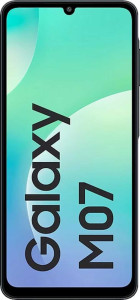
Samsung Galaxy M07
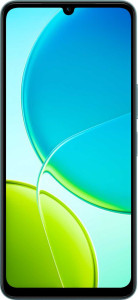
Vivo Y19e

Samsung Galaxy M07 Vivo Y19e

Overview

Choosing between the Samsung Galaxy M07 and the Vivo Y19e is no simple task, as both phones target the same budget-conscious audience while taking noticeably different approaches to key areas. In this comparison, we put their performance credentials, camera capabilities, battery and charging setups, and everyday usability side by side to help you decide which one truly earns a place in your pocket.

Common Features

  • Both phones are water resistant.
  • Neither phone has a rugged build.
  • Neither phone can be folded.
  • Both phones feature an LCD IPS display type.
  • Both phones have a resolution of 720 x 1600 px.
  • Both phones have a 90Hz refresh rate.
  • Neither phone has branded damage-resistant glass.
  • Neither phone supports HDR10, HDR10+, or Dolby Vision.
  • Neither phone has an Always-On Display.
  • Both phones come with 64GB of internal storage and 4GB of RAM.
  • Both phones have integrated LTE support.
  • Both phones support 64-bit processing and use big.LITTLE technology with 8 CPU threads.
  • Both phones have DirectX 11 and integrated graphics.
  • Both phones feature a dual-lens main camera.
  • Neither phone has built-in optical image stabilization.
  • Both phones have a CMOS sensor with phase-detection autofocus and continuous autofocus when recording.
  • Both phones support fast charging but do not have wireless charging or a removable battery.
  • Neither phone has stereo speakers, aptX, LDAC, or any lossless audio codec.
  • Both phones have a radio.
  • Both phones support dual SIM, have an external memory slot, USB Type-C (USB 2.0), NFC, and a fingerprint scanner.
  • Both phones lack 5G support and emergency SOS via satellite.
  • Both phones offer theme customization, clipboard warnings, location privacy options, camera and microphone privacy options, on-device machine learning, and the ability to block app tracking.
  • Neither phone blocks cross-site tracking or has Mail Privacy Protection.
  • Both phones have a video light, no sapphire glass display, no curved display, and no e-paper display.

Main Differences

  • Weight is 184 g on Samsung Galaxy M07 and 199 g on Vivo Y19e.
  • Thickness is 7.6 mm on Samsung Galaxy M07 and 8.2 mm on Vivo Y19e.
  • Width is 77.4 mm on Samsung Galaxy M07 and 76.9 mm on Vivo Y19e.
  • Volume is 98.47 cm³ on Samsung Galaxy M07 and 105.50 cm³ on Vivo Y19e.
  • Ingress Protection rating is IP54 on Samsung Galaxy M07 and IP64 on Vivo Y19e.
  • Screen size is 6.7″ on Samsung Galaxy M07 and 6.74″ on Vivo Y19e.
  • Pixel density is 262 ppi on Samsung Galaxy M07 and 260 ppi on Vivo Y19e.
  • Chipset is Mediatek Helio G99 on Samsung Galaxy M07 and Unisoc T7225 on Vivo Y19e.
  • GPU is Mali G57 on Samsung Galaxy M07 and Mali G57 MP1 on Vivo Y19e.
  • CPU speed is 2 x 2.2 & 6 x 2 GHz on Samsung Galaxy M07 and 2 x 1.8 & 6 x 1.8 GHz on Vivo Y19e.
  • RAM speed is 4266 MHz on Samsung Galaxy M07 and 1866 MHz on Vivo Y19e.
  • Semiconductor size is 6 nm on Samsung Galaxy M07 and 12 nm on Vivo Y19e.
  • Maximum memory bandwidth is 17.1 GB/s on Samsung Galaxy M07 and 12.8 GB/s on Vivo Y19e.
  • Maximum supported RAM is 12GB on Samsung Galaxy M07 and 8GB on Vivo Y19e.
  • GPU turbo clock is 2133 MHz on Samsung Galaxy M07 and 614.4 MHz on Vivo Y19e.
  • Main camera resolution is 50 & 2 MP on Samsung Galaxy M07 and 13 & 0.08 MP on Vivo Y19e.
  • Front camera resolution is 8MP on Samsung Galaxy M07 and 5MP on Vivo Y19e.
  • Front camera aperture is f/2.0 on Samsung Galaxy M07 and f/2.2 on Vivo Y19e.
  • Android version is Android 15 on Samsung Galaxy M07 and Android 14 on Vivo Y19e.
  • App offloading is supported on Samsung Galaxy M07 but not available on Vivo Y19e.
  • Battery capacity is 5000 mAh on Samsung Galaxy M07 and 5500 mAh on Vivo Y19e.
  • Charging speed is 25W on Samsung Galaxy M07 and 15W on Vivo Y19e.
  • A 3.5mm audio jack is present on Samsung Galaxy M07 but not available on Vivo Y19e.
  • Bluetooth version is 5.3 on Samsung Galaxy M07 and 5.2 on Vivo Y19e.
  • Download speed is 650 Mbits/s on Samsung Galaxy M07 and 300 Mbits/s on Vivo Y19e.
  • Upload speed is 150 Mbits/s on Samsung Galaxy M07 and 100 Mbits/s on Vivo Y19e.
  • A compass is available on Vivo Y19e but not present on Samsung Galaxy M07.
Specs Comparison
Samsung Galaxy M07

Samsung Galaxy M07

Vivo Y19e

Vivo Y19e

Design:
water resistance Water resistant Water resistant
weight 184 g 199 g
thickness 7.6 mm 8.2 mm
width 77.4 mm 76.9 mm
height 167.4 mm 167.3 mm
volume 98.471376 cm³ 105.496034 cm³
Ingress Protection (IP) rating IP54 IP64
has a rugged build
can be folded

In terms of overall footprint, these two phones are remarkably close — nearly identical height and width — but they diverge in ways that matter for daily handling. The Samsung Galaxy M07 is notably slimmer at 7.6 mm versus the Vivo Y19e's 8.2 mm, and lighter at 184 g compared to 199 g. That 15-gram difference may sound minor, but over hours of use it translates to a more comfortable one-handed grip and less fatigue — a real-world advantage for users who keep their phone in hand frequently.

Where the Y19e pushes back is in protection. Both phones carry a water-resistant rating, but their IP ratings diverge: the M07 holds an IP54 certification, meaning it resists dust ingress only partially, while the Y19e carries an IP64 rating, which means it is fully dust-tight. For users in dusty or arid environments — construction sites, sandy beaches, or dry climates — that extra digit in the dust rating on the Y19e is a meaningful practical advantage, not just a spec sheet number.

Neither device offers a rugged build or a foldable form factor, so both target the same mainstream audience. The choice here comes down to priorities: the M07 edges ahead on ergonomics with its slimmer, lighter profile, while the Y19e has a clear advantage in dust protection. For most urban users, the M07's more pocketable design will likely win out; for those frequently exposed to dusty conditions, the Y19e's IP64 rating makes it the more durable pick.

Display:
Display type LCD, IPS LCD, IPS
screen size 6.7" 6.74"
pixel density 262 ppi 260 ppi
resolution 720 x 1600 px 720 x 1600 px
refresh rate 90Hz 90Hz
has branded damage-resistant glass
supports HDR10
supports HDR10+
Always-On Display
supports Dolby Vision
Has a secondary screen
has a touch screen

Rarely does a display comparison come down to this level of parity. Both the Samsung Galaxy M07 and the Vivo Y19e use an LCD IPS panel, share an identical 720 x 1600 px resolution, and both refresh at 90Hz — meaning scrolling and light animations will feel equally fluid on either device. The 90Hz rate is a genuine quality-of-life upgrade over the standard 60Hz found on many budget phones, so both users benefit equally here.

The size and sharpness gap is virtually nonexistent: the Y19e's 6.74″ screen versus the M07's 6.7″, with pixel densities of 260 ppi and 262 ppi respectively. At these figures, the human eye cannot distinguish any difference in sharpness in normal use — both screens will look essentially identical in terms of detail and clarity.

Neither phone offers branded damage-resistant glass, HDR support of any kind, or an Always-On Display, which is expected at this price tier but worth noting for buyers coming from mid-range devices. The honest conclusion here is a dead tie: the display category provides no meaningful basis for choosing one phone over the other, and buyers should look to other spec groups to differentiate the two.

Performance:
internal storage 64GB 64GB
RAM 4GB 4GB
Chipset (SoC) name Mediatek Helio G99 Unisoc T7225
GPU name Mali G57 Mali G57 MP1
CPU speed 2 x 2.2 & 6 x 2 GHz 2 x 1.8 & 6 x 1.8 GHz
Has integrated LTE
RAM speed 4266 MHz 1866 MHz
semiconductor size 6 nm 12 nm
Supports 64-bit
DirectX version DirectX 11 DirectX 11
Has integrated graphics
Uses big.LITTLE technology
CPU threads 8 threads 8 threads
Has TrustZone
maximum memory bandwidth 17.1 GB/s 12.8 GB/s
OpenCL version 2 2
eMMC version 5.2 5.1
maximum memory amount 12GB 8GB
GPU turbo 2133 MHz 614.4 MHz
DDR memory version 4 4
shading units 32 32

The chipset gap between these two phones is substantial. The Samsung Galaxy M07 runs on the Mediatek Helio G99, built on a modern 6 nm process node, while the Vivo Y19e relies on the Unisoc T7225, fabbed on an older 12 nm node. A smaller process size means the M07's chip can pack more transistors into less space, generating less heat and consuming less power for the same workload — translating directly to smoother sustained performance and better battery efficiency over the course of a day.

The CPU clock speed tells a similar story: the M07's performance cores reach 2.2 GHz, while all eight cores on the Y19e are capped at 1.8 GHz — a flat, undifferentiated configuration that lacks the burst-speed headroom useful for launching apps or handling quick, intensive tasks. The memory subsystem compounds this advantage further. The M07's RAM runs at 4266 MHz with a peak bandwidth of 17.1 GB/s, versus the Y19e's 1866 MHz and 12.8 GB/s — meaning the M07 can feed its CPU data significantly faster, reducing bottlenecks in multitasking. The M07 also supports a maximum of 12 GB of RAM versus the Y19e's 8 GB ceiling, giving it more headroom for future configurations.

The GPU turbo clock is perhaps the starkest single number: 2133 MHz on the M07 versus just 614.4 MHz on the Y19e. For gaming or GPU-accelerated tasks, this gap is hard to ignore. Across every meaningful performance metric in this group, the Samsung Galaxy M07 holds a clear and consistent advantage — this is not a close call.

Cameras:
megapixels (main camera) 50 & 2 MP 13 & 0.08 MP
Has a dual-lens (or multi-lens) main camera
megapixels (front camera) 8MP 5MP
has built-in optical image stabilization
Has a dual-tone LED flash
number of flash LEDs 1 1
has a BSI sensor
has a CMOS sensor
has continuous autofocus when recording movies
Has phase-detection autofocus for photos
supports slow-motion video recording
has a built-in HDR mode
has manual exposure
has a flash
optical zoom 0x 0x
has manual ISO
has a serial shot mode
has manual focus
has a front camera
Has laser autofocus
Shoots 360° panorama
has manual white balance
shoots raw
has touch autofocus
has manual shutter speed
can create panoramas in-camera
wide aperture (front camera) 2f 2.2f
Has timelapse function
Has a front-facing LED flash
has a dual-lens (or multi-lens) front camera
supports HDR10 recording
supports Dolby Vision recording
has a front-facing camera under the display
Has a RGB LED flash
has 3D photo/video recording capabilities

The main camera is where these two phones part ways most visibly. The Samsung Galaxy M07 pairs a 50 MP primary sensor with a 2 MP depth lens, while the Vivo Y19e offers a 13 MP primary alongside an auxiliary lens so low-resolution at 0.08 MP that it functions essentially as a depth sensor in name only. Higher megapixel counts enable more detail capture and give the processing pipeline more data to work with — useful for cropping into shots or retaining clarity in prints and large-screen viewing. The M07's primary sensor holds a meaningful edge here.

The selfie camera gap follows the same pattern. The M07's 8 MP front shooter outresolves the Y19e's 5 MP unit, and its slightly wider aperture of f/2.0 versus f/2.2 on the Y19e means it admits more light — an advantage in dimmer indoor settings like restaurants or evening gatherings. For users who rely on the front camera regularly, both differences compound into a noticeably more capable selfie experience on the M07.

Everything else in this category is a straight tie: both phones share identical feature sets across autofocus, HDR mode, slow-motion, timelapse, manual controls, and flash configuration. Neither offers optical image stabilization or raw shooting. Given that the shared features are equal and the quantitative specs consistently favor one side, the Samsung Galaxy M07 has a clear camera advantage — both at the back and the front.

Operating system:
Android version Android 15 Android 14
has clipboard warnings
has location privacy options
has camera/microphone privacy options
has Mail Privacy Protection
has theme customization
can block app tracking
blocks cross-site tracking
has on-device machine learning
has notification permissions
has media picker
Can play games while they download
has dark mode
has Wi-Fi password sharing
has battery health check
has an extra dim mode
has focus modes
has dynamic theming
can offload apps
Has customizable notifications
has Live Text
has full-page screenshots
supports split screen
gets direct OS updates
has PiP
Can be used as a PC
Has sharing intents
has a child lock
Supports widgets
Is free and open source
Has offline voice recognition
has voice commands
Tracks the current position of a mobile device
is a multi-user system
has Quick Start

Android version is the headline differentiator here. The Samsung Galaxy M07 ships with Android 15, one full generation ahead of the Vivo Y19e's Android 14. A newer Android version typically brings security patches, refined privacy controls, and UI improvements — meaning the M07 starts its lifecycle with a more current foundation, and will theoretically reach end-of-support later than the Y19e assuming similar update policies from each manufacturer.

Beyond the version number, only one other spec separates these two phones: the M07 supports app offloading, while the Y19e does not. Offloading allows the system to temporarily remove unused apps while preserving their data, freeing up storage without forcing a full uninstall — a practical feature on a 64 GB device where storage management matters.

Everything else in this category is identical: both phones offer the same privacy toolset, dark mode, dynamic theming, split-screen, PiP, widgets, and offline voice recognition, among others. Neither receives direct OS updates. The Samsung Galaxy M07 holds a modest but clear advantage in this group — its newer Android version and app offloading capability give it a slightly more polished and future-proof software experience.

Battery:
battery power 5000 mAh 5500 mAh
has wireless charging
Supports fast charging
charging speed 25W 15W
has a removable battery
has a battery level indicator
has a rechargeable battery

Battery is the one spec group where the Vivo Y19e punches back. Its 5500 mAh cell edges out the Samsung Galaxy M07's 5000 mAh — a 10% larger reserve that, all else being equal, translates to proportionally more screen-on time before needing to reach for a charger. For heavy users who stream, browse, or game through a full day, that extra 500 mAh can be the difference between making it to bedtime and not.

The M07 counters with faster replenishment. Its 25W charging is noticeably quicker than the Y19e's 15W, meaning shorter time tethered to a wall outlet. In practical terms, a 25W charger can typically recover a significant portion of battery in a short lunch-break charge, while 15W will take meaningfully longer to reach the same level — a real consideration for users with unpredictable schedules.

Neither phone supports wireless charging or has a removable battery, so the decision here is a genuine trade-off between endurance and convenience: the Y19e lasts longer between charges, while the M07 recharges faster. Users who have reliable access to an outlet will likely prefer the M07's quicker top-ups; those who prioritize going the distance on a single charge will find the Y19e's larger cell more reassuring. There is no outright winner — it comes down to usage pattern.

Audio:
has a socket for a 3.5 mm audio jack
has stereo speakers
has aptX
has LDAC
has aptX HD
has aptX Adaptive
has aptX Lossless
Has a radio

Audio is a short but meaningful category here, with one spec doing all the talking. The Samsung Galaxy M07 retains a 3.5 mm headphone jack, while the Vivo Y19e omits it entirely. For users who own wired headphones — whether budget earbuds or higher-quality over-ear pairs — this is a practical daily convenience on the M07 that simply isn't available on the Y19e without a USB-C adapter. At this price tier, where wireless audio accessories are an added cost, the presence of a headphone jack carries real weight.

Both phones are otherwise identical in this category: mono speakers only, no high-resolution Bluetooth audio codecs such as aptX or LDAC, and a built-in FM radio on each. The absence of stereo speakers and premium codecs is expected at the budget level and gives neither phone an advantage in those areas.

The conclusion is straightforward — the Samsung Galaxy M07 has a clear edge in audio connectivity purely by virtue of including the headphone jack. For users who are indifferent to wired listening, the two phones are otherwise tied; but for anyone who regularly plugs in headphones, the M07 is the more versatile choice without needing any extra accessories.

Connectivity & Features:
release date October 2025 March 2025
has 5G support
Wi-Fi version Wi-Fi 4 (802.11n), Wi-Fi 5 (802.11ac) Wi-Fi 5 (802.11ac), Wi-Fi 4 (802.11n)
SIM cards 2 SIM 2 SIM
Bluetooth version 5.3 5.2
has an external memory slot
Has USB Type-C
USB version 2 2
has NFC
download speed 650 MBits/s 300 MBits/s
upload speed 150 MBits/s 100 MBits/s
Has a fingerprint scanner
has emergency SOS via satellite
has crash detection
is DLNA-certified
has a gyroscope
supports ANT+
Has a heart rate monitor
has GPS
has a compass
supports Wi-Fi
Has an infrared sensor
has an accelerometer
has a cellular module
Has a barometer
has an HDMI output
Uses 3D facial recognition
Has an iris scanner
Stylus included
supports Galileo
Has motion tracking
Has optical tracking
Has a built-in projector

Cellular connectivity is a tie — neither phone supports 5G, both handle dual SIM, and their LTE speeds diverge notably on paper: the Samsung Galaxy M07 reaches a peak download of 650 Mbits/s versus 300 Mbits/s on the Vivo Y19e, with upload speeds of 150 Mbits/s against 100 Mbits/s. In real-world LTE conditions, both speeds are typically more than sufficient for streaming or browsing, but the M07 has more headroom in congested networks or when transferring large files.

Bluetooth tells a similar story to the LTE gap — the M07 carries Bluetooth 5.3 versus the Y19e's 5.2, a minor generational step that brings marginal improvements in connection stability and efficiency, though unlikely to be perceptible in everyday use. Both phones share Wi-Fi 4 and Wi-Fi 5 support, NFC, USB Type-C (USB 2.0), expandable storage, a fingerprint scanner, GPS with Galileo support, and an accelerometer — a solid shared baseline for this segment. The one sensor the Y19e adds is a compass, which the M07 lacks. For navigation apps that rely on directional orientation rather than just positioning, this is a quiet but genuine functional advantage.

Balancing it all out: the M07 leads on cellular throughput and Bluetooth version, while the Y19e counters with a built-in compass. The connectivity gap slightly favors the Samsung Galaxy M07 overall, though users who frequently use turn-by-turn navigation or compass-dependent apps may find the Y19e's sensor inclusion more personally relevant.
Miscellaneous:
has a video light
Has sapphire glass display
Has a curved display
Has an e-paper display

The Miscellaneous category offers no basis for differentiation whatsoever. Every single spec in this group is identical across the Samsung Galaxy M07 and the Vivo Y19e — both have a video light, and neither features a sapphire glass display, a curved screen, or an e-paper panel.

This is a complete tie by the data provided, and buyers should place no weight on this category when choosing between the two devices.

Comparison Summary & Verdict

After examining the full spec sheet, a clear picture emerges for each device. The Samsung Galaxy M07 stands out with its more powerful Mediatek Helio G99 chipset built on a 6nm process, significantly faster RAM, a superior 50MP main camera, a 25W fast-charging solution, a 3.5mm headphone jack, and the latest Android 15 — making it the stronger all-rounder for performance-minded and media-focused users. The Vivo Y19e, on the other hand, counters with a larger 5500 mAh battery, a better IP64 dust and water resistance rating, a slightly lighter software footprint, and a built-in compass, making it a compelling pick for those who prioritize endurance and durability on a budget. Neither phone is a clear-cut winner for every buyer, so your ideal choice depends entirely on what matters most to you day to day.

Samsung Galaxy M07
Buy Samsung Galaxy M07 if...

Buy the Samsung Galaxy M07 if you want stronger performance, a higher-resolution camera, faster 25W charging, and a headphone jack. It also ships with Android 15 out of the box.

Vivo Y19e
Buy Vivo Y19e if...

Buy the Vivo Y19e if long battery life is your top priority, or if you need a more robust IP64 dust and water resistance rating for added durability in challenging conditions.