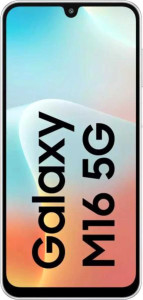
Samsung Galaxy M16 5G
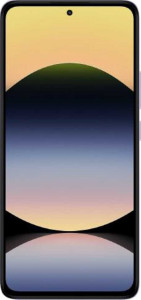
Xiaomi Redmi Note 14 4G (Global)

Samsung Galaxy M16 5G Xiaomi Redmi Note 14 4G (Global)

Overview

Welcome to our detailed comparison of the Samsung Galaxy M16 5G and the Xiaomi Redmi Note 14 4G (Global) — two mid-range contenders that share a surprising amount of common ground while diverging sharply in key areas. From display quality and camera hardware to connectivity, audio, and battery capacity, both phones make compelling cases for different types of users. Read on to see exactly how these two stack up across every major specification category.

Common Features

  • Both phones are water resistant with an IP54 ingress protection rating.
  • Neither phone has a rugged build.
  • Neither phone can be folded.
  • Both phones feature an OLED/AMOLED display type.
  • Neither phone supports Dolby Vision.
  • Neither phone has a secondary screen.
  • Both phones have a touchscreen.
  • Both phones come with 8GB of RAM and 256GB of internal storage.
  • Both phones use a 6 nm semiconductor size.
  • Both phones support 64-bit processing and use big.LITTLE technology.
  • Both phones have integrated LTE and integrated graphics.
  • Both phones feature a multi-lens main camera setup.
  • Both phones record main camera video at 1080p 30fps.
  • Both phones have a CMOS sensor and phase-detection autofocus for photos.
  • Both phones support continuous autofocus when recording movies.
  • Neither phone has a BSI sensor or dual-tone LED flash.
  • Both phones support fast charging and come with a charger included.
  • Neither phone has wireless charging or a removable battery.
  • Both phones have NFC, a fingerprint scanner, USB Type-C, and Bluetooth 5.3.
  • Both phones support two SIM cards and have an external memory slot.
  • Both phones use USB version 2.
  • Neither phone has emergency SOS via satellite.
  • Both phones have theme customization and on-device machine learning.
  • Both phones offer location privacy options and camera/microphone privacy options.
  • Neither phone blocks cross-site tracking or has Mail Privacy Protection.
  • Both phones have clipboard warnings and can block app tracking.
  • Both phones have a video light and no curved, e-paper, or sapphire glass display.

Main Differences

  • Weight is 191 g on Samsung Galaxy M16 5G and 196.5 g on Xiaomi Redmi Note 14 4G (Global).
  • Thickness is 7.9 mm on Samsung Galaxy M16 5G and 8.2 mm on Xiaomi Redmi Note 14 4G (Global).
  • Screen size is 6.7″ on Samsung Galaxy M16 5G and 6.67″ on Xiaomi Redmi Note 14 4G (Global).
  • Refresh rate is 90Hz on Samsung Galaxy M16 5G and 120Hz on Xiaomi Redmi Note 14 4G (Global).
  • Pixel density is 385 ppi on Samsung Galaxy M16 5G and 395 ppi on Xiaomi Redmi Note 14 4G (Global).
  • Damage-resistant glass is present on Xiaomi Redmi Note 14 4G (Global) but not available on Samsung Galaxy M16 5G.
  • HDR10 support is present on Xiaomi Redmi Note 14 4G (Global) but not available on Samsung Galaxy M16 5G.
  • HDR10+ support is present on Xiaomi Redmi Note 14 4G (Global) but not available on Samsung Galaxy M16 5G.
  • Always-On Display is available on Xiaomi Redmi Note 14 4G (Global) but not on Samsung Galaxy M16 5G.
  • The chipset is MediaTek Dimensity 6300 on Samsung Galaxy M16 5G and Mediatek Helio G99 on Xiaomi Redmi Note 14 4G (Global).
  • CPU speed is 2 x 2.4 & 6 x 2 GHz on Samsung Galaxy M16 5G and 2 x 2.2 & 6 x 2 GHz on Xiaomi Redmi Note 14 4G (Global).
  • Geekbench 6 multi-core score is 2012 on Samsung Galaxy M16 5G and 1979 on Xiaomi Redmi Note 14 4G (Global).
  • Geekbench 6 single-core score is 782 on Samsung Galaxy M16 5G and 729 on Xiaomi Redmi Note 14 4G (Global).
  • RAM speed is 2133 MHz on Samsung Galaxy M16 5G and 4266 MHz on Xiaomi Redmi Note 14 4G (Global).
  • DirectX version is DirectX 12 on Samsung Galaxy M16 5G and DirectX 11 on Xiaomi Redmi Note 14 4G (Global).
  • Main camera resolution is 50 & 5 & 2 MP on Samsung Galaxy M16 5G and 108 & 2 & 2 MP on Xiaomi Redmi Note 14 4G (Global).
  • Front camera resolution is 13MP on Samsung Galaxy M16 5G and 20MP on Xiaomi Redmi Note 14 4G (Global).
  • Optical image stabilization is available on Xiaomi Redmi Note 14 4G (Global) but not on Samsung Galaxy M16 5G.
  • Android version is Android 15 on Samsung Galaxy M16 5G and Android 14 on Xiaomi Redmi Note 14 4G (Global).
  • App offloading is supported on Samsung Galaxy M16 5G but not on Xiaomi Redmi Note 14 4G (Global).
  • Battery capacity is 5000 mAh on Samsung Galaxy M16 5G and 5500 mAh on Xiaomi Redmi Note 14 4G (Global).
  • Charging speed is 25W on Samsung Galaxy M16 5G and 33W on Xiaomi Redmi Note 14 4G (Global).
  • A 3.5 mm audio jack is present on Xiaomi Redmi Note 14 4G (Global) but not on Samsung Galaxy M16 5G.
  • Stereo speakers are present on Xiaomi Redmi Note 14 4G (Global) but not on Samsung Galaxy M16 5G.
  • LDAC support is available on Xiaomi Redmi Note 14 4G (Global) but not on Samsung Galaxy M16 5G.
  • A radio is present on Xiaomi Redmi Note 14 4G (Global) but not on Samsung Galaxy M16 5G.
  • 5G support is available on Samsung Galaxy M16 5G but not on Xiaomi Redmi Note 14 4G (Global).
  • Wi-Fi versions supported are Wi-Fi 4, 5, and 6 on Samsung Galaxy M16 5G, and Wi-Fi 4 and 5 on Xiaomi Redmi Note 14 4G (Global).
  • Download speed is 3300 MBits/s on Samsung Galaxy M16 5G and 650 MBits/s on Xiaomi Redmi Note 14 4G (Global).
  • An infrared sensor is present on Xiaomi Redmi Note 14 4G (Global) but not on Samsung Galaxy M16 5G.
Specs Comparison
Samsung Galaxy M16 5G

Samsung Galaxy M16 5G

Xiaomi Redmi Note 14 4G (Global)

Xiaomi Redmi Note 14 4G (Global)

Design:
water resistance Water resistant Water resistant
weight 191 g 196.5 g
thickness 7.9 mm 8.2 mm
width 77.9 mm 76.6 mm
height 164.4 mm 163.3 mm
volume 101.173404 cm³ 102.571996 cm³
Ingress Protection (IP) rating IP54 IP54
has a rugged build
can be folded

In terms of overall form factor, these two phones occupy nearly identical territory. Both carry an IP54 rating, meaning they offer the same level of protection against dust ingress and water splashes from any direction — practical for everyday use in light rain or dusty environments, though neither is rated for submersion. Neither features a rugged build or a foldable design, so they are squarely conventional candy-bar smartphones.

Where small but tangible differences emerge is in dimensions and weight. The Samsung Galaxy M16 5G is marginally slimmer at 7.9 mm versus 8.2 mm for the Redmi Note 14 4G, and lighter at 191 g compared to 196.5 g. A 5.5 g difference is imperceptible in isolation, but combined with the 0.3 mm reduction in thickness, the M16 5G will feel ever so slightly more pocketable and less bulky during prolonged one-handed use. The Redmi Note 14 4G is fractionally shorter and narrower, which slightly offsets its thickness disadvantage in terms of grip.

Overall, the design category is nearly a draw, but the Samsung Galaxy M16 5G holds a slim edge thanks to its lighter weight and thinner profile — advantages that, while modest on paper, do translate to a marginally more comfortable daily carry experience.

Display:
Display type OLED/AMOLED OLED/AMOLED
screen size 6.7" 6.67"
pixel density 385 ppi 395 ppi
resolution 1080 x 2340 px 1080 x 2400 px
refresh rate 90Hz 120Hz
has branded damage-resistant glass
supports HDR10
supports HDR10+
Always-On Display
supports Dolby Vision
Has a secondary screen
has a touch screen

Both phones share the same fundamental display technology — OLED/AMOLED panels at near-identical screen sizes and full HD+ resolution — so baseline image quality, contrast, and color vibrancy are in the same league. The pixel density gap (395 ppi on the Redmi Note 14 4G vs. 385 ppi on the M16 5G) is negligible in everyday use; both are sharp enough that individual pixels are indistinguishable at normal viewing distances.

Where the Redmi Note 14 4G pulls meaningfully ahead is in the details that affect daily experience. Its 120Hz refresh rate versus the M16 5G's 90Hz delivers noticeably smoother scrolling, animations, and gaming responsiveness — a difference that is easy to perceive when switching between the two devices. Beyond that, the Redmi Note 14 4G adds HDR10 and HDR10+ support for richer highlights and shadow detail in compatible content, an Always-On Display for at-a-glance notifications without waking the screen, and branded damage-resistant glass that provides a real-world layer of scratch and drop protection the M16 5G lacks entirely.

The Xiaomi Redmi Note 14 4G holds a clear advantage in this category. While the Samsung Galaxy M16 5G is no slouch as an OLED panel, the combination of a higher refresh rate, HDR support, Always-On Display, and protected glass gives the Redmi Note 14 4G a notably richer and more practical display package.

Performance:
internal storage 256GB 256GB
RAM 8GB 8GB
Chipset (SoC) name MediaTek Dimensity 6300 Mediatek Helio G99
GPU name Arm Mali-G57 MC2 Mali G57
CPU speed 2 x 2.4 & 6 x 2 GHz 2 x 2.2 & 6 x 2 GHz
Geekbench 6 result (multi) 2012 1979
Geekbench 6 result (single) 782 729
GPU clock speed 950 MHz 950 MHz
Has integrated LTE
RAM speed 2133 MHz 4266 MHz
semiconductor size 6 nm 6 nm
Supports 64-bit
DirectX version DirectX 12 DirectX 11
Has integrated graphics
Uses big.LITTLE technology
CPU threads 8 threads 8 threads
Uses HMP
maximum memory bandwidth 17.07 GB/s 17.1 GB/s
maximum memory amount 12GB 12GB
DDR memory version 4 4

Both phones arrive with identical storage configurations — 8GB RAM and 256GB internal storage — and share the same 6 nm manufacturing process, so their power efficiency profiles are broadly comparable. The real story is in their respective chipsets: the MediaTek Dimensity 6300 in the Samsung Galaxy M16 5G versus the Helio G99 in the Redmi Note 14 4G. The Dimensity 6300 edges ahead in both single-core (782 vs. 729) and multi-core (2012 vs. 1979) Geekbench 6 scores, meaning slightly snappier app launches and marginally better sustained multitasking in practice — though the gap is narrow enough that most users would not notice it in day-to-day tasks.

A few differentiators are worth flagging. The M16 5G supports DirectX 12 versus DirectX 11 on the Redmi Note 14 4G, which is relevant for gaming compatibility as newer titles increasingly target DX12-class APIs. Conversely, the Redmi Note 14 4G features considerably faster RAM at 4266 MHz versus 2133 MHz on the M16 5G — yet the maximum memory bandwidth figures are nearly identical at roughly 17 GB/s for both, suggesting the system architecture of the Dimensity 6300 compensates effectively and the higher RAM clock on the Helio G99 does not translate into a real-world throughput advantage.

The Samsung Galaxy M16 5G takes a narrow performance edge here, driven by its modest but consistent lead in benchmark scores and its DirectX 12 GPU support. Neither phone will struggle with everyday workloads or casual gaming, but for users who want the slight upper hand in processing headroom, the M16 5G is the more capable performer of the two.

Cameras:
megapixels (main camera) 50 & 5 & 2 MP 108 & 2 & 2 MP
wide aperture (main camera) 1.8 & 2.2 & 2.4f 1.7 & 2.2 & 2.4f
Has a dual-lens (or multi-lens) main camera
megapixels (front camera) 13MP 20MP
has built-in optical image stabilization
video recording (main camera) 1080 x 30 fps 1080 x 30 fps
Has a dual-tone LED flash
number of flash LEDs 1 1
has a BSI sensor
has a CMOS sensor
has continuous autofocus when recording movies
Has phase-detection autofocus for photos
supports slow-motion video recording
has a built-in HDR mode
has manual exposure
has a flash
optical zoom 0x 0x
has manual ISO
has a serial shot mode
has manual focus
has a front camera
Has laser autofocus
Shoots 360° panorama
has manual white balance
shoots raw
has touch autofocus
has manual shutter speed
can create panoramas in-camera
wide aperture (front camera) 2f 2.2f
Has timelapse function
Has a front-facing LED flash
has a dual-lens (or multi-lens) front camera
supports HDR10 recording
supports Dolby Vision recording
has a front-facing camera under the display
Has a RGB LED flash
has 3D photo/video recording capabilities

The camera gap between these two phones is significant. The Redmi Note 14 4G leads with a 108MP primary sensor versus the M16 5G's 50MP shooter — a difference that translates to substantially more detail and greater cropping flexibility in good lighting. The Redmi also edges ahead with a slightly wider main aperture of f/1.7 compared to f/1.8 on the M16 5G, allowing marginally more light in low-light scenes. On the front camera, the gap continues: 20MP versus 13MP, though here the M16 5G counters with a wider f/2.0 aperture compared to the Redmi's f/2.2, meaning the selfie camera on the M16 5G captures slightly more light per frame.

The most practically impactful differentiator, however, is optical image stabilization (OIS), which the Redmi Note 14 4G has and the Samsung Galaxy M16 5G entirely lacks. OIS physically compensates for hand shake during shooting, producing noticeably sharper handheld photos in low light and smoother video footage — a feature whose absence on the M16 5G is a meaningful everyday disadvantage. Both phones cap video recording at 1080p at 30fps and share the same broad feature parity across shooting modes, so neither pulls ahead in terms of creative controls or video capabilities beyond stabilization.

The Xiaomi Redmi Note 14 4G holds a clear advantage in this category. The combination of a higher-resolution main sensor, a wider primary aperture, a superior selfie camera, and — most critically — the presence of OIS gives it a well-rounded lead over the Samsung Galaxy M16 5G for photography enthusiasts.

Operating system:
Android version Android 15 Android 14
has clipboard warnings
has location privacy options
has camera/microphone privacy options
has Mail Privacy Protection
has theme customization
can block app tracking
blocks cross-site tracking
has on-device machine learning
has notification permissions
has media picker
Can play games while they download
has dark mode
has Wi-Fi password sharing
has battery health check
has an extra dim mode
has focus modes
has dynamic theming
can offload apps
Has customizable notifications
has Live Text
has full-page screenshots
supports split screen
gets direct OS updates
has PiP
Can be used as a PC
Has sharing intents
has a child lock
Supports widgets
Is free and open source
Has offline voice recognition
has voice commands
Tracks the current position of a mobile device
is a multi-user system
has Quick Start

The software story here is largely one of near-identical feature sets, with one version difference setting them apart. The Samsung Galaxy M16 5G ships on Android 15 while the Redmi Note 14 4G launches on Android 14 — meaning the M16 5G arrives with Google's latest platform improvements, security patches, and any behavioral changes introduced in that release, giving it a fresher software foundation out of the box.

Across the full list of OS-level features, the two phones are remarkably aligned — both support split-screen multitasking, picture-in-picture, dynamic theming, on-device machine learning, customizable notifications, and a solid suite of privacy controls. The one functional difference worth noting is app offloading: the M16 5G supports it, while the Redmi Note 14 4G does not. The ability to offload apps — removing an app's data footprint while retaining its settings — is a useful storage management tool, particularly on a fixed-storage device with no mention of expansion.

The Samsung Galaxy M16 5G takes the edge in this category. A newer Android version means more up-to-date security and features at launch, and the addition of app offloading provides a practical storage advantage. Neither phone receives direct OS updates, so the version you start with matters more — and starting one generation ahead on Android 15 is a meaningful lead.

Battery:
battery power 5000 mAh 5500 mAh
has wireless charging
Supports fast charging
charging speed 25W 33W
comes with a charger
has a removable battery
has a battery level indicator
has a rechargeable battery

Capacity and charging speed are the two axes that define battery comparisons, and the Redmi Note 14 4G wins on both. Its 5500 mAh cell outpaces the M16 5G's 5000 mAh by a meaningful 10% — a margin that, in real-world terms, can translate to an extra hour or more of screen-on time before reaching for a charger, particularly under moderate to heavy use.

The charging side tells a similar story. The Redmi Note 14 4G supports 33W fast charging versus 25W on the M16 5G, and both phones include a charger in the box. The 8W difference means the Redmi not only starts with more capacity to fill, but also replenishes that larger battery faster — a compounding advantage for users who charge opportunistically throughout the day. Neither phone supports wireless charging, so that is a non-factor in the comparison.

The Xiaomi Redmi Note 14 4G has a clear and practical edge here. A bigger battery combined with faster wired charging makes it the stronger choice for users who prioritize endurance and convenience, with no trade-off in the shared features category to offset the Samsung Galaxy M16 5G's deficit.

Audio:
has a socket for a 3.5 mm audio jack
has stereo speakers
has aptX
has LDAC
has aptX HD
has aptX Adaptive
has aptX Lossless
Has a radio

Audio is one of the most lopsided categories in this comparison. The Redmi Note 14 4G brings a genuinely well-rounded audio setup: stereo speakers for wider, more immersive sound during media playback, a 3.5mm headphone jack for wired listening without an adapter, LDAC support for high-resolution wireless audio over Bluetooth, and even a built-in FM radio. The Samsung Galaxy M16 5G, by contrast, offers none of these — no stereo output, no headphone jack, no lossless Bluetooth codec, and no radio.

Each of these omissions carries real-world weight. The absence of stereo speakers means all audio from the M16 5G is channeled through a single driver, producing a flatter, less spatially rich listening experience for videos and music. Losing the headphone jack forces users toward Bluetooth or USB-C audio, and without LDAC, even high-quality wireless headphones are limited to standard compressed Bluetooth audio quality. LDAC, developed by Sony, can transmit audio at up to three times the data rate of standard Bluetooth codecs — a tangible benefit for audiophiles using compatible headphones.

The Xiaomi Redmi Note 14 4G wins this category decisively and without qualification. It outperforms the Samsung Galaxy M16 5G on every single audio dimension covered by these specs, making it the obvious choice for users who care about sound quality, versatile connectivity, or simply want the flexibility of wired headphones.
Connectivity & Features:
release date February 2025 January 2025
has 5G support
Wi-Fi version Wi-Fi 4 (802.11n), Wi-Fi 6 (802.11ax), Wi-Fi 5 (802.11ac) Wi-Fi 4 (802.11n), Wi-Fi 5 (802.11ac)
SIM cards 2 SIM 2 SIM
Bluetooth version 5.3 5.3
has an external memory slot
Has USB Type-C
USB version 2 2
has NFC
download speed 3300 MBits/s 650 MBits/s
Has a fingerprint scanner
has emergency SOS via satellite
has crash detection
is DLNA-certified
has a gyroscope
supports ANT+
Has a heart rate monitor
has GPS
has a compass
supports Wi-Fi
Has an infrared sensor
has an accelerometer
has a cellular module
Has a barometer
has an HDMI output
Uses 3D facial recognition
Has an iris scanner
Stylus included
supports Galileo
Has motion tracking
Has optical tracking
Has a built-in projector

The headline differentiator in this category is cellular connectivity. The Samsung Galaxy M16 5G supports 5G and carries a maximum download speed of 3300 Mbits/s, while the Redmi Note 14 4G is capped at 4G with a ceiling of 650 Mbits/s. For users in areas with active 5G coverage, this is a substantial gap — not just in peak throughput but in future-proofing, as 4G networks will progressively see less investment and prioritization over the coming years. On Wi-Fi, the M16 5G also supports Wi-Fi 6 (802.11ax) in addition to Wi-Fi 5 and Wi-Fi 4, whereas the Redmi tops out at Wi-Fi 5 — meaning the M16 5G can take advantage of faster, less congested home or office networks when the router supports it.

The Redmi Note 14 4G counters with one exclusive hardware feature: an infrared (IR) blaster, which allows the phone to function as a universal remote control for TVs, air conditioners, and other IR-compatible appliances. It is a niche but genuinely useful convenience that the M16 5G lacks entirely. Beyond that, the two phones are evenly matched — both carry Bluetooth 5.3, NFC, USB Type-C, expandable storage, a fingerprint scanner, GPS with Galileo support, and the same core sensor suite.

The Samsung Galaxy M16 5G takes a clear overall edge here, driven primarily by its 5G support and Wi-Fi 6 capability — connectivity advantages that have lasting relevance as network infrastructure evolves. The Redmi Note 14 4G's IR blaster is a useful perk, but it does not offset the M16 5G's lead in the features that matter most for daily and long-term wireless performance.

Miscellaneous:
has a video light
Has sapphire glass display
Has a curved display
Has an e-paper display

The miscellaneous specs for these two phones are identical across every data point in this group. Both include a video light, and neither features a sapphire glass display, a curved screen, or an e-paper display. There is simply nothing in this category to separate them.

This is a complete tie. Neither the Samsung Galaxy M16 5G nor the Xiaomi Redmi Note 14 4G holds any advantage here, and this group carries no weight in the broader comparison between the two devices.

Comparison Summary & Verdict

After a thorough look at both devices, it is clear that each phone targets a distinct kind of user. The Samsung Galaxy M16 5G stands out with its 5G connectivity, newer Android 15 out of the box, a lighter build at 191 g, and a higher Geekbench single-core score — making it a strong pick for users who want future-proof network speeds and a snappier software experience. The Xiaomi Redmi Note 14 4G (Global), on the other hand, wins on the multimedia and media consumption front, offering a 120Hz OLED display with HDR10+ support, a 108 MP main camera with optical image stabilization, a larger 5500 mAh battery with 33W fast charging, stereo speakers, an audio jack, and LDAC Bluetooth audio. If connectivity and software freshness matter most to you, the Samsung is the wiser choice; if display quality, camera versatility, and rich audio features are your priority, the Xiaomi delivers noticeably more for the money.

Samsung Galaxy M16 5G
Buy Samsung Galaxy M16 5G if...

Buy the Samsung Galaxy M16 5G if you want 5G network support, a lighter and slimmer design, and the latest Android 15 experience out of the box.

Xiaomi Redmi Note 14 4G (Global)
Buy Xiaomi Redmi Note 14 4G (Global) if...

Buy the Xiaomi Redmi Note 14 4G (Global) if you prioritize a smoother 120Hz HDR10+ display, a higher-resolution 108 MP camera with optical image stabilization, a larger battery with faster 33W charging, and richer audio features including stereo speakers and a 3.5 mm headphone jack.