Samsung Galaxy S25 256GB
Samsung Galaxy S25 Edge

Samsung Galaxy S25 256GB Samsung Galaxy S25 Edge

Overview

When choosing between the Samsung Galaxy S25 256GB and the Samsung Galaxy S25 Edge, buyers are faced with a fascinating internal rivalry from the same manufacturer. Both phones share the same Snapdragon 8 Elite chipset and Android 15 foundation, yet they diverge in meaningful ways across display size and resolution, camera configuration, and battery features. This comparison breaks down exactly where these two siblings differ and where they align.

Common Features

  • Both phones are waterproof with an IP68 ingress protection rating.
  • Neither phone has a rugged build.
  • Neither phone can be folded.
  • Both phones feature an OLED/AMOLED display.
  • Both phones support a 120Hz refresh rate.
  • Both phones have a 240Hz touch sampling rate.
  • Both phones feature Gorilla Glass Victus 2 for damage resistance.
  • HDR10 support is available on both phones.
  • HDR10+ support is available on both phones.
  • Always-On Display is available on both phones.
  • Both phones are equipped with 12GB of RAM running at 5300 MHz.
  • Both phones are powered by the Qualcomm Snapdragon 8 Elite chipset built on a 3nm process.
  • Both phones use the Adreno 830 GPU.
  • Both phones have integrated LTE support.
  • Both phones support 64-bit processing and DirectX 12.
  • Both phones feature a multi-lens main camera with built-in optical image stabilization.
  • Both phones have a 12MP front camera.
  • Both phones can record video at 4320 x 30 fps.
  • Both phones support continuous autofocus and phase-detection autofocus.
  • Both phones support slow-motion video recording.
  • Both phones run Android 15.
  • Both phones include clipboard warnings, location privacy options, and camera/microphone privacy options.
  • App tracking can be blocked on both phones.
  • Neither phone blocks cross-site tracking.
  • Neither phone includes Mail Privacy Protection.
  • Both phones support theme customization.
  • Both phones support wireless charging at 15W and fast wired charging at 25W.
  • Neither phone comes with a charger in the box.
  • Neither phone has a removable battery.
  • Both phones have a rechargeable battery with a battery level indicator.
  • Neither phone has a 3.5mm audio jack.
  • Both phones feature stereo speakers.
  • Both phones support aptX and LDAC audio codecs.
  • aptX HD support is not available on either phone.
  • Neither phone has a built-in radio.
  • Both phones have 2 microphones.
  • Both phones support 5G connectivity.
  • Both phones accommodate 2 SIM cards and 2 eSIMs.
  • Both phones use Bluetooth 5.4.
  • Neither phone has an external memory slot.
  • Both phones feature USB Type-C with USB 3.2.
  • Both phones support NFC and offer a download speed of 10000 MBits/s.
  • Neither phone has a sapphire glass display.
  • Neither phone has a curved display.
  • Neither phone has an e-paper display.
  • Both phones have a video light.

Main Differences

  • Weight is 162g on Samsung Galaxy S25 256GB and 163g on Samsung Galaxy S25 Edge.
  • Thickness is 7.2mm on Samsung Galaxy S25 256GB and 5.8mm on Samsung Galaxy S25 Edge.
  • Width is 70.5mm on Samsung Galaxy S25 256GB and 75.6mm on Samsung Galaxy S25 Edge.
  • Height is 146.9mm on Samsung Galaxy S25 256GB and 158.2mm on Samsung Galaxy S25 Edge.
  • Volume is 74.57 cm³ on Samsung Galaxy S25 256GB and 69.37 cm³ on Samsung Galaxy S25 Edge.
  • Screen size is 6.2″ on Samsung Galaxy S25 256GB and 6.7″ on Samsung Galaxy S25 Edge.
  • Pixel density is 416 ppi on Samsung Galaxy S25 256GB and 513 ppi on Samsung Galaxy S25 Edge.
  • Resolution is 1080 x 2340 px on Samsung Galaxy S25 256GB and 1440 x 3120 px on Samsung Galaxy S25 Edge.
  • Internal storage is 256GB on Samsung Galaxy S25 256GB and 512GB on Samsung Galaxy S25 Edge.
  • AnTuTu benchmark score is 3,050,000 on Samsung Galaxy S25 256GB and 2,265,529 on Samsung Galaxy S25 Edge.
  • CPU speed is 2 x 4.47 & 6 x 3.53 GHz on Samsung Galaxy S25 256GB and 2 x 4.32 & 6 x 3.53 GHz on Samsung Galaxy S25 Edge.
  • Geekbench 6 multi-core score is 10,050 on Samsung Galaxy S25 256GB and 10,059 on Samsung Galaxy S25 Edge.
  • Geekbench 6 single-core score is 3,175 on Samsung Galaxy S25 256GB and 3,234 on Samsung Galaxy S25 Edge.
  • GPU clock speed is 1200 MHz on Samsung Galaxy S25 256GB and 1100 MHz on Samsung Galaxy S25 Edge.
  • Main camera resolution is 50 & 12 & 10 MP on Samsung Galaxy S25 256GB and 200 & 12 MP on Samsung Galaxy S25 Edge.
  • Main camera wide aperture is f/1.8, f/2.2 & f/2.4 on Samsung Galaxy S25 256GB and f/2.2 & f/1.7 on Samsung Galaxy S25 Edge.
  • Dual-tone LED flash is present on Samsung Galaxy S25 256GB but not available on Samsung Galaxy S25 Edge.
  • Number of flash LEDs is 2 on Samsung Galaxy S25 256GB and 1 on Samsung Galaxy S25 Edge.
  • A BSI sensor is present on Samsung Galaxy S25 256GB but not available on Samsung Galaxy S25 Edge.
  • Optical zoom is 3x on Samsung Galaxy S25 256GB and 0x on Samsung Galaxy S25 Edge.
  • Manual shutter speed is supported on Samsung Galaxy S25 256GB but not available on Samsung Galaxy S25 Edge.
  • HDR10 video recording is supported on Samsung Galaxy S25 256GB but not available on Samsung Galaxy S25 Edge.
  • Battery capacity is 4000 mAh on Samsung Galaxy S25 256GB and 3900 mAh on Samsung Galaxy S25 Edge.
  • Reverse wireless charging is supported on Samsung Galaxy S25 256GB but not available on Samsung Galaxy S25 Edge.
  • aptX Adaptive support is present on Samsung Galaxy S25 256GB but not available on Samsung Galaxy S25 Edge.
  • aptX Lossless support is present on Samsung Galaxy S25 256GB but not available on Samsung Galaxy S25 Edge.
  • Wi-Fi versions include Wi-Fi 4, 5, 6, 6E, and 7 on Samsung Galaxy S25 256GB, while Samsung Galaxy S25 Edge supports Wi-Fi 4, 5, 6, 6E, and 7 as well, but the listing order differs slightly between the two.
Specs Comparison
Samsung Galaxy S25 256GB

Samsung Galaxy S25 256GB

Samsung Galaxy S25 Edge

Samsung Galaxy S25 Edge

Design:
water resistance Waterproof Waterproof
weight 162 g 163 g
thickness 7.2 mm 5.8 mm
width 70.5 mm 75.6 mm
height 146.9 mm 158.2 mm
volume 74.56644 cm³ 69.367536 cm³
Ingress Protection (IP) rating IP68 IP68
has a rugged build
can be folded

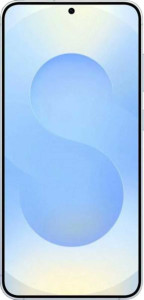
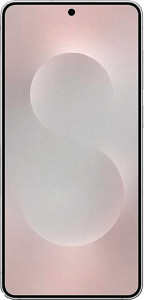
Both phones share the same IP68 waterproof rating, meaning neither has an edge in water or dust protection — both can handle submersion under typical conditions. Where the two diverge significantly is in their physical form factor. The S25 Edge is dramatically thinner at 5.8 mm versus the standard S25's 7.2 mm, a difference of nearly 20% that is immediately perceptible in-hand and in-pocket. That ultra-slim profile is the defining design statement of the Edge.

However, slimness comes with a trade-off in footprint: the S25 Edge is notably taller (158.2 mm vs 146.9 mm) and wider (75.6 mm vs 70.5 mm), which makes it a larger device to grip and reach across. Interestingly, despite that larger surface area, the Edge actually occupies less total volume (69.4 cm³ vs 74.6 cm³), confirming that its thinness more than compensates geometrically. Weight is virtually identical at 162 g vs 163 g, so neither device wins on lightness.

For users who prioritize a sleek, ultra-thin feel in the hand and pocket, the S25 Edge has a clear design advantage. But those with smaller hands or who prefer a more compact one-handed grip may find the standard S25's narrower, shorter body easier to manage — even if it is slightly thicker. Neither is ruggedized or foldable, so that distinction does not factor into this comparison.

Display:
Display type OLED/AMOLED OLED/AMOLED
screen size 6.2" 6.7"
pixel density 416 ppi 513 ppi
resolution 1080 x 2340 px 1440 x 3120 px
refresh rate 120Hz 120Hz
touch sampling rate 240Hz 240Hz
has branded damage-resistant glass
Gorilla Glass version Gorilla Glass Victus 2 Gorilla Glass Victus 2
supports HDR10
supports HDR10+
Always-On Display
supports Dolby Vision
Has a secondary screen
has a touch screen

The display is where the S25 Edge pulls decisively ahead. Its 6.7″ screen versus the standard S25's 6.2″ panel already makes a meaningful difference for media consumption and multitasking, but the resolution gap is even more telling: the Edge renders at 1440 x 3120 px compared to 1080 x 2340 px, resulting in a pixel density of 513 ppi versus 416 ppi. At that density, individual pixels are essentially invisible to the naked eye, and fine text, detailed photography, and UI elements will appear noticeably crisper on the Edge.

Where the two phones are evenly matched is in their panel technology and feature set. Both use OLED/AMOLED displays with a 120Hz refresh rate for smooth scrolling and animations, a 240Hz touch sampling rate for responsive input, Always-On Display support, HDR10+, and Gorilla Glass Victus 2 protection. Neither supports Dolby Vision, so that omission is not a differentiator.

The conclusion for this category is straightforward: the S25 Edge offers a meaningfully superior display experience, combining a larger canvas with significantly higher pixel density. For users who watch video, read frequently, or simply value screen real estate, the Edge's panel is a substantial step up. The standard S25 holds its own for everyday use, but it cannot match the Edge's sharpness and size.

Performance:
internal storage 256GB 512GB
RAM 12GB 12GB
AnTuTu benchmark score 3050000 2265529
Chipset (SoC) name Qualcomm Snapdragon 8 Elite Qualcomm Snapdragon 8 Elite
GPU name Adreno 830 Adreno 830
CPU speed 2 x 4.47 & 6 x 3.53 GHz 2 x 4.32 & 6 x 3.53 GHz
Geekbench 6 result (multi) 10050 10059
Geekbench 6 result (single) 3175 3234
GPU clock speed 1200 MHz 1100 MHz
Has integrated LTE
RAM speed 5300 MHz 5300 MHz
semiconductor size 3 nm 3 nm
Supports 64-bit
DirectX version DirectX 12 DirectX 12
Has integrated graphics
OpenGL version 3.2 3.2
OpenGL ES version 3.2 3.2
Uses big.LITTLE technology
CPU threads 8 threads 8 threads
Uses HMP
Has TrustZone
maximum memory bandwidth 85.1 GB/s 85.1 GB/s
OpenCL version 3 3
memory channels 2 2
L2 cache 12 MB 12 MB
Supports ECC memory
L1 cache 192 KB 192 KB
maximum memory amount 24GB 24GB
uses multithreading
GPU turbo 1100 MHz 1100 MHz
Thermal Design Power (TDP) 8.2W 8.2W
DDR memory version 5 5
shading units 1536 1536
supported displays 2 2
L3 cache 8 MB 8 MB

At first glance, both phones appear identical in this category — same Snapdragon 8 Elite chipset, same 12GB of DDR5 RAM, same 3nm fabrication, and the same thermal envelope. Dig into the numbers, however, and a meaningful GPU gap emerges. The standard S25 runs its Adreno 830 at 1200 MHz, while the Edge is clocked at 1100 MHz — almost certainly a thermal concession tied to the Edge's ultra-thin chassis, which has less room for heat dissipation. That 8% clock speed difference translates directly into the AnTuTu scores: the S25 posts 3,050,000 versus the Edge's 2,265,529, a gap of roughly 25% that is unusually large for two phones sharing the same silicon.

CPU performance tells a more nuanced story. The S25's peak performance cores run at 4.47 GHz versus 4.32 GHz on the Edge, yet Geekbench 6 results are effectively identical — single-core scores of 3175 and 3234, multi-core of 10050 and 10059. For real-world CPU-bound tasks like app launches, web browsing, and productivity work, users will notice no difference between the two.

The verdict depends on use case. For everyday tasks and even demanding apps, both phones perform identically. But for sustained GPU-intensive workloads — high-fidelity gaming, 3D rendering, or extended compute tasks — the S25 256GB holds a tangible advantage thanks to its higher GPU clock. The Edge's 512GB base storage is a practical win for heavy users, but purely from a raw performance standpoint, the standard S25 edges ahead.
Cameras:
megapixels (main camera) 50 & 12 & 10 MP 200 & 12 MP
wide aperture (main camera) 1.8 & 2.2 & 2.4f 2.2 & 1.7f
Has a dual-lens (or multi-lens) main camera
megapixels (front camera) 12MP 12MP
has built-in optical image stabilization
video recording (main camera) 4320 x 30 fps 4320 x 30 fps
Has a dual-tone LED flash
number of flash LEDs 2 1
has a BSI sensor
has a CMOS sensor
has continuous autofocus when recording movies
Has phase-detection autofocus for photos
supports slow-motion video recording
has a built-in HDR mode
has manual exposure
has a flash
optical zoom 3x 0x
has manual ISO
has a serial shot mode
has manual focus
has a front camera
Has laser autofocus
Shoots 360° panorama
has manual white balance
shoots raw
has touch autofocus
has manual shutter speed
can create panoramas in-camera
wide aperture (front camera) 2.2f 2.2f
Has timelapse function
Has a front-facing LED flash
has a dual-lens (or multi-lens) front camera
supports HDR10 recording
supports Dolby Vision recording
has a front-facing camera under the display
Has a RGB LED flash
has 3D photo/video recording capabilities

The camera systems on these two phones reflect a fundamentally different design philosophy. The S25 256GB opts for versatility with a triple-lens setup — 50 + 12 + 10 MP — that includes a dedicated telephoto lens delivering 3x optical zoom. The S25 Edge, constrained by its ultra-thin body, drops to a dual-lens system (200 + 12 MP) with no optical zoom at all. That omission is significant: optical zoom preserves image quality at distance, while the digital zoom the Edge must rely on from its high-resolution sensor is an inherently inferior substitute, even with 200MP to work with.

The Edge's headline 200MP main sensor does offer a real advantage in detail capture and cropping flexibility in good lighting, but its main lens aperture of f/2.2 is notably narrower than the S25's f/1.8, meaning it admits less light. In low-light conditions, that wider aperture on the S25 — combined with its BSI sensor, which the Edge lacks — gives it a structural advantage in retaining detail and reducing noise. The Edge does feature a very wide f/1.7 aperture on its secondary lens, which helps for ultrawide shots.

Rounding out the differences, the S25 supports HDR10 video recording and manual shutter speed control, neither of which is available on the Edge. For photographers and videographers who want the most flexible, well-rounded camera toolkit, the S25 256GB holds a clear overall advantage — particularly due to its optical zoom and low-light credentials. The Edge's 200MP sensor is a compelling spec on paper, but the loss of a telephoto lens and optical zoom is a tangible real-world trade-off.

Operating system:
Android version Android 15 Android 15
has clipboard warnings
has location privacy options
has camera/microphone privacy options
has Mail Privacy Protection
has theme customization
can block app tracking
blocks cross-site tracking
has on-device machine learning
has notification permissions
has media picker
Can play games while they download
has dark mode
has Wi-Fi password sharing
has battery health check
has an extra dim mode
has focus modes
has dynamic theming
can offload apps
Has customizable notifications
has Live Text
has full-page screenshots
supports split screen
gets direct OS updates
has PiP
Can be used as a PC
Has sharing intents
has a child lock
Supports widgets
Is free and open source
Has offline voice recognition
has voice commands
Tracks the current position of a mobile device
is a multi-user system
has Quick Start

When two phones share a manufacturer, a chipset generation, and a launch window, an identical OS spec sheet is expected — and that is exactly what the data shows here. Both the S25 256GB and the S25 Edge ship with Android 15, carry the same privacy controls, and support the same productivity features including split-screen multitasking, Picture-in-Picture, widgets, and the ability to function as a PC substitute. There is not a single differentiating data point in this entire group.

This is a complete tie. Choosing between these two phones on software grounds is simply not possible — every feature, permission system, and OS capability listed is identical across both devices. Users can expect the same Samsung One UI experience, the same update cadence, and the same out-of-box feature set regardless of which model they pick.

Battery:
battery power 4000 mAh 3900 mAh
has wireless charging
Supports fast charging
charging speed 25W 25W
wireless charging speed 15W 15W
has reverse wireless charging
comes with a charger
has a removable battery
has a battery level indicator
has a rechargeable battery

Battery capacity is nearly identical between these two phones — 4000 mAh on the S25 versus 3900 mAh on the Edge. A 100 mAh difference is negligible in practice, amounting to perhaps minutes of screen-on time, and should not factor into any purchasing decision. Charging infrastructure is identical as well: both support 25W wired fast charging and 15W wireless charging, and neither ships with a charger in the box.

The one meaningful differentiator is reverse wireless charging, which is present on the S25 256GB and absent on the S25 Edge. This feature allows the phone to act as a wireless charging pad for accessories like earbuds or a smartwatch — a genuinely useful convenience for users invested in a wireless ecosystem. Its omission on the Edge is likely another concession to the ultra-thin form factor.

Overall, the S25 256GB holds a modest but real advantage here, solely due to reverse wireless charging. For users who would never use that feature, this category is effectively a tie. Those who regularly top up accessories wirelessly will find the standard S25 the more capable choice.

Audio:
has a socket for a 3.5 mm audio jack
has stereo speakers
has aptX
has LDAC
has aptX HD
has aptX Adaptive
has aptX Lossless
Has a radio
number of microphones 2 2

Shared ground dominates this category — both phones ditch the 3.5mm jack, pack stereo speakers, dual microphones, and support both aptX and LDAC for high-quality Bluetooth audio. For most listeners, that common foundation already delivers a solid wireless audio experience. The meaningful split is in the advanced Qualcomm codec tier: the S25 256GB supports aptX Adaptive and aptX Lossless, while the S25 Edge supports neither.

That distinction matters for audiophiles with compatible headphones. aptX Adaptive dynamically adjusts bitrate for low-latency, high-resolution streaming, making it notably better for gaming and video in addition to music. aptX Lossless goes further, enabling CD-quality wireless audio with no compression artifacts — a feature that only pays off with supported headphones but is a genuine ceiling-raiser when the full chain is in place. The Edge's omission of both codecs caps its wireless audio potential below what the hardware ecosystem is capable of delivering.

For casual listeners who rely on LDAC-compatible headphones, the gap is less pronounced — LDAC already provides high-resolution audio and is present on both devices. But for users who own or plan to buy aptX Adaptive or Lossless-compatible gear, the S25 256GB is the clear winner in this category.

Connectivity & Features:
release date January 2025 May 2025
has 5G support
Wi-Fi version Wi-Fi 4 (802.11n), Wi-Fi 6 (802.11ax), Wi-Fi 5 (802.11ac), Wi-Fi 7 (802.11be), Wi-Fi 6E (802.11ax) Wi-Fi 4 (802.11n), Wi-Fi 5 (802.11ac), Wi-Fi 6 (802.11ax), Wi-Fi 7 (802.11be), Wi-Fi 6E (802.11ax)
SIM cards 2 SIM, 2 eSIM 2 SIM, 2 eSIM
Bluetooth version 5.4 5.4
has an external memory slot
Has USB Type-C
USB version 3.2 3.2
has NFC
download speed 10000 MBits/s 10000 MBits/s
upload speed 3500 MBits/s 3500 MBits/s
Has a fingerprint scanner
has emergency SOS via satellite
is DLNA-certified
has a gyroscope
supports ANT+
Has a heart rate monitor
has GPS
has a compass
supports Wi-Fi
Has an infrared sensor
has an accelerometer
has a cellular module
Has a barometer
has an HDMI output
Uses 3D facial recognition
Has an iris scanner
Stylus included
supports Galileo
Has motion tracking
Has optical tracking
Has a built-in projector

Connectivity is another category where these two phones are inseparable. Both support Wi-Fi 7 (the latest standard, offering lower latency and higher throughput in congested environments), Bluetooth 5.4, 5G, NFC, and USB 3.2 Type-C. Dual physical SIM plus dual eSIM support is identical across both, as are peak download and upload speeds of 10,000 Mbps and 3,500 Mbps respectively. There is no connectivity tier where one phone outpaces the other.

The sensor array is equally matched — both carry a gyroscope, accelerometer, barometer, compass, GPS with Galileo support, fingerprint scanner, and ANT+ compatibility. Notable shared omissions include satellite emergency SOS, infrared, and any form of 3D facial recognition, but again, these apply equally to both devices and do not create any distinction between them.

This is a complete tie. No matter which of these two phones a user chooses, they get an identical connectivity and sensor package. Any decision between the S25 256GB and the S25 Edge should rest entirely on the differentiators found in other spec groups.

Miscellaneous:
has a video light
Has sapphire glass display
Has a curved display
Has an e-paper display

The miscellaneous spec group offers nothing to separate these two phones. Both have a video light, neither uses sapphire glass, neither has a curved or e-paper display — every data point is identical. This is a complete tie, and no purchasing decision should be influenced by this category.

Comparison Summary & Verdict

After reviewing all available specifications, the two phones serve distinctly different users. The Samsung Galaxy S25 256GB stands out for camera versatility, offering a triple-lens setup with 3x optical zoom, a BSI sensor, dual-tone flash, HDR10 video recording, and richer audio codec support including aptX Adaptive and aptX Lossless — making it the stronger pick for photography and media enthusiasts. The Samsung Galaxy S25 Edge, on the other hand, impresses with its larger 6.7″ display at a sharper 513 ppi, a massive 200MP main sensor, and a notably slimmer 5.8mm profile, appealing to those who prioritize screen real estate and bold imaging in a sleek form. Both share the same chipset, RAM, and core connectivity, so the decision ultimately comes down to your priorities: camera flexibility and audio features versus display size and a cutting-edge high-resolution shooter.

Samsung Galaxy S25 256GB
Buy Samsung Galaxy S25 256GB if...

Buy the Samsung Galaxy S25 256GB if you value a versatile triple-lens camera system with optical zoom, richer audio codec support, and reverse wireless charging. It is also the stronger choice for HDR10 video recording and a more compact form factor.

Samsung Galaxy S25 Edge
Buy Samsung Galaxy S25 Edge if...

Buy the Samsung Galaxy S25 Edge if you want a larger, sharper 6.7″ display with a 200MP main camera and prefer an ultra-slim 5.8mm design with more built-in storage at 512GB.