Samsung Galaxy S25 256GB
Samsung Galaxy S25 FE

Samsung Galaxy S25 256GB Samsung Galaxy S25 FE

Overview

Choosing between the Samsung Galaxy S25 256GB and the Samsung Galaxy S25 FE means weighing compactness and raw performance against a larger display and longer battery life. Both phones share the same Samsung DNA — IP68 waterproofing, OLED screens, and 256GB storage — but they diverge sharply when it comes to chipset power, battery capacity, and overall size. Read on to see exactly how these two Galaxy siblings stack up across every major specification.

Common Features

  • Both phones are waterproof with an IP68 ingress protection rating.
  • Neither phone has a rugged build.
  • Neither phone can be folded.
  • Both phones feature an OLED/AMOLED display.
  • Both phones share the same resolution of 1080 x 2340 px.
  • Both phones have a 120Hz refresh rate and a 240Hz touch sampling rate.
  • Both phones feature damage-resistant glass.
  • HDR10 support is available on both phones.
  • HDR10+ support is available on both phones.
  • Always-On Display is available on both phones.
  • Both phones come with 256GB of internal storage.
  • Both phones support LTE and 64-bit processing.
  • Both phones have integrated graphics and use big.LITTLE technology.
  • Both phones feature a 50MP main camera, a 12MP ultrawide, and built-in optical image stabilization.
  • Both phones can record video at 4320 x 30 fps and have a BSI CMOS sensor.
  • Both phones have a 12MP front camera.
  • Both phones run Android with clipboard warnings, location privacy options, and camera/microphone privacy options.
  • Both phones support wireless charging, fast charging, and reverse wireless charging at 4.5W.
  • Neither phone comes with a charger in the box, and neither has a removable battery.
  • Both phones lack a 3.5mm audio jack but feature stereo speakers.
  • Both phones support 5G, Bluetooth 5.4, NFC, USB Type-C, and a fingerprint scanner.
  • Neither phone has an external memory slot, emergency SOS via satellite, or crash detection.
  • Both phones have a video light and neither has a sapphire glass, curved, or e-paper display.

Main Differences

  • Weight is 162 g on Samsung Galaxy S25 256GB and 190 g on Samsung Galaxy S25 FE.
  • Thickness is 7.2 mm on Samsung Galaxy S25 256GB and 7.4 mm on Samsung Galaxy S25 FE.
  • Width is 70.5 mm on Samsung Galaxy S25 256GB and 76.6 mm on Samsung Galaxy S25 FE.
  • Height is 146.9 mm on Samsung Galaxy S25 256GB and 161.3 mm on Samsung Galaxy S25 FE.
  • Screen size is 6.2″ on Samsung Galaxy S25 256GB and 6.7″ on Samsung Galaxy S25 FE.
  • Pixel density is 416 ppi on Samsung Galaxy S25 256GB and 385 ppi on Samsung Galaxy S25 FE.
  • Typical brightness is 2600 nits on Samsung Galaxy S25 256GB and 1200 nits on Samsung Galaxy S25 FE.
  • The Samsung Galaxy S25 256GB uses Gorilla Glass Victus 2, while the Samsung Galaxy S25 FE uses Gorilla Glass Victus.
  • RAM is 12GB on Samsung Galaxy S25 256GB and 8GB on Samsung Galaxy S25 FE.
  • The chipset is Qualcomm Snapdragon 8 Elite on Samsung Galaxy S25 256GB and Samsung Exynos 2400 on Samsung Galaxy S25 FE.
  • AnTuTu benchmark score is 3,050,000 on Samsung Galaxy S25 256GB and 2,147,521 on Samsung Galaxy S25 FE.
  • Geekbench 6 multi-core score is 10,050 on Samsung Galaxy S25 256GB and 7,000 on Samsung Galaxy S25 FE.
  • Semiconductor size is 3 nm on Samsung Galaxy S25 256GB and 4 nm on Samsung Galaxy S25 FE.
  • The telephoto camera is 10MP on Samsung Galaxy S25 256GB and 8MP on Samsung Galaxy S25 FE.
  • HDR10 video recording is supported on Samsung Galaxy S25 256GB but not available on Samsung Galaxy S25 FE.
  • Laser autofocus is present on Samsung Galaxy S25 FE but not available on Samsung Galaxy S25 256GB.
  • The Samsung Galaxy S25 256GB has 2 flash LEDs, while the Samsung Galaxy S25 FE has 1.
  • Android version is Android 15 on Samsung Galaxy S25 256GB and Android 16 on Samsung Galaxy S25 FE.
  • Battery capacity is 4000 mAh on Samsung Galaxy S25 256GB and 4900 mAh on Samsung Galaxy S25 FE.
  • Wired charging speed is 25W on Samsung Galaxy S25 256GB and 45W on Samsung Galaxy S25 FE.
  • Wireless charging speed is 15W on Samsung Galaxy S25 256GB and 25W on Samsung Galaxy S25 FE.
  • aptX and aptX Adaptive support is present on Samsung Galaxy S25 256GB but not available on Samsung Galaxy S25 FE.
  • Number of microphones is 2 on Samsung Galaxy S25 256GB and 3 on Samsung Galaxy S25 FE.
  • Samsung Galaxy S25 256GB supports Wi-Fi 7 (802.11be), while Samsung Galaxy S25 FE does not.
  • SIM card support is 2 SIM and 2 eSIM on Samsung Galaxy S25 256GB and 1 SIM and 1 eSIM on Samsung Galaxy S25 FE.
  • USB version is 3.2 on Samsung Galaxy S25 256GB and 2.0 on Samsung Galaxy S25 FE.
Specs Comparison
Samsung Galaxy S25 256GB

Samsung Galaxy S25 256GB

Samsung Galaxy S25 FE

Samsung Galaxy S25 FE

Design:
water resistance Waterproof Waterproof
weight 162 g 190 g
thickness 7.2 mm 7.4 mm
width 70.5 mm 76.6 mm
height 146.9 mm 161.3 mm
volume 74.56644 cm³ 91.431292 cm³
Ingress Protection (IP) rating IP68 IP68
has a rugged build
can be folded

Both phones share the same IP68 waterproofing standard, meaning neither has an edge in water or dust resistance — both can handle submersion equally well in everyday scenarios. Neither features a rugged build or a foldable form factor, so they sit in the same conventional smartphone category from a construction standpoint.

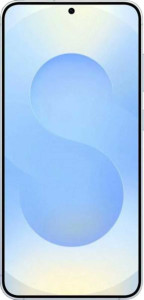
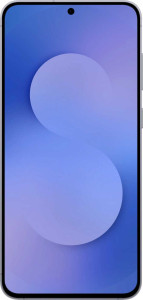
Where these two diverge significantly is in physical footprint and weight. The Galaxy S25 is a noticeably more compact device: at 146.9 × 70.5 mm and 162 g, it occupies just 74.6 cm³ of volume. The Galaxy S25 FE, by contrast, measures 161.3 × 76.6 mm and weighs 190 g — a volume of 91.4 cm³. That is roughly 17% more mass and 23% more volume. In practice, this means the S25 FE will feel substantially heavier and less pocketable in daily use, while the S25 sits much more comfortably in one hand. The thickness difference (7.2 mm vs 7.4 mm) is negligible by comparison.

The Galaxy S25 holds a clear edge in the Design category for users who prioritize compactness, lighter weight, and one-handed ergonomics. The S25 FE's larger frame is a trade-off that likely reflects a bigger display underneath, but purely on physical design metrics, the standard S25 is the more refined and manageable device.

Display:
Display type OLED/AMOLED OLED/AMOLED
screen size 6.2" 6.7"
pixel density 416 ppi 385 ppi
resolution 1080 x 2340 px 1080 x 2340 px
refresh rate 120Hz 120Hz
touch sampling rate 240Hz 240Hz
brightness (typical) 2600 nits 1200 nits
has branded damage-resistant glass
Gorilla Glass version Gorilla Glass Victus 2 Gorilla Glass Victus
supports HDR10
supports HDR10+
Always-On Display
supports Dolby Vision
Has a secondary screen
has a touch screen

On paper, these two screens share a lot of DNA: both use OLED/AMOLED panels, run at 120Hz with a 240Hz touch sampling rate, support HDR10+, and feature Always-On Display. For everyday scrolling, video, and color accuracy, the experience will feel broadly similar. The meaningful differences, however, are hard to ignore once you dig into the numbers.

The single most impactful gap is peak brightness. The Galaxy S25 256GB reaches a typical brightness of 2600 nits, more than double the 1200 nits of the Galaxy S25 FE. In practice, this is the difference between a screen that remains easily readable in direct sunlight and one that may struggle in bright outdoor conditions. For anyone who frequently uses their phone outside, this is a decisive real-world advantage. The S25 also carries Gorilla Glass Victus 2 versus the FE's Gorilla Glass Victus — a generational step up in drop and scratch resistance, albeit a subtler difference.

The S25 FE counters with a larger 6.7″ display versus the S25's 6.2″, which benefits media consumption and multitasking. Its slightly lower pixel density (385 ppi vs 416 ppi) is imperceptible at normal viewing distances, so the size advantage is genuine. Still, the dramatic brightness deficit and the older glass version give the Galaxy S25 256GB a clear overall edge in display quality, particularly for users who value outdoor usability and screen durability.

Performance:
internal storage 256GB 256GB
RAM 12GB 8GB
AnTuTu benchmark score 3050000 2147521
Chipset (SoC) name Qualcomm Snapdragon 8 Elite Samsung Exynos 2400
GPU name Adreno 830 Xclipse 940
CPU speed 2 x 4.47 & 6 x 3.53 GHz 2 x 2.9 & 3 x 2.6 & 4 x 2 & 1 x 3.2 GHz
Geekbench 6 result (multi) 10050 7000
Geekbench 6 result (single) 3175 2198
GPU clock speed 1200 MHz 1009 MHz
Has integrated LTE
RAM speed 5300 MHz 4200 MHz
semiconductor size 3 nm 4 nm
Supports 64-bit
DirectX version DirectX 12 DirectX 12
Has integrated graphics
Uses big.LITTLE technology
CPU threads 8 threads 10 threads
Uses HMP
Has TrustZone
maximum memory bandwidth 85.1 GB/s 64 GB/s
maximum memory amount 24GB 24GB
uses multithreading
Thermal Design Power (TDP) 8.2W 6W
DDR memory version 5 5

The performance gap between these two devices is substantial and cuts across every measurable dimension. The Galaxy S25 256GB runs on the Qualcomm Snapdragon 8 Elite, a 3 nm chip that scores roughly 3,050,000 on AnTuTu and 10,050 on Geekbench 6 multi-core. The Galaxy S25 FE uses Samsung's own Exynos 2400, built on a 4 nm process, posting around 2,147,521 on AnTuTu and 7,000 on Geekbench multi-core. That is roughly a 42% lead in AnTuTu for the S25 — a difference that translates into noticeably faster app launches, smoother multitasking, and a more responsive experience under sustained load.

The RAM advantage compounds this further. The S25 carries 12 GB of RAM at 5300 MHz with a memory bandwidth of 85.1 GB/s, versus 8 GB at 4200 MHz and 64 GB/s on the S25 FE. More RAM means more apps can run in the background without being force-closed, and the faster memory speed accelerates data throughput to the CPU and GPU alike. On the graphics side, the S25's Adreno 830 at 1200 MHz outclocks the S25 FE's Xclipse 940 at 1009 MHz, reinforcing its edge in gaming and GPU-intensive tasks. The S25 FE does feature more CPU threads (10 vs 8), though this architectural breadth does not offset its lower clock speeds and benchmark scores in practice.

The Galaxy S25 256GB wins this category decisively. Its newer chip node, higher benchmark scores, more RAM, faster memory, and stronger GPU make it the clear choice for users who demand top-tier performance — whether for gaming, video editing, or simply keeping the phone feeling fast years down the line.
Cameras:
megapixels (main camera) 50 & 12 & 10 MP 50 & 12 & 8 MP
wide aperture (main camera) 1.8 & 2.2 & 2.4f 1.8 & 2.2 & 2.4f
Has a dual-lens (or multi-lens) main camera
megapixels (front camera) 12MP 12MP
has built-in optical image stabilization
video recording (main camera) 4320 x 30 fps 4320 x 30 fps
Has a dual-tone LED flash
number of flash LEDs 2 1
has a BSI sensor
has a CMOS sensor
has continuous autofocus when recording movies
Has phase-detection autofocus for photos
supports slow-motion video recording
has a built-in HDR mode
has manual exposure
has a flash
optical zoom 3x 3x
has manual ISO
has a serial shot mode
has manual focus
has a front camera
Has laser autofocus
Shoots 360° panorama
has manual white balance
shoots raw
has touch autofocus
has manual shutter speed
can create panoramas in-camera
wide aperture (front camera) 2.2f 2.2f
Has timelapse function
Has a front-facing LED flash
has a dual-lens (or multi-lens) front camera
supports HDR10 recording
Has a RGB LED flash

At first glance, the camera systems on these two phones look nearly identical — and for the most part, they are. Both feature a triple-lens rear setup with a 50 MP main, 12 MP ultrawide, identical apertures across all three lenses, OIS, 3x optical zoom, and the same maximum video resolution of 4320p at 30 fps. The front camera is also a match at 12 MP with a 2.2f aperture. For the vast majority of shooting scenarios, both phones will produce comparable results.

The differences are real but targeted. The Galaxy S25 256GB gains an edge in two areas: its telephoto lens is 10 MP versus 8 MP on the S25 FE — a modest but present resolution advantage at zoom — and it uses a dual-LED flash compared to the FE's single LED, which means better color rendering and more even illumination in flash photography. Crucially, the S25 also supports HDR10 video recording, which the S25 FE lacks; for users who shoot video and care about dynamic range in post-production or playback on HDR displays, this is a meaningful omission on the FE. The S25 FE does counter with laser autofocus, which the S25 does not have, offering potentially faster and more reliable focus acquisition in challenging lighting conditions.

The cameras are closely matched for still photography, but the Galaxy S25 256GB holds a slight overall edge thanks to its HDR10 video support and dual-LED flash — advantages that matter most to video-focused users and those who frequently shoot in low light.

Operating system:
Android version Android 15 Android 16
has clipboard warnings
has location privacy options
has camera/microphone privacy options
has Mail Privacy Protection
has theme customization
can block app tracking
blocks cross-site tracking
has on-device machine learning
has notification permissions
has media picker
Can play games while they download
has dark mode
has Wi-Fi password sharing
has battery health check
has an extra dim mode
has focus modes
has dynamic theming
can offload apps
Has customizable notifications
has Live Text
has full-page screenshots
supports split screen
gets direct OS updates
has PiP
Can be used as a PC
Has sharing intents
has a child lock
Supports widgets
Is free and open source
Has offline voice recognition
has voice commands
Tracks the current position of a mobile device
is a multi-user system
has Quick Start

Across the entire operating system feature set, these two devices are virtually identical — same privacy controls, same productivity tools like split-screen and Picture-in-Picture, same customization options including dynamic theming and widgets, and the same set of limitations. The one and only differentiator in this category is the Android version: the Galaxy S25 FE ships with Android 16, while the Galaxy S25 256GB launches on Android 15.

In practical terms, a newer Android version at launch means the S25 FE starts its software lifecycle one step ahead — it will receive the next major OS update one cycle later than the S25, giving it a marginal longevity advantage all else being equal. It may also include incremental platform improvements, security patches, and under-the-hood refinements that ship with Android 16. Neither device gets direct OS updates according to the provided specs, so both rely on Samsung's update pipeline regardless.

The Galaxy S25 FE takes a narrow edge in this category purely by virtue of launching on a more recent Android version. For most users the day-to-day software experience will feel indistinguishable between the two, but the fresher OS base is a modest but real advantage in terms of security currency and future update longevity.

Battery:
battery power 4000 mAh 4900 mAh
has wireless charging
Supports fast charging
charging speed 25W 45W
wireless charging speed 15W 25W
has reverse wireless charging
reverse wireless charging speed 4.5W 4.5W
comes with a charger
has a removable battery
has a battery level indicator
has a rechargeable battery

Battery is one of the clearest wins for the Galaxy S25 FE in this comparison. Its 4900 mAh cell is nearly 23% larger than the 4000 mAh pack in the Galaxy S25 256GB — a gap significant enough to translate into a meaningfully longer time between charges under comparable usage patterns. For heavy users or those who frequently go a full day without access to a charger, this advantage is tangible.

The charging story favors the S25 FE just as decisively. Its 45W wired charging speed is nearly double the S25's 25W, meaning not only does the FE have more capacity to replenish, it does so considerably faster. Wireless charging follows the same pattern: the S25 FE supports 25W wireless versus 15W on the S25. Both devices share the same 4.5W reverse wireless charging speed, so the ability to top up accessories like earbuds is evenly matched. Neither phone includes a charger in the box.

The Galaxy S25 FE wins this category outright — it carries a larger battery, charges faster both wired and wirelessly, and offers no trade-offs relative to the S25 within this spec group. For users who prioritize endurance and quick top-ups, the FE has a compelling and well-rounded advantage.

Audio:
has a socket for a 3.5 mm audio jack
has stereo speakers
has aptX
has aptX HD
has aptX Adaptive
Has a radio
number of microphones 2 3

Shared fundamentals first: both phones ditch the 3.5mm headphone jack, feature stereo speakers, and lack a radio — so wired analog audio and FM reception are off the table for both equally. The meaningful split comes in Bluetooth audio codec support and microphone count.

The Galaxy S25 256GB supports aptX and aptX Adaptive, while the Galaxy S25 FE supports neither. For wireless audio, this matters: aptX Adaptive is a high-resolution codec that dynamically adjusts bitrate for lower latency and higher fidelity, making it particularly valuable with compatible headphones and earbuds. Users who invest in quality Bluetooth audio gear will get noticeably more out of the S25 in this regard. The S25 FE, lacking any aptX support, is limited to SBC or AAC for Bluetooth audio — a real step down for audiophiles.

The S25 FE counters with 3 microphones versus 2 on the S25, which can improve noise cancellation during calls and voice recordings by giving the device more spatial audio data to work with. Still, for overall audio capability, the Galaxy S25 256GB holds the stronger hand — the aptX Adaptive advantage for wireless playback is a more impactful differentiator than the extra microphone for most users.

Connectivity & Features:
release date January 2025 September 2025
has 5G support
Wi-Fi version Wi-Fi 4 (802.11n), Wi-Fi 6 (802.11ax), Wi-Fi 5 (802.11ac), Wi-Fi 7 (802.11be), Wi-Fi 6E (802.11ax) Wi-Fi 4 (802.11n), Wi-Fi 6E (802.11ax), Wi-Fi 6 (802.11ax), Wi-Fi 5 (802.11ac)
SIM cards 2 SIM, 2 eSIM 1 SIM, 1 eSIM
Bluetooth version 5.4 5.4
has an external memory slot
Has USB Type-C
USB version 3.2 2
has NFC
download speed 10000 MBits/s 9640 MBits/s
upload speed 3500 MBits/s 2550 MBits/s
Has a fingerprint scanner
has emergency SOS via satellite
has crash detection
has a gyroscope
Has a heart rate monitor
has GPS
has a compass
supports Wi-Fi
Has an infrared sensor
has an accelerometer
has a cellular module
Has a barometer
Uses 3D facial recognition
Has an iris scanner
Stylus included
supports Galileo

Several connectivity specs are shared between these two devices: both support 5G, Bluetooth 5.4, NFC, and an identical sensor suite including GPS, gyroscope, accelerometer, barometer, and compass. Neither offers expandable storage or a stylus. The common ground is broad — but three specific differences meaningfully separate them.

The most practical gap is in SIM configuration. The Galaxy S25 256GB supports 2 physical SIMs plus 2 eSIMs, while the Galaxy S25 FE is limited to 1 SIM and 1 eSIM. For users who carry two numbers — personal and work, or a local SIM while traveling abroad — the S25's dual-SIM flexibility is a genuine day-to-day advantage. On top of that, the S25 adds Wi-Fi 7 support to its wireless stack, a standard the S25 FE lacks entirely. Wi-Fi 7 delivers higher throughput and lower latency on compatible routers, making it a forward-looking investment. The USB gap is also notable: the S25 uses USB 3.2 versus USB 2.0 on the S25 FE, which means dramatically faster wired data transfers — relevant for anyone who regularly moves large files like videos or RAW photos to a computer.

The Galaxy S25 256GB wins this category clearly. The combination of dual-SIM support, Wi-Fi 7 compatibility, and USB 3.2 represents a meaningful connectivity upgrade over the S25 FE across multiple real-world use cases — from international travel to future-proof wireless speeds to faster local file transfers.

Miscellaneous:
has a video light
Has sapphire glass display
Has a curved display
Has an e-paper display

The Miscellaneous category offers no basis for differentiation between these two devices. Every spec in this group is identical: both the Galaxy S25 256GB and the Galaxy S25 FE have a video light, neither features sapphire glass, a curved display, nor an e-paper display.

This is a clear tie — no advantage exists for either phone within the scope of the provided data for this group.

Comparison Summary & Verdict

After examining every specification, a clear picture emerges for each type of buyer. The Samsung Galaxy S25 256GB is the stronger performer: its Snapdragon 8 Elite chipset delivers a significantly higher AnTuTu score of 3,050,000, its display hits a remarkable 2600 nits of brightness, and its lighter 162 g frame makes it the premium pocket-friendly choice for users who demand speed and portability. The Samsung Galaxy S25 FE, on the other hand, answers with a 4900 mAh battery paired with 45W fast charging, a larger 6.7-inch screen, and an extra microphone — making it a compelling option for users who prioritize all-day endurance and media consumption over top-tier benchmark results. Neither phone is a bad choice; the decision ultimately comes down to whether raw performance or battery longevity and screen size matters more to you.

Samsung Galaxy S25 256GB
Buy Samsung Galaxy S25 256GB if...

Buy the Samsung Galaxy S25 256GB if you want the most powerful chipset, a significantly brighter display, and a lighter, more compact design.

Samsung Galaxy S25 FE
Buy Samsung Galaxy S25 FE if...

Buy the Samsung Galaxy S25 FE if you prioritize a larger screen, a bigger battery with faster 45W wired and 25W wireless charging, and you do not mind a heavier handset.