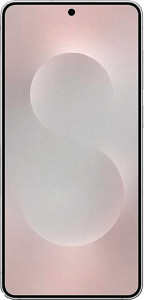
Samsung Galaxy S25 Edge
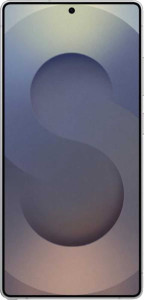
Samsung Galaxy S25 Ultra

Samsung Galaxy S25 Edge Samsung Galaxy S25 Ultra

Overview

When comparing the Samsung Galaxy S25 Edge and the Samsung Galaxy S25 Ultra, two flagship Android phones built on the same Snapdragon 8 Elite foundation, the choices come down to some compelling trade-offs. Both share an OLED display, 12GB of RAM, and IP68 waterproofing, yet they diverge sharply on design philosophy, camera versatility, and battery endurance. Whether portability or raw capability matters more to you, this comparison breaks down every key specification to help you decide.

Common Features

  • Both phones are waterproof with an IP68 ingress protection rating.
  • Neither phone has a rugged build.
  • Neither phone can be folded.
  • Both phones feature an OLED/AMOLED display.
  • Both phones share a 1440 x 3120 px resolution.
  • Both phones have a 120Hz refresh rate and a 240Hz touch sampling rate.
  • Damage-resistant glass is present on both phones.
  • HDR10 and HDR10+ support is available on both phones.
  • Always-On Display is available on both phones.
  • Both phones are powered by the Qualcomm Snapdragon 8 Elite chipset with 12GB of RAM.
  • Both phones use the Adreno 830 GPU.
  • Both phones are built on a 3 nm semiconductor process.
  • Both phones support 64-bit processing and DirectX 12.
  • Both phones run Android 15.
  • Both cameras support optical image stabilization, phase-detection autofocus, and continuous autofocus during video.
  • Both phones can record video at 4320 x 30 fps and support slow-motion video.
  • Both phones have a 12MP front camera.
  • Wireless charging at 15W is supported on both phones, though neither comes with a charger in the box.
  • Both phones support fast charging and have a non-removable, rechargeable battery.
  • Both phones have stereo speakers, no 3.5mm audio jack, no radio, and support aptX and LDAC.
  • Both phones support 5G, NFC, Bluetooth 5.4, USB Type-C 3.2, and offer dual SIM with two eSIM slots.
  • Both phones do not have an external memory slot.
  • Both phones have a video light, no sapphire glass display, no curved display, and no e-paper display.

Main Differences

  • Weight is 163 g on Samsung Galaxy S25 Edge and 218 g on Samsung Galaxy S25 Ultra.
  • Thickness is 5.8 mm on Samsung Galaxy S25 Edge and 8.2 mm on Samsung Galaxy S25 Ultra.
  • Width is 75.6 mm on Samsung Galaxy S25 Edge and 77.6 mm on Samsung Galaxy S25 Ultra.
  • Height is 158.2 mm on Samsung Galaxy S25 Edge and 162.8 mm on Samsung Galaxy S25 Ultra.
  • Volume is 69.37 cm³ on Samsung Galaxy S25 Edge and 103.59 cm³ on Samsung Galaxy S25 Ultra.
  • Screen size is 6.7″ on Samsung Galaxy S25 Edge and 6.9″ on Samsung Galaxy S25 Ultra.
  • Pixel density is 513 ppi on Samsung Galaxy S25 Edge and 498 ppi on Samsung Galaxy S25 Ultra.
  • The Samsung Galaxy S25 Edge uses Gorilla Glass Victus 2, while the Samsung Galaxy S25 Ultra uses Gorilla Armor 2.
  • Internal storage is 512GB on Samsung Galaxy S25 Edge and 1024GB on Samsung Galaxy S25 Ultra.
  • AnTuTu benchmark score is 2,265,529 on Samsung Galaxy S25 Edge and 2,207,809 on Samsung Galaxy S25 Ultra.
  • CPU speed is 2 x 4.32 & 6 x 3.53 GHz on Samsung Galaxy S25 Edge and 2 x 4.47 & 6 x 3.53 GHz on Samsung Galaxy S25 Ultra.
  • Geekbench 6 multi-core score is 10,059 on Samsung Galaxy S25 Edge and 9,846 on Samsung Galaxy S25 Ultra.
  • Geekbench 6 single-core score is 3,234 on Samsung Galaxy S25 Edge and 3,057 on Samsung Galaxy S25 Ultra.
  • GPU clock speed is 1100 MHz on Samsung Galaxy S25 Edge and 1200 MHz on Samsung Galaxy S25 Ultra.
  • The Samsung Galaxy S25 Edge has a 200 & 12 MP rear camera setup, while the Samsung Galaxy S25 Ultra has a 200, 50, 50 & 10 MP quad-camera system.
  • Optical zoom is not available on Samsung Galaxy S25 Edge but reaches 5x on Samsung Galaxy S25 Ultra.
  • A BSI sensor, laser autofocus, dual-tone LED flash, manual shutter speed, and HDR10 video recording are present on Samsung Galaxy S25 Ultra but not available on Samsung Galaxy S25 Edge.
  • Battery capacity is 3900 mAh on Samsung Galaxy S25 Edge and 5000 mAh on Samsung Galaxy S25 Ultra.
  • Wired charging speed is 25W on Samsung Galaxy S25 Edge and 45W on Samsung Galaxy S25 Ultra.
  • Reverse wireless charging is supported on Samsung Galaxy S25 Ultra but not available on Samsung Galaxy S25 Edge.
  • aptX HD support is present on Samsung Galaxy S25 Ultra but not available on Samsung Galaxy S25 Edge.
  • The Samsung Galaxy S25 Edge has 2 microphones, while the Samsung Galaxy S25 Ultra has 3 microphones.
  • Cross-site tracking blocking, Wi-Fi password sharing, and focus modes are available on Samsung Galaxy S25 Ultra but not on Samsung Galaxy S25 Edge.
  • A stylus is included with Samsung Galaxy S25 Ultra but not with Samsung Galaxy S25 Edge.
Specs Comparison
Samsung Galaxy S25 Edge

Samsung Galaxy S25 Edge

Samsung Galaxy S25 Ultra

Samsung Galaxy S25 Ultra

Design:
water resistance Waterproof Waterproof
weight 163 g 218 g
thickness 5.8 mm 8.2 mm
width 75.6 mm 77.6 mm
height 158.2 mm 162.8 mm
volume 69.367536 cm³ 103.592896 cm³
Ingress Protection (IP) rating IP68 IP68
has a rugged build
can be folded

The most striking design difference between these two phones is how radically different they feel to hold. The Galaxy S25 Edge is exceptionally thin at 5.8 mm and weighs just 163 g, while the S25 Ultra measures 8.2 mm thick and tips the scale at 218 g. That 55 g weight gap is substantial in practice — roughly the weight of a large egg — and becomes noticeable during extended one-handed use or when carried in a shirt pocket. The Edge's slimmer profile also results in a volume of ~69.4 cm³ versus the Ultra's ~103.6 cm³, meaning the Ultra displaces nearly 50% more physical space.

Where the two phones converge is on water resistance: both carry an IP68 rating, meaning they offer the same level of protection against dust and prolonged water submersion. Neither is marketed as a rugged device, and neither is foldable, so these shared traits offer no differentiation between them.

For users who prioritize a sleek, lightweight, and pocketable form factor, the S25 Edge holds a clear design advantage. The S25 Ultra's larger footprint is a deliberate trade-off — likely accommodating a bigger battery or display hardware — but from a pure ergonomics and portability standpoint, the Edge is the more comfortable daily carry.

Display:
Display type OLED/AMOLED OLED/AMOLED
screen size 6.7" 6.9"
pixel density 513 ppi 498 ppi
resolution 1440 x 3120 px 1440 x 3120 px
refresh rate 120Hz 120Hz
touch sampling rate 240Hz 240Hz
has branded damage-resistant glass
Gorilla Glass version Gorilla Glass Victus 2 Gorilla Armor 2
supports HDR10
supports HDR10+
Always-On Display
supports Dolby Vision
Has a secondary screen
has a touch screen

Both phones share a strong display foundation: identical OLED/AMOLED panels, the same 1440 x 3120 px resolution, 120Hz refresh rate, and matching HDR10+ support. At this level, day-to-day viewing quality — color accuracy, brightness response, and motion smoothness — will feel essentially equivalent on both screens.

The meaningful differences come down to size and sharpness. The S25 Ultra's 6.9″ display provides more screen real estate, useful for multitasking or media consumption, but because it stretches the same resolution across a larger panel, pixel density drops to 498 ppi. The S25 Edge's 6.7″ screen concentrates those same pixels more tightly, yielding a noticeably sharper 513 ppi — a 15 ppi advantage that is subtly perceptible when reading fine text or viewing detailed images up close. The other notable divergence is glass: the Edge uses Gorilla Glass Victus 2 while the Ultra is protected by Gorilla Armor 2, two distinct Corning product lines, though the provided data does not specify performance differences between them.

Overall, the display category is close to a draw, with each phone winning on a different axis. If screen size and immersiveness matter most, the S25 Ultra has the edge; if pixel-level sharpness is the priority, the S25 Edge comes out slightly ahead.

Performance:
internal storage 512GB 1024GB
RAM 12GB 12GB
AnTuTu benchmark score 2265529 2207809
Chipset (SoC) name Qualcomm Snapdragon 8 Elite Qualcomm Snapdragon 8 Elite
GPU name Adreno 830 Adreno 830
CPU speed 2 x 4.32 & 6 x 3.53 GHz 2 x 4.47 & 6 x 3.53 GHz
Geekbench 6 result (multi) 10059 9846
Geekbench 6 result (single) 3234 3057
GPU clock speed 1100 MHz 1200 MHz
Has integrated LTE
RAM speed 5300 MHz 5300 MHz
semiconductor size 3 nm 3 nm
Supports 64-bit
DirectX version DirectX 12 DirectX 12
Has integrated graphics
OpenGL version 3.2 3.2
OpenGL ES version 3.2 3.2
Uses big.LITTLE technology
CPU threads 8 threads 8 threads
Uses HMP
Has TrustZone
maximum memory bandwidth 85.1 GB/s 85.1 GB/s
OpenCL version 3 3
memory channels 2 2
L2 cache 12 MB 12 MB
Supports ECC memory
L1 cache 192 KB 192 KB
maximum memory amount 24GB 24GB
uses multithreading
GPU turbo 1100 MHz 1100 MHz
Thermal Design Power (TDP) 8.2W 8.2W
DDR memory version 5 5
shading units 1536 1536
supported displays 2 2
L3 cache 8 MB 8 MB

At their core, both phones are built on the same Qualcomm Snapdragon 8 Elite platform with 12GB of RAM, identical memory bandwidth, and the same Adreno 830 GPU — so the vast majority of real-world performance tasks will feel indistinguishable between them. The deeper question is whether the minor configuration differences produce any measurable outcome.

Counterintuitively, despite the S25 Ultra carrying a slightly higher peak CPU clock on its performance cores (4.47 GHz vs the Edge's 4.32 GHz), the S25 Edge scores higher across every benchmark provided — 2,265,529 vs 2,207,809 on AnTuTu, and 10,059 vs 9,846 on Geekbench 6 multi-core. The gap is modest (roughly 2–3%), but it is consistent. The Ultra lists a higher GPU base clock (1200 MHz), yet both share the same GPU turbo ceiling of 1100 MHz, making peak sustained graphics performance effectively equal. Storage is the one clear Ultra advantage: its 1TB internal capacity doubles the Edge's 512GB, which matters for power users who shoot high-res video or carry large local libraries.

On raw compute performance, the S25 Edge holds a narrow but consistent benchmark advantage. For storage capacity, the S25 Ultra wins decisively. Users who push storage limits should weigh that heavily; those focused purely on processing speed will find the Edge marginally ahead on paper, though both phones are effectively in the same performance tier.

Cameras:
megapixels (main camera) 200 & 12 MP 200 & 50 & 50 & 10 MP
wide aperture (main camera) 2.2 & 1.7f 1.7 & 3.4 & 1.9 & 2.4f
Has a dual-lens (or multi-lens) main camera
megapixels (front camera) 12MP 12MP
has built-in optical image stabilization
video recording (main camera) 4320 x 30 fps 4320 x 30 fps
Has a dual-tone LED flash
number of flash LEDs 1 2
has a BSI sensor
has a CMOS sensor
has continuous autofocus when recording movies
Has phase-detection autofocus for photos
supports slow-motion video recording
has a built-in HDR mode
has manual exposure
has a flash
optical zoom 0x 5x
has manual ISO
has a serial shot mode
has manual focus
has a front camera
Has laser autofocus
Shoots 360° panorama
has manual white balance
shoots raw
has touch autofocus
has manual shutter speed
can create panoramas in-camera
wide aperture (front camera) 2.2f 2.2f
Has timelapse function
Has a front-facing LED flash
has a dual-lens (or multi-lens) front camera
supports HDR10 recording
supports Dolby Vision recording
has a front-facing camera under the display
Has a RGB LED flash
has 3D photo/video recording capabilities

Camera versatility is where these two phones diverge most sharply. The S25 Edge carries a dual rear camera setup — a 200 MP main shooter and a 12 MP ultrawide — while the S25 Ultra fields a four-lens system at 200 MP + 50 MP + 50 MP + 10 MP. More lenses means more creative range: the Ultra covers ultrawide, standard, and multiple telephoto focal lengths, enabling genuine compositional flexibility that the Edge simply cannot match from a hardware standpoint.

The most consequential gap is optical zoom. The S25 Ultra offers 5x optical zoom; the S25 Edge has none. In practice, any zoom on the Edge is purely digital, meaning cropped and interpolated image quality at distance. Beyond zoom, the Ultra adds laser autofocus for faster, more reliable subject locking — especially useful in low light or for moving subjects — while the Edge relies solely on phase-detection. The Ultra also supports HDR10 video recording and includes manual shutter speed control, two capabilities absent on the Edge, giving videographers and manual shooters more expressive tools. Even the flash is more capable on the Ultra, with a dual-tone LED arrangement for more natural-looking artificial lighting.

The S25 Ultra is the clear winner in cameras by a significant margin. The shared 200 MP main sensor and OIS mean single-shot stills from the primary lens can be competitive, but the Ultra's additional lenses, native telephoto reach, laser autofocus, and expanded video controls make it the substantially more capable imaging device across nearly every shooting scenario.

Operating system:
Android version Android 15 Android 15
has clipboard warnings
has location privacy options
has camera/microphone privacy options
has Mail Privacy Protection
has theme customization
can block app tracking
blocks cross-site tracking
has on-device machine learning
has notification permissions
has media picker
Can play games while they download
has dark mode
has Wi-Fi password sharing
has battery health check
has an extra dim mode
has focus modes
has dynamic theming
can offload apps
Has customizable notifications
has Live Text
has full-page screenshots
supports split screen
gets direct OS updates
has PiP
Can be used as a PC
Has sharing intents
has a child lock
Supports widgets
Is free and open source
Has offline voice recognition
has voice commands
Tracks the current position of a mobile device
is a multi-user system
has Quick Start

Running the same version of Android 15, these two phones share an almost identical software feature set — from split-screen multitasking and picture-in-picture to on-device machine learning, dynamic theming, and a comprehensive suite of privacy controls. For the overwhelming majority of daily software interactions, users switching between the two would notice no difference at all.

The S25 Ultra does pull ahead on three specific features absent from the Edge: cross-site tracking blocking, Wi-Fi password sharing, and focus modes. Of these, focus modes are arguably the most impactful for daily use — they allow users to filter notifications and app access based on context (work, sleep, personal), a meaningful productivity and wellbeing tool. Wi-Fi password sharing is a convenience feature that removes friction when connecting guests or new devices to a network. Cross-site tracking blocking adds an incremental layer of browser-level privacy, though its real-world impact depends heavily on which browser the user runs.

The S25 Ultra holds a mild software advantage, but it is worth keeping in perspective — three features separate these phones out of a very long shared list. Users who rely on focus modes or value the extra privacy and convenience features will find the Ultra's software loadout marginally more complete; everyone else will experience the two phones as functionally identical from an OS standpoint.

Battery:
battery power 3900 mAh 5000 mAh
has wireless charging
Supports fast charging
charging speed 25W 45W
wireless charging speed 15W 15W
has reverse wireless charging
comes with a charger
has a removable battery
has a battery level indicator
has a rechargeable battery

Battery is one of the clearest wins for either phone in this entire comparison. The S25 Ultra's 5000 mAh cell is 28% larger than the S25 Edge's 3900 mAh — a gap large enough to translate into a meaningfully longer time between charges under equivalent usage patterns. For heavy users who stream, game, or stay away from an outlet for extended periods, that extra 1100 mAh provides a real-world buffer that is difficult to dismiss.

Wired charging compounds the Ultra's advantage further. Its 45W fast charging is nearly double the Edge's 25W, meaning not only does the Ultra carry more energy, it also refills faster — a combination that significantly reduces charging anxiety. Both phones match on 15W wireless charging and neither ships with a charger in the box. The Ultra also adds reverse wireless charging, allowing it to top up accessories like earbuds or a smartwatch directly from the phone's back — a convenience feature the Edge entirely lacks.

The S25 Ultra is the decisive winner in battery, and it isn't particularly close. It holds more charge, replenishes faster, and can share power wirelessly — three compounding advantages. The S25 Edge's smaller cell is almost certainly a direct consequence of its ultra-thin design, making this trade-off an inherent cost of the form factor rather than an oversight.

Audio:
has a socket for a 3.5 mm audio jack
has stereo speakers
has aptX
has LDAC
has aptX HD
has aptX Adaptive
has aptX Lossless
Has a radio
number of microphones 2 3

Shared ground dominates the audio picture: both phones drop the 3.5mm headphone jack, feature stereo speakers, and support both aptX and LDAC for high-quality Bluetooth audio streaming. LDAC in particular is the most capable codec of the two, capable of transmitting up to three times more data than standard Bluetooth audio — so wireless audiophiles using compatible headphones will get solid performance from either device.

Two differences separate them. First, the S25 Ultra adds aptX HD support, which targets higher-resolution audio over Bluetooth with compatible headphones — a niche but genuine advantage for listeners with aptX HD gear, though its real-world benefit over LDAC is marginal in most listening conditions. More practically impactful is the microphone count: the Ultra carries 3 microphones versus the Edge's 2. An additional mic improves noise cancellation, spatial audio capture, and voice clarity during calls or recordings — benefits that extend to everyday use rather than just audiophile scenarios.

The S25 Ultra edges ahead on audio, but narrowly. The extra microphone is the more universally useful advantage, while aptX HD support matters only to a specific subset of wireless audio users. For the majority of listeners, both phones will deliver a comparable audio experience.

Connectivity & Features:
release date May 2025 January 2025
has 5G support
Wi-Fi version Wi-Fi 4 (802.11n), Wi-Fi 5 (802.11ac), Wi-Fi 6 (802.11ax), Wi-Fi 7 (802.11be), Wi-Fi 6E (802.11ax) Wi-Fi 4 (802.11n), Wi-Fi 6 (802.11ax), Wi-Fi 5 (802.11ac), Wi-Fi 7 (802.11be), Wi-Fi 6E (802.11ax)
SIM cards 2 SIM, 2 eSIM 2 SIM, 2 eSIM
Bluetooth version 5.4 5.4
has an external memory slot
Has USB Type-C
USB version 3.2 3.2
has NFC
download speed 10000 MBits/s 10000 MBits/s
upload speed 3500 MBits/s 3500 MBits/s
Has a fingerprint scanner
has emergency SOS via satellite
is DLNA-certified
has a gyroscope
supports ANT+
Has a heart rate monitor
has GPS
has a compass
supports Wi-Fi
Has an infrared sensor
has an accelerometer
has a cellular module
Has a barometer
has an HDMI output
Uses 3D facial recognition
Has an iris scanner
Stylus included
supports Galileo
Has motion tracking
Has optical tracking
Has a built-in projector

Connectivity parity is nearly total between these two phones. Both support 5G, Wi-Fi 7, Bluetooth 5.4, NFC, and USB 3.2 Type-C, with identical download and upload speed ceilings of 10,000 / 3,500 Mbps. The sensor array — gyroscope, accelerometer, barometer, compass, GPS with Galileo — is also a perfect match. For anyone evaluating these phones on the basis of wireless capabilities or hardware sensors alone, the choice between them is effectively a tie.

The sole differentiator in this entire category is that the S25 Ultra includes a stylus, while the S25 Edge does not. This is not a trivial accessory — a built-in stylus enables handwritten note-taking, precise on-screen annotation, and detailed illustration workflows that a finger simply cannot replicate with the same accuracy. For productivity-oriented users, particularly those in fields like medicine, design, or education, this single addition substantially expands the Ultra's use case.

For general connectivity, these phones are evenly matched. But the S25 Ultra takes this category on the strength of the included stylus alone — a feature with no counterpart on the Edge, and one that can meaningfully reshape how the device is used day to day.

Miscellaneous:
has a video light
Has sapphire glass display
Has a curved display
Has an e-paper display

The miscellaneous specs for these two phones are identical across every data point provided: both have a video light, neither features sapphire glass, a curved display, or an e-paper display. There is nothing in this category that separates them.

This group is a complete tie — no advantage can be assigned to either the Samsung Galaxy S25 Edge or the S25 Ultra based solely on the data provided here.

Comparison Summary & Verdict

After examining every specification, the two phones serve distinctly different users. The Samsung Galaxy S25 Edge stands out for its remarkably slim 5.8 mm profile and featherlight 163 g weight, making it the clear choice for those who prize everyday comfort and pocketability without sacrificing the Snapdragon 8 Elite chipset. It even edges ahead slightly in CPU and AnTuTu benchmark scores. The Samsung Galaxy S25 Ultra, on the other hand, is built for power users who demand more: a larger 5000 mAh battery with 45 W fast charging, a versatile quad-camera system with 5x optical zoom, an included stylus, and a more expansive 1 TB storage option make it the definitive productivity and creative powerhouse. Choose the Edge for sleek, lightweight elegance; choose the Ultra when you need maximum capability across every dimension.

Samsung Galaxy S25 Edge
Buy Samsung Galaxy S25 Edge if...

Buy the Samsung Galaxy S25 Edge if you want a strikingly thin and lightweight flagship that still delivers top-tier Snapdragon 8 Elite performance in a pocket-friendly form factor.

Samsung Galaxy S25 Ultra
Buy Samsung Galaxy S25 Ultra if...

Buy the Samsung Galaxy S25 Ultra if you need a versatile quad-camera setup with 5x optical zoom, a larger battery with faster 45 W charging, an included stylus, and up to 1 TB of storage.