Samsung Galaxy S25 FE
TCL NxtPaper 60 Ultra

Samsung Galaxy S25 FE TCL NxtPaper 60 Ultra

Overview

In this detailed comparison between the Samsung Galaxy S25 FE and the TCL NxtPaper 60 Ultra, we put two very different Android smartphones head-to-head. While both devices share a number of solid fundamentals, they diverge sharply when it comes to display technology, camera capabilities, battery and charging features, and overall performance headroom. Whether you prioritize a compact and feature-rich experience or a larger, storage-heavy device, this comparison will help you find your ideal match.

Common Features

  • Both phones are waterproof with an IP68 ingress protection rating.
  • Neither phone has a rugged build.
  • Neither phone can be folded.
  • Both phones share a 1080 x 2340 px display resolution.
  • Both phones support a 120Hz refresh rate.
  • Both phones feature branded damage-resistant glass.
  • Neither phone supports Dolby Vision.
  • Neither phone has a secondary screen.
  • Both phones have a touchscreen.
  • Both phones use a 4 nm semiconductor size.
  • Both phones support 64-bit processing.
  • Both phones support DirectX 12.
  • Both phones have integrated graphics.
  • Both phones use big.LITTLE technology with HMP support.
  • Both phones use DDR5 memory.
  • Both phones have integrated LTE.
  • Both phones feature a multi-lens main camera with built-in optical image stabilization.
  • Both phones have a CMOS sensor with phase-detection autofocus and continuous autofocus during video recording.
  • Both phones support slow-motion video recording and have a built-in HDR mode.
  • Both phones have a single flash LED.
  • Both phones include clipboard warnings and location privacy options.
  • Both phones offer camera and microphone privacy options, theme customization, and the ability to block app tracking.
  • Neither phone has Mail Privacy Protection or blocks cross-site tracking.
  • Both phones support on-device machine learning.
  • Both phones support fast charging and have a non-removable, rechargeable battery with a battery level indicator.
  • Both phones support 5G, Bluetooth 5.4, NFC, USB Type-C (USB 2.0), and have a fingerprint scanner.
  • Neither phone has an external memory slot or emergency SOS via satellite.
  • Both phones lack a 3.5 mm audio jack but feature stereo speakers.
  • Neither phone supports aptX, aptX HD, or aptX Adaptive.
  • Both phones have a video light, no sapphire glass display, and no curved display.

Main Differences

  • Weight is 190 g on Samsung Galaxy S25 FE and 227 g on TCL NxtPaper 60 Ultra.
  • Thickness is 7.4 mm on Samsung Galaxy S25 FE and 7.6 mm on TCL NxtPaper 60 Ultra.
  • Width is 76.6 mm on Samsung Galaxy S25 FE and 81.2 mm on TCL NxtPaper 60 Ultra.
  • Height is 161.3 mm on Samsung Galaxy S25 FE and 174.5 mm on TCL NxtPaper 60 Ultra.
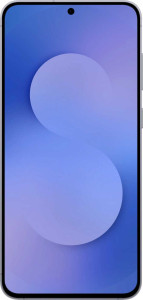
  • Display type is OLED/AMOLED on Samsung Galaxy S25 FE and LCD IPS on TCL NxtPaper 60 Ultra.
  • Screen size is 6.7″ on Samsung Galaxy S25 FE and 7.2″ on TCL NxtPaper 60 Ultra.
  • Pixel density is 385 ppi on Samsung Galaxy S25 FE and 358 ppi on TCL NxtPaper 60 Ultra.
  • Typical brightness is 1200 nits on Samsung Galaxy S25 FE and 780 nits on TCL NxtPaper 60 Ultra.
  • HDR10 support is present on Samsung Galaxy S25 FE but not available on TCL NxtPaper 60 Ultra.
  • HDR10+ support is present on Samsung Galaxy S25 FE but not available on TCL NxtPaper 60 Ultra.
  • Always-On Display is available on Samsung Galaxy S25 FE but not on TCL NxtPaper 60 Ultra.
  • Internal storage is 256 GB on Samsung Galaxy S25 FE and 512 GB on TCL NxtPaper 60 Ultra.
  • RAM is 8 GB on Samsung Galaxy S25 FE and 12 GB on TCL NxtPaper 60 Ultra.
  • CPU configuration is 2 x 2.9 & 3 x 2.6 & 4 x 2 & 1 x 3.2 GHz (10 threads) on Samsung Galaxy S25 FE and 4 x 2.6 & 4 x 2 GHz (8 threads) on TCL NxtPaper 60 Ultra.
  • GPU is Xclipse 940 at 1009 MHz on Samsung Galaxy S25 FE and Mali G615 MC2 at 1047 MHz on TCL NxtPaper 60 Ultra.
  • RAM speed is 4200 MHz on Samsung Galaxy S25 FE and 6400 MHz on TCL NxtPaper 60 Ultra.
  • Maximum memory bandwidth is 64 GB/s on Samsung Galaxy S25 FE and 25.6 GB/s on TCL NxtPaper 60 Ultra.
  • Maximum supported memory amount is 24 GB on Samsung Galaxy S25 FE and 16 GB on TCL NxtPaper 60 Ultra.
  • Main camera megapixels are 50 & 12 & 8 MP on Samsung Galaxy S25 FE and 50 & 50 & 8 MP on TCL NxtPaper 60 Ultra.
  • Front camera resolution is 12 MP on Samsung Galaxy S25 FE and 32 MP on TCL NxtPaper 60 Ultra.
  • Maximum video recording resolution is 4320 x 30 fps on Samsung Galaxy S25 FE and 2160 x 30 fps on TCL NxtPaper 60 Ultra.
  • Dual-tone LED flash is present on Samsung Galaxy S25 FE but not on TCL NxtPaper 60 Ultra.
  • BSI sensor is present on Samsung Galaxy S25 FE but not on TCL NxtPaper 60 Ultra.
  • Laser autofocus is available on Samsung Galaxy S25 FE but not on TCL NxtPaper 60 Ultra.
  • Manual shutter speed is supported on Samsung Galaxy S25 FE but not on TCL NxtPaper 60 Ultra.
  • Android version is Android 16 on Samsung Galaxy S25 FE and Android 15 on TCL NxtPaper 60 Ultra.
  • PC mode functionality is available on Samsung Galaxy S25 FE but not on TCL NxtPaper 60 Ultra.
  • Battery capacity is 4900 mAh on Samsung Galaxy S25 FE and 5200 mAh on TCL NxtPaper 60 Ultra.
  • Wireless charging is supported on Samsung Galaxy S25 FE but not on TCL NxtPaper 60 Ultra.
  • Charging speed is 45W on Samsung Galaxy S25 FE and 33W on TCL NxtPaper 60 Ultra.
  • Reverse wireless charging is available on Samsung Galaxy S25 FE but not on TCL NxtPaper 60 Ultra.
  • A charger is not included with Samsung Galaxy S25 FE but is included with TCL NxtPaper 60 Ultra.
  • Number of microphones is 3 on Samsung Galaxy S25 FE and 2 on TCL NxtPaper 60 Ultra.
  • Wi-Fi 6E support is present on Samsung Galaxy S25 FE but not on TCL NxtPaper 60 Ultra.
  • SIM configuration is 1 SIM + 1 eSIM on Samsung Galaxy S25 FE and 2 physical SIM cards on TCL NxtPaper 60 Ultra.
  • An infrared sensor is absent on Samsung Galaxy S25 FE but present on TCL NxtPaper 60 Ultra.
  • An e-paper display is not featured on Samsung Galaxy S25 FE but is present on TCL NxtPaper 60 Ultra.
Specs Comparison
Samsung Galaxy S25 FE

Samsung Galaxy S25 FE

TCL NxtPaper 60 Ultra

TCL NxtPaper 60 Ultra

Design:
water resistance Waterproof Waterproof
weight 190 g 227 g
thickness 7.4 mm 7.6 mm
width 76.6 mm 81.2 mm
height 161.3 mm 174.5 mm
volume 91.431292 cm³ 107.68744 cm³
Ingress Protection (IP) rating IP68 IP68
has a rugged build
can be folded

Both the Samsung Galaxy S25 FE and the TCL NxtPaper 60 Ultra share an IP68 waterproof rating, meaning both can withstand submersion in fresh water — a genuinely useful parity that removes any differentiation on durability grounds. Neither device offers a rugged build or a foldable form factor, so they compete squarely as standard candy-bar smartphones.

Where the two diverge meaningfully is in physical footprint. The S25 FE is noticeably more compact across every dimension — 161.3 × 76.6 mm versus 174.5 × 81.2 mm — and that translates into a volume difference of roughly 16 cm³, which is significant. More practically, the S25 FE weighs 190 g compared to the NxtPaper 60 Ultra's 227 g. That 37 g gap is not trivial: it is roughly the weight of a large egg, and over a day of extended holding, scrolling, or one-handed use, the lighter device is noticeably less fatiguing. The thickness difference of just 0.2 mm (7.4 mm vs 7.6 mm), however, is imperceptible in practice.

In terms of design, the Samsung Galaxy S25 FE holds a clear edge for users who prioritize compactness and lighter handling. The TCL NxtPaper 60 Ultra's larger size is a trade-off that may be justified by what it offers in other spec categories (such as display area), but purely from a design and ergonomics standpoint, the S25 FE is the more manageable device.

Display:
Display type OLED/AMOLED LCD, IPS
screen size 6.7" 7.2"
pixel density 385 ppi 358 ppi
resolution 1080 x 2340 px 1080 x 2340 px
refresh rate 120Hz 120Hz
brightness (typical) 1200 nits 780 nits
has branded damage-resistant glass
supports HDR10
supports HDR10+
Always-On Display
supports Dolby Vision
Has a secondary screen
has a touch screen

The most fundamental difference here is panel technology. The S25 FE uses an OLED/AMOLED display, while the NxtPaper 60 Ultra relies on an LCD IPS panel. This single distinction cascades into several real-world advantages for the S25 FE: OLED delivers true blacks (each pixel switches off individually), richer contrast, and more vibrant colors — qualities that LCD physically cannot replicate regardless of other tuning. The S25 FE also supports HDR10+, enabling dynamic tone-mapping in compatible video content, and features an Always-On Display — a capability that is only practical on OLED because lighting individual pixels costs almost no battery. The NxtPaper 60 Ultra supports neither.

The brightness gap reinforces this divide. At 1200 nits typical versus 780 nits, the S25 FE is substantially more legible in direct sunlight — a difference users will notice on any bright day outdoors. The NxtPaper 60 Ultra counters with a larger 7.2″ screen compared to the S25 FE's 6.7″, and both share an identical 1080 × 2340 resolution at a smooth 120Hz refresh rate. That means the larger TCL panel actually has a slightly lower pixel density (358 ppi vs 385 ppi), though both are sharp enough that the difference is negligible at normal viewing distances.

The Samsung Galaxy S25 FE holds a decisive display advantage. The OLED panel, significantly higher brightness, HDR10+ support, and Always-On Display collectively represent a higher tier of display experience. The NxtPaper 60 Ultra's larger screen offers more real estate, but that benefit is outweighed by the qualitative gap in panel technology and peak luminance.

Performance:
internal storage 256GB 512GB
RAM 8GB 12GB
Chipset (SoC) name Samsung Exynos 2400
GPU name Xclipse 940 Mali G615 MC2
CPU speed 2 x 2.9 & 3 x 2.6 & 4 x 2 & 1 x 3.2 GHz 4 x 2.6 & 4 x 2 GHz
GPU clock speed 1009 MHz 1047 MHz
Has integrated LTE
RAM speed 4200 MHz 6400 MHz
semiconductor size 4 nm 4 nm
Supports 64-bit
DirectX version DirectX 12 DirectX 12
Has integrated graphics
Uses big.LITTLE technology
CPU threads 10 threads 8 threads
Uses HMP
maximum memory bandwidth 64 GB/s 25.6 GB/s
maximum memory amount 24GB 16GB
DDR memory version 5 5

The silicon powering these two devices tells very different stories. The S25 FE runs on the Samsung Exynos 2400, a 4nm chip with a sophisticated 10-thread CPU configuration that includes a peak core clocked at 3.2 GHz — a meaningful step above the NxtPaper 60 Ultra's 8-thread setup that tops out at 2.6 GHz. The TCL's chipset name is absent from the data entirely, which makes direct SoC-level comparison impossible, but its CPU architecture is simpler by design. The practical implication is that the S25 FE is better equipped to handle sustained heavy workloads — gaming, video rendering, multitasking — where that additional thread count and higher peak frequency matter.

The memory bandwidth gap is arguably the most striking figure here: 64 GB/s on the S25 FE versus 25.6 GB/s on the NxtPaper 60 Ultra. Bandwidth dictates how quickly the processor can feed data to and from RAM, and a 2.5× advantage translates directly into faster app launches, smoother GPU-intensive tasks, and more headroom under load. The NxtPaper does counter with more base RAM — 12 GB versus 8 GB — and double the internal storage at 512 GB, both of which are tangible day-to-day advantages for users who keep many apps open simultaneously or store large media libraries.

On balance, the Samsung Galaxy S25 FE holds a clear performance edge in raw processing power and memory throughput. The NxtPaper 60 Ultra's advantages in RAM and storage capacity are meaningful for everyday convenience, but they do not compensate for the structural gap in CPU architecture and bandwidth that would show up under any demanding workload.

Cameras:
megapixels (main camera) 50 & 12 & 8 MP 50 & 50 & 8 MP
wide aperture (main camera) 1.8 & 2.2 & 2.4f 1.8 & 2.4 & 2.2f
Has a dual-lens (or multi-lens) main camera
megapixels (front camera) 12MP 32MP
has built-in optical image stabilization
video recording (main camera) 4320 x 30 fps 2160 x 30 fps
Has a dual-tone LED flash
number of flash LEDs 1 1
has a BSI sensor
has a CMOS sensor
has continuous autofocus when recording movies
Has phase-detection autofocus for photos
supports slow-motion video recording
has a built-in HDR mode
has manual exposure
has a flash
optical zoom 3x 3x
has manual ISO
has a serial shot mode
has manual focus
has a front camera
Has laser autofocus
Shoots 360° panorama
has manual white balance
has touch autofocus
has manual shutter speed
can create panoramas in-camera
wide aperture (front camera) 2.2f 2f
Has timelapse function
Has a front-facing LED flash
has a dual-lens (or multi-lens) front camera
supports HDR10 recording
Has a RGB LED flash

At first glance the rear camera arrays look similar — both offer a triple-lens setup with a 50 MP primary shooter, 3x optical zoom, and OIS — but the secondary lenses diverge significantly. The NxtPaper 60 Ultra's ultrawide comes in at 50 MP, a substantial jump over the S25 FE's 12 MP ultrawide, meaning wide-angle shots on the TCL will capture considerably more detail. On the selfie side, the NxtPaper also pulls ahead with a 32 MP front camera versus the S25 FE's 12 MP — a difference that is directly visible in portrait clarity and video calls.

Where the S25 FE reasserts itself is in video capability and low-level camera hardware. It tops out at 4320p (8K) at 30 fps, a full two resolution tiers above the NxtPaper 60 Ultra's ceiling of 2160p (4K). The S25 FE also benefits from a BSI sensor — backside-illuminated technology that improves light capture efficiency, particularly in dim conditions — which the NxtPaper lacks. Additionally, the S25 FE includes laser autofocus for faster, more reliable subject locking, and supports manual shutter speed control, giving photographers more creative flexibility. The NxtPaper omits both.

This is a genuine split verdict. The TCL NxtPaper 60 Ultra has the edge for still photography, particularly selfies and ultrawide shots, thanks to its higher-resolution front and secondary lenses. But the Samsung Galaxy S25 FE leads on video and offers a more capable camera hardware stack overall, with 8K recording, a BSI sensor, and laser autofocus combining to make it the stronger choice for videographers and low-light shooters.
Operating system:
Android version Android 16 Android 15
has clipboard warnings
has location privacy options
has camera/microphone privacy options
has Mail Privacy Protection
has theme customization
can block app tracking
blocks cross-site tracking
has on-device machine learning
has notification permissions
has media picker
Can play games while they download
has dark mode
has Wi-Fi password sharing
has battery health check
has an extra dim mode
has focus modes
has dynamic theming
can offload apps
Has customizable notifications
has Live Text
has full-page screenshots
supports split screen
gets direct OS updates
has PiP
Can be used as a PC
Has sharing intents
has a child lock
Supports widgets
Is free and open source
Has offline voice recognition
has voice commands
Tracks the current position of a mobile device
is a multi-user system
has Quick Start

These two devices run nearly identical Android feature sets, which makes the version difference the most consequential data point in this group. The S25 FE ships with Android 16 while the NxtPaper 60 Ultra runs Android 15. Being one full Android generation ahead means the S25 FE arrives with the latest security patches, privacy improvements, and platform-level features baked in from day one — a meaningful head start for users who care about longevity and staying current without waiting for an OTA update.

Scanning the feature list, the two phones are remarkably aligned: both offer dynamic theming, on-device machine learning, split-screen, picture-in-picture, customizable notifications, and a full suite of privacy controls including camera and microphone access management. The one functional differentiator beyond the OS version is that the S25 FE supports desktop mode (PC use), while the NxtPaper 60 Ultra does not. For users who want to plug their phone into a monitor and work with a keyboard and mouse — a genuinely useful productivity feature — only the S25 FE accommodates that workflow.

The Samsung Galaxy S25 FE has a clear software edge. A newer Android version and desktop PC mode support are both tangible advantages, while the NxtPaper 60 Ultra offers nothing exclusive in this category to offset them. Users who prioritize software freshness and versatility will find the S25 FE the more future-proof choice here.

Battery:
battery power 4900 mAh 5200 mAh
has wireless charging
Supports fast charging
charging speed 45W 33W
has reverse wireless charging
comes with a charger
has a removable battery
has a battery level indicator
has a rechargeable battery

Raw capacity separates these two modestly: the NxtPaper 60 Ultra packs a 5200 mAh cell versus the S25 FE's 4900 mAh. That 300 mAh gap is relatively small in absolute terms, but it does give the TCL a marginal buffer for longer between-charge endurance — all else being equal. Neither device offers a removable battery, which is now standard across this segment.

Charging is where the trade-offs become more pointed. The S25 FE supports 45W wired fast charging compared to the NxtPaper's 33W, meaning it can recover battery significantly faster when plugged in — a practical advantage for users with busy schedules who rely on short top-up windows. More importantly, the S25 FE adds wireless charging and reverse wireless charging, neither of which the NxtPaper 60 Ultra supports at all. Reverse wireless charging is particularly useful for topping up accessories like earbuds or smartwatches without needing an extra cable. The NxtPaper does include a charger in the box, while the S25 FE does not — a minor but real out-of-pocket consideration at purchase.

On balance, the Samsung Galaxy S25 FE has the stronger battery package. The NxtPaper's slightly larger cell is a slim advantage that the S25 FE's faster wired charging, wireless charging, and reverse wireless charging more than offset for most users. Only the most battery-passive users — those who charge overnight and never need mid-day top-ups — would find the NxtPaper's setup preferable.

Audio:
has a socket for a 3.5 mm audio jack
has stereo speakers
has aptX
has aptX HD
has aptX Adaptive
number of microphones 3 2

Audio is a near-tie between these two devices, with one small but practical distinction. Both drop the 3.5mm headphone jack — now firmly the norm at this tier — and both deliver stereo speakers, which remain the single most important audio feature for media consumption on a smartphone. Neither supports aptX, aptX HD, or aptX Adaptive, so Bluetooth audio quality is on equal footing for both.

The only differentiator is microphone count: the S25 FE has 3 microphones versus the NxtPaper 60 Ultra's 2. An additional microphone enables more sophisticated noise cancellation and spatial audio processing during calls and video recording — the phone can better isolate the user's voice from ambient sound by triangulating across more capture points. It is not a dramatic difference, but it is a meaningful one for anyone who frequently takes calls in noisy environments or records video with on-device audio.

The Samsung Galaxy S25 FE has a narrow edge here solely on the strength of its third microphone. For most users the two phones will sound effectively identical through speakers and wireless headphones, but the S25 FE's extra mic gives it a quiet advantage in call clarity and voice capture scenarios.

Connectivity & Features:
release date September 2025 September 2025
has 5G support
Wi-Fi version Wi-Fi 4 (802.11n), Wi-Fi 6E (802.11ax), Wi-Fi 6 (802.11ax), Wi-Fi 5 (802.11ac) Wi-Fi 4 (802.11n), Wi-Fi 5 (802.11ac), Wi-Fi 6 (802.11ax)
SIM cards 1 SIM, 1 eSIM 2 SIM
Bluetooth version 5.4 5.4
has an external memory slot
Has USB Type-C
USB version 2 2
has NFC
Has a fingerprint scanner
has emergency SOS via satellite
has crash detection
has a gyroscope
Has a heart rate monitor
has GPS
has a compass
supports Wi-Fi
Has an infrared sensor
has an accelerometer
has a cellular module
Has a barometer
Uses 3D facial recognition
Has an iris scanner
Stylus included
supports Galileo

For most connectivity fundamentals, these two phones are evenly matched: both support 5G, Bluetooth 5.4, NFC, USB Type-C, GPS with Galileo, and an identical sensor suite including gyroscope, accelerometer, barometer, and compass. The shared USB 2.0 standard is a limitation for both — neither benefits from faster data transfer speeds over the cable — but it is a parity limitation rather than a differentiator.

Where the two diverge is on a handful of specific features. The S25 FE steps ahead on Wi-Fi, adding Wi-Fi 6E support on top of the standard Wi-Fi 6 that the NxtPaper 60 Ultra caps out at. Wi-Fi 6E opens up the 6 GHz band, which means less congestion and faster throughput in environments with many competing devices — a tangible advantage in dense urban apartments or offices. The NxtPaper counters with two meaningful differentiators of its own: it accommodates 2 physical SIM cards rather than the S25 FE's 1 SIM + 1 eSIM configuration, which matters for users who need dual active lines without relying on carrier eSIM support. It also includes an infrared sensor, enabling it to function as a universal remote for TVs and appliances — a niche but genuinely useful feature the S25 FE omits entirely.

This group is a genuine split, but leans slightly toward the Samsung Galaxy S25 FE for most users thanks to its Wi-Fi 6E advantage in an increasingly congested wireless environment. The NxtPaper 60 Ultra's dual physical SIM and IR blaster are compelling for specific use cases — frequent travelers managing two numbers, or users who want remote control functionality — but those are narrower needs than the broadly applicable benefit of a faster, less congested Wi-Fi standard.

Miscellaneous:
has a video light
Has sapphire glass display
Has a curved display
Has an e-paper display

This is a short spec group, and three of the four attributes are shared: both phones have a video light, neither has sapphire glass, and neither has a curved display. The only differentiator — but it is a significant one — is that the NxtPaper 60 Ultra features an e-paper display mode, while the S25 FE does not.

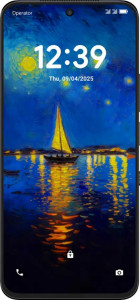
E-paper technology renders text and static images using reflected light rather than a backlit panel, closely mimicking the appearance of ink on paper. For extended reading sessions, this dramatically reduces eye strain compared to a conventional lit screen — which is precisely the use case the TCL NxtPaper brand is built around. It also consumes very little power when displaying static content, which can meaningfully extend battery life during reading-heavy usage. This is a genuinely differentiated hardware capability that the S25 FE simply cannot replicate.

For this group, the TCL NxtPaper 60 Ultra holds a clear and unique advantage. The e-paper display capability is the entire identity of the NxtPaper product line, and for users who read extensively on their phone — ebooks, articles, documents — it represents a qualitatively different and more comfortable experience. The S25 FE offers nothing in this category to counter it.

Comparison Summary & Verdict

After a thorough look at both devices, the Samsung Galaxy S25 FE emerges as the stronger all-rounder for users who value a premium display experience. Its OLED screen with 1200-nit brightness, HDR10+ support, Always-On Display, and superior video recording up to 4320p set it apart. Add in wireless and reverse wireless charging, a lighter build, and Android 16, and it suits tech-savvy users who want flagship-level polish. The TCL NxtPaper 60 Ultra, on the other hand, appeals to users who need more raw storage at 512 GB, a higher 32 MP front camera, a larger 7.2″ screen, and a bigger 5200 mAh battery. Its included charger and dual physical SIM support make it a practical choice for heavy media consumers and frequent travelers.

Samsung Galaxy S25 FE
Buy Samsung Galaxy S25 FE if...

Buy the Samsung Galaxy S25 FE if you want a brighter OLED display with HDR10+ support, wireless charging, superior video recording, and a lighter, more compact design running the latest Android 16.

TCL NxtPaper 60 Ultra
Buy TCL NxtPaper 60 Ultra if...

Buy the TCL NxtPaper 60 Ultra if you need more built-in storage, a higher-resolution front camera, a larger screen, a bigger battery, dual physical SIM support, and a charger included in the box.