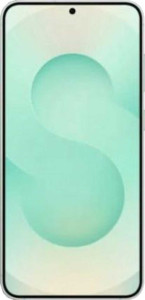
Samsung Galaxy S25 Plus
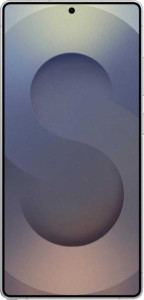
Samsung Galaxy S25 Ultra 512GB

Samsung Galaxy S25 Plus Samsung Galaxy S25 Ultra 512GB

Overview

Welcome to our in-depth spec comparison between the Samsung Galaxy S25 Plus and the Samsung Galaxy S25 Ultra 512GB. Both flagship phones share the same Snapdragon 8 Elite chipset and stunning OLED display technology, yet they diverge sharply in areas like camera versatility, physical dimensions, and premium extras. Whether portability or photographic power matters most to you, this breakdown covers every key battleground to help you make the right call.

Common Features

  • Both phones are waterproof with an IP68 ingress protection rating.
  • Both phones share a French Repairability Index of 8.5.
  • Neither phone has a rugged build.
  • The operating temperature range is 0°C to 35°C on both phones.
  • Neither phone can be folded.
  • Both phones feature an OLED/AMOLED display.
  • Both phones share a resolution of 1440 x 3120 px.
  • Both phones have a 120Hz refresh rate and 240Hz touch sampling rate.
  • Typical brightness is 2600 nits on both phones.
  • Damage-resistant branded glass is present on both phones.
  • HDR10 and HDR10+ support is available on both phones.
  • Both phones are powered by the Qualcomm Snapdragon 8 Elite chipset with an Adreno 830 GPU.
  • Both phones come with 12GB of RAM at 5300 MHz and 512GB of internal storage.
  • Both phones share a CPU speed of 2 x 4.47 & 6 x 3.53 GHz and a GPU clock speed of 1200 MHz.
  • Both phones support 4K video recording at 30fps on the main camera.
  • Both phones include optical image stabilization and a BSI CMOS sensor.
  • Both phones run Android 15 with theme customization and on-device machine learning.
  • Both phones support wireless charging at 15W, fast wired charging at 45W, and reverse wireless charging at 4.5W.
  • Neither phone includes a charger in the box, and neither has a removable battery.
  • Both phones have stereo speakers and support aptX, aptX HD, and LDAC audio codecs.
  • Both phones support 5G, Wi-Fi 7, Bluetooth 5.4, NFC, USB Type-C 3.2, and dual SIM with 2 eSIM slots.
  • Neither phone has a 3.5mm audio jack or an external memory slot.

Main Differences

  • Weight is 190g on Samsung Galaxy S25 Plus and 218g on Samsung Galaxy S25 Ultra 512GB.
  • Thickness is 7.3mm on Samsung Galaxy S25 Plus and 8.2mm on Samsung Galaxy S25 Ultra 512GB.
  • Width is 75.8mm on Samsung Galaxy S25 Plus and 77.6mm on Samsung Galaxy S25 Ultra 512GB.
  • Height is 158.4mm on Samsung Galaxy S25 Plus and 162.8mm on Samsung Galaxy S25 Ultra 512GB.
  • Volume is 87.65 cm³ on Samsung Galaxy S25 Plus and 103.59 cm³ on Samsung Galaxy S25 Ultra 512GB.
  • Screen size is 6.7″ on Samsung Galaxy S25 Plus and 6.9″ on Samsung Galaxy S25 Ultra 512GB.
  • Pixel density is 513 ppi on Samsung Galaxy S25 Plus and 498 ppi on Samsung Galaxy S25 Ultra 512GB.
  • The display uses Gorilla Glass Victus 2 on Samsung Galaxy S25 Plus and Gorilla Armor 2 on Samsung Galaxy S25 Ultra 512GB.
  • AnTuTu benchmark score is 3,050,000 on Samsung Galaxy S25 Plus and 2,207,809 on Samsung Galaxy S25 Ultra 512GB.
  • Geekbench 6 multi-core score is 9435 on Samsung Galaxy S25 Plus and 9846 on Samsung Galaxy S25 Ultra 512GB.
  • Geekbench 6 single-core score is 2721 on Samsung Galaxy S25 Plus and 3057 on Samsung Galaxy S25 Ultra 512GB.
  • Main camera resolution is 50 & 12 & 10 MP on Samsung Galaxy S25 Plus and 200 & 50 & 50 & 10 MP on Samsung Galaxy S25 Ultra 512GB.
  • Optical zoom is 3x on Samsung Galaxy S25 Plus and 5x on Samsung Galaxy S25 Ultra 512GB.
  • Laser autofocus is not available on Samsung Galaxy S25 Plus but is present on Samsung Galaxy S25 Ultra 512GB.
  • Focal length range is 13–67mm on Samsung Galaxy S25 Plus and 24–111mm on Samsung Galaxy S25 Ultra 512GB.
  • Cross-site tracking blocking is not available on Samsung Galaxy S25 Plus but is present on Samsung Galaxy S25 Ultra 512GB.
  • Wi-Fi password sharing is not available on Samsung Galaxy S25 Plus but is present on Samsung Galaxy S25 Ultra 512GB.
  • Focus modes are not available on Samsung Galaxy S25 Plus but are present on Samsung Galaxy S25 Ultra 512GB.
  • Battery capacity is 4900 mAh on Samsung Galaxy S25 Plus and 5000 mAh on Samsung Galaxy S25 Ultra 512GB.
  • A stylus is not included with Samsung Galaxy S25 Plus but is included with Samsung Galaxy S25 Ultra 512GB.
  • Head SAR (US) is 1.16 W/kg on Samsung Galaxy S25 Plus and 1.26 W/kg on Samsung Galaxy S25 Ultra 512GB.
  • Body SAR (US) is 0.81 W/kg on Samsung Galaxy S25 Plus and 0.64 W/kg on Samsung Galaxy S25 Ultra 512GB.
  • Body SAR (EU) is 1.26 W/kg on Samsung Galaxy S25 Plus and 1.42 W/kg on Samsung Galaxy S25 Ultra 512GB.
Specs Comparison
Samsung Galaxy S25 Plus

Samsung Galaxy S25 Plus

Samsung Galaxy S25 Ultra 512GB

Samsung Galaxy S25 Ultra 512GB

Design:
water resistance Waterproof Waterproof
weight 190 g 218 g
thickness 7.3 mm 8.2 mm
width 75.8 mm 77.6 mm
height 158.4 mm 162.8 mm
volume 87.649056 cm³ 103.592896 cm³
Ingress Protection (IP) rating IP68 IP68
French Repairability Index 8.5 8.5
has a rugged build
lowest potential operating temperature 0 °C 0 °C
maximum operating temperature 35 °C 35 °C
can be folded

Both the Samsung Galaxy S25 Plus and the S25 Ultra share the same core durability credentials: both are rated IP68 waterproof and carry an identical French Repairability Index of 8.5, meaning neither holds an edge in protection against the elements or long-term serviceability. Their operating temperature range is also identical (0 °C to 35 °C), and neither offers a rugged build or a foldable form factor.

Where the two diverge is in physical footprint. The S25 Ultra is meaningfully larger across every dimension — 162.8 mm tall vs. 158.4 mm, 77.6 mm wide vs. 75.8 mm, and 8.2 mm thick vs. 7.3 mm — resulting in a volume of 103.6 cm³ compared to the S25 Plus's 87.6 cm³. In practice, this makes the Ultra noticeably bulkier and harder to pocket. The weight gap reinforces this: at 218 g, the Ultra is 28 g heavier than the S25 Plus's 190 g — a difference that becomes perceptible during extended one-handed use or all-day carry.

For users who prioritize a more pocketable, lighter device, the S25 Plus has a clear ergonomic edge in this category. The S25 Ultra's larger chassis is not a flaw per se — it accommodates a bigger display and battery — but purely from a design and handling standpoint, the S25 Plus is the more compact and comfortable option, with no trade-off in durability or repairability.

Display:
Display type OLED/AMOLED OLED/AMOLED
screen size 6.7" 6.9"
pixel density 513 ppi 498 ppi
resolution 1440 x 3120 px 1440 x 3120 px
refresh rate 120Hz 120Hz
touch sampling rate 240Hz 240Hz
brightness (typical) 2600 nits 2600 nits
has branded damage-resistant glass
Gorilla Glass version Gorilla Glass Victus 2 Gorilla Armor 2
supports HDR10
supports HDR10+
Always-On Display
supports Dolby Vision
Has a secondary screen
has a touch screen

At their core, these two displays are nearly identical in technology and performance. Both deliver OLED/AMOLED panels with the same 1440 x 3120 px resolution, 120Hz refresh rate, 240Hz touch sampling rate, and a peak brightness of 2600 nits — ensuring equally fluid, vivid visuals in virtually all lighting conditions. HDR10 and HDR10+ support is shared across both, while neither supports Dolby Vision, so media compatibility is a wash.

The most meaningful display difference comes down to size versus pixel density. The S25 Ultra's 6.9″ screen offers more screen real estate — useful for multitasking, note-taking, or media consumption — but because the resolution is identical, its pixel density drops slightly to 498 ppi versus the S25 Plus's 513 ppi. In practice, both exceed the threshold where individual pixels are imperceptible to the human eye, so this difference is functionally invisible during normal use. The glass protection does diverge: the S25 Plus uses Gorilla Glass Victus 2, while the Ultra features Gorilla Armor 2, which is a more premium offering designed to reduce reflections and improve outdoor readability — a tangible real-world benefit that the raw specs table alone understates.

Overall, the display category is largely a tie on measurable performance metrics. However, the S25 Ultra holds a modest edge thanks to its larger screen and the superior anti-reflective properties of Gorilla Armor 2, making it the stronger choice for power users who consume a lot of content or work frequently in bright outdoor environments.

Performance:
internal storage 512GB 512GB
RAM 12GB 12GB
AnTuTu benchmark score 3050000 2207809
Chipset (SoC) name Qualcomm Snapdragon 8 Elite Qualcomm Snapdragon 8 Elite
GPU name Adreno 830 Adreno 830
CPU speed 2 x 4.47 & 6 x 3.53 GHz 2 x 4.47 & 6 x 3.53 GHz
Geekbench 6 result (multi) 9435 9846
Geekbench 6 result (single) 2721 3057
GPU clock speed 1200 MHz 1200 MHz
Has integrated LTE
RAM speed 5300 MHz 5300 MHz
semiconductor size 3 nm 3 nm
Supports 64-bit
DirectX version DirectX 12 DirectX 12
Has integrated graphics
OpenGL version 3.2 3.2
OpenGL ES version 3.2 3.2
Uses big.LITTLE technology
CPU threads 8 threads 8 threads
Uses HMP
Has TrustZone
maximum memory bandwidth 85.1 GB/s 85.1 GB/s
OpenCL version 3 3
memory channels 2 2
L2 cache 12 MB 12 MB
Supports ECC memory
L1 cache 192 KB 192 KB
maximum memory amount 24GB 24GB
uses multithreading
GPU turbo 1100 MHz 1100 MHz
Thermal Design Power (TDP) 8.2W 8.2W
DDR memory version 5 5
shading units 1536 1536
supported displays 2 2
L3 cache 8 MB 8 MB

On paper, these two phones share an identical hardware foundation: the same Qualcomm Snapdragon 8 Elite chipset built on a 3 nm process, 12GB of RAM at 5300 MHz, 512GB of internal storage, and an Adreno 830 GPU — meaning day-to-day app launches, multitasking, and gaming performance should feel essentially the same in either hand.

The benchmark results, however, tell a nuanced story. The S25 Plus posts a significantly higher AnTuTu score of 3,050,000 versus the Ultra's 2,207,809 — a gap of roughly 38% that suggests the S25 Plus sustains higher peak throughput in that particular workload. Yet the picture reverses in Geekbench 6: the S25 Ultra scores higher in both single-core (3057 vs. 2721) and multi-core (9846 vs. 9435) tests, indicating stronger CPU execution efficiency under that benchmark's methodology. These contradictory results — same silicon, same TDP of 8.2W — point to differences in how each device manages thermal throttling and power delivery under sustained load, rather than any fundamental hardware distinction.

Given that the underlying specs are identical, declaring a clear winner here is not straightforward. The S25 Ultra edges ahead in CPU-focused Geekbench tasks, while the S25 Plus leads in the broader AnTuTu suite. For most users, neither gap will be perceptible in real-world use. This category is effectively a tie, with the choice coming down to which benchmark profile better reflects the user's specific workloads.

Cameras:
megapixels (main camera) 50 & 12 & 10 MP 200 & 50 & 50 & 10 MP
wide aperture (main camera) 1.8 & 2.2 & 2.4f 1.7 & 3.4 & 1.9 & 2.4f
Has a dual-lens (or multi-lens) main camera
megapixels (front camera) 12MP 12MP
has built-in optical image stabilization
video recording (main camera) 4320 x 30 fps 4320 x 30 fps
Has a dual-tone LED flash
number of flash LEDs 2 2
has a BSI sensor
has a CMOS sensor
has continuous autofocus when recording movies
Has phase-detection autofocus for photos
supports slow-motion video recording
has a built-in HDR mode
has manual exposure
has a flash
optical zoom 3x 5x
has manual ISO
has a serial shot mode
has manual focus
has a front camera
Has laser autofocus
Shoots 360° panorama
has manual white balance
shoots raw
has touch autofocus
has manual shutter speed
can create panoramas in-camera
wide aperture (front camera) 2.2f 2.2f
Has timelapse function
minimum focal length 13 mm 24 mm
maximum focal length 67 mm 111 mm
Has a front-facing LED flash
has a dual-lens (or multi-lens) front camera
supports HDR10 recording
supports Dolby Vision recording
has a front-facing camera under the display
Has a RGB LED flash
has 3D photo/video recording capabilities

The camera systems are where these two phones diverge most dramatically. The S25 Plus fields a capable triple-lens setup with a 50 MP main, 12 MP ultrawide, and 10 MP telephoto, while the S25 Ultra goes considerably further with a quad-lens array headlined by a 200 MP main sensor, complemented by two 50 MP lenses and a 10 MP shooter. That 200 MP primary sensor is a generational leap in resolution terms — it captures a vastly greater amount of detail, giving users far more flexibility to crop aggressively in post without sacrificing image quality.

The telephoto gap is equally consequential. The S25 Plus tops out at 3x optical zoom with a focal range of 13–67 mm, whereas the S25 Ultra reaches 5x optical zoom and a maximum focal length of 111 mm — making it substantially more versatile for wildlife, sports, or any distant subject. The Ultra also adds laser autofocus, which the S25 Plus lacks; this improves focus acquisition speed and accuracy in low-light or fast-moving scenes. The wider maximum aperture on the Ultra's main lens (f/1.7 vs. f/1.8 on the S25 Plus) additionally allows slightly more light in, a small but meaningful advantage in dim conditions.

The front cameras and video capabilities are evenly matched — both shoot 8K at 30 fps, support HDR10 recording, and share the same 12 MP selfie sensor. But the rear camera story is one-sided: the S25 Ultra holds a clear and significant advantage in this category, offering more lenses, higher resolution, greater zoom range, and laser autofocus — making it the stronger choice for anyone who treats smartphone photography as a priority.

Operating system:
Android version Android 15 Android 15
has clipboard warnings
has location privacy options
has camera/microphone privacy options
has Mail Privacy Protection
has theme customization
can block app tracking
blocks cross-site tracking
has on-device machine learning
has notification permissions
has media picker
Can play games while they download
has dark mode
has Wi-Fi password sharing
has battery health check
has an extra dim mode
has focus modes
has dynamic theming
can offload apps
Has customizable notifications
has Live Text
has full-page screenshots
supports split screen
gets direct OS updates
has PiP
Can be used as a PC
Has sharing intents
has a child lock
Supports widgets
Is free and open source
Has offline voice recognition
has voice commands
Tracks the current position of a mobile device
is a multi-user system
has Quick Start

Running the same Android 15 foundation, these two phones share an extensive and nearly identical software feature set — from on-device machine learning and dynamic theming to split-screen multitasking, Picture-in-Picture, and offline voice recognition. For the vast majority of daily software interactions, users of either device will have an equivalent experience.

Three features, however, are exclusive to the S25 Ultra in this dataset. It supports cross-site tracking blocking, adding a layer of passive privacy protection when browsing that the S25 Plus does not offer. It also includes Wi-Fi password sharing, a convenience feature that lets users share network credentials with nearby contacts without manually reading out a password — a small but genuinely useful quality-of-life addition. Finally, the Ultra includes focus modes, which allow users to configure tailored digital wellness profiles that restrict notifications and app access during work, sleep, or personal time — something the S25 Plus lacks entirely.

None of these three differences are deal-breakers, but they are consistent, real-world advantages. The S25 Ultra holds a modest edge in this category — not because the S25 Plus is deficient in any major way, but because the Ultra's additional features cater to users who care about privacy controls and structured device management.

Battery:
battery power 4900 mAh 5000 mAh
has wireless charging
Supports fast charging
charging speed 45W 45W
wireless charging speed 15W 15W
has reverse wireless charging
reverse wireless charging speed 4.5W 4.5W
comes with a charger
has a removable battery
Has an ultra power-saving mode
has a battery level indicator
has a rechargeable battery

Charging infrastructure is identical across both devices: 45W wired fast charging, 15W wireless charging, and 4.5W reverse wireless charging are shared specifications, as is the absence of a bundled charger in the box. Neither has a removable battery, and both include an ultra power-saving mode for emergencies.

The only differentiator is raw battery capacity — the S25 Ultra carries a 5000 mAh cell versus the S25 Plus's 4900 mAh. A 100 mAh gap is, in practical terms, negligible; it translates to a difference of perhaps a few minutes of screen-on time under equivalent usage conditions. Worth noting is that the Ultra's larger display and heavier chassis mean it has more hardware to power, which partially offsets even that marginal capacity advantage.

This category is effectively a tie. The capacity difference is too small to influence a purchase decision, and every charging feature is mirrored exactly between the two phones. Battery life in real-world use will ultimately depend more on software optimization and display-on time than on this 100 mAh delta.

Audio:
has a socket for a 3.5 mm audio jack
has stereo speakers
has aptX
has LDAC
has aptX HD
has aptX Adaptive
has aptX Lossless
Has a radio
number of microphones 3 3

Audio is the rare category where there is genuinely nothing to separate these two phones — every single specification is identical. Both omit a 3.5 mm headphone jack, relying entirely on wireless or USB-C audio. Both feature stereo speakers and the same trio of wireless audio codecs: aptX, aptX HD, and LDAC. The inclusion of LDAC is particularly noteworthy, as it supports transmission rates up to 990 kbps — high enough to deliver near-lossless audio quality over Bluetooth when paired with a compatible headset, a meaningful benefit for audiophiles going wireless.

Neither phone supports aptX Adaptive or aptX Lossless, and neither includes a radio. Both also field 3 microphones, which enables beamforming and noise cancellation for cleaner call quality and voice recordings — again, a shared strength rather than a differentiator.

This category is an unambiguous tie. Users of either device will have an acoustically equivalent experience across speakers, wireless audio quality, and voice capture. Audio preference should play no role whatsoever in choosing between these two phones.

Connectivity & Features:
release date January 2025 January 2025
has 5G support
Wi-Fi version Wi-Fi 4 (802.11n), Wi-Fi 6 (802.11ax), Wi-Fi 5 (802.11ac), Wi-Fi 7 (802.11be), Wi-Fi 6E (802.11ax) Wi-Fi 4 (802.11n), Wi-Fi 6 (802.11ax), Wi-Fi 5 (802.11ac), Wi-Fi 7 (802.11be), Wi-Fi 6E (802.11ax)
SIM cards 2 SIM, 2 eSIM 2 SIM, 2 eSIM
Bluetooth version 5.4 5.4
has an external memory slot
Has USB Type-C
USB version 3.2 3.2
has NFC
download speed 10000 MBits/s 10000 MBits/s
upload speed 3500 MBits/s 3500 MBits/s
Has a fingerprint scanner
has emergency SOS via satellite
has crash detection
is DLNA-certified
has a gyroscope
supports ANT+
Has a heart rate monitor
has GPS
has a compass
supports Wi-Fi
Has an infrared sensor
Head SAR (US) 1.16W/kg 1.26W/kg
Body SAR (US) 0.81W/kg 0.64W/kg
Head SAR (EU) 1.26W/kg 1.25W/kg
Body SAR (EU) 1.26W/kg 1.42W/kg
has an accelerometer
has a cellular module
Has a barometer
has an HDMI output
Uses 3D facial recognition
Has an iris scanner
Stylus included
supports Galileo
Has motion tracking
Has optical tracking
Has a built-in projector

Connectivity credentials are virtually mirrored across both devices. Each supports 5G, Wi-Fi 7, Bluetooth 5.4, NFC, and USB 3.2 Type-C, with identical download and upload speed ceilings of 10,000 and 3,500 Mbps respectively. The dual SIM plus dual eSIM configuration, full sensor suite (gyroscope, accelerometer, barometer, compass), and ANT+ support are also shared — meaning neither phone holds any edge in how it connects to networks, peripherals, or accessories.

The one meaningful differentiator in this category is the included stylus on the S25 Ultra. For users who annotate documents, sketch, or take handwritten notes directly on their device, this is a significant functional advantage that the S25 Plus simply cannot replicate without an accessory purchase. It transforms the Ultra into a productivity tool in a way that connectivity specs alone cannot.

SAR values differ slightly between the two — the S25 Ultra has a lower Body SAR (US) of 0.64 W/kg versus the S25 Plus's 0.81 W/kg, while Head SAR values are comparable — but these figures are regulatory measurements rather than practical differentiators for most users. Overall, the S25 Ultra takes this category solely on the strength of its bundled stylus, which represents a tangible capability gap for productivity-focused users.

Miscellaneous:
has a video light
Has sapphire glass display
Has a curved display
Has an e-paper display

The miscellaneous feature set for these two phones is completely identical across every data point provided. Both include a video light, and neither features a sapphire glass display, a curved display, or an e-paper secondary screen. There is nothing in this group that separates the two devices in any meaningful way.

This category is an unambiguous tie, and should carry no weight in a purchase decision between the Samsung Galaxy S25 Plus and the S25 Ultra.

Comparison Summary & Verdict

After examining every spec, these two flagships serve clearly different audiences. The Samsung Galaxy S25 Plus is the smarter pick for users who want a lighter, more pocketable phone at 190g and 7.3mm thin, while still enjoying a sharp 513 ppi display and a surprisingly strong AnTuTu score. It is the ideal daily driver for those who value comfort and balance. The Samsung Galaxy S25 Ultra 512GB, on the other hand, is built for power users who demand the absolute best in imaging, with a 200MP main camera, 5x optical zoom, laser autofocus, and an included stylus. It also edges ahead in single-core performance and adds useful software perks like focus modes and cross-site tracking blocking. If camera range and productivity tools define your smartphone needs, the Ultra justifies its larger footprint.

Samsung Galaxy S25 Plus
Buy Samsung Galaxy S25 Plus if...

Buy the Samsung Galaxy S25 Plus if you want a lighter, slimmer flagship that is easier to handle day-to-day and still delivers top-tier performance and a high pixel density display.

Samsung Galaxy S25 Ultra 512GB
Buy Samsung Galaxy S25 Ultra 512GB if...

Buy the Samsung Galaxy S25 Ultra 512GB if you need the best possible camera system with a 200MP sensor, 5x optical zoom, and laser autofocus, plus the added productivity of a built-in stylus.