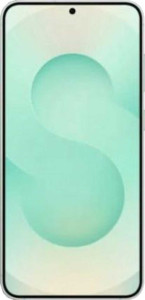
Samsung Galaxy S25 Plus
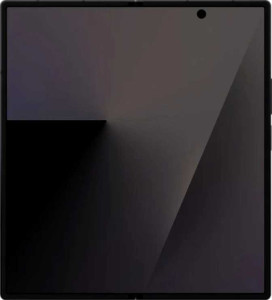
Samsung Galaxy Z Fold 7

Samsung Galaxy S25 Plus Samsung Galaxy Z Fold 7

Overview

Welcome to our in-depth spec comparison between the Samsung Galaxy S25 Plus and the Samsung Galaxy Z Fold 7. These two flagship Android devices share a powerful Snapdragon 8 Elite core, yet they represent very different philosophies in smartphone design. From their contrasting form factors and display sizes to differences in camera hardware, battery capacity, and charging speeds, there is plenty to unpack before deciding which one deserves a place in your pocket.

Common Features

  • Both phones are waterproof and share the same height of 158.4 mm.
  • Both phones feature an OLED/AMOLED display with a 120Hz refresh rate.
  • Both phones reach a typical brightness of 2600 nits.
  • Gorilla Glass Victus 2 is used on both phones.
  • HDR10 support is available on both phones.
  • HDR10+ support is available on both phones.
  • Always-On Display is available on both phones.
  • Both phones are powered by the Qualcomm Snapdragon 8 Elite chipset with an Adreno 830 GPU.
  • Both phones use a 3 nm semiconductor and support 64-bit processing.
  • RAM speed is 5300 MHz on both phones.
  • DirectX 12 is supported on both phones.
  • Both phones feature multi-lens rear cameras with built-in optical image stabilization, BSI and CMOS sensors, phase-detection autofocus, continuous autofocus during video, slow-motion recording, and a built-in HDR mode.
  • Both phones run Android 15 and share identical privacy features including clipboard warnings, location privacy options, and camera/microphone privacy options.
  • Neither phone has a 3.5 mm audio jack, and both feature stereo speakers.
  • Both phones support aptX, aptX HD, and LDAC audio codecs.
  • Both phones support wireless charging at 15W and reverse wireless charging at 4.5W.
  • Fast charging is supported on both phones, and neither has a removable battery.
  • Both phones support 5G, Bluetooth 5.4, NFC, USB Type-C with USB 3.2, and Wi-Fi 7.
  • Download speed reaches 10000 Mbits/s and upload speed reaches 3500 Mbits/s on both phones.
  • Neither phone has an external memory slot, a radio, sapphire glass, or an e-paper display.

Main Differences

  • Weight is 190 g on Samsung Galaxy S25 Plus and 215 g on Samsung Galaxy Z Fold 7.
  • Thickness is 7.3 mm on Samsung Galaxy S25 Plus and 4.2 mm on Samsung Galaxy Z Fold 7.
  • Width is 75.8 mm on Samsung Galaxy S25 Plus and 143.2 mm on Samsung Galaxy Z Fold 7.
  • Volume is 87.649056 cm³ on Samsung Galaxy S25 Plus and 95.268096 cm³ on Samsung Galaxy Z Fold 7.
  • IP rating is IP68 on Samsung Galaxy S25 Plus and IP67 on Samsung Galaxy Z Fold 7.
  • Folding capability is present on Samsung Galaxy Z Fold 7 but not available on Samsung Galaxy S25 Plus.
  • Screen size is 6.7″ on Samsung Galaxy S25 Plus and 8″ on Samsung Galaxy Z Fold 7.
  • Pixel density is 513 ppi on Samsung Galaxy S25 Plus and 368 ppi on Samsung Galaxy Z Fold 7.
  • Resolution is 1440 x 3120 px on Samsung Galaxy S25 Plus and 1968 x 2184 px on Samsung Galaxy Z Fold 7.
  • Branded damage-resistant glass is present on Samsung Galaxy S25 Plus but not available on Samsung Galaxy Z Fold 7.
  • A secondary screen is present on Samsung Galaxy Z Fold 7 but not on Samsung Galaxy S25 Plus.
  • Internal storage is 512 GB on Samsung Galaxy S25 Plus and 1024 GB on Samsung Galaxy Z Fold 7.
  • RAM is 12 GB on Samsung Galaxy S25 Plus and 16 GB on Samsung Galaxy Z Fold 7.
  • AnTuTu benchmark score is 3050000 on Samsung Galaxy S25 Plus and 2771639 on Samsung Galaxy Z Fold 7.
  • Geekbench 6 single-core score is 2721 on Samsung Galaxy S25 Plus and 3234 on Samsung Galaxy Z Fold 7.
  • Geekbench 6 multi-core score is 9435 on Samsung Galaxy S25 Plus and 10059 on Samsung Galaxy Z Fold 7.
  • GPU clock speed is 1200 MHz on Samsung Galaxy S25 Plus and 1100 MHz on Samsung Galaxy Z Fold 7.
  • Main camera megapixels are 50, 12, and 10 MP on Samsung Galaxy S25 Plus and 200, 12, and 10 MP on Samsung Galaxy Z Fold 7.
  • Main camera wide aperture is f/1.8, f/2.2, and f/2.4 on Samsung Galaxy S25 Plus and f/1.7, f/2.2, and f/2.4 on Samsung Galaxy Z Fold 7.
  • Front camera resolution is 12 MP on Samsung Galaxy S25 Plus and 10 and 10 MP on Samsung Galaxy Z Fold 7.
  • Main camera video recording tops out at 4320 x 30 fps on Samsung Galaxy S25 Plus and 4320 x 24 fps on Samsung Galaxy Z Fold 7.
  • A dual-tone LED flash with 2 LEDs is present on Samsung Galaxy S25 Plus, while Samsung Galaxy Z Fold 7 has a single LED flash without dual-tone.
  • Laser autofocus is present on Samsung Galaxy Z Fold 7 but not on Samsung Galaxy S25 Plus.
  • 360° panorama shooting is supported on Samsung Galaxy Z Fold 7 but not on Samsung Galaxy S25 Plus.
  • An under-display front-facing camera is present on Samsung Galaxy Z Fold 7 but not on Samsung Galaxy S25 Plus.
  • Battery capacity is 4900 mAh on Samsung Galaxy S25 Plus and 4400 mAh on Samsung Galaxy Z Fold 7.
  • Wired charging speed is 45W on Samsung Galaxy S25 Plus and 25W on Samsung Galaxy Z Fold 7.
  • SIM configuration is 2 SIM and 2 eSIM on Samsung Galaxy S25 Plus and 1 SIM and 1 eSIM on Samsung Galaxy Z Fold 7.
  • ANT+ support is present on Samsung Galaxy S25 Plus but not available on Samsung Galaxy Z Fold 7.
Specs Comparison
Samsung Galaxy S25 Plus

Samsung Galaxy S25 Plus

Samsung Galaxy Z Fold 7

Samsung Galaxy Z Fold 7

Design:
water resistance Waterproof Waterproof
weight 190 g 215 g
thickness 7.3 mm 4.2 mm
width 75.8 mm 143.2 mm
height 158.4 mm 158.4 mm
volume 87.649056 cm³ 95.268096 cm³
Ingress Protection (IP) rating IP68 IP67
can be folded

The most fundamental design difference here is, of course, the form factor: the Galaxy Z Fold 7 is a foldable device, while the Galaxy S25 Plus is a conventional candy-bar smartphone. This single distinction cascades into nearly every other physical spec. When unfolded, the Z Fold 7 stretches to a striking 143.2 mm wide — nearly double the S25 Plus's 75.8 mm — delivering a tablet-like canvas. Both share an identical 158.4 mm height, which means the extra real estate is purely horizontal, making the Fold 7 a dramatically wider device in use.

The thickness figures require careful interpretation. The Z Fold 7's 4.2 mm thickness refers to its unfolded state, where the two halves lie flat together. When folded shut and used as a phone, that figure roughly doubles, making it bulkier in-pocket than the S25 Plus's consistent 7.3 mm slab profile. The S25 Plus is also notably lighter at 190 g versus 215 g for the Fold 7 — a 25 g gap that is perceptible over a long day of one-handed use. On water resistance, the S25 Plus holds a slight edge with an IP68 rating versus the Fold 7's IP67, meaning the S25 Plus is rated for deeper and potentially longer water submersion — a meaningful real-world advantage for accidental drops.

In terms of design, neither product is strictly better; they serve different priorities. The S25 Plus wins on everyday ergonomics — it is lighter, slimmer, and more water-resistant, making it the more comfortable and durable choice for daily, single-handed use. The Z Fold 7 trades those conveniences for its transformative foldable form factor, which unlocks a much larger display surface. Buyers who value portability and simplicity lean toward the S25 Plus; those who want a device that doubles as a compact tablet accept the added weight and complexity of the Fold 7.

Display:
Display type OLED/AMOLED OLED/AMOLED
screen size 6.7" 8"
pixel density 513 ppi 368 ppi
resolution 1440 x 3120 px 1968 x 2184 px
refresh rate 120Hz 120Hz
brightness (typical) 2600 nits 2600 nits
has branded damage-resistant glass
Gorilla Glass version Gorilla Glass Victus 2 Gorilla Glass Victus 2
supports HDR10
supports HDR10+
Always-On Display
Has a secondary screen
has a touch screen

Screen size is where these two devices diverge most dramatically. The Z Fold 7's 8″ inner display dwarfs the S25 Plus's 6.7″ panel, offering a tablet-scale canvas ideal for multitasking, media consumption, and document editing. However, raw size comes with a trade-off: the Fold 7's inner display resolves to just 368 ppi, compared to the S25 Plus's exceptionally sharp 513 ppi. In practice, the S25 Plus's display is noticeably crisper — individual pixels are harder to discern, text appears cleaner, and fine detail in photos is rendered more precisely. The Fold 7's lower pixel density is a direct consequence of spreading its resolution across a much larger panel, a physical constraint inherent to current foldable technology.

Where the two phones converge is notable: both use OLED/AMOLED panels with a 120Hz refresh rate, peak brightness of 2600 nits, full HDR10+ support, and Always-On Display functionality. This means color accuracy, outdoor legibility, and motion smoothness are on equal footing. One meaningful durability distinction, however, is that the S25 Plus carries damage-resistant glass on its display, while the Z Fold 7's inner screen does not — a known limitation of foldable display engineering that leaves it comparatively more vulnerable to scratches and impact.

For display quality, the S25 Plus holds a clear edge in sharpness and screen durability. The Z Fold 7 counters with its significantly larger canvas and the added utility of a secondary cover screen, making it the superior choice for productivity and immersive media — but users who prioritize pixel-perfect clarity and a more resilient display surface will find the S25 Plus the stronger performer.

Performance:
internal storage 512GB 1024GB
RAM 12GB 16GB
AnTuTu benchmark score 3050000 2771639
Chipset (SoC) name Qualcomm Snapdragon 8 Elite Qualcomm Snapdragon 8 Elite
GPU name Adreno 830 Adreno 830
CPU speed 2 x 4.47 & 6 x 3.53 GHz 2 x 4.32 & 6 x 3.53 GHz
Geekbench 6 result (multi) 9435 10059
Geekbench 6 result (single) 2721 3234
GPU clock speed 1200 MHz 1100 MHz
Has integrated LTE
RAM speed 5300 MHz 5300 MHz
semiconductor size 3 nm 3 nm
Supports 64-bit
DirectX version DirectX 12 DirectX 12
Has integrated graphics
OpenGL version 3.2 3.2
OpenGL ES version 3.2 3.2
Uses big.LITTLE technology
CPU threads 8 threads 8 threads
Uses HMP
Has TrustZone
maximum memory bandwidth 85.1 GB/s 85.1 GB/s
OpenCL version 3 3
memory channels 2 2
L2 cache 12 MB 12 MB
Supports ECC memory
L1 cache 192 KB 192 KB
maximum memory amount 24GB 24GB
uses multithreading
GPU turbo 1100 MHz 1100 MHz
Thermal Design Power (TDP) 8.2W 8.2W
DDR memory version 5 5
shading units 1536 1536
supported displays 2 2
L3 cache 8 MB 8 MB

Both phones are powered by the Qualcomm Snapdragon 8 Elite on a 3nm process, so the silicon foundation is identical. The meaningful differences emerge in configuration and tuning. The S25 Plus runs its prime cores at a slightly higher 4.47 GHz versus the Z Fold 7's 4.32 GHz, and its GPU clock is tuned higher at 1200 MHz compared to 1100 MHz — which contributes to the S25 Plus's commanding lead in the AnTuTu benchmark (3,050,000 vs 2,771,639), a synthetic test that heavily weights GPU throughput and sustained performance.

Yet the Geekbench 6 results tell a different story. The Z Fold 7 scores higher in both single-core (3234 vs 2721) and multi-core (10059 vs 9435) tests, suggesting its CPU is tuned for stronger per-core compute bursts — the kind of performance that matters for real-world tasks like app launches, AI processing, and productivity workloads. The Z Fold 7 also carries 16GB of RAM versus 12GB, which translates to more apps held in memory simultaneously and smoother multitasking — a particularly relevant advantage given its larger, multitasking-oriented display. Its 1TB of internal storage versus 512GB is another practical edge for power users.

Performance here is genuinely split by use case. The S25 Plus has the GPU advantage, making it the stronger device for graphics-intensive gaming and GPU benchmarks. The Z Fold 7 leads in CPU throughput and memory capacity, which better serves its identity as a productivity powerhouse. Neither phone will bottleneck any current app or game, but users who prioritize multitasking and future-proofing their RAM headroom will find the Z Fold 7 the more capable performer overall.

Cameras:
megapixels (main camera) 50 & 12 & 10 MP 200 & 12 & 10 MP
wide aperture (main camera) 1.8 & 2.2 & 2.4f 1.7 & 2.2 & 2.4f
Has a dual-lens (or multi-lens) main camera
megapixels (front camera) 12MP 10 & 10MP
has built-in optical image stabilization
video recording (main camera) 4320 x 30 fps 4320 x 24 fps
Has a dual-tone LED flash
number of flash LEDs 2 1
has a BSI sensor
has a CMOS sensor
has continuous autofocus when recording movies
Has phase-detection autofocus for photos
supports slow-motion video recording
has a built-in HDR mode
has manual exposure
has a flash
optical zoom 3x 3x
has manual ISO
has a serial shot mode
has manual focus
has a front camera
Has laser autofocus
Shoots 360° panorama
has manual white balance
shoots raw
has touch autofocus
can create panoramas in-camera
wide aperture (front camera) 2.2f 1.8 & 2.2f
Has timelapse function
Has a front-facing LED flash
has a dual-lens (or multi-lens) front camera
has a front-facing camera under the display
Has a RGB LED flash

The Samsung Galaxy S25 Plus and the Samsung Galaxy Z Fold 7 both offer impressive camera setups with multi-lens systems. The S25 Plus features a triple-camera main system with 50 MP, 12 MP, and 10 MP lenses, while the Z Fold 7’s main camera system includes a 200 MP, 12 MP, and 10 MP configuration. The S25 Plus offers a slightly wider aperture on its 50 MP lens at f/1.8, while the Z Fold 7's 200 MP lens has a wider aperture of f/1.7, potentially allowing for more light capture.

For front-facing cameras, the S25 Plus comes with a 12 MP sensor, while the Z Fold 7 has a dual front-camera setup with two 10 MP sensors. The S25 Plus has a wider aperture of f/2.2 for the front camera, compared to the Z Fold 7’s 1.8 & 2.2f combination.

Both devices support similar features, including built-in optical image stabilization, phase-detection autofocus, manual exposure, HDR mode, and slow-motion video recording. The S25 Plus can record 4320 x 30 fps video, while the Z Fold 7 is limited to 4320 x 24 fps. The Z Fold 7 has laser autofocus and can shoot 360° panoramas, a feature not available on the S25 Plus. Both phones can create panoramas in-camera, shoot raw images, and have touch autofocus. Additionally, the S25 Plus includes a dual-tone LED flash with 2 LEDs, while the Z Fold 7 has a single flash LED without dual-tone support. Neither phone includes a front-facing LED flash, but the Z Fold 7 has a front-facing camera under the display, which the S25 Plus lacks.

Operating system:
Android version Android 15 Android 15
has clipboard warnings
has location privacy options
has camera/microphone privacy options
has Mail Privacy Protection
has theme customization
can block app tracking
blocks cross-site tracking
has on-device machine learning
has notification permissions
has media picker
Can play games while they download
has dark mode
has Wi-Fi password sharing
has battery health check
has an extra dim mode
has focus modes
has dynamic theming
can offload apps
Has customizable notifications
has Live Text
has full-page screenshots
supports split screen
gets direct OS updates
has PiP
Can be used as a PC
Has sharing intents
has a child lock
Supports widgets
Is free and open source
Has offline voice recognition
has voice commands
Tracks the current position of a mobile device
is a multi-user system
has Quick Start

The Samsung Galaxy S25 Plus and the Samsung Galaxy Z Fold 7 both run Android 15 and share a range of similar features, such as clipboard warnings, location privacy options, camera/microphone privacy options, theme customization, and the ability to block app tracking. Neither device includes Mail Privacy Protection or Wi-Fi password sharing, but both support dark mode and have customizable notifications. They also feature on-device machine learning, media pickers, and the ability to play games while they download.

Both phones support split screen, PiP (Picture-in-Picture), and can be used as a PC. They also have features like full-page screenshots, offline voice recognition, voice commands, and the ability to track the current position of a mobile device. The S25 Plus and the Z Fold 7 both offer dynamic theming, and both devices can offload apps, have battery health checks, and include an extra dim mode.

While the devices are similar in most features, there are some slight differences. The S25 Plus does not have focus modes, Quick Start, or cross-site tracking blocking, while the Z Fold 7 lacks the ability to block cross-site tracking. Both devices are free and open source, support widgets, have sharing intents, and include a child lock and multi-user system. Neither phone supports direct OS updates, and both have the same restrictions in terms of Mail Privacy Protection and focus modes.

Battery:
battery power 4900 mAh 4400 mAh
has wireless charging
Supports fast charging
charging speed 45W 25W
wireless charging speed 15W 15W
has reverse wireless charging
reverse wireless charging speed 4.5W 4.5W
has a removable battery
has a battery level indicator
has a rechargeable battery

The Samsung Galaxy S25 Plus and the Samsung Galaxy Z Fold 7 both feature wireless charging and support fast charging. The S25 Plus has a larger 4900 mAh battery, while the Z Fold 7 is equipped with a 4400 mAh battery, providing slightly less battery capacity. Both devices support fast charging, but the S25 Plus charges at a higher speed of 45W, compared to the Z Fold 7’s 25W charging speed. Both phones also have a wireless charging speed of 15W.

Both devices feature reverse wireless charging with a speed of 4.5W, allowing you to charge other devices. Neither phone has a removable battery, but both have a rechargeable battery, a battery level indicator, and the ability to recharge when necessary.

In summary, the S25 Plus offers a larger battery and faster wired charging speed, while both phones share similar wireless charging capabilities and features like reverse wireless charging and battery indicators.

Audio:
has a socket for a 3.5 mm audio jack
has stereo speakers
has aptX
has LDAC
has aptX HD
Has a radio

Both the Samsung Galaxy S25 Plus and the Samsung Galaxy Z Fold 7 do not feature a 3.5 mm audio jack, which may require users to rely on wireless headphones or adapters for wired audio connections. However, both devices come equipped with stereo speakers for an enhanced audio experience.

Both phones support advanced audio technologies such as aptX, LDAC, and aptX HD, ensuring high-quality wireless audio streaming. Neither device includes a radio, which may be a consideration for users who prefer FM radio functionality.

In summary, both the S25 Plus and the Z Fold 7 share identical audio features, offering high-quality wireless audio support and stereo speakers while lacking a 3.5 mm audio jack and radio functionality.

Connectivity & Features:
release date January 2025 July 2025
has 5G support
Wi-Fi version Wi-Fi 4 (802.11n), Wi-Fi 6 (802.11ax), Wi-Fi 5 (802.11ac), Wi-Fi 7 (802.11be), Wi-Fi 6E (802.11ax) Wi-Fi 6 (802.11ax), Wi-Fi 5 (802.11ac), Wi-Fi 4 (802.11n), Wi-Fi 6E (802.11ax), Wi-Fi 7 (802.11be)
SIM cards 2 SIM, 2 eSIM 1 eSIM, 1 SIM
Bluetooth version 5.4 5.4
has an external memory slot
Has USB Type-C
USB version 3.2 3.2
has NFC
download speed 10000 MBits/s 10000 MBits/s
upload speed 3500 MBits/s 3500 MBits/s
Has a fingerprint scanner
is DLNA-certified
has a gyroscope
supports ANT+
Has a heart rate monitor
has GPS
has a compass
supports Wi-Fi
Has an infrared sensor
has an accelerometer
has a cellular module
Has a barometer
Uses 3D facial recognition
Has an iris scanner
Stylus included
supports Galileo
Has motion tracking
Has optical tracking
Has a built-in projector

Both the Samsung Galaxy S25 Plus and the Samsung Galaxy Z Fold 7 support 5G, offer NFC, and have USB Type-C ports with USB 3.2. Both devices also support Wi-Fi versions including Wi-Fi 4 (802.11n), Wi-Fi 5 (802.11ac), Wi-Fi 6 (802.11ax), Wi-Fi 6E (802.11ax), and Wi-Fi 7 (802.11be). The download and upload speeds are identical for both devices at 10000 MBits/s and 3500 MBits/s, respectively.

The S25 Plus supports two SIM cards and two eSIMs, while the Z Fold 7 supports one SIM card and one eSIM. Both devices are equipped with Bluetooth 5.4 and share a similar array of sensors, including a fingerprint scanner, gyroscope, accelerometer, GPS, compass, barometer, and support for Galileo. Neither device includes features like motion tracking, optical tracking, or a built-in projector.

Some differences between the two devices include that the S25 Plus supports ANT+, while the Z Fold 7 does not. Additionally, the S25 Plus supports 2 SIM cards and 2 eSIMs, whereas the Z Fold 7 only supports 1 SIM and 1 eSIM. Both phones do not include an infrared sensor, 3D facial recognition, or an iris scanner, and neither includes a stylus.

Miscellaneous:
has a video light
Has sapphire glass display
Has an e-paper display

Both the Samsung Galaxy S25 Plus and the Samsung Galaxy Z Fold 7 feature a video light, which can be useful for capturing videos in low-light environments. Neither device includes a sapphire glass display or an e-paper display, as both lack these specific features.

In summary, the S25 Plus and the Z Fold 7 are similar in this category, with both offering a video light but missing the sapphire glass and e-paper display options.

These devices share identical specifications in the Miscellaneous category, with no differences between them in terms of display technology or additional features.

Comparison Summary & Verdict

After examining every spec, it is clear that both phones are premium flagships built for demanding users, but they cater to distinct needs. The Samsung Galaxy S25 Plus stands out with its lighter 190 g body, slimmer 7.3 mm profile, stronger IP68 water resistance, larger 4900 mAh battery, and faster 45W wired charging, making it the more practical daily driver for users who value endurance and portability. The Samsung Galaxy Z Fold 7, on the other hand, offers a transformative experience with its foldable design, expansive 8-inch inner display, 200 MP main camera, 16 GB of RAM, 1 TB of storage, and an under-display front camera, making it the clear choice for power users and multitaskers who want the most versatile and feature-rich device money can buy.

Samsung Galaxy S25 Plus
Buy Samsung Galaxy S25 Plus if...

Buy the Samsung Galaxy S25 Plus if you want a lighter, more compact phone with a longer-lasting battery, faster 45W charging, and a stronger IP68 water resistance rating at a lower price point.

Samsung Galaxy Z Fold 7
Buy Samsung Galaxy Z Fold 7 if...

Buy the Samsung Galaxy Z Fold 7 if you want a foldable large-screen experience, a 200 MP main camera, more RAM and storage, and the versatility of a secondary cover display for multitasking on the go.