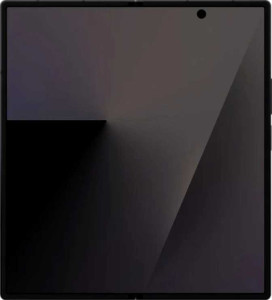
At the silicon level, these two phones are built on the same foundation: both run the Qualcomm Snapdragon 8 Elite on a 3 nm process, with identical GPU architecture, memory bandwidth, and thermal envelopes. For most buyers, this means day-to-day performance — app launches, scrolling, multitasking — will feel essentially indistinguishable between them. That said, the data reveals some meaningful separations once you look closer.
The Z Fold 7 pulls ahead in every benchmark result provided: its AnTuTu score of 2,771,639 is notably higher than the S25 Ultra's 2,207,809, and it also leads in both Geekbench 6 single-core (3,234 vs 3,057) and multi-core (10,059 vs 9,846) results. Intriguingly, the S25 Ultra actually carries a slightly higher peak CPU clock (4.47 GHz vs 4.32 GHz) and a higher GPU boost clock (1200 MHz vs 1100 MHz), yet scores lower across the board — a result consistent with the Fold 7's larger 16 GB of RAM versus the S25 Ultra's 12 GB, which can meaningfully impact benchmark workloads and sustained multitasking headroom. The Fold 7 also ships with a massive 1 TB of internal storage in this configuration, compared to 256 GB on the S25 Ultra — a stark difference for users with large media libraries or app collections.
On performance, the Z Fold 7 holds a clear edge as configured here: more RAM, more storage, and superior real-world benchmark results — despite sharing the same core chip. The S25 Ultra's raw clock speed advantage does not translate into higher scores based on the provided data, making the Fold 7 the stronger performer in this group by the numbers.