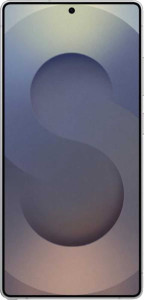
Samsung Galaxy S25 Ultra
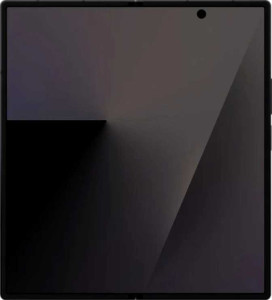
Samsung Galaxy Z Fold 7

Samsung Galaxy S25 Ultra Samsung Galaxy Z Fold 7

Overview

Welcome to our in-depth spec comparison between the Samsung Galaxy S25 Ultra and the Samsung Galaxy Z Fold 7. These two flagship devices represent very different philosophies: one is a powerhouse slab built around an integrated stylus and a telephoto-focused camera system, while the other is a foldable marvel offering a massive 8″ inner display. In this comparison, we examine their key battlegrounds — including display technology, performance benchmarks, camera versatility, and battery endurance — to help you find the right fit.

Common Features

  • Both products are waterproof.
  • Both products feature an OLED/AMOLED display.
  • Both products have a 120Hz refresh rate.
  • Both products have a typical brightness of 2600 nits.
  • HDR10 support is available on both products.
  • HDR10+ support is available on both products.
  • Always-On Display is available on both products.
  • Both products have a touchscreen.
  • Both products offer 1024GB of internal storage.
  • Both products are powered by the Qualcomm Snapdragon 8 Elite chipset.
  • Both products use the Adreno 830 GPU.
  • Both products have integrated LTE.
  • Both products feature RAM running at 5300 MHz.
  • Both products are built on a 3nm semiconductor process.
  • Both products support 64-bit processing.
  • Both products support DirectX 12.
  • Both products have a multi-lens main camera with built-in optical image stabilization.
  • Both products have a BSI CMOS sensor, phase-detection autofocus, continuous autofocus during video recording, slow-motion video recording, and a built-in HDR mode.
  • Both products run Android 15.
  • Both products include clipboard warnings, location privacy options, and camera/microphone privacy options.
  • Both products support theme customization, can block app tracking, and have on-device machine learning.
  • Both products support wireless charging at 15W and reverse wireless charging at 4.5W.
  • Both products support fast charging and have a non-removable rechargeable battery with a battery level indicator.
  • Neither product has a 3.5mm audio jack, but both have stereo speakers.
  • Both products support aptX, aptX HD, and LDAC audio codecs.
  • Neither product has a built-in radio.
  • Both products support 5G, Bluetooth 5.4, NFC, USB Type-C with USB 3.2, and have no external memory slot.
  • Both products have download speeds of 10000 Mbits/s and upload speeds of 3500 Mbits/s.
  • Both products support Wi-Fi 4, Wi-Fi 5, Wi-Fi 6, Wi-Fi 6E, and Wi-Fi 7.
  • Both products have a video light, no sapphire glass display, and no e-paper display.

Main Differences

  • Weight is 218g on Samsung Galaxy S25 Ultra and 215g on Samsung Galaxy Z Fold 7.
  • Thickness is 8.2mm on Samsung Galaxy S25 Ultra and 4.2mm on Samsung Galaxy Z Fold 7.
  • Width is 77.6mm on Samsung Galaxy S25 Ultra and 143.2mm on Samsung Galaxy Z Fold 7.
  • Height is 162.8mm on Samsung Galaxy S25 Ultra and 158.4mm on Samsung Galaxy Z Fold 7.
  • Volume is 103.59 cm³ on Samsung Galaxy S25 Ultra and 95.27 cm³ on Samsung Galaxy Z Fold 7.
  • IP rating is IP68 on Samsung Galaxy S25 Ultra and IP67 on Samsung Galaxy Z Fold 7.
  • Folding capability is present on Samsung Galaxy Z Fold 7 but not available on Samsung Galaxy S25 Ultra.
  • Screen size is 6.9″ on Samsung Galaxy S25 Ultra and 8″ on Samsung Galaxy Z Fold 7.
  • Pixel density is 498 ppi on Samsung Galaxy S25 Ultra and 368 ppi on Samsung Galaxy Z Fold 7.
  • Resolution is 1440 x 3120 px on Samsung Galaxy S25 Ultra and 1968 x 2184 px on Samsung Galaxy Z Fold 7.
  • Branded damage-resistant glass is present on Samsung Galaxy S25 Ultra (Gorilla Armor 2) but Samsung Galaxy Z Fold 7 uses Gorilla Glass Victus 2 without the branded damage-resistant designation.
  • A secondary screen is present on Samsung Galaxy Z Fold 7 but not available on Samsung Galaxy S25 Ultra.
  • RAM is 12GB on Samsung Galaxy S25 Ultra and 16GB on Samsung Galaxy Z Fold 7.
  • AnTuTu benchmark score is 2,207,809 on Samsung Galaxy S25 Ultra and 2,771,639 on Samsung Galaxy Z Fold 7.
  • CPU speed is 2 x 4.47 & 6 x 3.53 GHz on Samsung Galaxy S25 Ultra and 2 x 4.32 & 6 x 3.53 GHz on Samsung Galaxy Z Fold 7.
  • Geekbench 6 multi-core score is 9846 on Samsung Galaxy S25 Ultra and 10059 on Samsung Galaxy Z Fold 7.
  • Geekbench 6 single-core score is 3057 on Samsung Galaxy S25 Ultra and 3234 on Samsung Galaxy Z Fold 7.
  • GPU clock speed is 1200 MHz on Samsung Galaxy S25 Ultra and 1100 MHz on Samsung Galaxy Z Fold 7.
  • Main camera megapixels are 200 & 50 & 50 & 10 MP on Samsung Galaxy S25 Ultra and 200 & 12 & 10 MP on Samsung Galaxy Z Fold 7.
  • Main camera wide apertures are f/1.7, f/3.4, f/1.9, and f/2.4 on Samsung Galaxy S25 Ultra and f/1.7, f/2.2, and f/2.4 on Samsung Galaxy Z Fold 7.
  • Front camera is 12MP on Samsung Galaxy S25 Ultra and dual 10 & 10MP on Samsung Galaxy Z Fold 7.
  • Maximum video recording frame rate is 4320 x 30 fps on Samsung Galaxy S25 Ultra and 4320 x 24 fps on Samsung Galaxy Z Fold 7.
  • A dual-tone LED flash is present on Samsung Galaxy S25 Ultra but not available on Samsung Galaxy Z Fold 7.
  • Number of flash LEDs is 2 on Samsung Galaxy S25 Ultra and 1 on Samsung Galaxy Z Fold 7.
  • Optical zoom is 5x on Samsung Galaxy S25 Ultra and 3x on Samsung Galaxy Z Fold 7.
  • 360° panorama shooting is available on Samsung Galaxy Z Fold 7 but not on Samsung Galaxy S25 Ultra.
  • An under-display front-facing camera is present on Samsung Galaxy Z Fold 7 but not on Samsung Galaxy S25 Ultra.
  • Cross-site tracking blocking is available on Samsung Galaxy S25 Ultra but not on Samsung Galaxy Z Fold 7.
  • Wi-Fi password sharing is available on Samsung Galaxy S25 Ultra but not on Samsung Galaxy Z Fold 7.
  • Focus modes are available on Samsung Galaxy S25 Ultra but not on Samsung Galaxy Z Fold 7.
  • Battery capacity is 5000 mAh on Samsung Galaxy S25 Ultra and 4400 mAh on Samsung Galaxy Z Fold 7.
  • Wired charging speed is 45W on Samsung Galaxy S25 Ultra and 25W on Samsung Galaxy Z Fold 7.
  • SIM card configuration is 2 SIM + 2 eSIM on Samsung Galaxy S25 Ultra and 1 SIM + 1 eSIM on Samsung Galaxy Z Fold 7.
  • ANT+ support is present on Samsung Galaxy S25 Ultra but not available on Samsung Galaxy Z Fold 7.
  • A stylus is included with Samsung Galaxy S25 Ultra but not with Samsung Galaxy Z Fold 7.
Specs Comparison
Samsung Galaxy S25 Ultra

Samsung Galaxy S25 Ultra

Samsung Galaxy Z Fold 7

Samsung Galaxy Z Fold 7

Design:
water resistance Waterproof Waterproof
weight 218 g 215 g
thickness 8.2 mm 4.2 mm
width 77.6 mm 143.2 mm
height 162.8 mm 158.4 mm
volume 103.592896 cm³ 95.268096 cm³
Ingress Protection (IP) rating IP68 IP67
can be folded

The most striking physical contrast between these two devices lies in their form factors. When unfolded, the Z Fold 7 spans a wide 143.2 mm in width — nearly double the 77.6 mm of the S25 Ultra — while also being dramatically thinner at 4.2 mm versus 8.2 mm. In practice, this means the Fold 7 in its open state offers a tablet-like footprint but an almost impossibly slim profile, while the S25 Ultra maintains a conventional, pocketable candy-bar shape. Despite their very different geometries, the two phones weigh nearly the same — 215 g versus 218 g — which is a genuine engineering achievement for the Fold 7 given its larger unfolded surface area.

On water resistance, the S25 Ultra holds a slight but meaningful advantage with an IP68 rating compared to the Fold 7's IP67. Both ratings confirm full dust protection and water resistance for everyday scenarios like rain or accidental splashes, but IP68 allows for deeper and longer submersion. For most users the difference is minor, but it is a real concession made to accommodate the Fold 7's hinge mechanism.

Overall, neither phone has a clear across-the-board design edge — they target fundamentally different priorities. The S25 Ultra wins on water resistance and offers a more compact, single-slab ergonomic experience. The Z Fold 7 wins on versatility with its foldable form and a smaller overall volume (95.3 cm³ vs 103.6 cm³), despite its wider unfolded footprint. The deciding factor comes down to use case: users who want a traditional, robust smartphone form will prefer the S25 Ultra, while those who value the flexibility of a folding display will accept the IP67 trade-off with the Fold 7.

Display:
Display type OLED/AMOLED OLED/AMOLED
screen size 6.9" 8"
pixel density 498 ppi 368 ppi
resolution 1440 x 3120 px 1968 x 2184 px
refresh rate 120Hz 120Hz
brightness (typical) 2600 nits 2600 nits
has branded damage-resistant glass
Gorilla Glass version Gorilla Armor 2 Gorilla Glass Victus 2
supports HDR10
supports HDR10+
Always-On Display
Has a secondary screen
has a touch screen

Screen size and sharpness tell very different stories here. The Z Fold 7's main display stretches to a generous 8 inches, giving it a tablet-like canvas ideal for multitasking, media consumption, and productivity — a substantial upgrade over the S25 Ultra's already-large 6.9-inch panel. However, that extra screen real estate comes at a cost: with a pixel density of just 368 ppi versus the S25 Ultra's 498 ppi, text and fine detail will appear noticeably crisper on the Ultra. At typical viewing distances the Fold 7's sharpness is still comfortable, but side-by-side the difference is visible, especially in small text or high-detail images.

Where both phones stand on equal footing is brightness and HDR support — both deliver 2600 nits peak brightness and full HDR10+ compatibility, meaning outdoor legibility and premium streaming content look equally impressive on either device. The 120Hz refresh rate is also matched across the board, ensuring equally fluid scrolling and animations. One meaningful divergence is glass protection: the S25 Ultra features Gorilla Armor 2, a premium branded solution, while the Fold 7 uses Gorilla Glass Victus 2 on its cover screen but lacks branded damage-resistant glass on its main foldable panel — a known structural limitation of current folding display technology.

For display, the edge goes to the S25 Ultra if pixel-perfect sharpness and screen durability are priorities. But if raw screen size and the unique productivity advantages of a large foldable canvas matter more, the Z Fold 7 makes a compelling case — it also adds a secondary cover screen that the Ultra entirely lacks, giving it greater day-to-day flexibility without always needing to unfold the device.

Performance:
internal storage 1024GB 1024GB
RAM 12GB 16GB
AnTuTu benchmark score 2207809 2771639
Chipset (SoC) name Qualcomm Snapdragon 8 Elite Qualcomm Snapdragon 8 Elite
GPU name Adreno 830 Adreno 830
CPU speed 2 x 4.47 & 6 x 3.53 GHz 2 x 4.32 & 6 x 3.53 GHz
Geekbench 6 result (multi) 9846 10059
Geekbench 6 result (single) 3057 3234
GPU clock speed 1200 MHz 1100 MHz
Has integrated LTE
RAM speed 5300 MHz 5300 MHz
semiconductor size 3 nm 3 nm
Supports 64-bit
DirectX version DirectX 12 DirectX 12
Has integrated graphics
OpenGL version 3.2 3.2
OpenGL ES version 3.2 3.2
Uses big.LITTLE technology
CPU threads 8 threads 8 threads
Uses HMP
Has TrustZone
maximum memory bandwidth 85.1 GB/s 85.1 GB/s
OpenCL version 3 3
memory channels 2 2
L2 cache 12 MB 12 MB
Supports ECC memory
L1 cache 192 KB 192 KB
maximum memory amount 24GB 24GB
uses multithreading
GPU turbo 1100 MHz 1100 MHz
Thermal Design Power (TDP) 8.2W 8.2W
DDR memory version 5 5
shading units 1536 1536
supported displays 2 2
L3 cache 8 MB 8 MB

Both phones are built around the same Qualcomm Snapdragon 8 Elite chip on a 3 nm process, so the fundamentals — architecture, thermal envelope at 8.2W TDP, memory bandwidth, and GPU hardware — are shared. Yet the Z Fold 7 pulls ahead in benchmark scores by a meaningful margin: its AnTuTu score of 2,771,639 is roughly 25% higher than the S25 Ultra's 2,207,809, and it edges ahead in both Geekbench 6 single-core (3234 vs 3057) and multi-core (10059 vs 9846) results. The most likely explanation is the Fold 7's larger 16 GB of RAM versus the Ultra's 12 GB, which allows more data to stay in fast memory during benchmark workloads and in practice supports heavier multitasking without memory compression slowdowns.

An interesting counter-point is the GPU configuration. The S25 Ultra runs its Adreno 830 at a higher base clock of 1200 MHz compared to the Fold 7's 1100 MHz, suggesting Samsung tuned the Ultra's GPU more aggressively — potentially to serve its higher-resolution 1440p display. In sustained gaming or GPU-bound tasks, this higher clock could narrow the performance gap seen in CPU-weighted benchmarks. Both share the same GPU turbo ceiling and identical shading unit count, so the difference is subtle rather than transformative.

On balance, the Z Fold 7 holds the performance edge in this group, driven primarily by its RAM advantage and higher benchmark results across the board. For users who keep many apps open simultaneously or run demanding productivity workloads on that large display, the extra 4 GB of RAM is a tangible benefit. The S25 Ultra is no slouch — they share the same silicon — but the Fold 7's configuration gives it a measurable lead where it counts most.

Cameras:
megapixels (main camera) 200 & 50 & 50 & 10 MP 200 & 12 & 10 MP
wide aperture (main camera) 1.7 & 3.4 & 1.9 & 2.4f 1.7 & 2.2 & 2.4f
Has a dual-lens (or multi-lens) main camera
megapixels (front camera) 12MP 10 & 10MP
has built-in optical image stabilization
video recording (main camera) 4320 x 30 fps 4320 x 24 fps
Has a dual-tone LED flash
number of flash LEDs 2 1
has a BSI sensor
has a CMOS sensor
has continuous autofocus when recording movies
Has phase-detection autofocus for photos
supports slow-motion video recording
has a built-in HDR mode
has manual exposure
has a flash
optical zoom 5x 3x
has manual ISO
has a serial shot mode
has manual focus
has a front camera
Has laser autofocus
Shoots 360° panorama
has manual white balance
shoots raw
has touch autofocus
can create panoramas in-camera
wide aperture (front camera) 2.2f 1.8 & 2.2f
Has timelapse function
Has a front-facing LED flash
has a dual-lens (or multi-lens) front camera
has a front-facing camera under the display
Has a RGB LED flash

The rear camera systems share a 200 MP primary sensor at their core, but diverge sharply from there. The S25 Ultra fields a four-lens array — adding two 50 MP sensors alongside its 10 MP telephoto — while the Z Fold 7 manages with three lenses, where the ultrawide drops to 12 MP and the telephoto to 10 MP. More consequentially, the S25 Ultra offers 5x optical zoom versus the Fold 7's 3x, a difference that is immediately noticeable when shooting distant subjects. Combined with its higher-resolution telephoto lenses, the Ultra is the stronger dedicated photography tool at range. Video recording also tips toward the Ultra, which captures 8K footage at 30 fps compared to the Fold 7's 24 fps — a meaningful difference for anyone shooting cinematic or high-motion content.

The front camera situation is where the Fold 7 flips the script. Its under-display front camera on the main inner screen is a unique structural advantage — selfies and video calls can be made on the large display without a visible punch-hole interruption. The cover screen adds a second front-facing option as well. The S25 Ultra's 12 MP conventional front camera likely delivers sharper selfie output in isolation, but the Fold 7's dual-front setup offers more versatility across both screens.

For cameras overall, the S25 Ultra holds a clear edge in rear imaging — more lenses, greater optical zoom reach, and higher-frame-rate 8K video make it the stronger choice for photography-focused users. The Z Fold 7 carves out its own niche with the under-display selfie camera and the flexibility of two usable front-facing setups, but those advantages are tied to its form factor rather than outright imaging capability.

Operating system:
Android version Android 15 Android 15
has clipboard warnings
has location privacy options
has camera/microphone privacy options
has Mail Privacy Protection
has theme customization
can block app tracking
blocks cross-site tracking
has on-device machine learning
has notification permissions
has media picker
Can play games while they download
has dark mode
has Wi-Fi password sharing
has battery health check
has an extra dim mode
has focus modes
has dynamic theming
can offload apps
Has customizable notifications
has Live Text
has full-page screenshots
supports split screen
gets direct OS updates
has PiP
Can be used as a PC
Has sharing intents
has a child lock
Supports widgets
Is free and open source
Has offline voice recognition
has voice commands
Tracks the current position of a mobile device
is a multi-user system
has Quick Start

Running the same version of Android 15, these two devices share an overwhelmingly similar software foundation — privacy controls, multitasking features, widget support, on-device AI, and productivity tools like split-screen and Picture-in-Picture are matched across the board. For most users, day-to-day software experience will feel virtually identical between the two.

Dig into the differences, however, and the S25 Ultra holds a consistent, if modest, advantage. It supports cross-site tracking blocking, Wi-Fi password sharing, and focus modes — three features absent on the Z Fold 7. Focus modes in particular have real daily-life utility, allowing users to filter notifications and limit app access during work, sleep, or personal time. Wi-Fi password sharing is a small but frequently appreciated convenience. The missing cross-site tracking protection on the Fold 7 is a minor privacy gap, though its impact depends heavily on which browser is used.

This group has a clear but narrow winner: the S25 Ultra edges ahead strictly on the basis of the three features the Fold 7 lacks. None of these omissions are dealbreakers, and the Fold 7 remains fully capable as a software platform — but for users who value a more complete out-of-the-box feature set without workarounds, the S25 Ultra delivers a slightly more polished OS experience.

Battery:
battery power 5000 mAh 4400 mAh
has wireless charging
Supports fast charging
charging speed 45W 25W
wireless charging speed 15W 15W
has reverse wireless charging
reverse wireless charging speed 4.5W 4.5W
has a removable battery
has a battery level indicator
has a rechargeable battery

Battery capacity is one of the clearest divides between these two devices. The S25 Ultra packs a 5000 mAh cell versus the Z Fold 7's 4400 mAh — a 14% difference that, all else being equal, translates directly into longer time between charges. Given that the Fold 7 also drives a larger 8-inch display, the gap in real-world endurance is likely even more pronounced than the raw numbers suggest, since bigger screens consume more power.

Wired charging is where the S25 Ultra extends its lead further. Its 45W charging speed is nearly double the Fold 7's 25W, meaning not only does the Ultra have more capacity to replenish, it fills up significantly faster. For users who rely on quick top-ups during the day, this is a practical advantage. Wireless charging is matched at 15W on both devices, and reverse wireless charging is identical at 4.5W — so for those who charge wirelessly as a primary method, the gap narrows considerably.

The S25 Ultra wins this category decisively. A larger battery combined with substantially faster wired charging gives it a meaningful advantage in day-to-day energy management. The Z Fold 7's 4400 mAh cell is a reasonable capacity in absolute terms, but paired with its power-hungry large display and slower replenishment rate, it is the weaker option for users who prioritize all-day battery confidence.

Audio:
has a socket for a 3.5 mm audio jack
has stereo speakers
has aptX
has LDAC
has aptX HD
Has a radio

Audio is the rare category where these two devices are in complete lockstep. Both omit a 3.5 mm headphone jack, offer stereo speakers, and support the same trio of high-quality Bluetooth audio codecs: aptX, aptX HD, and LDAC. For wireless listening, this means both phones are equally capable of streaming lossless-quality audio to compatible headphones — LDAC in particular allows for significantly higher Bluetooth bitrates than standard codecs, making it relevant for audiophiles pairing with premium wireless headphones.

This group is a complete tie. There is no differentiator between the Samsung Galaxy S25 Ultra and the Samsung Galaxy Z Fold 7 based on the provided audio specifications — every feature is matched identically. Users choosing between these two devices can safely set audio hardware aside as a deciding factor and focus on the other categories where real differences exist.

Connectivity & Features:
release date January 2025 July 2025
has 5G support
Wi-Fi version Wi-Fi 4 (802.11n), Wi-Fi 6 (802.11ax), Wi-Fi 5 (802.11ac), Wi-Fi 7 (802.11be), Wi-Fi 6E (802.11ax) Wi-Fi 6 (802.11ax), Wi-Fi 5 (802.11ac), Wi-Fi 4 (802.11n), Wi-Fi 6E (802.11ax), Wi-Fi 7 (802.11be)
SIM cards 2 SIM, 2 eSIM 1 eSIM, 1 SIM
Bluetooth version 5.4 5.4
has an external memory slot
Has USB Type-C
USB version 3.2 3.2
has NFC
download speed 10000 MBits/s 10000 MBits/s
upload speed 3500 MBits/s 3500 MBits/s
Has a fingerprint scanner
is DLNA-certified
has a gyroscope
supports ANT+
Has a heart rate monitor
has GPS
has a compass
supports Wi-Fi
Has an infrared sensor
has an accelerometer
has a cellular module
Has a barometer
Uses 3D facial recognition
Has an iris scanner
Stylus included
supports Galileo
Has motion tracking
Has optical tracking
Has a built-in projector

Connectivity fundamentals are nearly identical between these two devices — both support Wi-Fi 7, Bluetooth 5.4, 5G, NFC, USB 3.2 Type-C, and matching peak download and upload speeds. For most users, this means neither phone will feel faster or more connected than the other in everyday wireless scenarios. The shared Wi-Fi 7 support is worth noting as a forward-looking feature, offering significantly higher theoretical throughput and lower latency compared to Wi-Fi 6E on compatible routers.

Two differences stand out. First, the S25 Ultra supports dual physical SIM plus dual eSIM, while the Z Fold 7 is limited to one physical SIM and one eSIM. For frequent travelers or users juggling personal and work lines, the Ultra's more flexible SIM configuration is a practical advantage. Second, the S25 Ultra includes ANT+ support, a wireless protocol used primarily to connect fitness devices like heart rate monitors, cycling sensors, and GPS watches — absent on the Fold 7. Its relevance is niche but meaningful for fitness-oriented users who rely on ANT+ accessories.

The most significant exclusive feature in this category, however, is the S25 Ultra's included stylus. The Fold 7 ships with no stylus, and given the productivity potential of its large inner display, that omission is notable. Combined with the SIM and ANT+ advantages, the S25 Ultra takes this category — not through any difference in core wireless technology, but through a broader set of features that extend its utility for power users.
Miscellaneous:
has a video light
Has sapphire glass display
Has an e-paper display

With only three data points in this group — and all three identical across both devices — the Miscellaneous category is a complete tie. Both the Samsung Galaxy S25 Ultra and the Samsung Galaxy Z Fold 7 include a video light, neither uses sapphire glass, and neither incorporates an e-paper display. There is nothing in this specification group that distinguishes one device from the other or should influence a purchasing decision.

Comparison Summary & Verdict

After a thorough side-by-side analysis, both the Samsung Galaxy S25 Ultra and the Samsung Galaxy Z Fold 7 prove themselves as elite flagship smartphones sharing the same Snapdragon 8 Elite chipset, OLED displays, and robust connectivity. However, their strengths diverge sharply. The Samsung Galaxy S25 Ultra stands out with its superior IP68 water resistance, larger 5000 mAh battery, faster 45W wired charging, 5x optical zoom, and the added productivity of a built-in S Pen stylus — making it ideal for power users, photographers, and note-takers. The Samsung Galaxy Z Fold 7, on the other hand, wins on raw performance benchmarks, more RAM (16GB), and its unique foldable 8″ display experience, making it the better choice for multitaskers and those who want a tablet-in-a-pocket lifestyle. Choose based on your priorities: durability and zoom versus immersion and versatility.

Samsung Galaxy S25 Ultra
Buy Samsung Galaxy S25 Ultra if...

Buy the Samsung Galaxy S25 Ultra if you want a longer-lasting battery with faster 45W charging, stronger IP68 water resistance, greater 5x optical zoom, and the convenience of an included S Pen stylus.

Samsung Galaxy Z Fold 7
Buy Samsung Galaxy Z Fold 7 if...

Buy the Samsung Galaxy Z Fold 7 if you prioritize a larger foldable 8″ display, higher RAM for demanding multitasking, and stronger overall benchmark performance in a uniquely versatile form factor.