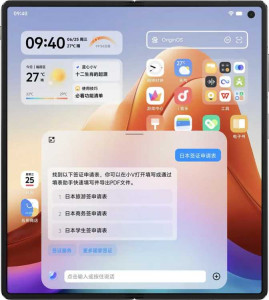
Samsung Galaxy S25 Ultra
Vivo X Fold 5

Samsung Galaxy S25 Ultra Vivo X Fold 5

Overview

Welcome to our in-depth spec comparison between the Samsung Galaxy S25 Ultra and the Vivo X Fold 5 — two very different visions of what a flagship Android smartphone can be. One is a sleek, traditional slab with a built-in stylus and a powerhouse chip, while the other is an ambitious foldable with a larger display and a bigger battery. In this comparison, we examine their key battlegrounds: performance and chipset capabilities, display quality, camera versatility, battery and charging speeds, and overall design philosophy.

Common Features

  • Neither product has a rugged build.
  • Both products weigh nearly the same, at 218 g and 219 g respectively.
  • Both products feature an OLED/AMOLED display.
  • Both products support a 120Hz refresh rate.
  • HDR10 support is available on both products.
  • HDR10+ support is available on both products.
  • Always-On Display is available on both products.
  • Both products have a touchscreen.
  • Both products offer 1024GB of internal storage.
  • Both products have integrated LTE.
  • Both products support 64-bit processing.
  • Both products support DirectX 12.
  • Both products use big.LITTLE technology.
  • Both products run Android 15.
  • Wireless charging is available on both products.
  • Fast charging is supported on both products.
  • Reverse wireless charging is available on both products.
  • Neither product has a removable battery.
  • Neither product has a 3.5mm audio jack.
  • Both products have stereo speakers.
  • aptX support is available on both products.
  • aptX HD support is available on both products.
  • aptX Lossless is not available on either product.
  • Neither product has a built-in radio.
  • Both products support 5G.
  • Both products have Bluetooth version 5.4.
  • Neither product has an external memory slot.
  • Both products have USB Type-C with USB version 3.2.
  • NFC is available on both products.
  • Both products support the same download speed of 10000 MBits/s and upload speed of 3500 MBits/s.
  • Both products have multi-lens main cameras with built-in optical image stabilization.
  • Both products support 4K video recording at 30fps on the main camera.
  • Both products have a dual-tone LED flash with 2 LEDs.
  • Both products have a CMOS sensor with phase-detection autofocus and continuous autofocus when recording.
  • Both products have clipboard warnings in their operating system.
  • Both products offer location privacy options.
  • Both products offer camera and microphone privacy options.
  • Mail Privacy Protection is not available on either product.
  • Both products support theme customization and can block app tracking.
  • Both products have on-device machine learning.
  • Both products have a battery level indicator and a rechargeable battery.
  • Neither product has a sapphire glass display, curved display, or e-paper display.
  • Both products have a video light.

Main Differences

  • Water resistance is rated as waterproof on Samsung Galaxy S25 Ultra and water resistant on Vivo X Fold 5.
  • IP rating is IP68 on Samsung Galaxy S25 Ultra and IP58 on Vivo X Fold 5.
  • The Samsung Galaxy S25 Ultra cannot be folded, while the Vivo X Fold 5 can be folded.
  • Thickness is 8.2 mm on Samsung Galaxy S25 Ultra and 4.7 mm on Vivo X Fold 5.
  • Width is 77.6 mm on Samsung Galaxy S25 Ultra and 142.7 mm on Vivo X Fold 5.
  • Height is 162.8 mm on Samsung Galaxy S25 Ultra and 160 mm on Vivo X Fold 5.
  • Volume is 103.59 cm³ on Samsung Galaxy S25 Ultra and 107.31 cm³ on Vivo X Fold 5.
  • Screen size is 6.9″ on Samsung Galaxy S25 Ultra and 8.03″ on Vivo X Fold 5.
  • Pixel density is 498 ppi on Samsung Galaxy S25 Ultra and 413 ppi on Vivo X Fold 5.
  • Resolution is 1440 x 3120 px on Samsung Galaxy S25 Ultra and 2480 x 2200 px on Vivo X Fold 5.
  • Damage-resistant glass branding is present on Samsung Galaxy S25 Ultra but not on Vivo X Fold 5.
  • Dolby Vision support is present on Vivo X Fold 5 but not available on Samsung Galaxy S25 Ultra.
  • A secondary screen is present on Vivo X Fold 5 but not on Samsung Galaxy S25 Ultra.
  • RAM is 12GB on Samsung Galaxy S25 Ultra and 16GB on Vivo X Fold 5.
  • The chipset is Qualcomm Snapdragon 8 Elite on Samsung Galaxy S25 Ultra and Qualcomm Snapdragon 8s Gen 3 on Vivo X Fold 5.
  • The GPU is Adreno 830 on Samsung Galaxy S25 Ultra and Adreno 735 on Vivo X Fold 5.
  • CPU speed is 2 x 4.47 & 6 x 3.53 GHz on Samsung Galaxy S25 Ultra and 1 x 3 & 4 x 2.8 & 3 x 2 GHz on Vivo X Fold 5.
  • Geekbench 6 multi-core score is 9846 on Samsung Galaxy S25 Ultra and 5570 on Vivo X Fold 5.
  • Geekbench 6 single-core score is 3057 on Samsung Galaxy S25 Ultra and 2019 on Vivo X Fold 5.
  • GPU clock speed is 1200 MHz on Samsung Galaxy S25 Ultra and 1100 MHz on Vivo X Fold 5.
  • RAM speed is 5300 MHz on Samsung Galaxy S25 Ultra and 4800 MHz on Vivo X Fold 5.
  • Semiconductor size is 3 nm on Samsung Galaxy S25 Ultra and 4 nm on Vivo X Fold 5.
  • Maximum memory bandwidth is 85.1 GB/s on Samsung Galaxy S25 Ultra and 64 GB/s on Vivo X Fold 5.
  • Main camera megapixels are 200 & 50 & 50 & 10 MP on Samsung Galaxy S25 Ultra and 50 & 50 & 50 MP on Vivo X Fold 5.
  • Optical zoom is 5x on Samsung Galaxy S25 Ultra and 3x on Vivo X Fold 5.
  • A BSI sensor is present on Samsung Galaxy S25 Ultra but not on Vivo X Fold 5.
  • RAW shooting is supported on Samsung Galaxy S25 Ultra but not on Vivo X Fold 5.
  • Front camera megapixels are 12MP on Samsung Galaxy S25 Ultra and 20 & 20MP on Vivo X Fold 5.
  • Cross-site tracking blocking is available on Samsung Galaxy S25 Ultra but not on Vivo X Fold 5.
  • Wi-Fi password sharing is available on Samsung Galaxy S25 Ultra but not on Vivo X Fold 5.
  • Focus modes are available on Samsung Galaxy S25 Ultra but not on Vivo X Fold 5.
  • PC mode is available on Samsung Galaxy S25 Ultra but not on Vivo X Fold 5.
  • Battery capacity is 5000 mAh on Samsung Galaxy S25 Ultra and 6000 mAh on Vivo X Fold 5.
  • Wired charging speed is 45W on Samsung Galaxy S25 Ultra and 80W on Vivo X Fold 5.
  • Wireless charging speed is 15W on Samsung Galaxy S25 Ultra and 40W on Vivo X Fold 5.
  • Reverse wireless charging speed is 4.5W on Samsung Galaxy S25 Ultra and 5W on Vivo X Fold 5.
  • A charger is not included with Samsung Galaxy S25 Ultra but is included with Vivo X Fold 5.
  • LDAC support is present on Samsung Galaxy S25 Ultra but not on Vivo X Fold 5.
  • aptX Adaptive support is present on Vivo X Fold 5 but not on Samsung Galaxy S25 Ultra.
  • SIM support is 2 SIM and 2 eSIM on Samsung Galaxy S25 Ultra and 2 SIM only on Vivo X Fold 5.
  • ANT+ support is present on Samsung Galaxy S25 Ultra but not on Vivo X Fold 5.
  • An infrared sensor is present on Vivo X Fold 5 but not on Samsung Galaxy S25 Ultra.
  • A barometer is present on Samsung Galaxy S25 Ultra but not on Vivo X Fold 5.
  • A stylus is included with Samsung Galaxy S25 Ultra but not with Vivo X Fold 5.
Specs Comparison
Samsung Galaxy S25 Ultra

Samsung Galaxy S25 Ultra

Vivo X Fold 5

Vivo X Fold 5

Design:
water resistance Waterproof Water resistant
weight 218 g 219 g
thickness 8.2 mm 4.7 mm
width 77.6 mm 142.7 mm
height 162.8 mm 160 mm
volume 103.592896 cm³ 107.3104 cm³
Ingress Protection (IP) rating IP68 IP58
has a rugged build
can be folded

The most fundamental design difference here is form factor: the Samsung Galaxy S25 Ultra is a traditional candy-bar slab, while the Vivo X Fold 5 is a foldable device. This shapes every other dimension in this group. The Vivo's unfolded width of 142.7 mm gives it a tablet-like display footprint, whereas the S25 Ultra's 77.6 mm width is optimized for one-handed use. Yet when folded, the Vivo becomes far more pocketable in terms of width — a core practical benefit of the foldable form factor.

Despite being a foldable — a category historically associated with bulk — the Vivo X Fold 5 is impressively thin at 4.7 mm when unfolded, compared to the S25 Ultra's 8.2 mm. That is a meaningful engineering achievement. Weight, however, is nearly identical: 218 g vs 219 g, so neither phone has an advantage in hand feel from a mass perspective.

On water resistance, the S25 Ultra holds a clear edge: its IP68 rating means full waterproofing (submersion up to 1.5 m), while the Vivo's IP58 rating offers a lower dust ingress protection level, making it water-resistant but less robustly sealed against particulates. For users who prioritize durability in varied environments, the S25 Ultra wins this category outright. Overall, choosing between these two comes down to priorities: the S25 Ultra offers a more durable, one-handed-friendly build, while the Vivo X Fold 5 trades some protection for a versatile, impressively slim foldable design.

Display:
Display type OLED/AMOLED OLED/AMOLED
screen size 6.9" 8.03"
pixel density 498 ppi 413 ppi
resolution 1440 x 3120 px 2480 x 2200 px
refresh rate 120Hz 120Hz
has branded damage-resistant glass
supports HDR10
supports HDR10+
Always-On Display
supports Dolby Vision
Has a secondary screen
has a touch screen

Screen size is where the foldable nature of the Vivo X Fold 5 pays its biggest dividend: its unfolded 8.03″ OLED panel dwarfs the S25 Ultra's already-generous 6.9″ display, making the Vivo significantly better suited for media consumption, multitasking, and document viewing. The S25 Ultra hits back on sharpness, however — its 498 ppi pixel density is noticeably crisper than the Vivo's 413 ppi, a gap that becomes perceptible when reading fine text or viewing detailed images up close. Both panels share a 120Hz refresh rate and HDR10+ support, so motion smoothness and baseline HDR quality are evenly matched.

The Vivo X Fold 5 adds Dolby Vision support, giving it a wider HDR ecosystem advantage for compatible streaming content, and it includes a secondary screen — a crucial differentiator that lets users interact with the phone while folded without opening it, a genuine convenience in daily use. The S25 Ultra, meanwhile, features branded damage-resistant glass on its display, providing meaningful real-world protection against scratches and drops that the Vivo's inner panel cannot match.

Taken together, the two phones target different display priorities. The S25 Ultra is the sharper, more durable single-screen experience, while the Vivo X Fold 5 offers a larger canvas, Dolby Vision, and the practical utility of a secondary display. For pure screen real estate and versatility, the Vivo holds the edge; for pixel density and display durability, the S25 Ultra wins. Users who prioritize media and productivity will lean toward the Vivo, while those who value crispness and resilience will favor the S25 Ultra.

Performance:
internal storage 1024GB 1024GB
RAM 12GB 16GB
Chipset (SoC) name Qualcomm Snapdragon 8 Elite Qualcomm Snapdragon 8s Gen 3
GPU name Adreno 830 Adreno 735
CPU speed 2 x 4.47 & 6 x 3.53 GHz 1 x 3 & 4 x 2.8 & 3 x 2 GHz
Geekbench 6 result (multi) 9846 5570
Geekbench 6 result (single) 3057 2019
GPU clock speed 1200 MHz 1100 MHz
Has integrated LTE
RAM speed 5300 MHz 4800 MHz
semiconductor size 3 nm 4 nm
Supports 64-bit
DirectX version DirectX 12 DirectX 12
Has integrated graphics
OpenGL version 3.2 3.3
OpenGL ES version 3.2 3.2
Uses big.LITTLE technology
Has TrustZone
maximum memory bandwidth 85.1 GB/s 64 GB/s
OpenCL version 3 2
L2 cache 12 MB 1 MB
maximum memory amount 24GB 24GB
uses multithreading
Thermal Design Power (TDP) 8.2W 12.5W
DDR memory version 5 5
supported displays 2 1
L3 cache 8 MB 8 MB

The chipset gap here is substantial and defines this entire category. The S25 Ultra runs on the Snapdragon 8 Elite built on a 3 nm process, while the Vivo X Fold 5 uses the Snapdragon 8s Gen 3 — a mid-tier variant of that generation, fabbed at 4 nm. The Geekbench 6 scores make the performance delta concrete: the S25 Ultra posts a multi-core score of 9846 versus the Vivo's 5570, and a single-core score of 3057 against 2019. That is not a marginal difference — it means the S25 Ultra handles demanding workloads like video editing, gaming, and AI-driven tasks with measurably greater headroom.

The memory story adds nuance. The Vivo counters with more physical RAM — 16 GB versus 12 GB — which can help sustain more apps in the background simultaneously. However, the S25 Ultra's RAM runs at a faster 5300 MHz versus 4800 MHz, and its memory bandwidth of 85.1 GB/s significantly outpaces the Vivo's 64 GB/s. Faster bandwidth directly benefits GPU rendering, computational photography, and any task that moves large amounts of data quickly. The S25 Ultra's GPU clock of 1200 MHz versus 1100 MHz further reinforces its graphics advantage.

One point worth flagging: the Vivo's TDP of 12.5W is notably higher than the S25 Ultra's 8.2W, meaning the Vivo's chip draws more power relative to the performance it delivers — a less efficient trade-off that can affect sustained performance and thermals under load. The S25 Ultra wins this category clearly, offering a faster, more efficient chip with superior memory throughput. The Vivo's extra RAM is a genuine but secondary benefit that does not offset the raw performance gap.

Cameras:
megapixels (main camera) 200 & 50 & 50 & 10 MP 50 & 50 & 50 MP
wide aperture (main camera) 1.7 & 3.4 & 1.9 & 2.4f 1.6 & 2.6 & 2.1f
Has a dual-lens (or multi-lens) main camera
megapixels (front camera) 12MP 20 & 20MP
has built-in optical image stabilization
video recording (main camera) 4320 x 30 fps 4320 x 30 fps
Has a dual-tone LED flash
number of flash LEDs 2 2
has a BSI sensor
has a CMOS sensor
has continuous autofocus when recording movies
Has phase-detection autofocus for photos
supports slow-motion video recording
has a built-in HDR mode
has manual exposure
has a flash
optical zoom 5x 3x
has manual ISO
has a serial shot mode
has manual focus
has a front camera
Has laser autofocus
Shoots 360° panorama
has manual white balance
shoots raw
has touch autofocus
can create panoramas in-camera
Has timelapse function
Has a front-facing LED flash
has a dual-lens (or multi-lens) front camera
supports Dolby Vision recording
has a front-facing camera under the display
Has a RGB LED flash
has 3D photo/video recording capabilities

The Samsung Galaxy S25 Ultra and the Vivo X Fold 5 both feature advanced camera systems, but there are several differences in their setups. The Galaxy S25 Ultra boasts a quad-camera setup with a 200 MP, 50 MP, 50 MP, and 10 MP configuration, while the Vivo X Fold 5 has a triple-camera system with 50 MP for all three lenses. The S25 Ultra offers a higher variety of megapixels, particularly with the 200 MP main camera, compared to the Vivo X Fold 5's more uniform 50 MP lenses.

When it comes to aperture size, the Galaxy S25 Ultra has a range of apertures: f/1.7, f/3.4, f/1.9, and f/2.4, which should provide flexibility in low-light performance and depth of field. In comparison, the Vivo X Fold 5 has apertures of f/1.6, f/2.6, and f/2.1, offering slightly smaller apertures overall. Both devices have built-in optical image stabilization (OIS), phase-detection autofocus, and laser autofocus for better photo and video clarity, and both support slow-motion video recording, HDR modes, and manual exposure and focus settings.

For front cameras, the Galaxy S25 Ultra has a 12 MP front-facing camera, while the Vivo X Fold 5 features a dual 20 MP front camera setup. Both devices lack front-facing LED flashes and do not support Dolby Vision recording. The S25 Ultra supports shooting raw images, while the X Fold 5 does not. Additionally, both phones can create panoramas in-camera and offer timelapse functions. In terms of optical zoom, the S25 Ultra has a 5x zoom lens, while the X Fold 5 is limited to 3x optical zoom.

Operating system:
Android version Android 15 Android 15
has clipboard warnings
has location privacy options
has camera/microphone privacy options
has Mail Privacy Protection
has theme customization
can block app tracking
blocks cross-site tracking
has on-device machine learning
has notification permissions
has media picker
Can play games while they download
has dark mode
has Wi-Fi password sharing
has battery health check
has an extra dim mode
has focus modes
has dynamic theming
can offload apps
Has customizable notifications
has Live Text
has full-page screenshots
supports split screen
gets direct OS updates
has PiP
Can be used as a PC
Has sharing intents
has a child lock
Supports widgets
Is free and open source
Has offline voice recognition
has voice commands
Tracks the current position of a mobile device
is a multi-user system
has Quick Start

Both the Samsung Galaxy S25 Ultra and the Vivo X Fold 5 run Android 15, and they share many similar software features. They both include clipboard warnings, location privacy options, camera/microphone privacy options, theme customization, and the ability to block app tracking. Both devices also have dark mode, Wi-Fi password sharing, battery health checks, extra dim mode, and support for split-screen functionality. Additionally, they both offer on-device machine learning, customizable notifications, and the ability to play games while they download.

While both phones share features like notification permissions, media picker, and focus modes, the devices differ in a few areas. The Galaxy S25 Ultra includes support for cross-site tracking blocking, while the Vivo X Fold 5 does not. The S25 Ultra also offers a more robust experience with features like PiP (Picture-in-Picture), the ability to be used as a PC, and dynamic theming. The X Fold 5, on the other hand, lacks the ability to be used as a PC and does not include focus modes.

Both phones support widgets, offline voice recognition, voice commands, and track the device's position, with no major differences in these areas. Neither device offers Quick Start or Mail Privacy Protection. Both are free and open source, and both have a multi-user system, which allows multiple people to use the same device with different accounts. However, only the Galaxy S25 Ultra includes the ability to offload apps and has a front-facing LED flash, which the Vivo X Fold 5 lacks.

Battery:
battery power 5000 mAh 6000 mAh
has wireless charging
Supports fast charging
charging speed 45W 80W
wireless charging speed 15W 40W
has reverse wireless charging
reverse wireless charging speed 4.5W 5W
comes with a charger
has a removable battery
has a battery level indicator
has a rechargeable battery

The Samsung Galaxy S25 Ultra and the Vivo X Fold 5 both feature sizable batteries, but they differ in capacity and charging speeds. The Galaxy S25 Ultra comes with a 5000 mAh battery, while the Vivo X Fold 5 is equipped with a slightly larger 6000 mAh battery. Both phones support wireless charging, but the Galaxy S25 Ultra offers wireless charging at a speed of 15W, whereas the X Fold 5 supports faster wireless charging at 40W.

When it comes to fast charging, the Galaxy S25 Ultra supports 45W fast charging, while the Vivo X Fold 5 takes the lead with an 80W fast charging speed, allowing for quicker recharging. Both devices also feature reverse wireless charging, with the Galaxy S25 Ultra supporting a reverse charging speed of 4.5W, and the Vivo X Fold 5 offering 5W reverse wireless charging, meaning the X Fold 5 can charge other devices slightly faster.

Neither device offers a removable battery, but both feature a rechargeable battery and a battery level indicator. The Galaxy S25 Ultra does not come with a charger, while the Vivo X Fold 5 includes a charger in the box. Both phones have the same essential battery features like a rechargeable battery, ensuring efficient power management during use.

Audio:
has a socket for a 3.5 mm audio jack
has stereo speakers
has aptX
has LDAC
has aptX HD
has aptX Adaptive
has aptX Lossless
Has a radio

Both the Samsung Galaxy S25 Ultra and the Vivo X Fold 5 lack a 3.5 mm audio jack, focusing on wireless audio options. Both devices feature stereo speakers, ensuring an immersive audio experience. In terms of audio codec support, both phones include aptX, but the Galaxy S25 Ultra supports both aptX HD and LDAC, while the Vivo X Fold 5 supports aptX HD and aptX Adaptive, but does not support LDAC. Neither device supports aptX Lossless or has a radio.

While both phones offer high-quality audio playback, the Galaxy S25 Ultra provides a broader selection of audio technologies, supporting LDAC for high-resolution audio streaming. In contrast, the Vivo X Fold 5 compensates with aptX Adaptive, which can adjust to network conditions for better performance in dynamic environments.

Overall, both phones offer strong audio capabilities with their stereo speakers and various aptX technologies, but the Galaxy S25 Ultra has a slight edge with its support for LDAC, ideal for audiophiles who prioritize high-resolution streaming.

Connectivity & Features:
release date January 2025 June 2025
has 5G support
Wi-Fi version Wi-Fi 4 (802.11n), Wi-Fi 6 (802.11ax), Wi-Fi 5 (802.11ac), Wi-Fi 7 (802.11be), Wi-Fi 6E (802.11ax) Wi-Fi 4 (802.11n), Wi-Fi 7 (802.11be), Wi-Fi 5 (802.11ac), Wi-Fi 6 (802.11ax), Wi-Fi 6E (802.11ax)
SIM cards 2 SIM, 2 eSIM 2 SIM
Bluetooth version 5.4 5.4
has an external memory slot
Has USB Type-C
USB version 3.2 3.2
has NFC
download speed 10000 MBits/s 10000 MBits/s
upload speed 3500 MBits/s 3500 MBits/s
Has a fingerprint scanner
has emergency SOS via satellite
has crash detection
is DLNA-certified
has a gyroscope
supports ANT+
Has a heart rate monitor
has GPS
has a compass
supports Wi-Fi
Has an infrared sensor
has an accelerometer
has a cellular module
Has a barometer
has an HDMI output
Uses 3D facial recognition
Has an iris scanner
Stylus included
supports Galileo
Has motion tracking
Has optical tracking
Has a built-in projector

The Samsung Galaxy S25 Ultra and the Vivo X Fold 5 both offer extensive connectivity features, with support for 5G, NFC, Bluetooth 5.4, and USB Type-C with USB 3.2. Both devices support Wi-Fi 4, 5, 6, and Wi-Fi 7, along with Wi-Fi 6E, ensuring fast and reliable wireless connectivity. They also offer similar download and upload speeds, with 10,000 MBits/s for download and 3,500 MBits/s for upload. Both phones feature dual SIM card slots, but the Galaxy S25 Ultra also supports 2 eSIMs, while the Vivo X Fold 5 only supports 2 SIM cards.

When it comes to sensors, both devices include a gyroscope, accelerometer, compass, GPS, and cellular module. However, the Galaxy S25 Ultra has additional features like a barometer and support for ANT+, which the Vivo X Fold 5 lacks. The X Fold 5, on the other hand, includes an infrared sensor, a feature that is not present on the Galaxy S25 Ultra.

Other features such as fingerprint scanners are present on both devices. The Galaxy S25 Ultra also includes a stylus, while the Vivo X Fold 5 does not. Both devices lack features like 3D facial recognition, an iris scanner, or a built-in projector. The Galaxy S25 Ultra has some extra functionality with support for Galileo, but the Vivo X Fold 5 also supports this system. Neither device supports motion or optical tracking, and neither has HDMI output.

Miscellaneous:
has a video light
Has sapphire glass display
Has a curved display
Has an e-paper display

Both the Samsung Galaxy S25 Ultra and the Vivo X Fold 5 are equipped with a video light, which can be useful for photography in low-light conditions. Neither device features sapphire glass on the display, so both are likely to have more traditional glass protection. Additionally, neither phone has a curved display or an e-paper display, ensuring a more conventional flat display setup for both devices.

Overall, the miscellaneous features of both the Galaxy S25 Ultra and the Vivo X Fold 5 are quite similar, with only the video light being a standout shared feature. Both phones exclude advanced display types like sapphire glass or e-paper, and they lack curved display designs.

Comparison Summary & Verdict

After a thorough look at the specs, both devices excel in distinct ways. The Samsung Galaxy S25 Ultra stands out with its superior Snapdragon 8 Elite chipset, dramatically higher Geekbench scores, a versatile 200MP quad-camera system with 5x optical zoom and RAW shooting, a sharper 498 ppi display, included S Pen stylus, stronger IP68 waterproofing, and a richer set of software features including PC mode and cross-site tracking blocking. It is the better choice for power users, photographers, and professionals. The Vivo X Fold 5, on the other hand, wins on foldable form factor, offering a massive 8.03″ inner display, a significantly larger 6000 mAh battery with blazing 80W wired and 40W wireless charging, more RAM, and a slimmer 4.7 mm profile when unfolded. It suits users who prioritize screen real estate, endurance, and a versatile foldable experience.

Samsung Galaxy S25 Ultra
Buy Samsung Galaxy S25 Ultra if...

Buy the Samsung Galaxy S25 Ultra if you want class-leading performance, a pro-grade camera system with 5x optical zoom and 200MP resolution, an included stylus, and a comprehensive software feature set with stronger waterproofing.

Vivo X Fold 5
Buy Vivo X Fold 5 if...

Buy the Vivo X Fold 5 if you prefer a foldable design with a large 8.03″ inner display, a bigger 6000 mAh battery, and significantly faster 80W wired and 40W wireless charging speeds.