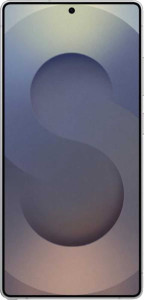
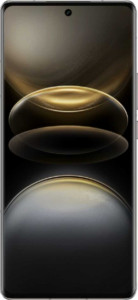
Both phones use OLED/AMOLED panels with a 1440p resolution, 120Hz refresh rate, HDR10+ support, and Always-On Display, establishing a strong shared baseline. The meaningful differentiators emerge when you look beyond those surface-level similarities. The vivo X200 Ultra's 4500 nits peak brightness versus the S25 Ultra's 2600 nits is a substantial gap — in direct sunlight readability, more nits translate directly to a clearer, more comfortable viewing experience, and nearly 2000 nits of additional headroom is a real-world advantage that is hard to ignore.
The contrast ratio tells a similar story. The X200 Ultra's 8,000,000:1 contrast ratio dwarfs the S25 Ultra's already-impressive 3,000,000:1, meaning deeper blacks and more vivid separation between dark and light elements — particularly noticeable in HDR content and dark scenes. The X200 Ultra also adds Dolby Vision support, which the S25 Ultra lacks, giving it access to a wider library of premium HDR-graded streaming content. Its slightly higher 510 ppi pixel density versus 498 ppi and faster 300Hz touch sampling rate (vs. 240Hz) round out a display package that is marginally sharper and more responsive to fast inputs like gaming or precise stylus work.
The S25 Ultra counters with Gorilla Armor 2, a newer glass generation than the X200 Ultra's standard Gorilla Armor, which offers better scratch and drop protection. Still, on pure display performance metrics, the vivo X200 Ultra holds a clear overall advantage — its brightness, contrast, and Dolby Vision support make it the stronger choice for media consumption and outdoor use, while the S25 Ultra's glass protection edge is a meaningful but narrower counter-argument.