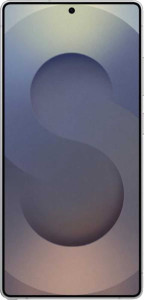
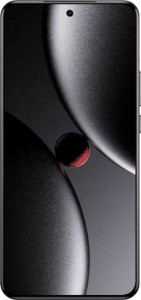
The Samsung Galaxy S25 Ultra and Xiaomi 15 Ultra both feature impressive multi-lens camera setups. The Galaxy S25 Ultra boasts a 200 MP main camera, along with 50 MP, 50 MP, and 10 MP lenses, while the Xiaomi 15 Ultra has a slightly different configuration with a 200 MP main camera, 50 MP, 50 MP, and 50 MP lenses. Both cameras offer a wide aperture across their lenses, with the Galaxy S25 Ultra featuring 1.7, 3.4, 1.9, and 2.4f apertures, while the Xiaomi 15 Ultra has 2.6, 1.8, 1.6, and 2.2f apertures. Both devices also include built-in optical image stabilization for improved photo quality.
For video recording, both phones can record at a resolution of 4320 x 30 fps. Both devices have a dual-tone LED flash with 2 LEDs, though the Galaxy S25 Ultra has a BSI sensor, while the Xiaomi 15 Ultra does not. Both devices support slow-motion video recording, have built-in HDR modes, and support shooting raw images. They also both include manual exposure, manual ISO, serial shot mode, manual focus, and manual shutter speed. The Galaxy S25 Ultra has an optical zoom of 5x, whereas the Xiaomi 15 Ultra offers a slightly lower optical zoom of 4.3x.
The front cameras also differ, with the Galaxy S25 Ultra featuring a 12 MP front camera with a 2.2f wide aperture, while the Xiaomi 15 Ultra has a higher resolution 32 MP front camera with a 2f aperture. Both front cameras lack a front-facing LED flash and dual-lens setups. The Galaxy S25 Ultra has a DxOMark Mobile score of 146, while the Xiaomi 15 Ultra scores slightly higher at 153. The Xiaomi 15 Ultra also supports Dolby Vision recording, which the Galaxy S25 Ultra does not. Additionally, the Xiaomi 15 Ultra is capable of shooting 360° panoramas, while the Galaxy S25 Ultra cannot. Both devices offer touch autofocus, laser autofocus, and the ability to create in-camera panoramas, with neither supporting 3D photo/video recording capabilities.