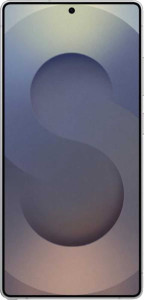
Samsung Galaxy S25 Ultra
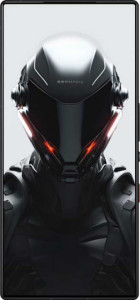
ZTE Nubia Red Magic 10S Pro Plus

Samsung Galaxy S25 Ultra ZTE Nubia Red Magic 10S Pro Plus

Overview

When comparing the Samsung Galaxy S25 Ultra and the ZTE Nubia Red Magic 10S Pro Plus, two very different philosophies emerge from what is, at their core, a shared hardware foundation. Both phones run the Qualcomm Snapdragon 8 Elite and offer 1TB of storage, yet they diverge sharply across battery capacity, display performance, camera versatility, and software experience — making this a genuinely fascinating head-to-head for anyone trying to find their ideal flagship.

Common Features

  • Neither product can be folded.
  • Both products feature an OLED/AMOLED display type.
  • Both products have branded damage-resistant glass on their displays.
  • Always-On Display is available on both products.
  • Both products have a touchscreen.
  • Both products are powered by the Qualcomm Snapdragon 8 Elite chipset.
  • Both products use the Adreno 830 GPU.
  • Both products have 1024GB of internal storage.
  • Both products have a CPU speed of 2 x 4.47 & 6 x 3.53 GHz.
  • Both products support integrated LTE.
  • Both products have RAM running at 5300 MHz.
  • Both products are built on a 3 nm semiconductor process.
  • Both products support 64-bit architecture.
  • Both products feature a multi-lens main camera.
  • Both products have built-in optical image stabilization.
  • Both products can record video at 4320 x 30 fps on the main camera.
  • Both products run Android 15.
  • Both products support fast charging.
  • Both products have stereo speakers and 3 microphones.
  • Both products support 5G, Bluetooth 5.4, NFC, USB Type-C, and USB 3.2.

Main Differences

  • Water resistance is rated as Waterproof (IP68) on Samsung Galaxy S25 Ultra and Water resistant (IP54) on ZTE Nubia Red Magic 10S Pro Plus.
  • Weight is 218 g on Samsung Galaxy S25 Ultra and 229 g on ZTE Nubia Red Magic 10S Pro Plus.
  • Thickness is 8.2 mm on Samsung Galaxy S25 Ultra and 8.9 mm on ZTE Nubia Red Magic 10S Pro Plus.
  • Screen size is 6.9″ on Samsung Galaxy S25 Ultra and 6.85″ on ZTE Nubia Red Magic 10S Pro Plus.
  • Pixel density is 498 ppi on Samsung Galaxy S25 Ultra and 431 ppi on ZTE Nubia Red Magic 10S Pro Plus.
  • Resolution is 1440 x 3120 px on Samsung Galaxy S25 Ultra and 1216 x 2688 px on ZTE Nubia Red Magic 10S Pro Plus.
  • Refresh rate is 120Hz on Samsung Galaxy S25 Ultra and 144Hz on ZTE Nubia Red Magic 10S Pro Plus.
  • Touch sampling rate is 240Hz on Samsung Galaxy S25 Ultra and 960Hz on ZTE Nubia Red Magic 10S Pro Plus.
  • HDR10 and HDR10+ support is present on Samsung Galaxy S25 Ultra but not available on ZTE Nubia Red Magic 10S Pro Plus.
  • RAM is 12GB on Samsung Galaxy S25 Ultra and 24GB on ZTE Nubia Red Magic 10S Pro Plus.
  • Geekbench 6 multi-core score is 9846 on Samsung Galaxy S25 Ultra and 10059 on ZTE Nubia Red Magic 10S Pro Plus.
  • Geekbench 6 single-core score is 3057 on Samsung Galaxy S25 Ultra and 3234 on ZTE Nubia Red Magic 10S Pro Plus.
  • GPU clock speed is 1200 MHz on Samsung Galaxy S25 Ultra and 1100 MHz on ZTE Nubia Red Magic 10S Pro Plus.
  • Main camera megapixels are 200 & 50 & 50 & 10 MP on Samsung Galaxy S25 Ultra and 50 & 50 & 2 MP on ZTE Nubia Red Magic 10S Pro Plus.
  • Front camera resolution is 12MP on Samsung Galaxy S25 Ultra and 16MP on ZTE Nubia Red Magic 10S Pro Plus.
  • An under-display front-facing camera is present on ZTE Nubia Red Magic 10S Pro Plus but not on Samsung Galaxy S25 Ultra.
  • Laser autofocus and manual shutter speed are available on Samsung Galaxy S25 Ultra but not on ZTE Nubia Red Magic 10S Pro Plus.
  • Battery capacity is 5000 mAh on Samsung Galaxy S25 Ultra and 7500 mAh on ZTE Nubia Red Magic 10S Pro Plus.
  • Charging speed is 45W on Samsung Galaxy S25 Ultra and 120W on ZTE Nubia Red Magic 10S Pro Plus.
  • Wireless charging is available on Samsung Galaxy S25 Ultra but not on ZTE Nubia Red Magic 10S Pro Plus.
  • A charger is included in the box with ZTE Nubia Red Magic 10S Pro Plus but not with Samsung Galaxy S25 Ultra.
  • A 3.5mm audio jack is present on ZTE Nubia Red Magic 10S Pro Plus but not on Samsung Galaxy S25 Ultra.
  • aptX Adaptive and aptX Lossless are supported on ZTE Nubia Red Magic 10S Pro Plus but not on Samsung Galaxy S25 Ultra, while aptX is supported on Samsung Galaxy S25 Ultra but not on ZTE Nubia Red Magic 10S Pro Plus.
  • SIM support is 2 SIM + 2 eSIM on Samsung Galaxy S25 Ultra and 2 SIM only on ZTE Nubia Red Magic 10S Pro Plus.
  • An infrared sensor is present on ZTE Nubia Red Magic 10S Pro Plus but not on Samsung Galaxy S25 Ultra.
  • A barometer is present on Samsung Galaxy S25 Ultra but not on ZTE Nubia Red Magic 10S Pro Plus.
  • A stylus is included with Samsung Galaxy S25 Ultra but not with ZTE Nubia Red Magic 10S Pro Plus.
  • The ability to be used as a PC is available on Samsung Galaxy S25 Ultra but not on ZTE Nubia Red Magic 10S Pro Plus.
  • Cross-site tracking blocking and Wi-Fi password sharing are available on Samsung Galaxy S25 Ultra but not on ZTE Nubia Red Magic 10S Pro Plus.
Specs Comparison
Samsung Galaxy S25 Ultra

Samsung Galaxy S25 Ultra

ZTE Nubia Red Magic 10S Pro Plus

ZTE Nubia Red Magic 10S Pro Plus

Design:
water resistance Waterproof Water resistant
weight 218 g 229 g
thickness 8.2 mm 8.9 mm
width 77.6 mm 76.1 mm
height 162.8 mm 163.4 mm
volume 103.592896 cm³ 110.669186 cm³
Ingress Protection (IP) rating IP68 IP54
can be folded

Both phones are large, non-folding slabs with similar footprints, but the Samsung Galaxy S25 Ultra is meaningfully more compact in the ways that matter most. At 218 g versus 229 g, the S25 Ultra is 11 grams lighter — a small but perceptible difference during extended one-handed use. More notably, it is also slimmer at 8.2 mm compared to 8.9 mm, which translates to a more refined in-pocket feel and a less fatiguing grip over long sessions. Its smaller overall volume (103.6 cm³ vs 110.7 cm³) confirms that despite comparable screen-real-estate, the S25 Ultra packs its internals more efficiently.

The most significant differentiator in this group is water protection. The S25 Ultra carries an IP68 rating, meaning it is fully waterproof and can withstand submersion in up to 1.5 meters of fresh water for 30 minutes. The Nubia Red Magic 10S Pro+, rated at IP54, is only splash and dust resistant — it can handle rain or an accidental counter spill, but should never be submerged. For a device that costs as much as a flagship, IP54 is a notable limitation and a real-world liability near pools, sinks, or in heavy rain.

The S25 Ultra holds a clear advantage in this category. It is lighter, thinner, more volume-efficient, and — crucially — offers a substantially higher level of water protection. The Red Magic 10S Pro+ is not poorly built, but its design priorities lean toward accommodating gaming hardware rather than premium everyday ergonomics or environmental resilience.

Display:
Display type OLED/AMOLED OLED/AMOLED
screen size 6.9" 6.85"
pixel density 498 ppi 431 ppi
resolution 1440 x 3120 px 1216 x 2688 px
refresh rate 120Hz 144Hz
touch sampling rate 240Hz 960Hz
has branded damage-resistant glass
supports HDR10
supports HDR10+
Always-On Display
has a touch screen

Both screens are OLED/AMOLED panels of nearly identical size, but sharpness tells them apart immediately. The Samsung Galaxy S25 Ultra resolves at 498 ppi against the Red Magic 10S Pro+'s 431 ppi — a 15% gap that is genuinely visible when reading fine text or viewing detailed imagery up close. That advantage stems from the S25 Ultra's higher native resolution of 1440 x 3120 px, which also makes it better suited for VR-style viewing or high-fidelity media consumption.

The Red Magic 10S Pro+ fights back on responsiveness. Its 144Hz refresh rate edges out the S25 Ultra's 120Hz, but the far more consequential figure is the touch sampling rate: 960Hz versus 240Hz. In competitive gaming, that four-fold difference means the screen registers finger input almost instantaneously, reducing latency in fast-paced titles. For everyday use this distinction is imperceptible, but for its target audience it is a deliberate hardware choice. Where the Red Magic falls short, however, is HDR support — it lacks both HDR10 and HDR10+, meaning streaming content from platforms that deliver dynamic metadata (Netflix, Prime Video, YouTube HDR) will not be rendered with the full tonal range those formats offer. The S25 Ultra supports both standards.

The edge here depends on use case, but for the broader audience the S25 Ultra is the stronger display overall: meaningfully sharper, HDR-capable, and still smooth at 120Hz. The Red Magic 10S Pro+ carves out a legitimate niche with its ultra-high touch sampling rate for gamers, but sacrifices resolution fidelity and HDR compatibility to get there.

Performance:
internal storage 1024GB 1024GB
RAM 12GB 24GB
Chipset (SoC) name Qualcomm Snapdragon 8 Elite Qualcomm Snapdragon 8 Elite
GPU name Adreno 830 Adreno 830
CPU speed 2 x 4.47 & 6 x 3.53 GHz 2 x 4.47 & 6 x 3.53 GHz
Geekbench 6 result (multi) 9846 10059
Geekbench 6 result (single) 3057 3234
GPU clock speed 1200 MHz 1100 MHz
Has integrated LTE
RAM speed 5300 MHz 5300 MHz
semiconductor size 3 nm 3 nm
Supports 64-bit
DirectX version DirectX 12 DirectX 12
Has integrated graphics
OpenGL version 3.2 3.2
OpenGL ES version 3.2 3.2
Uses big.LITTLE technology
CPU threads 8 threads 8 threads
Uses HMP
Has TrustZone
maximum memory bandwidth 85.1 GB/s 85.1 GB/s
OpenCL version 3 3
memory channels 2 2
L2 cache 12 MB 12 MB
Supports ECC memory
L1 cache 192 KB 192 KB
maximum memory amount 24GB 24GB
uses multithreading
GPU turbo 1100 MHz 1100 MHz
Thermal Design Power (TDP) 8.2W 8.2W
DDR memory version 5 5
shading units 1536 1536
supported displays 2 2
L3 cache 8 MB 8 MB

At their core, these two phones are silicon twins. Both run on the Qualcomm Snapdragon 8 Elite chipset, built on a 3 nm process with identical CPU configurations, the same Adreno 830 GPU, and matching memory bandwidth, cache hierarchy, and TDP. For the vast majority of performance-related specs, choosing between them is a non-decision.

Where the data does diverge is RAM and benchmark scores. The Red Magic 10S Pro+ ships with 24 GB of RAM in this configuration versus 12 GB on the S25 Ultra — a meaningful gap for users who run many apps simultaneously, stream in the background while gaming, or work with memory-intensive workloads. That extra headroom also correlates with its slightly higher Geekbench 6 scores: 3234 single-core and 10059 multi-core against the S25 Ultra's 3057 and 9846 respectively. The gaps are modest — roughly 5-6% — and unlikely to be felt in day-to-day tasks, but they confirm the Red Magic is not throttled by its additional RAM. One nuance worth noting: the S25 Ultra's GPU turbo clock is rated at 1200 MHz versus 1100 MHz on the Red Magic, suggesting Samsung has tuned the GPU slightly more aggressively, which could partially offset the Red Magic's CPU benchmark lead in graphics-bound scenarios.

On raw performance specs, the Red Magic 10S Pro+ holds a practical edge thanks to double the RAM and marginally stronger benchmark numbers — an advantage that matters most for power users and gamers who push their devices hard. For mainstream flagship use, the S25 Ultra's identical silicon means the real-world difference will rarely be felt.

Cameras:
megapixels (main camera) 200 & 50 & 50 & 10 MP 50 & 50 & 2 MP
wide aperture (main camera) 1.7 & 3.4 & 1.9 & 2.4f 1.9 & 2.2 & 2.4f
Has a dual-lens (or multi-lens) main camera
megapixels (front camera) 12MP 16MP
has built-in optical image stabilization
video recording (main camera) 4320 x 30 fps 4320 x 30 fps
has a BSI sensor
has a CMOS sensor
has continuous autofocus when recording movies
Has phase-detection autofocus for photos
supports slow-motion video recording
has a built-in HDR mode
has manual exposure
has a flash
has manual ISO
has a serial shot mode
has manual focus
has a front camera
Has laser autofocus
Shoots 360° panorama
has manual white balance
has touch autofocus
has manual shutter speed
can create panoramas in-camera
Has timelapse function
Has a front-facing LED flash
has a dual-lens (or multi-lens) front camera
has a front-facing camera under the display
Has a RGB LED flash

The rear camera systems reveal a stark difference in ambition. The Samsung Galaxy S25 Ultra fields a four-lens array headlined by a 200 MP primary sensor, supplemented by two 50 MP lenses and a 10 MP shooter — a configuration designed for versatility across focal lengths and extreme detail capture. The Red Magic 10S Pro+, by contrast, offers a three-lens setup with a 50 MP main sensor, a secondary 50 MP lens, and a 2 MP auxiliary camera that contributes minimally in practice. Both top out at 4320p at 30 fps for video, so peak resolution recording is matched, but the S25 Ultra's sensor depth gives it a substantial lead for stills, zoom photography, and low-light flexibility.

In autofocus capability, the S25 Ultra again pulls ahead with laser autofocus layered on top of phase-detection — a combination that accelerates subject lock-on in challenging conditions like low light or fast movement. The Red Magic relies on phase-detection alone. The S25 Ultra also includes manual shutter speed control, which the Red Magic omits, making the Samsung more capable for users who want granular control over exposure in pro mode. One area where the Red Magic offers something distinct is its under-display front camera, which eliminates the punch-hole cutout entirely for a cleaner full-screen aesthetic — though this design choice typically involves trade-offs in selfie image quality that the specs alone do not quantify.

The S25 Ultra is the clear winner in this category. Its 200 MP primary sensor, four-lens versatility, laser autofocus, and broader manual controls represent a fundamentally more capable imaging system. The Red Magic's under-display selfie camera is a notable design differentiator, but the overall camera package is oriented toward a device where photography is secondary to other priorities.

Operating system:
Android version Android 15 Android 15
has clipboard warnings
has location privacy options
has camera/microphone privacy options
has Mail Privacy Protection
has theme customization
can block app tracking
blocks cross-site tracking
has on-device machine learning
has notification permissions
has media picker
Can play games while they download
has dark mode
has Wi-Fi password sharing
has battery health check
has an extra dim mode
has focus modes
has dynamic theming
can offload apps
Has customizable notifications
has Live Text
has full-page screenshots
supports split screen
gets direct OS updates
has PiP
Can be used as a PC
Has sharing intents
has a child lock
Supports widgets
Is free and open source
Has offline voice recognition
has voice commands
Tracks the current position of a mobile device
is a multi-user system
has Quick Start

Both the Samsung Galaxy S25 Ultra and ZTE Nubia Red Magic 10S Pro Plus run Android 15, offering a range of advanced features. Both devices include clipboard warnings, location privacy options, camera/microphone privacy options, and the ability to block app tracking. However, the Samsung Galaxy S25 Ultra goes further by also blocking cross-site tracking, while the Nubia Red Magic 10S Pro Plus does not.

Both phones provide theme customization, dark mode, notification permissions, media pickers, and support for widgets. They also allow for playing games while they download, and both include Wi-Fi password sharing, battery health checks, and an extra dim mode. The Samsung model has additional features like focus modes, dynamic theming, customizable notifications, and the ability to offload apps, which are not available on the Nubia. The Samsung device also offers PiP (Picture-in-Picture), live text, full-page screenshots, and split screen, which the Nubia Red Magic 10S Pro Plus also supports.

There are also some notable differences. The Samsung Galaxy S25 Ultra can be used as a PC, while the Nubia Red Magic 10S Pro Plus cannot. Both phones have offline voice recognition, voice commands, and multi-user system support. The Samsung model also has direct OS updates, which the Nubia does not. Both phones support sharing intents, have child locks, and track the current position of a mobile device. Neither device features Quick Start.
Battery:
battery power 5000 mAh 7500 mAh
has wireless charging
Supports fast charging
charging speed 45W 120W
comes with a charger
has a removable battery
has a battery level indicator
has a rechargeable battery

The Samsung Galaxy S25 Ultra is equipped with a 5000 mAh battery, while the ZTE Nubia Red Magic 10S Pro Plus features a significantly larger 7500 mAh battery. Both devices support fast charging, but the Nubia device offers a much faster charging speed of 120W compared to the 45W on the Samsung Galaxy S25 Ultra.

Wireless charging is supported on the Galaxy S25 Ultra, but the Nubia Red Magic 10S Pro Plus does not have this feature. Both phones have rechargeable batteries and include a battery level indicator to help monitor remaining power. Neither device has a removable battery.

While the Samsung Galaxy S25 Ultra does not come with a charger, the Nubia Red Magic 10S Pro Plus includes a charger in the box, offering additional convenience for users who need one.

Audio:
has a socket for a 3.5 mm audio jack
has stereo speakers
has aptX
has aptX HD
has aptX Adaptive
has aptX Lossless
Has a radio
number of microphones 3 3

The Samsung Galaxy S25 Ultra does not include a 3.5 mm audio jack, while the ZTE Nubia Red Magic 10S Pro Plus has a 3.5 mm audio jack for wired headphones. Both phones feature stereo speakers for an enhanced audio experience, but they differ in their support for wireless audio codecs. The Samsung device supports aptX, aptX HD, but lacks aptX Adaptive and aptX Lossless. On the other hand, the Nubia Red Magic 10S Pro Plus supports aptX HD, aptX Adaptive, and aptX Lossless, but it does not have aptX support.

Both devices include three microphones, ensuring clear audio for calls and recording. Neither phone has a built-in radio feature.

Connectivity & Features:
release date January 2025 May 2025
has 5G support
Wi-Fi version Wi-Fi 4 (802.11n), Wi-Fi 6 (802.11ax), Wi-Fi 5 (802.11ac), Wi-Fi 7 (802.11be), Wi-Fi 6E (802.11ax) Wi-Fi 4 (802.11n), Wi-Fi 6E (802.11ax), Wi-Fi 6 (802.11ax), Wi-Fi 5 (802.11ac), Wi-Fi 7 (802.11be)
SIM cards 2 SIM, 2 eSIM 2 SIM
Bluetooth version 5.4 5.4
has an external memory slot
Has USB Type-C
USB version 3.2 3.2
has NFC
download speed 10000 MBits/s 10000 MBits/s
upload speed 3500 MBits/s 3500 MBits/s
Has a fingerprint scanner
has a gyroscope
Has a heart rate monitor
has GPS
has a compass
supports Wi-Fi
Has an infrared sensor
has an accelerometer
has a cellular module
Has a barometer
Uses 3D facial recognition
Has an iris scanner
Stylus included
supports Galileo

Both the Samsung Galaxy S25 Ultra and ZTE Nubia Red Magic 10S Pro Plus support 5G, ensuring fast mobile data speeds. They both also offer Wi-Fi support, with compatibility for Wi-Fi 4 (802.11n), Wi-Fi 5 (802.11ac), Wi-Fi 6 (802.11ax), Wi-Fi 6E (802.11ax), and Wi-Fi 7 (802.11be). In terms of connectivity, both devices feature Bluetooth 5.4, NFC, USB Type-C with USB 3.2, and GPS. They also both support Galileo for satellite positioning.

When it comes to SIM cards, the Samsung Galaxy S25 Ultra supports 2 SIM cards and 2 eSIMs, while the Nubia Red Magic 10S Pro Plus supports 2 SIM cards but does not include support for eSIMs. Both phones have a fingerprint scanner, gyroscope, accelerometer, and compass. The Samsung device also includes a barometer, which the Nubia lacks. The Nubia device has an infrared sensor, but the Galaxy S25 Ultra does not.

Neither phone includes a heart rate monitor, 3D facial recognition, or an iris scanner. The Samsung Galaxy S25 Ultra comes with a stylus, while the Nubia Red Magic 10S Pro Plus does not. Both devices support high-speed download and upload speeds (10,000 MBits/s and 3,500 MBits/s, respectively), and they both lack an external memory slot, making their storage non-expandable.

Miscellaneous:
has a video light
Has a curved display

Both the Samsung Galaxy S25 Ultra and ZTE Nubia Red Magic 10S Pro Plus are equipped with a video light, which can be useful for enhancing photo and video quality in low-light conditions. Neither device features a curved display, as both models have flat screens.

In this group, the two phones share identical specifications, offering similar functionalities in terms of lighting and display design.

Comparison Summary & Verdict

After examining every major specification, it becomes clear that these two phones serve distinct audiences. The Samsung Galaxy S25 Ultra stands out for users who value a more compact and lighter build, a sharper 498 ppi display with HDR10+ support, a highly versatile quad-camera system with a 200MP main sensor, and a polished software experience complete with an included stylus and wireless charging. It is the stronger all-rounder for everyday productivity and creative work. The ZTE Nubia Red Magic 10S Pro Plus, on the other hand, is purpose-built for power users and mobile gamers: its 7500 mAh battery, blazing 120W wired charging, 24GB of RAM, 960Hz touch sampling rate, and 144Hz refresh rate make it a formidable performance machine. If raw endurance and gaming-focused hardware are your priorities, the Red Magic wins decisively in those areas.

Samsung Galaxy S25 Ultra
Buy Samsung Galaxy S25 Ultra if...

Buy the Samsung Galaxy S25 Ultra if you want a lighter, more versatile flagship with a sharper display, HDR10+ support, a quad-camera system with a 200MP sensor, wireless charging, and an included stylus for productivity.

ZTE Nubia Red Magic 10S Pro Plus
Buy ZTE Nubia Red Magic 10S Pro Plus if...

Buy the ZTE Nubia Red Magic 10S Pro Plus if you prioritize maximum battery life with its 7500 mAh cell, ultra-fast 120W wired charging, 24GB of RAM, and a high-refresh 144Hz display with a 960Hz touch sampling rate for serious mobile gaming.