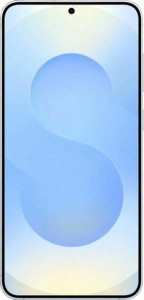
Samsung Galaxy S25
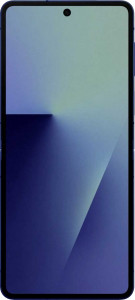
Samsung Galaxy Z Flip 7

Samsung Galaxy S25 Samsung Galaxy Z Flip 7

Overview

Welcome to our in-depth comparison of the Samsung Galaxy S25 and the Samsung Galaxy Z Flip 7 — two very different takes on the modern Android flagship. While both phones share a strong foundation of premium features, they diverge sharply in areas like form factor and performance, display design, and camera capabilities. Whether you prioritize raw power or a distinctive foldable experience, this side-by-side breakdown will help you decide which device truly fits your lifestyle.

Common Features

  • Both phones are waterproof with an IP68 or IPX8 water resistance rating.
  • Both phones feature an OLED/AMOLED display with a 120Hz refresh rate.
  • Both phones reach a typical brightness of 2600 nits.
  • HDR10 support is available on both products.
  • HDR10+ support is available on both products.
  • Always-On Display is available on both products.
  • Both phones have a touchscreen.
  • Both phones come with 512GB of internal storage and 12GB of RAM.
  • Both phones use a 3 nm semiconductor and support 64-bit processing.
  • Integrated LTE is available on both products.
  • Both phones use big.LITTLE technology and have integrated graphics.
  • DirectX 12 is supported on both products.
  • Both phones have a multi-lens main camera with optical image stabilization, a BSI sensor, a CMOS sensor, phase-detection autofocus, continuous autofocus during video, slow-motion recording, and a built-in HDR mode.
  • Both phones run Android 15 and share the same privacy features including clipboard warnings, location privacy options, and camera/microphone privacy options.
  • Both phones support wireless charging at 15W and fast charging at 25W.
  • Both phones support reverse wireless charging at 4.5W and have a non-removable battery.
  • Both phones lack a 3.5mm audio jack but feature stereo speakers.
  • Both phones support 5G, Bluetooth 5.4, NFC, USB Type-C 3.2, and Wi-Fi 7.
  • Neither phone has an external memory slot.
  • Both phones have a fingerprint scanner and a video light.

Main Differences

  • Weight is 162 g on Samsung Galaxy S25 and 188 g on Samsung Galaxy Z Flip 7.
  • Thickness is 7.2 mm on Samsung Galaxy S25 and 6.5 mm on Samsung Galaxy Z Flip 7.
  • Height is 146.9 mm on Samsung Galaxy S25 and 166.7 mm on Samsung Galaxy Z Flip 7.
  • The Samsung Galaxy Z Flip 7 can be folded, while the Samsung Galaxy S25 cannot.
  • IP rating is IP68 on Samsung Galaxy S25 and IPX8 on Samsung Galaxy Z Flip 7.
  • Screen size is 6.2″ on Samsung Galaxy S25 and 6.9″ on Samsung Galaxy Z Flip 7.
  • Pixel density is 416 ppi on Samsung Galaxy S25 and 397 ppi on Samsung Galaxy Z Flip 7.
  • Damage-resistant glass is present on Samsung Galaxy S25 but not available on Samsung Galaxy Z Flip 7.
  • A secondary screen is present on Samsung Galaxy Z Flip 7 but not on Samsung Galaxy S25.
  • The chipset is Qualcomm Snapdragon 8 Elite on Samsung Galaxy S25 and Samsung Exynos 2500 on Samsung Galaxy Z Flip 7.
  • AnTuTu benchmark score is 3,050,000 on Samsung Galaxy S25 and 1,513,343 on Samsung Galaxy Z Flip 7.
  • Maximum memory bandwidth is 85.1 GB/s on Samsung Galaxy S25 and 64 GB/s on Samsung Galaxy Z Flip 7.
  • Main camera resolution is 50 & 12 & 10 MP on Samsung Galaxy S25 and 50 & 12 MP on Samsung Galaxy Z Flip 7.
  • Max video recording resolution is 4320 x 30 fps on Samsung Galaxy S25 and 2160 x 60 fps on Samsung Galaxy Z Flip 7.
  • A dual-tone LED flash is present on Samsung Galaxy S25 but not on Samsung Galaxy Z Flip 7.
  • PC mode is available on Samsung Galaxy S25 but not on Samsung Galaxy Z Flip 7.
  • Battery capacity is 4000 mAh on Samsung Galaxy S25 and 4300 mAh on Samsung Galaxy Z Flip 7.
  • aptX audio support is present on Samsung Galaxy S25 but not available on Samsung Galaxy Z Flip 7.
  • SIM card support is 2 SIM and 2 eSIM on Samsung Galaxy S25 and 1 SIM and 1 eSIM on Samsung Galaxy Z Flip 7.
  • ANT+ support is present on Samsung Galaxy S25 but not available on Samsung Galaxy Z Flip 7.
Specs Comparison
Samsung Galaxy S25

Samsung Galaxy S25

Samsung Galaxy Z Flip 7

Samsung Galaxy Z Flip 7

Design:
water resistance Waterproof Waterproof
weight 162 g 188 g
thickness 7.2 mm 6.5 mm
width 70.5 mm 75.2 mm
height 146.9 mm 166.7 mm
volume 74.56644 cm³ 81.48296 cm³
Ingress Protection (IP) rating IP68 IPX8
can be folded

The most defining design difference here is that the Galaxy Z Flip 7 is a foldable, while the Galaxy S25 is a conventional candy-bar slab — and that single fact shapes every other spec in this group. Unfolded, the Z Flip 7 is noticeably taller (166.7 mm vs 146.9 mm) and wider (75.2 mm vs 70.5 mm), giving it a larger footprint. However, because it folds in half, its real-world pocketability when closed is dramatically better than the S25's dimensions suggest — the Flip becomes roughly half its height in your pocket, which the raw numbers alone cannot capture.

The S25 holds a meaningful edge in day-to-day handling comfort: at 162 g it is noticeably lighter than the Z Flip 7's 188 g, a 26-gram gap that becomes perceptible over long one-handed use. The S25 is also thicker when considering a flat form factor (7.2 mm vs the Flip's 6.5 mm when unfolded), though this advantage is moot once you consider that the Flip effectively doubles in thickness at the hinge when folded. On water resistance, both are rated waterproof, but the S25 carries a full IP68 certification — covering both dust and water intrusion — while the Z Flip 7's IPX8 rating omits the dust-resistance component, a practical consideration in sandy or dusty environments.

In summary, neither phone is strictly superior in design; they target different priorities. The Galaxy S25 has the edge for those who want a lighter, dust-resistant, no-compromise slab. The Galaxy Z Flip 7 wins on the novelty and genuine pocket-size advantage of its folding form factor, but you trade away some weight, dust protection, and structural simplicity to get it.

Display:
Display type OLED/AMOLED OLED/AMOLED
screen size 6.2" 6.9"
pixel density 416 ppi 397 ppi
resolution 1080 x 2340 px 1080 x 2520 px
refresh rate 120Hz 120Hz
brightness (typical) 2600 nits 2600 nits
has branded damage-resistant glass
supports HDR10
supports HDR10+
Always-On Display
Has a secondary screen
has a touch screen

At the panel level, both phones are evenly matched in all the ways that matter most for image quality: the same OLED/AMOLED technology, identical 120Hz refresh rates, matching peak brightness of 2600 nits, and full HDR10+ support. In practice, this means fluid scrolling, vivid colors, and excellent outdoor legibility on both devices — there is no meaningful gap here.

Where the two diverge is in screen real estate and sharpness. The Z Flip 7's main display is a notably larger 6.9″ versus the S25's 6.2″, making it better suited for media consumption, multitasking, and reading. The S25, however, edges ahead on pixel density — 416 ppi compared to 397 ppi — meaning its smaller canvas is marginally sharper per inch, though the difference is unlikely to be visible to the naked eye at normal viewing distances. More consequential is the S25's branded damage-resistant glass, which the Z Flip 7 lacks on its main display; foldable screens remain inherently more fragile by nature of the hinge mechanism, and the absence of hardened glass reinforces that vulnerability.

The Z Flip 7 does gain a significant functional advantage with its secondary screen — a feature the S25 entirely lacks. This cover display allows users to check notifications, control media, and interact with apps without ever unfolding the phone, which is a genuine convenience differentiator. Overall, the Galaxy S25 has the edge in display durability, while the Galaxy Z Flip 7 wins on screen size and secondary display utility — making the right choice here dependent on whether you prioritize resilience or versatility.

Performance:
internal storage 512GB 512GB
RAM 12GB 12GB
AnTuTu benchmark score 3050000 1513343
Chipset (SoC) name Qualcomm Snapdragon 8 Elite Samsung Exynos 2500
GPU name Adreno 830 Xclipse 950
CPU speed 2 x 4.47 & 6 x 3.53 GHz 2 x 2.74 & 5 x 2.36 & 2 x 1.8 & 1 x 3.3 GHz
GPU clock speed 1200 MHz 1009 MHz
Has integrated LTE
RAM speed 5300 MHz 4200 MHz
semiconductor size 3 nm 3 nm
Supports 64-bit
DirectX version DirectX 12 DirectX 12
Has integrated graphics
Uses big.LITTLE technology
CPU threads 8 threads 10 threads
Uses HMP
Has TrustZone
maximum memory bandwidth 85.1 GB/s 64 GB/s
maximum memory amount 24GB 24GB
uses multithreading
Thermal Design Power (TDP) 8.2W 6W
DDR memory version 5 5

The performance gap between these two phones is substantial and impossible to overlook. The Galaxy S25 runs on the Qualcomm Snapdragon 8 Elite and posts an AnTuTu score of roughly 3,050,000, while the Z Flip 7's Samsung Exynos 2500 scores approximately 1,513,343 — less than half. In real-world terms, this translates to faster app launches, smoother sustained gaming, quicker AI processing, and more headroom for demanding workloads. Both chips are fabbed on a 3 nm process and share the same 12 GB of DDR5 RAM, but the Snapdragon's architectural efficiency converts those shared fundamentals into a dramatically higher output.

Supporting metrics reinforce the gap. The S25's memory bandwidth reaches 85.1 GB/s versus 64 GB/s on the Flip 7, meaning the S25 can feed its processor data significantly faster — particularly relevant for graphics-intensive tasks and AI inference. The Adreno 830 GPU also clocks in at 1200 MHz against the Xclipse 950's 1009 MHz, giving the S25 a clear graphics rendering advantage. The one area where the Exynos 2500 holds a structural edge is its lower 6W TDP compared to the Snapdragon's 8.2W, suggesting it generates less heat under load — a practically relevant trait inside the thermally constrained enclosure of a foldable device.

The Galaxy S25 is the clear performance winner in this category by a wide margin. Unless thermal headroom in a compact foldable body is your primary concern, the Snapdragon 8 Elite's dominance across benchmark score, memory bandwidth, and GPU clock speed makes the S25 the stronger choice for users who prioritize raw processing power.

Cameras:
megapixels (main camera) 50 & 12 & 10 MP 50 & 12 MP
wide aperture (main camera) 1.8 & 2.2 & 2.4f 2.2 & 1.8f
Has a dual-lens (or multi-lens) main camera
megapixels (front camera) 12MP 10MP
has built-in optical image stabilization
video recording (main camera) 4320 x 30 fps 2160 x 60 fps
Has a dual-tone LED flash
number of flash LEDs 2 1
has a BSI sensor
has a CMOS sensor
has continuous autofocus when recording movies
Has phase-detection autofocus for photos
supports slow-motion video recording
has a built-in HDR mode
has manual exposure
has a flash
has manual ISO
has a serial shot mode
has manual focus
has a front camera
Has laser autofocus
Shoots 360° panorama
has manual white balance
shoots raw
has touch autofocus
can create panoramas in-camera
wide aperture (front camera) 2.2f 2.2f
Has timelapse function
Has a front-facing LED flash
has a dual-lens (or multi-lens) front camera
Has a RGB LED flash

The most structurally significant difference in this camera comparison is lens count. The Galaxy S25 fields a triple rear camera system — 50 MP main, 12 MP ultrawide, and a third 10 MP lens — while the Z Flip 7 stops at two: a 50 MP main and a 12 MP secondary. That third lens on the S25 is almost certainly a dedicated telephoto, meaning the S25 can achieve optical zoom where the Flip 7 would have to rely on digital cropping. For users who shoot at distance — portraits, wildlife, architecture — this is a meaningful real-world gap, not just a spec sheet footnote.

Video capability is another point of divergence, though the trade-offs are less one-sided. The S25 supports recording up to 4320p at 30 fps (8K), while the Z Flip 7 caps at 2160p at 60 fps (4K). The S25's higher resolution ceiling is impressive, but 4K at 60 fps is actually preferable for fast-motion content and offers smoother playback — so the ″better″ option here genuinely depends on use case. On flash hardware, the S25 also pulls ahead with a dual-tone, dual-LED flash versus the Flip 7's single LED, which produces more natural-looking artificial light in low-light shots.

Across all other shooting features — OIS, phase-detection autofocus, RAW capture, HDR, slow motion — the two phones are evenly matched. The Galaxy S25 nonetheless holds a clear overall edge in this category, primarily due to its additional telephoto lens and superior flash system, making it the stronger choice for photography-focused users.

Operating system:
Android version Android 15 Android 15
has clipboard warnings
has location privacy options
has camera/microphone privacy options
has Mail Privacy Protection
has theme customization
can block app tracking
blocks cross-site tracking
has on-device machine learning
has notification permissions
has media picker
Can play games while they download
has dark mode
has Wi-Fi password sharing
has battery health check
has an extra dim mode
has focus modes
has dynamic theming
can offload apps
Has customizable notifications
has Live Text
has full-page screenshots
supports split screen
gets direct OS updates
has PiP
Can be used as a PC
Has sharing intents
has a child lock
Supports widgets
Is free and open source
Has offline voice recognition
has voice commands
Tracks the current position of a mobile device
is a multi-user system
has Quick Start

Rarely in a head-to-head comparison do two competing products align this completely, but on operating system features, the Galaxy S25 and Galaxy Z Flip 7 are virtually identical. Both run Android 15, share the same privacy toolkit — including location controls, camera and microphone permissions, and app tracking blocking — and offer the same suite of usability features: split-screen multitasking, Picture-in-Picture, dynamic theming, offline voice recognition, and on-device machine learning, among others.

Scanning the full spec list, only one functional difference emerges: the Galaxy S25 supports PC mode, allowing it to be connected to an external display and used like a desktop, while the Z Flip 7 does not. For power users who want a single device that can occasionally stand in for a computer — driving a monitor, keyboard, and mouse — this is a legitimate advantage. For the majority of users who never use this feature, it is a non-factor.

This category is effectively a tie, with a narrow edge to the Galaxy S25 solely on account of PC mode support. Anyone prioritizing software features and OS capabilities will find no meaningful reason to choose one over the other — the experience at the software layer is functionally the same on both devices.

Battery:
battery power 4000 mAh 4300 mAh
has wireless charging
Supports fast charging
charging speed 25W 25W
wireless charging speed 15W 15W
has reverse wireless charging
reverse wireless charging speed 4.5W 4.5W
has a removable battery
has a battery level indicator
has a rechargeable battery

Battery is another category where these two phones converge almost entirely. Charging architecture is identical across the board: both support 25W wired fast charging, 15W wireless charging, and 4.5W reverse wireless charging — meaning charge times, cable compatibility, and the ability to top up accessories like earbuds or a smartwatch are equivalent on both devices.

The only numerical difference is raw capacity: the Z Flip 7 packs a 4300 mAh battery versus the S25's 4000 mAh. A 300 mAh gap is modest — roughly 7.5% more capacity — and would not typically translate to dramatically longer endurance in isolation. That said, battery life is not determined by capacity alone; the Z Flip 7's less powerful Exynos 2500 chip (noted in the Performance group) draws less peak power, while the S25's Snapdragon 8 Elite is hungrier under load. These factors interact with capacity in ways the specs here cannot fully resolve, but on paper the Flip 7 holds a slight edge in raw energy reserve.

Given how closely matched every charging specification is, the Galaxy Z Flip 7 earns a narrow advantage in this category purely on the basis of its larger battery. For most users the real-world difference will be marginal, but when everything else is equal, more capacity is always preferable.

Audio:
has a socket for a 3.5 mm audio jack
has stereo speakers
has aptX
Has a radio

The audio spec set for these two phones is slim, and the shared ground is straightforward: neither device offers a 3.5mm headphone jack, and both feature stereo speakers — meaning wired listening requires an adapter or USB-C headphones, while speaker output delivers the same left-right channel separation on both.

The sole differentiator is the Galaxy S25's support for aptX, a Qualcomm Bluetooth audio codec that delivers higher-quality wireless audio with lower latency compared to the standard SBC codec. For users with aptX-compatible wireless headphones, this means noticeably cleaner sound transmission and reduced audio delay — relevant for both music listening and video playback. The Z Flip 7 lacks aptX support entirely, so it cannot take advantage of this improvement even when paired with hardware that supports it.

The Galaxy S25 takes this category on the strength of aptX alone. It is a niche advantage that only matters when paired with compatible audio hardware, but for audiophiles or users who invest in quality wireless headphones, it represents a genuine and practical edge over the Z Flip 7.

Connectivity & Features:
release date January 2025 July 2025
has 5G support
Wi-Fi version Wi-Fi 4 (802.11n), Wi-Fi 6 (802.11ax), Wi-Fi 5 (802.11ac), Wi-Fi 7 (802.11be), Wi-Fi 6E (802.11ax) Wi-Fi 6 (802.11ax), Wi-Fi 5 (802.11ac), Wi-Fi 4 (802.11n), Wi-Fi 7 (802.11be), Wi-Fi 6E (802.11ax)
SIM cards 2 SIM, 2 eSIM 1 SIM, 1 eSIM
Bluetooth version 5.4 5.4
has an external memory slot
Has USB Type-C
USB version 3.2 3.2
has NFC
download speed 10000 MBits/s 9640 MBits/s
upload speed 3500 MBits/s 2550 MBits/s
Has a fingerprint scanner
is DLNA-certified
has a gyroscope
supports ANT+
Has a heart rate monitor
has GPS
has a compass
supports Wi-Fi
Has an infrared sensor
has an accelerometer
has a cellular module
Has a barometer
Uses 3D facial recognition
Has an iris scanner
Stylus included
supports Galileo
Has motion tracking
Has optical tracking
Has a built-in projector

Across the core connectivity stack, these two phones are largely indistinguishable. Both support 5G, Wi-Fi 7, Bluetooth 5.4, and USB 3.2 via Type-C, and both carry the same sensor suite — gyroscope, accelerometer, barometer, compass, and GPS with Galileo support. For the vast majority of users, day-to-day wireless performance and device interoperability will feel identical.

Three differences are worth flagging. First, the Galaxy S25 supports 2 physical SIMs plus 2 eSIMs, compared to the Z Flip 7's 1 SIM and 1 eSIM — a meaningful advantage for frequent travelers or users who maintain separate personal and work lines simultaneously. Second, the S25's peak upload speed reaches 3500 Mbps against the Z Flip 7's 2550 Mbps, a 37% gap that matters for users who regularly push large files — video uploads, cloud backups, or live streaming — over 5G. The download speed difference (10,000 vs 9,640 Mbps) is negligible in practice. Third, the S25 supports ANT+, a low-power wireless protocol used by fitness equipment and sports sensors, which the Flip 7 lacks — a niche but real advantage for gym and endurance athletes using compatible gear.

The Galaxy S25 holds a clear edge in this category. Its dual-SIM flexibility, higher upload ceiling, and ANT+ support collectively give it broader connectivity utility, even if the differences only activate in specific use cases rather than everyday scenarios.

Miscellaneous:
has a video light
Has sapphire glass display
Has an e-paper display

The miscellaneous spec group for these two phones contains only three data points, and all three are identical: both have a video light, neither has a sapphire glass display, and neither features an e-paper display. There is simply nothing in this dataset that separates them.

This category is a complete tie. No advantage can be assigned to either the Galaxy S25 or the Galaxy Z Flip 7 based solely on the provided specifications.

Comparison Summary & Verdict

After a thorough comparison, it is clear that both phones serve distinct audiences. The Samsung Galaxy S25 stands out for users who demand the highest performance, thanks to its Qualcomm Snapdragon 8 Elite chipset, a significantly higher AnTuTu benchmark score of 3,050,000, superior memory bandwidth, a triple-lens camera system capable of 8K video recording, and aptX audio support — all in a lighter, more pocketable 162 g body. On the other hand, the Samsung Galaxy Z Flip 7 appeals to those who want a head-turning foldable design with a larger 6.9″ inner display, a practical secondary cover screen, and a slightly larger 4300 mAh battery. Both phones share the same fast and wireless charging speeds, Android 15, and Wi-Fi 7 support, so neither compromises on everyday essentials. Your choice ultimately comes down to whether you value peak performance and versatility or a compact, stylish foldable form.

Samsung Galaxy S25
Buy Samsung Galaxy S25 if...

Buy the Samsung Galaxy S25 if you want top-tier performance, a triple-lens camera with 8K video, lighter weight, and aptX audio in a traditional smartphone form factor.

Samsung Galaxy Z Flip 7
Buy Samsung Galaxy Z Flip 7 if...

Buy the Samsung Galaxy Z Flip 7 if you prefer a distinctive foldable design with a larger inner display, a handy secondary screen, and a slightly bigger battery.