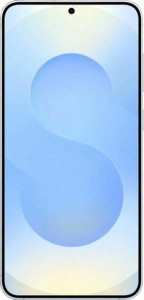
Samsung Galaxy S25
Samsung Galaxy Z Flip 7 FE

Samsung Galaxy S25 Samsung Galaxy Z Flip 7 FE

Overview

Welcome to our in-depth specs comparison between the Samsung Galaxy S25 and the Samsung Galaxy Z Flip 7 FE. These two Samsung devices take notably different approaches to the modern smartphone experience, with key battlegrounds spanning raw processing performance, camera versatility, form factor, and connectivity. Whether you are drawn to a traditional candy-bar design or the novelty of a foldable display, this comparison will help you understand exactly what each phone brings to the table.

Common Features

  • Both phones are waterproof with an IPX8 or higher water resistance rating.
  • Both phones feature an OLED/AMOLED display.
  • Both phones support a 120Hz refresh rate.
  • Both phones reach a typical brightness of 2600 nits.
  • HDR10 support is available on both phones.
  • HDR10+ support is available on both phones.
  • Always-On Display is available on both phones.
  • Both phones have a touchscreen.
  • Both phones have integrated LTE.
  • Both phones support 64-bit processing.
  • Both phones use DirectX 12.
  • Both phones have integrated graphics.
  • Both phones use big.LITTLE technology.
  • Both phones support HMP.
  • Both phones have TrustZone security.
  • Both phones support a maximum memory amount of 24GB.
  • Both phones have a multi-lens main camera with built-in optical image stabilization.
  • Both phones have a BSI CMOS sensor, continuous autofocus during video, phase-detection autofocus for photos, slow-motion video recording, and a built-in HDR mode.
  • Both phones run Android 15.
  • Both phones have clipboard warnings, location privacy options, and camera/microphone privacy options.
  • Cross-site tracking is not blocked on either phone.
  • Mail Privacy Protection is not available on either phone.
  • Both phones have theme customization and the ability to block app tracking.
  • Both phones have a 4000 mAh battery.
  • Both phones support wireless charging at 15W and fast wired charging at 25W.
  • Both phones support reverse wireless charging at 4.5W.
  • Neither phone has a removable battery.
  • Neither phone has a 3.5mm audio jack.
  • Both phones have stereo speakers.
  • Neither phone has a built-in radio.
  • Both phones support 5G, Bluetooth 5.4, NFC, USB Type-C, and have a fingerprint scanner.
  • Neither phone has an external memory slot.
  • Neither phone is DLNA-certified.
  • Both phones have a gyroscope.
  • Both phones have a video light.
  • Neither phone has a sapphire glass display or an e-paper display.

Main Differences

  • Weight is 162 g on Samsung Galaxy S25 and 187 g on Samsung Galaxy Z Flip 7 FE.
  • Thickness is 7.2 mm on Samsung Galaxy S25 and 6.9 mm on Samsung Galaxy Z Flip 7 FE.
  • Width is 70.5 mm on Samsung Galaxy S25 and 71.9 mm on Samsung Galaxy Z Flip 7 FE.
  • Height is 146.9 mm on Samsung Galaxy S25 and 165.1 mm on Samsung Galaxy Z Flip 7 FE.
  • Volume is 74.57 cm³ on Samsung Galaxy S25 and 81.91 cm³ on Samsung Galaxy Z Flip 7 FE.
  • Ingress Protection rating is IP68 on Samsung Galaxy S25 and IPX8 on Samsung Galaxy Z Flip 7 FE.
  • The Samsung Galaxy Z Flip 7 FE can be folded, while the Samsung Galaxy S25 cannot.
  • Screen size is 6.2″ on Samsung Galaxy S25 and 6.7″ on Samsung Galaxy Z Flip 7 FE.
  • Pixel density is 416 ppi on Samsung Galaxy S25 and 426 ppi on Samsung Galaxy Z Flip 7 FE.
  • Resolution is 1080 x 2340 px on Samsung Galaxy S25 and 1080 x 2640 px on Samsung Galaxy Z Flip 7 FE.
  • Branded damage-resistant glass is present on Samsung Galaxy S25 but not on Samsung Galaxy Z Flip 7 FE.
  • A secondary screen is available on Samsung Galaxy Z Flip 7 FE but not on Samsung Galaxy S25.
  • Internal storage is 512GB on Samsung Galaxy S25 and 256GB on Samsung Galaxy Z Flip 7 FE.
  • RAM is 12GB on Samsung Galaxy S25 and 8GB on Samsung Galaxy Z Flip 7 FE.
  • The chipset is Qualcomm Snapdragon 8 Elite on Samsung Galaxy S25 and Samsung Exynos 2400 on Samsung Galaxy Z Flip 7 FE.
  • The GPU is Adreno 830 on Samsung Galaxy S25 and Xclipse 940 on Samsung Galaxy Z Flip 7 FE.
  • CPU speed is 2 x 4.47 & 6 x 3.53 GHz on Samsung Galaxy S25 and 2 x 2.9 & 3 x 2.6 & 4 x 2 & 1 x 3.2 GHz on Samsung Galaxy Z Flip 7 FE.
  • Geekbench 6 multi-core score is 10050 on Samsung Galaxy S25 and 7000 on Samsung Galaxy Z Flip 7 FE.
  • Geekbench 6 single-core score is 3175 on Samsung Galaxy S25 and 2198 on Samsung Galaxy Z Flip 7 FE.
  • GPU clock speed is 1200 MHz on Samsung Galaxy S25 and 1009 MHz on Samsung Galaxy Z Flip 7 FE.
  • RAM speed is 5300 MHz on Samsung Galaxy S25 and 4200 MHz on Samsung Galaxy Z Flip 7 FE.
  • Semiconductor size is 3 nm on Samsung Galaxy S25 and 4 nm on Samsung Galaxy Z Flip 7 FE.
  • CPU thread count is 8 on Samsung Galaxy S25 and 10 on Samsung Galaxy Z Flip 7 FE.
  • Maximum memory bandwidth is 85.1 GB/s on Samsung Galaxy S25 and 64 GB/s on Samsung Galaxy Z Flip 7 FE.
  • Main camera megapixels are 50 & 12 & 10 MP on Samsung Galaxy S25 and 50 & 12 MP on Samsung Galaxy Z Flip 7 FE.
  • Main camera wide aperture values are f/1.8, f/2.2, and f/2.4 on Samsung Galaxy S25 and f/2.2 and f/1.8 on Samsung Galaxy Z Flip 7 FE.
  • Front camera resolution is 12MP on Samsung Galaxy S25 and 10MP on Samsung Galaxy Z Flip 7 FE.
  • Maximum main camera video recording resolution is 4320 x 30 fps on Samsung Galaxy S25 and 2160 x 60 fps on Samsung Galaxy Z Flip 7 FE.
  • A dual-tone LED flash is present on Samsung Galaxy S25 but not on Samsung Galaxy Z Flip 7 FE.
  • Number of flash LEDs is 2 on Samsung Galaxy S25 and 1 on Samsung Galaxy Z Flip 7 FE.
  • PC mode is supported on Samsung Galaxy S25 but not on Samsung Galaxy Z Flip 7 FE.
  • aptX audio support is present on Samsung Galaxy S25 but not on Samsung Galaxy Z Flip 7 FE.
  • Samsung Galaxy S25 supports Wi-Fi 7 (802.11be) in addition to Wi-Fi 4/5/6/6E, while Samsung Galaxy Z Flip 7 FE supports only Wi-Fi 4/5/6/6E.
  • SIM card support is 2 SIM and 2 eSIM on Samsung Galaxy S25 and 1 SIM and 1 eSIM on Samsung Galaxy Z Flip 7 FE.
  • USB version is 3.2 on Samsung Galaxy S25 and 2.0 on Samsung Galaxy Z Flip 7 FE.
  • Download speed is 10000 MBits/s on Samsung Galaxy S25 and 9640 MBits/s on Samsung Galaxy Z Flip 7 FE.
  • Upload speed is 3500 MBits/s on Samsung Galaxy S25 and 2550 MBits/s on Samsung Galaxy Z Flip 7 FE.
  • ANT+ support is present on Samsung Galaxy S25 but not on Samsung Galaxy Z Flip 7 FE.
Specs Comparison
Samsung Galaxy S25

Samsung Galaxy S25

Samsung Galaxy Z Flip 7 FE

Samsung Galaxy Z Flip 7 FE

Design:
water resistance Waterproof Waterproof
weight 162 g 187 g
thickness 7.2 mm 6.9 mm
width 70.5 mm 71.9 mm
height 146.9 mm 165.1 mm
volume 74.56644 cm³ 81.907761 cm³
Ingress Protection (IP) rating IP68 IPX8
can be folded

The most fundamental design difference between these two devices is that the Galaxy Z Flip 7 FE can be folded while the Galaxy S25 cannot. In practice, this means the Z Flip 7 FE — despite being taller (165.1 mm vs 146.9 mm) and having a larger overall volume (81.91 cm³ vs 74.57 cm³) when open — can collapse to roughly half its height for pocketing, a portability advantage the S25 simply cannot match in the same way.

Where the S25 does hold a concrete edge is weight: at 162 g versus 187 g, it is noticeably lighter in the hand — a 25 g difference that becomes perceptible during extended one-handed use or long calls. The S25 is also marginally thicker when unfolded (7.2 mm vs 6.9 mm), though this gap is negligible in daily use. On water resistance, both are rated Waterproof, but the S25 carries a full IP68 certification while the Z Flip 7 FE is rated IPX8 — meaning the Flip has no official dust-ingress protection, which could matter in sandy or dusty environments.

Overall, neither phone has a clean sweep in this category: the Galaxy S25 has the edge in raw handling comfort (lighter, dust-resistant) and everyday pocketability as a flat slab, while the Z Flip 7 FE wins on folding convenience and a slimmer unfolded profile. The right choice depends on whether the user values a compact flip form factor over a lighter, fully sealed build.

Display:
Display type OLED/AMOLED OLED/AMOLED
screen size 6.2" 6.7"
pixel density 416 ppi 426 ppi
resolution 1080 x 2340 px 1080 x 2640 px
refresh rate 120Hz 120Hz
brightness (typical) 2600 nits 2600 nits
has branded damage-resistant glass
supports HDR10
supports HDR10+
Always-On Display
Has a secondary screen
has a touch screen

Both phones share the same OLED/AMOLED panel technology, 120Hz refresh rate, and a peak brightness of 2600 nits — meaning outdoor visibility and scroll smoothness are effectively identical on paper. The real screen story is size: the Z Flip 7 FE unfolds to a 6.7″ display versus the S25's 6.2″, and while the pixel density difference is minimal (426 ppi vs 416 ppi), both are sharp enough that individual pixels are indistinguishable at normal viewing distances. The larger canvas of the Flip gives it a practical edge for media consumption and multitasking when fully open.

Two diverging specs shift the balance in opposite directions. The Galaxy S25 features branded damage-resistant glass on its display — a meaningful durability advantage that the Z Flip 7 FE lacks, likely a trade-off of the folding mechanism's design constraints. Drops and daily scratches are a more realistic concern on the Flip's unprotected inner screen. On the flip side (literally), the Z Flip 7 FE includes a secondary screen on its outer cover, allowing glanceable notifications, quick replies, and camera control without ever unfolding the device — a convenience the S25 cannot offer at all.

On balance, the Z Flip 7 FE has the display edge for feature richness, offering a larger main screen and a secondary cover display. However, users who prioritize long-term screen durability should note that the Galaxy S25 is the only one here with damage-resistant glass — a practical consideration that could matter significantly over the lifespan of the device.

Performance:
internal storage 512GB 256GB
RAM 12GB 8GB
Chipset (SoC) name Qualcomm Snapdragon 8 Elite Samsung Exynos 2400
GPU name Adreno 830 Xclipse 940
CPU speed 2 x 4.47 & 6 x 3.53 GHz 2 x 2.9 & 3 x 2.6 & 4 x 2 & 1 x 3.2 GHz
Geekbench 6 result (multi) 10050 7000
Geekbench 6 result (single) 3175 2198
GPU clock speed 1200 MHz 1009 MHz
Has integrated LTE
RAM speed 5300 MHz 4200 MHz
semiconductor size 3 nm 4 nm
Supports 64-bit
DirectX version DirectX 12 DirectX 12
Has integrated graphics
Uses big.LITTLE technology
CPU threads 8 threads 10 threads
Uses HMP
Has TrustZone
maximum memory bandwidth 85.1 GB/s 64 GB/s
maximum memory amount 24GB 24GB
uses multithreading
Thermal Design Power (TDP) 8.2W 6W
DDR memory version 5 5

The chipset gap here is substantial and consequential. The Galaxy S25 runs on the Qualcomm Snapdragon 8 Elite built on a 3 nm process, while the Z Flip 7 FE uses the Samsung Exynos 2400 on a 4 nm node. That single generation of process technology, combined with Qualcomm's architectural advantages, translates directly into benchmark results: the S25 scores 10,050 in Geekbench 6 multi-core versus 7,000 for the Flip — a roughly 43% lead. Single-core performance tells the same story (3,175 vs 2,198), meaning the S25 is faster not just at parallelized workloads but at the everyday, single-threaded tasks that determine perceived snappiness.

Memory and storage compound this advantage further. The S25 pairs its chip with 12 GB of RAM at 5,300 MHz and offers up to 512 GB of internal storage, versus 8 GB at 4,200 MHz and 256 GB on the Flip. More RAM at higher speeds means the S25 can keep more apps alive in the background and handle memory-intensive tasks — like AI processing or video editing — with less throttling. The S25 also delivers significantly higher memory bandwidth (85.1 GB/s vs 64 GB/s), which accelerates GPU-bound workloads like gaming and computational photography. The Flip's lower 6W TDP versus the S25's 8.2W suggests it runs cooler under load, but that efficiency comes at the direct cost of peak performance.

The Galaxy S25 holds a clear and decisive performance advantage across every measurable dimension in this category — faster CPU, faster GPU, more RAM, quicker memory, and greater storage. For users who game heavily, multitask aggressively, or plan to keep their device for several years, this gap is meaningful. The Z Flip 7 FE is no slouch for everyday use, but the S25 is in a different performance tier entirely.

Cameras:
megapixels (main camera) 50 & 12 & 10 MP 50 & 12 MP
wide aperture (main camera) 1.8 & 2.2 & 2.4f 2.2 & 1.8f
Has a dual-lens (or multi-lens) main camera
megapixels (front camera) 12MP 10MP
has built-in optical image stabilization
video recording (main camera) 4320 x 30 fps 2160 x 60 fps
Has a dual-tone LED flash
number of flash LEDs 2 1
has a BSI sensor
has a CMOS sensor
has continuous autofocus when recording movies
Has phase-detection autofocus for photos
supports slow-motion video recording
has a built-in HDR mode
has manual exposure
has a flash
has manual ISO
has a serial shot mode
has manual focus
has a front camera
Has laser autofocus
Shoots 360° panorama
has manual white balance
shoots raw
has touch autofocus
can create panoramas in-camera
wide aperture (front camera) 2.2f 2.2f
Has timelapse function
Has a front-facing LED flash
has a dual-lens (or multi-lens) front camera
Has a RGB LED flash

The Samsung Galaxy S25 and Samsung Galaxy Z Flip 7 FE both feature multi-lens main cameras, but with slightly different configurations. The S25 has a triple-lens main camera with 50 MP, 12 MP, and 10 MP lenses, while the Z Flip 7 FE has a dual-lens setup with 50 MP and 12 MP lenses. Both phones have wide apertures, but the S25's main camera has apertures of f/1.8, f/2.2, and f/2.4, while the Z Flip 7 FE has f/2.2 and f/1.8.

Both devices support a wide range of camera features, including phase-detection autofocus, continuous autofocus during video recording, manual exposure, and the ability to shoot raw images. They also support slow-motion video recording, HDR mode, timelapse, and in-camera panoramas. However, the S25 offers a higher video recording resolution for its main camera, at 4320 x 30 fps, compared to the Z Flip 7 FE’s 2160 x 60 fps. The Z Flip 7 FE also has a single LED flash with one LED, whereas the S25 has a dual-tone LED flash with two LEDs.

For front cameras, the S25 has a 12 MP sensor with a wide aperture of f/2.2, while the Z Flip 7 FE has a 10 MP front camera with the same f/2.2 aperture. Both phones feature a front camera with manual focus, touch autofocus, and the ability to shoot raw images, but the S25 does not include a front-facing LED flash, while the Z Flip 7 FE does not either. The S25 lacks a dual-lens front camera, which is also true for the Z Flip 7 FE.

Operating system:
Android version Android 15 Android 15
has clipboard warnings
has location privacy options
has camera/microphone privacy options
has Mail Privacy Protection
has theme customization
can block app tracking
blocks cross-site tracking
has on-device machine learning
has notification permissions
has media picker
Can play games while they download
has dark mode
has Wi-Fi password sharing
has battery health check
has an extra dim mode
has focus modes
has dynamic theming
can offload apps
Has customizable notifications
has Live Text
has full-page screenshots
supports split screen
gets direct OS updates
has PiP
Can be used as a PC
Has sharing intents
has a child lock
Supports widgets
Is free and open source
Has offline voice recognition
has voice commands
Tracks the current position of a mobile device
is a multi-user system
has Quick Start

Both the Samsung Galaxy S25 and the Samsung Galaxy Z Flip 7 FE run Android 15 and share a number of similar software features, including clipboard warnings, location privacy options, camera/microphone privacy options, theme customization, and the ability to block app tracking. Both devices also support on-device machine learning, notification permissions, media pickers, and the ability to play games while they download. Additionally, both phones have dark mode, battery health checks, and extra dim mode.

While the software experience is largely identical across both devices, there are a few differences. The S25 supports PiP (Picture-in-Picture) and can be used as a PC, while the Z Flip 7 FE lacks the latter feature. Both devices offer customizable notifications, Live Text, full-page screenshots, split-screen support, and widgets. However, neither device supports Quick Start.

Other common features include offline voice recognition, voice commands, tracking the current position of the device, and being a multi-user system. Neither device supports Wi-Fi password sharing or focus modes, and both phones lack Mail Privacy Protection and cross-site tracking blocking. Overall, the operating system experience is very similar on both devices, with the key distinction being the ability to use the S25 as a PC.

Battery:
battery power 4000 mAh 4000 mAh
has wireless charging
Supports fast charging
charging speed 25W 25W
wireless charging speed 15W 15W
has reverse wireless charging
reverse wireless charging speed 4.5W 4.5W
has a removable battery
has a battery level indicator
has a rechargeable battery

Both the Samsung Galaxy S25 and Samsung Galaxy Z Flip 7 FE are equipped with a 4000 mAh battery, providing similar battery power. They both support wireless charging at a speed of 15W and fast charging at 25W, ensuring quick power replenishment. Additionally, both devices feature reverse wireless charging at 4.5W, allowing them to charge other devices wirelessly.

Neither phone has a removable battery, but both include a battery level indicator and have a rechargeable battery. The charging speeds for both phones are identical, with no differences in their charging or wireless charging capabilities. The overall battery experience is the same across both models.

There are no other significant differences in the battery specifications between the two devices, and both share the same core features such as wireless charging, reverse wireless charging, and fast charging support.

Audio:
has a socket for a 3.5 mm audio jack
has stereo speakers
has aptX
Has a radio

Both the Samsung Galaxy S25 and Samsung Galaxy Z Flip 7 FE do not include a 3.5 mm audio jack, meaning users will need to rely on wireless or USB-C audio options. Both devices are equipped with stereo speakers, providing a more immersive audio experience. However, the S25 supports aptX, which is a codec designed for higher-quality wireless audio, while the Z Flip 7 FE does not support aptX.

Neither phone features a radio, so users will need to use streaming services or other alternatives for radio listening. The audio experience on both phones is similar in terms of speaker quality, but the S25's support for aptX gives it an edge in terms of high-quality wireless audio playback.

Overall, the two phones are quite similar in terms of audio features, with the key difference being the S25's aptX support, which the Z Flip 7 FE lacks.

Connectivity & Features:
release date January 2025 July 2025
has 5G support
Wi-Fi version Wi-Fi 4 (802.11n), Wi-Fi 6 (802.11ax), Wi-Fi 5 (802.11ac), Wi-Fi 7 (802.11be), Wi-Fi 6E (802.11ax) Wi-Fi 6 (802.11ax), Wi-Fi 5 (802.11ac), Wi-Fi 4 (802.11n), Wi-Fi 6E (802.11ax)
SIM cards 2 SIM, 2 eSIM 1 SIM, 1 eSIM
Bluetooth version 5.4 5.4
has an external memory slot
Has USB Type-C
USB version 3.2 2
has NFC
download speed 10000 MBits/s 9640 MBits/s
upload speed 3500 MBits/s 2550 MBits/s
Has a fingerprint scanner
is DLNA-certified
has a gyroscope
supports ANT+
Has a heart rate monitor
has GPS
has a compass
supports Wi-Fi
Has an infrared sensor
has an accelerometer
has a cellular module
Has a barometer
Uses 3D facial recognition
Has an iris scanner
Stylus included
supports Galileo
Has motion tracking
Has optical tracking
Has a built-in projector

Both the Samsung Galaxy S25 and Samsung Galaxy Z Flip 7 FE support 5G, ensuring fast mobile data speeds. They also feature Wi-Fi 6 (802.11ax), Wi-Fi 5 (802.11ac), Wi-Fi 4 (802.11n), and Wi-Fi 6E (802.11ax), providing a range of Wi-Fi connectivity options. The S25 has a slightly higher download speed of 10000 Mbits/s compared to the Z Flip 7 FE's 9640 Mbits/s, and the S25 also offers a faster upload speed of 3500 Mbits/s versus the Z Flip 7 FE's 2550 Mbits/s.

In terms of SIM card support, the S25 can accommodate two physical SIM cards and two eSIMs, while the Z Flip 7 FE supports one physical SIM card and one eSIM. Both devices have Bluetooth 5.4, NFC, USB Type-C (though the S25 has USB 3.2, while the Z Flip 7 FE has USB 2.0), and a fingerprint scanner for security. The S25 supports ANT+, while the Z Flip 7 FE does not.

Both phones come equipped with essential sensors like a gyroscope, accelerometer, barometer, GPS, and a compass, as well as support for Galileo positioning. They do not include features like motion tracking, optical tracking, a built-in projector, or 3D facial recognition. Both models are also missing an infrared sensor and an iris scanner. While neither device includes an external memory slot or stylus, both have the same core connectivity features, with only small differences in download/upload speeds, USB versions, and ANT+ support.

Miscellaneous:
has a video light
Has sapphire glass display
Has an e-paper display

Both the Samsung Galaxy S25 and Samsung Galaxy Z Flip 7 FE come with a video light, allowing for better illumination when recording videos in low-light conditions. Neither phone features a sapphire glass display, and neither has an e-paper display.

There are no differences between the two devices in this miscellaneous category. Both phones share the same features regarding video lighting and display types.

In summary, the Samsung Galaxy S25 and Z Flip 7 FE are identical in terms of these specific miscellaneous features.

Comparison Summary & Verdict

After examining every specification, a clear picture emerges for each device. The Samsung Galaxy S25 is the stronger performer overall, offering the faster Qualcomm Snapdragon 8 Elite chipset, higher Geekbench scores, more RAM, double the internal storage, a triple-lens camera system capable of 8K video recording, Wi-Fi 7 support, dual SIM with dual eSIM, and USB 3.2 speeds. It is the better fit for power users, content creators, and anyone who demands top-tier processing and connectivity. The Samsung Galaxy Z Flip 7 FE, on the other hand, offers a unique foldable form factor with a secondary cover screen, a larger 6.7-inch display when open, and a slightly slimmer profile when folded. It suits users who prioritize portability, style, and the practicality of a compact foldable design over raw performance. Both phones share the same battery capacity, charging speeds, and Android 15 experience, so the choice ultimately comes down to performance versus form.

Samsung Galaxy S25
Buy Samsung Galaxy S25 if...

Buy the Samsung Galaxy S25 if you want superior processing power, more RAM and storage, a versatile triple-camera system with 8K video, Wi-Fi 7, and dual SIM support in a lightweight traditional design.

Samsung Galaxy Z Flip 7 FE
Buy Samsung Galaxy Z Flip 7 FE if...

Buy the Samsung Galaxy Z Flip 7 FE if you want a unique foldable design with a secondary cover screen and a larger inner display, and you value compact portability over top-end performance.