Samsung Galaxy S25
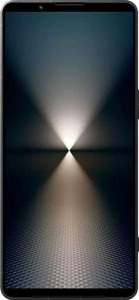
Sony Xperia 1 VII

Samsung Galaxy S25 Sony Xperia 1 VII

Overview

When comparing the Samsung Galaxy S25 and the Sony Xperia 1 VII, two flagship Android smartphones come head to head with surprisingly different priorities. While both share the powerful Qualcomm Snapdragon 8 Elite chipset and a polished Android 15 experience, they diverge sharply on design philosophy, camera capabilities, and everyday usability. Whether you care most about portability, zoom range, or battery endurance, this comparison has the detail you need to decide.

Common Features

  • Both phones are waterproof with an IP68 ingress protection rating.
  • Neither phone has a rugged build.
  • Neither phone can be folded.
  • Both phones feature an OLED/AMOLED display.
  • Both phones share the same resolution of 1080 x 2340 px.
  • Both phones support a 120Hz refresh rate.
  • Both phones have a 240Hz touch sampling rate.
  • Both phones feature Gorilla Glass Victus 2 for damage-resistant glass protection.
  • HDR10 support is available on both phones.
  • Always-On Display is available on both phones.
  • Both phones are powered by the Qualcomm Snapdragon 8 Elite chipset with an Adreno 830 GPU.
  • Both phones come with 12GB of RAM at 5300 MHz and 512GB of internal storage.
  • Both phones use a 3 nm semiconductor and support 64-bit processing.
  • Both phones have a multi-lens main camera with built-in optical image stabilization.
  • Both phones support phase-detection autofocus, continuous autofocus when recording, slow-motion video, and a built-in HDR mode.
  • Both phones have a 12MP front camera.
  • Both phones run Android 15 with clipboard warnings, location privacy options, and camera/microphone privacy options.
  • Both phones support wireless charging at 15W, fast charging, and reverse wireless charging.
  • Neither phone comes with a charger in the box, and neither has a removable battery.
  • Both phones have stereo speakers and support aptX, LDAC, aptX Adaptive, and aptX Lossless audio codecs.
  • Neither phone has a built-in radio.
  • Both phones have 2 microphones.
  • Both phones support 5G, USB Type-C 3.2, NFC, download speeds of 10000 Mbits/s, and upload speeds of 3500 Mbits/s.
  • Both phones have a fingerprint scanner.
  • Emergency SOS via satellite is not available on either phone.
  • Both phones support Wi-Fi 7 (802.11be), Wi-Fi 6E, Wi-Fi 6, Wi-Fi 5, and Wi-Fi 4.
  • Neither phone has sapphire glass, a curved display, or an e-paper display.
  • Both phones have a video light.

Main Differences

  • Weight is 162 g on Samsung Galaxy S25 and 197 g on Sony Xperia 1 VII.
  • Thickness is 7.2 mm on Samsung Galaxy S25 and 8.2 mm on Sony Xperia 1 VII.
  • Width is 70.5 mm on Samsung Galaxy S25 and 74 mm on Sony Xperia 1 VII.
  • Height is 146.9 mm on Samsung Galaxy S25 and 162 mm on Sony Xperia 1 VII.
  • Volume is 74.57 cm³ on Samsung Galaxy S25 and 98.30 cm³ on Sony Xperia 1 VII.
  • Screen size is 6.2″ on Samsung Galaxy S25 and 6.5″ on Sony Xperia 1 VII.
  • Pixel density is 416 ppi on Samsung Galaxy S25 and 396 ppi on Sony Xperia 1 VII.
  • HDR10+ support is present on Samsung Galaxy S25 but not available on Sony Xperia 1 VII.
  • AnTuTu benchmark score is 3,050,000 on Samsung Galaxy S25 and 2,062,177 on Sony Xperia 1 VII.
  • Peak CPU speed is 2 x 4.47 GHz on Samsung Galaxy S25 and 2 x 4.32 GHz on Sony Xperia 1 VII.
  • GPU clock speed is 1200 MHz on Samsung Galaxy S25 and 1100 MHz on Sony Xperia 1 VII.
  • 3DMark Wild Life Extreme benchmark score is 6755 on Samsung Galaxy S25 and 6276 on Sony Xperia 1 VII.
  • Main camera megapixels are 50 & 12 & 10 MP on Samsung Galaxy S25 and 48 & 12 & 48 MP on Sony Xperia 1 VII.
  • Optical zoom is 3x on Samsung Galaxy S25 and 7.1x on Sony Xperia 1 VII.
  • Maximum focal length is 67 mm on Samsung Galaxy S25 and 170 mm on Sony Xperia 1 VII.
  • Minimum focal length is 13 mm on Samsung Galaxy S25 and 16 mm on Sony Xperia 1 VII.
  • A dual-tone LED flash with 2 LEDs is present on Samsung Galaxy S25, while Sony Xperia 1 VII has a single LED flash without dual-tone.
  • A BSI sensor is present on Samsung Galaxy S25 but not on Sony Xperia 1 VII.
  • PC mode is supported on Samsung Galaxy S25 but not available on Sony Xperia 1 VII.
  • Battery capacity is 4000 mAh on Samsung Galaxy S25 and 5000 mAh on Sony Xperia 1 VII.
  • Wired charging speed is 25W on Samsung Galaxy S25 and 30W on Sony Xperia 1 VII.
  • A 3.5 mm audio jack is absent on Samsung Galaxy S25 but present on Sony Xperia 1 VII.
  • aptX HD support is present on Sony Xperia 1 VII but not available on Samsung Galaxy S25.
  • Bluetooth version is 5.4 on Samsung Galaxy S25 and 6 on Sony Xperia 1 VII.
  • SIM card support is 2 SIM and 2 eSIM on Samsung Galaxy S25 and 1 SIM and 1 eSIM on Sony Xperia 1 VII.
  • An external memory slot is absent on Samsung Galaxy S25 but present on Sony Xperia 1 VII.
  • ANT+ support is present on Samsung Galaxy S25 but not available on Sony Xperia 1 VII.
Specs Comparison
Samsung Galaxy S25

Samsung Galaxy S25

Sony Xperia 1 VII

Sony Xperia 1 VII

Design:
water resistance Waterproof Waterproof
weight 162 g 197 g
thickness 7.2 mm 8.2 mm
width 70.5 mm 74 mm
height 146.9 mm 162 mm
volume 74.56644 cm³ 98.3016 cm³
Ingress Protection (IP) rating IP68 IP68
has a rugged build
can be folded

Both the Samsung Galaxy S25 and the Sony Xperia 1 VII share the same IP68 waterproof rating, meaning neither has an edge in water or dust resistance — both can handle submersion under the same standardized conditions. Neither offers a rugged build or a foldable form factor, so those dimensions are a wash.

Where the two diverge significantly is in physical footprint. The Galaxy S25 is a noticeably more compact device: at 146.9 × 70.5 × 7.2 mm and 162 g, it is slimmer, narrower, shorter, and lighter than the Xperia 1 VII, which measures 162 × 74 × 8.2 mm and weighs 197 g. That 35 g weight gap is meaningful in daily use — the S25 will feel appreciably lighter during prolonged calls or one-handed browsing sessions. The 1 mm difference in thickness may seem minor, but combined with the larger overall volume (98.3 cm³ vs 74.6 cm³), the Xperia is a substantially bulkier device — roughly 32% more volume.

For users who prioritize pocketability and one-handed comfort, the Galaxy S25 has a clear design edge. The Xperia 1 VII's larger frame may appeal to those who prefer a bigger canvas, but purely from a handling and portability standpoint, the S25 is the more ergonomic choice based on these specs.

Display:
Display type OLED/AMOLED OLED/AMOLED
screen size 6.2" 6.5"
pixel density 416 ppi 396 ppi
resolution 1080 x 2340 px 1080 x 2340 px
refresh rate 120Hz 120Hz
touch sampling rate 240Hz 240Hz
has branded damage-resistant glass
Gorilla Glass version Gorilla Glass Victus 2 Gorilla Glass Victus 2
supports HDR10
supports HDR10+
Always-On Display
supports Dolby Vision
Has a secondary screen
has a touch screen

On the surface, these two displays look nearly identical — both are OLED/AMOLED panels running at 120Hz with a 240Hz touch sampling rate, protected by Gorilla Glass Victus 2, and sharing the exact same 1080 x 2340 px resolution. For most everyday tasks, that common foundation means both screens will look vibrant and feel equally responsive to touch.

The meaningful differences emerge when you dig deeper. Because the Galaxy S25 packs that same resolution into a smaller 6.2″ panel, it achieves a sharper 416 ppi pixel density versus the Xperia 1 VII's 396 ppi on its 6.5″ screen. While both exceed the threshold where individual pixels are imperceptible at normal viewing distances, the S25 has a tangible edge for fine text and detail. On the HDR front, the S25 also supports HDR10+ — a dynamic metadata standard that enables scene-by-scene tone mapping for compatible content — whereas the Xperia 1 VII tops out at HDR10, which uses static metadata. For streaming HDR video on supported platforms, this gives the S25 a qualitative advantage in contrast and highlight rendering.

The Galaxy S25 holds a narrow but real display edge thanks to its higher pixel density and HDR10+ support. The Xperia 1 VII's larger screen may suit users who value screen real estate, but in terms of outright display quality metrics provided here, the S25 comes out ahead.

Performance:
internal storage 512GB 512GB
RAM 12GB 12GB
AnTuTu benchmark score 3050000 2062177
Chipset (SoC) name Qualcomm Snapdragon 8 Elite Qualcomm Snapdragon 8 Elite
GPU name Adreno 830 Adreno 830
CPU speed 2 x 4.47 & 6 x 3.53 GHz 2 x 4.32 & 6 x 3.53 GHz
Geekbench 6 result (multi) 10050 10059
Geekbench 6 result (single) 3175 3234
3DMark Wild Life Extreme benchmark 6755 6276
GPU clock speed 1200 MHz 1100 MHz
Has integrated LTE
RAM speed 5300 MHz 5300 MHz
semiconductor size 3 nm 3 nm
Supports 64-bit
DirectX version DirectX 12 DirectX 12
Has integrated graphics
OpenGL version 3.2 3.2
OpenGL ES version 3.2 3.2
Uses big.LITTLE technology
CPU threads 8 threads 8 threads
Uses HMP
Has TrustZone
maximum memory bandwidth 85.1 GB/s 85.1 GB/s
OpenCL version 3 3
memory channels 2 2
L2 cache 12 MB 12 MB
Supports ECC memory
L1 cache 192 KB 192 KB
maximum memory amount 24GB 24GB
uses multithreading
GPU turbo 1100 MHz 1100 MHz
Thermal Design Power (TDP) 8.2W 8.2W
DDR memory version 5 5
shading units 1536 1536
supported displays 2 2
L3 cache 8 MB 8 MB

At the silicon level, these two phones start from the same place: both run the Qualcomm Snapdragon 8 Elite on a 3nm process with the Adreno 830 GPU, 12GB of DDR5 RAM, and identical memory bandwidth, cache configurations, and TDP. In theory, they should be performance twins — but the benchmark data tells a more nuanced story.

CPU benchmarks are essentially a draw. Geekbench 6 single-core (3175 vs 3234) and multi-core (10050 vs 10059) scores are statistically indistinguishable, reflecting the near-identical core configurations — the only difference being the S25's slightly higher prime core clock of 4.47 GHz versus the Xperia 1 VII's 4.32 GHz. Where the gap widens is in GPU performance: the Galaxy S25's higher base GPU clock of 1200 MHz versus 1100 MHz on the Xperia translates into a lead in the 3DMark Wild Life Extreme score (6755 vs 6276). The AnTuTu gap is even more striking — 3,050,000 versus 2,062,177 — a difference too large to attribute to the clock speed delta alone, suggesting Samsung's platform tuning and sustained performance optimisation play a significant role.

For everyday tasks and even CPU-bound workloads, these phones are functionally equivalent. But for GPU-intensive use cases like high-end gaming and sustained 3D rendering, the Galaxy S25 holds a clear performance edge, backed by a higher GPU clock and substantially stronger composite benchmark results.

Cameras:
megapixels (main camera) 50 & 12 & 10 MP 48 & 12 & 48 MP
wide aperture (main camera) 1.8 & 2.2 & 2.4f 1.9 & 2.3 & 2f
Has a dual-lens (or multi-lens) main camera
megapixels (front camera) 12MP 12MP
has built-in optical image stabilization
video recording (main camera) 4320 x 30 fps 2160 x 120 fps
Has a dual-tone LED flash
number of flash LEDs 2 1
has a BSI sensor
has a CMOS sensor
has continuous autofocus when recording movies
Has phase-detection autofocus for photos
supports slow-motion video recording
has a built-in HDR mode
has manual exposure
has a flash
optical zoom 3x 7.1x
has manual ISO
has a serial shot mode
has manual focus
has a front camera
Has laser autofocus
Shoots 360° panorama
has manual white balance
shoots raw
has touch autofocus
has manual shutter speed
can create panoramas in-camera
wide aperture (front camera) 2.2f 2f
Has timelapse function
minimum focal length 13 mm 16 mm
maximum focal length 67 mm 170 mm
Has a front-facing LED flash
has a dual-lens (or multi-lens) front camera
supports HDR10 recording
supports Dolby Vision recording
has a front-facing camera under the display
Has a RGB LED flash
has 3D photo/video recording capabilities

Both phones field a capable triple-camera system with OIS, phase-detection autofocus, RAW shooting, and matching 12MP front cameras — a solid shared baseline. The real divergence lies in zoom capability. The Galaxy S25 tops out at 3x optical zoom with a focal range stretching to 67mm, while the Xperia 1 VII reaches a substantial 7.1x optical zoom and extends all the way to 170mm. For users who shoot sports, wildlife, or any distant subject, that is a decisive advantage — more than double the reach with no digital degradation.

The telephoto hardware gap is reinforced by resolution: the Xperia's third lens packs 48MP, compared to just 10MP on the S25's equivalent lens. A higher-resolution telephoto enables more aggressive cropping in post while retaining detail. The Xperia also has a wider aperture on its telephoto (f/2.0 vs f/2.4), which means better light intake at distance — an important real-world advantage for telephoto shots in dim conditions. On the video side, the trade-off flips: the S25 supports 8K (4320p) recording at 30fps, whereas the Xperia caps at 4K (2160p) but reaches 120fps at that resolution, enabling smooth slow-motion 4K footage — a different but equally compelling use case depending on the user's priorities.

For zoom photography, the Xperia 1 VII holds a clear and meaningful edge with its superior reach, higher-resolution telephoto, and wider telephoto aperture. The S25 counters specifically for users who prioritize maximum video resolution. But as an overall camera system judged on versatility of focal range and telephoto quality, the Xperia comes out ahead.

Operating system:
Android version Android 15 Android 15
has clipboard warnings
has location privacy options
has camera/microphone privacy options
has Mail Privacy Protection
has theme customization
can block app tracking
blocks cross-site tracking
has on-device machine learning
has notification permissions
has media picker
Can play games while they download
has dark mode
has Wi-Fi password sharing
has battery health check
has an extra dim mode
has focus modes
has dynamic theming
can offload apps
Has customizable notifications
has Live Text
has full-page screenshots
supports split screen
gets direct OS updates
has PiP
Can be used as a PC
Has sharing intents
has a child lock
Supports widgets
Is free and open source
Has offline voice recognition
has voice commands
Tracks the current position of a mobile device
is a multi-user system
has Quick Start

Across the operating system spec sheet, these two phones are remarkably aligned. Both ship with Android 15, and every major software feature — dynamic theming, dark mode, split-screen multitasking, Picture-in-Picture, on-device machine learning, offline voice recognition, and a full suite of privacy controls — is present on both devices. For the vast majority of users, the day-to-day software experience will feel functionally identical.

The single differentiator in this entire category is PC mode: the Galaxy S25 supports it, the Xperia 1 VII does not. This feature allows the S25 to output a desktop-style interface when connected to an external display, effectively letting the phone substitute for a basic PC. For users who travel light or want to consolidate their devices, this is a genuinely useful productivity capability — not a niche gimmick.

Given how closely matched these two are on software, the Galaxy S25 takes a narrow edge here solely on the strength of PC mode support. It is the only meaningful differentiator the data provides, but for the right user — one who values mobile-to-desktop flexibility — it could be a deciding factor.

Battery:
battery power 4000 mAh 5000 mAh
has wireless charging
Supports fast charging
charging speed 25W 30W
wireless charging speed 15W 15W
has reverse wireless charging
comes with a charger
has a removable battery
has a battery level indicator
has a rechargeable battery

Battery is one of the cleaner differentiators between these two phones. The Xperia 1 VII packs a 5000 mAh cell versus the Galaxy S25's 4000 mAh — a 25% larger capacity that, all else being equal, translates directly into more time between charges. For heavy users who regularly push through long days, that gap is meaningful and will be felt in real use.

The charging story also favors the Xperia, if modestly. Its 30W wired charging edges out the S25's 25W, meaning faster top-ups when you do plug in. Wireless charging is identical at 15W on both, and both support reverse wireless charging — useful for topping up accessories like earbuds. Neither phone ships with a charger in the box, so that's a shared inconvenience rather than a differentiator.

The Xperia 1 VII holds a clear battery advantage on both capacity and wired charging speed. Given that the S25 is a more compact device its smaller battery is somewhat expected, but users who prioritize all-day and multi-day endurance will find the Xperia the stronger choice based purely on these specs.

Audio:
has a socket for a 3.5 mm audio jack
has stereo speakers
has aptX
has LDAC
has aptX HD
has aptX Adaptive
has aptX Lossless
Has a radio
number of microphones 2 2

Wireless audio codec support is virtually identical across both phones — aptX, LDAC, aptX Adaptive, and aptX Lossless are all present on both, meaning users of high-resolution Bluetooth headphones will get the same lossless and low-latency wireless audio experience regardless of which device they choose. Stereo speakers and a matched dual-microphone setup round out the shared feature set.

Two differences stand out. First, the Xperia 1 VII adds aptX HD to its codec roster — a high-resolution Bluetooth format that the S25 omits. While aptX Adaptive and aptX Lossless already cover high-quality wireless audio, aptX HD compatibility broadens headphone pairing options for users with older high-res Bluetooth gear. Second, and more significantly for wired audio enthusiasts, the Xperia retains a 3.5mm headphone jack — a feature the Galaxy S25 does not offer. For users with wired headphones or who prefer the reliability and zero-latency nature of a wired connection, this is a concrete and practical advantage.

The Xperia 1 VII is the stronger audio package based on these specs. Its superset of Bluetooth codecs and, more importantly, the inclusion of a headphone jack give it a clear edge over the S25 for audio-focused users — particularly those invested in wired listening.

Connectivity & Features:
release date January 2025 May 2025
has 5G support
Wi-Fi version Wi-Fi 4 (802.11n), Wi-Fi 6 (802.11ax), Wi-Fi 5 (802.11ac), Wi-Fi 7 (802.11be), Wi-Fi 6E (802.11ax) Wi-Fi 4 (802.11n), Wi-Fi 5 (802.11ac), Wi-Fi 6 (802.11ax), Wi-Fi 6E (802.11ax), Wi-Fi 7 (802.11be)
SIM cards 2 SIM, 2 eSIM 1 SIM, 1 eSIM
Bluetooth version 5.4 6
has an external memory slot
Has USB Type-C
USB version 3.2 3.2
has NFC
download speed 10000 MBits/s 10000 MBits/s
upload speed 3500 MBits/s 3500 MBits/s
Has a fingerprint scanner
has emergency SOS via satellite
has crash detection
is DLNA-certified
has a gyroscope
supports ANT+
Has a heart rate monitor
has GPS
has a compass
supports Wi-Fi
Has an infrared sensor
has an accelerometer
has a cellular module
Has a barometer
has an HDMI output
Uses 3D facial recognition
Has an iris scanner
Stylus included
supports Galileo
Has motion tracking
Has optical tracking
Has a built-in projector

The connectivity foundation is virtually identical: both phones support 5G, Wi-Fi 7, USB 3.2 Type-C, NFC, and an identical set of sensors including GPS, barometer, gyroscope, and Galileo. Cellular speeds are matched too, so neither has an edge in raw network throughput.

The meaningful divergences cut in different directions for different users. The Xperia 1 VII steps ahead with Bluetooth 6.0 versus the S25's 5.4 — the newer version brings improved connection stability, better multi-device handling, and lower latency, which matters for wireless audio and peripherals. The Xperia also includes an external memory card slot, a feature the S25 drops entirely — a significant practical advantage for users who want to expand storage affordably or transfer files physically. The Galaxy S25 counters with dual SIM support — 2 SIM + 2 eSIM slots versus the Xperia's single physical SIM and single eSIM — a meaningful benefit for frequent travelers or anyone managing personal and work lines simultaneously. The S25 also supports ANT+, a protocol used by fitness equipment and sports accessories, which the Xperia omits.

This category is a genuine split depending on priorities. For storage flexibility and future-proof Bluetooth, the Xperia 1 VII has the edge; for dual-SIM flexibility and fitness accessory compatibility, the Galaxy S25 wins. Overall, the Xperia's advantages — expandable storage and newer Bluetooth — are likely to benefit a broader range of users, giving it a slight overall edge in this group.

Miscellaneous:
has a video light
Has sapphire glass display
Has a curved display
Has an e-paper display

The miscellaneous spec group offers no differentiation whatsoever between these two phones. Both have a video light, neither has a sapphire glass display, a curved display, or an e-paper display — every data point is an exact match.

This is a complete tie. Based strictly on the provided specs, there is no basis to favor one device over the other in this category.

Comparison Summary & Verdict

After examining every specification, the Samsung Galaxy S25 and Sony Xperia 1 VII each carve out a distinct identity. The Galaxy S25 stands out for its lighter, more compact build at just 162 g and 7.2 mm thin, its higher AnTuTu benchmark score, HDR10+ display support, and the ability to function as a PC — making it the sharper choice for users who value portability and raw performance. The Xperia 1 VII, on the other hand, wins on camera versatility with a remarkable 7.1x optical zoom and a 170 mm maximum focal length, pairs that with a larger 5000 mAh battery and 30W charging, and adds enthusiast-friendly extras like a 3.5 mm headphone jack, aptX HD, Bluetooth 6, and expandable storage. Casual users and those who want a sleek everyday device will gravitate toward the Galaxy S25, while photography enthusiasts and power users who demand audio flexibility and endurance will find the Xperia 1 VII a far more rewarding long-term companion.

Samsung Galaxy S25
Buy Samsung Galaxy S25 if...

Buy the Samsung Galaxy S25 if you want a lighter, more compact flagship with stronger benchmark performance, HDR10+ display support, and the convenience of desktop PC mode.

Sony Xperia 1 VII
Buy Sony Xperia 1 VII if...

Buy the Sony Xperia 1 VII if you prioritize versatile camera zoom reaching 7.1x, a larger battery with faster wired charging, a headphone jack, and expandable storage.