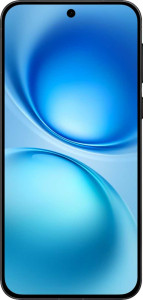
The chipset gap here is substantial. The Samsung Galaxy S25 runs on the Qualcomm Snapdragon 8 Elite, fabricated on a 3 nm process, while the Vivo X200 FE uses the MediaTek Dimensity 9300 Plus on a 4 nm node. That one-generation manufacturing difference matters: the smaller node delivers better power efficiency, meaning the S25 can sustain peak performance longer before thermal throttling kicks in. The benchmark numbers make the gap concrete — the Galaxy S25 scores roughly 3,050,000 on AnTuTu versus the X200 FE's 1,793,117, a lead of over 70%. Geekbench 6 tells the same story: 3,175 vs. 2,302 in single-core and 10,050 vs. 7,547 in multi-core. Single-core performance in particular drives everyday responsiveness — app launches, UI snappiness, typing lag — and the S25's lead there is decisive.
Memory bandwidth and CPU architecture reinforce the S25's advantage. At 85.1 GB/s versus 76.8 GB/s, the Galaxy S25 moves data to and from RAM faster, which benefits GPU-intensive tasks, computational photography, and AI workloads. The S25 also supports CPU multithreading while the X200 FE does not — a detail that becomes relevant under heavy parallel workloads like video encoding or running multiple demanding background processes. One area where the X200 FE partially compensates is its larger 18 MB L3 cache (versus the S25's 8 MB), which can reduce memory latency for cache-friendly workloads, though this is a narrow advantage in specific scenarios.
With identical 12 GB of RAM and 512 GB of storage on both devices, the day-to-day memory experience is equivalent — but the underlying silicon is not. The Samsung Galaxy S25 holds a commanding performance edge across the board, making it the clear winner in this category for users who prioritize processing speed, gaming, or future-proofing their device.