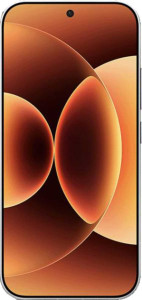
Samsung Galaxy S25
Xiaomi 17 Pro

Samsung Galaxy S25 Xiaomi 17 Pro

Overview

Welcome to our in-depth spec comparison between the Samsung Galaxy S25 and the Xiaomi 17 Pro. Both flagship smartphones share a solid foundation — IP68 waterproofing, 120Hz OLED displays, and the latest Snapdragon silicon — yet they diverge sharply when it comes to battery capacity and charging speeds, camera configurations, display refinements, and overall form factor. Read on to discover which device best aligns with your priorities.

Common Features

  • Both phones are waterproof with an IP68 ingress protection rating.
  • Neither phone has a rugged build.
  • Neither phone can be folded.
  • Both phones feature an OLED/AMOLED display with a 120Hz refresh rate.
  • Both phones have branded damage-resistant glass on the display.
  • HDR10 support is available on both phones.
  • HDR10+ support is available on both phones.
  • Always-On Display is available on both phones.
  • Both phones have a touchscreen.
  • Both phones use the Adreno 830 GPU running at 1200 MHz.
  • Both phones support integrated LTE.
  • Both phones use RAM running at 5300 MHz.
  • Both phones are built on a 3 nm semiconductor process.
  • Both phones support 64-bit processing and DirectX 12.
  • Both phones have a multi-lens main camera with built-in optical image stabilization.
  • Both phones can record video at 4320 x 30 fps on the main camera.
  • Both phones have a dual-tone LED flash with 2 LEDs.
  • Both phones include BSI and CMOS sensors with continuous autofocus during video recording.
  • Both phones support wireless charging, fast charging, and reverse wireless charging, and neither has a removable battery.
  • Both phones lack a 3.5 mm audio jack but include stereo speakers, aptX, and aptX Adaptive support.
  • Both phones support 5G, Bluetooth 5.4, NFC, USB Type-C with USB 3.2, and Wi-Fi 7.
  • Both phones have the same download speed of 10000 MBits/s and upload speed of 3500 MBits/s.
  • Neither phone has an external memory slot.
  • Both phones include camera and microphone privacy options, location privacy options, clipboard warnings, theme customization, app tracking blocking, and on-device machine learning.
  • Mail Privacy Protection is not available on either phone.
  • Cross-site tracking blocking is not available on either phone.
  • Neither phone has a sapphire glass display, a curved display, or an e-paper display.
  • Both phones have a video light.

Main Differences

  • Weight is 162 g on Samsung Galaxy S25 and 192 g on Xiaomi 17 Pro.
  • Thickness is 7.2 mm on Samsung Galaxy S25 and 8 mm on Xiaomi 17 Pro.
  • Height is 146.9 mm on Samsung Galaxy S25 and 151.1 mm on Xiaomi 17 Pro.
  • Width is 70.5 mm on Samsung Galaxy S25 and 71.8 mm on Xiaomi 17 Pro.
  • Volume is 74.57 cm³ on Samsung Galaxy S25 and 86.79 cm³ on Xiaomi 17 Pro.
  • Screen size is 6.2″ on Samsung Galaxy S25 and 6.3″ on Xiaomi 17 Pro.
  • Pixel density is 416 ppi on Samsung Galaxy S25 and 464 ppi on Xiaomi 17 Pro.
  • Resolution is 1080 x 2340 px on Samsung Galaxy S25 and 1220 x 2656 px on Xiaomi 17 Pro.
  • Touch sampling rate is 240Hz on Samsung Galaxy S25 and 300Hz on Xiaomi 17 Pro.
  • Dolby Vision support is present on Xiaomi 17 Pro but not available on Samsung Galaxy S25.
  • A secondary screen is present on Xiaomi 17 Pro but not available on Samsung Galaxy S25.
  • Internal storage is 512 GB on Samsung Galaxy S25 and 1024 GB on Xiaomi 17 Pro.
  • RAM is 12 GB on Samsung Galaxy S25 and 16 GB on Xiaomi 17 Pro.
  • AnTuTu benchmark score is 3,050,000 on Samsung Galaxy S25 and 3,691,009 on Xiaomi 17 Pro.
  • The chipset is Qualcomm Snapdragon 8 Elite on Samsung Galaxy S25 and Qualcomm Snapdragon 8 Elite Gen 5 on Xiaomi 17 Pro.
  • CPU speed is 2 x 4.47 & 6 x 3.53 GHz on Samsung Galaxy S25 and 2 x 4.6 & 6 x 3.62 GHz on Xiaomi 17 Pro.
  • Geekbench 6 multi-core result is 10,050 on Samsung Galaxy S25 and 10,059 on Xiaomi 17 Pro.
  • Geekbench 6 single-core result is 3,175 on Samsung Galaxy S25 and 3,234 on Xiaomi 17 Pro.
  • Main camera megapixels are 50 & 12 & 10 MP on Samsung Galaxy S25 and 50 & 50 & 50 MP on Xiaomi 17 Pro.
  • Main camera wide aperture is f/1.8, f/2.2, f/2.4 on Samsung Galaxy S25 and f/1.7, f/2.4, f/3 on Xiaomi 17 Pro.
  • Front camera resolution is 12 MP on Samsung Galaxy S25 and 50 MP on Xiaomi 17 Pro.
  • Optical zoom is 3x on Samsung Galaxy S25 and 5x on Xiaomi 17 Pro.
  • Laser autofocus is present on Xiaomi 17 Pro but not available on Samsung Galaxy S25.
  • Manual shutter speed is supported on Samsung Galaxy S25 but not available on Xiaomi 17 Pro.
  • Minimum focal length is 13 mm on Samsung Galaxy S25 and 17 mm on Xiaomi 17 Pro.
  • Maximum focal length is 67 mm on Samsung Galaxy S25 and 115 mm on Xiaomi 17 Pro.
  • Dolby Vision recording is supported on Xiaomi 17 Pro but not available on Samsung Galaxy S25.
  • Android version is Android 15 on Samsung Galaxy S25 and Android 16 on Xiaomi 17 Pro.
  • PC mode is available on Samsung Galaxy S25 but not present on Xiaomi 17 Pro.
  • Battery capacity is 4000 mAh on Samsung Galaxy S25 and 6300 mAh on Xiaomi 17 Pro.
  • Wired charging speed is 25W on Samsung Galaxy S25 and 100W on Xiaomi 17 Pro.
  • Wireless charging speed is 15W on Samsung Galaxy S25 and 50W on Xiaomi 17 Pro.
  • Reverse wireless charging speed is 4.5W on Samsung Galaxy S25 and 22.5W on Xiaomi 17 Pro.
  • LDAC support is present on Samsung Galaxy S25 but not available on Xiaomi 17 Pro.
  • aptX HD support is present on Xiaomi 17 Pro but not available on Samsung Galaxy S25.
  • aptX Lossless support is present on Samsung Galaxy S25 but not available on Xiaomi 17 Pro.
  • SIM support is 2 SIM + 2 eSIM on Samsung Galaxy S25 and 2 SIM only on Xiaomi 17 Pro.
  • ANT+ support is present on Samsung Galaxy S25 but not available on Xiaomi 17 Pro.
  • An infrared sensor is present on Xiaomi 17 Pro but not available on Samsung Galaxy S25.
Specs Comparison
Samsung Galaxy S25

Samsung Galaxy S25

Xiaomi 17 Pro

Xiaomi 17 Pro

Design:
water resistance Waterproof Waterproof
weight 162 g 192 g
thickness 7.2 mm 8 mm
width 70.5 mm 71.8 mm
height 146.9 mm 151.1 mm
volume 74.56644 cm³ 86.79184 cm³
Ingress Protection (IP) rating IP68 IP68
has a rugged build
can be folded

Both the Samsung Galaxy S25 and the Xiaomi 17 Pro share the same IP68 waterproof rating, meaning neither has an advantage in water and dust resistance — both can handle submersion in everyday scenarios equally well.

Where these two diverge significantly is in physical footprint and weight. The Galaxy S25 is noticeably more compact, measuring 146.9 × 70.5 × 7.2 mm with a volume of roughly 74.6 cm³, compared to the Xiaomi 17 Pro's 151.1 × 71.8 × 8 mm frame and 86.8 cm³ volume — that's about 16% more bulk. More strikingly, the S25 weighs 162 g versus the Xiaomi's 192 g, a 30 g difference that is very perceptible during prolonged one-handed use or when carried in a shirt pocket.

In terms of design, the Galaxy S25 holds a clear edge for users who prioritize a lighter, slimmer, and easier-to-handle device. The Xiaomi 17 Pro's larger volume likely accommodates bigger internal components, but from a pure ergonomics and portability standpoint, the S25 is the more pocketable and comfortable daily carry of the two.

Display:
Display type OLED/AMOLED OLED/AMOLED
screen size 6.2" 6.3"
pixel density 416 ppi 464 ppi
resolution 1080 x 2340 px 1220 x 2656 px
refresh rate 120Hz 120Hz
touch sampling rate 240Hz 300Hz
has branded damage-resistant glass
supports HDR10
supports HDR10+
Always-On Display
supports Dolby Vision
Has a secondary screen
has a touch screen

On the fundamentals, these two screens share a strong common ground — both use OLED/AMOLED panels, top out at 120Hz refresh rate, support HDR10+, and feature Always-On Display. For most everyday browsing, streaming, and social media use, neither will leave users wanting.

The sharper distinctions emerge in the details. The Xiaomi 17 Pro pulls ahead on raw visual fidelity with a 464 ppi pixel density at 1220 x 2656 px, versus the Galaxy S25's 416 ppi at 1080 x 2340 px — a difference that becomes perceptible when reading fine text or viewing high-resolution content up close. The 17 Pro also edges out on touch responsiveness with a 300Hz touch sampling rate compared to 240Hz on the S25, which translates to marginally snappier input recognition during fast gaming or precise stylus-like interactions. Additionally, the Xiaomi supports Dolby Vision, a premium HDR format not found on the S25, giving it a broader range of HDR-certified content compatibility particularly on streaming platforms like Netflix and Apple TV+.

Taken together, the Xiaomi 17 Pro holds a meaningful display advantage. It offers a higher-resolution, sharper, and more HDR-versatile screen — a tangible win for media enthusiasts and detail-conscious users. The Galaxy S25's display remains very capable and is well-suited for its compact form factor, but spec-for-spec, the 17 Pro's panel is the stronger performer in this category.

Performance:
internal storage 512GB 1024GB
RAM 12GB 16GB
AnTuTu benchmark score 3050000 3691009
Chipset (SoC) name Qualcomm Snapdragon 8 Elite Qualcomm Snapdragon 8 Elite Gen 5
GPU name Adreno 830 Adreno 830
CPU speed 2 x 4.47 & 6 x 3.53 GHz 2 x 4.6 & 6 x 3.62 GHz
Geekbench 6 result (multi) 10050 10059
Geekbench 6 result (single) 3175 3234
GPU clock speed 1200 MHz 1200 MHz
Has integrated LTE
RAM speed 5300 MHz 5300 MHz
semiconductor size 3 nm 3 nm
Supports 64-bit
DirectX version DirectX 12 DirectX 12
Has integrated graphics
OpenGL version 3.2 3.2
OpenGL ES version 3.2 3.2
Uses big.LITTLE technology
CPU threads 8 threads 8 threads
Uses HMP
Has TrustZone
maximum memory bandwidth 85.1 GB/s 85.1 GB/s
OpenCL version 3 3
memory channels 2 2
L2 cache 12 MB 12 MB
Supports ECC memory
L1 cache 192 KB 192 KB
maximum memory amount 24GB 24GB
uses multithreading
Thermal Design Power (TDP) 8.2W 8.2W
DDR memory version 5 5
shading units 1536 1536
supported displays 2 2
L3 cache 8 MB 8 MB

At the heart of both devices sits a Qualcomm Snapdragon chipset built on a 3 nm process, with identical GPU hardware — the Adreno 830 at 1200 MHz — and near-identical Geekbench 6 scores (multi-core 10,050 vs 10,059; single-core 3,175 vs 3,234). For sustained, real-world tasks like app switching, document editing, or even gaming, these two will feel virtually indistinguishable in day-to-day use.

Where a meaningful gap appears is in the AnTuTu benchmark: the Xiaomi 17 Pro scores roughly 3,691,009 against the Galaxy S25's 3,050,000 — a difference of over 20%. This likely reflects the Xiaomi's marginally higher CPU clocks (4.6 GHz peak vs 4.47 GHz) combined with more headroom from its larger 16 GB of RAM versus the S25's 12 GB. More RAM translates directly to more apps staying resident in memory and smoother handling of heavy multitasking or memory-intensive workloads. The Xiaomi also ships with up to 1 TB of internal storage compared to 512 GB on the S25, a practical advantage for power users who shoot a lot of video or store large files locally.

The Xiaomi 17 Pro holds the edge in this category. While the two phones are effectively tied in pure CPU throughput as Geekbench confirms, the Xiaomi's higher AnTuTu score, greater RAM, and doubled storage capacity make it the stronger performer for users who push their devices hard or simply want more headroom for the long term.

Cameras:
megapixels (main camera) 50 & 12 & 10 MP 50 & 50 & 50 MP
wide aperture (main camera) 1.8 & 2.2 & 2.4f 1.7 & 2.4 & 3f
Has a dual-lens (or multi-lens) main camera
megapixels (front camera) 12MP 50MP
has built-in optical image stabilization
video recording (main camera) 4320 x 30 fps 4320 x 30 fps
Has a dual-tone LED flash
number of flash LEDs 2 2
has a BSI sensor
has a CMOS sensor
has continuous autofocus when recording movies
Has phase-detection autofocus for photos
supports slow-motion video recording
has a built-in HDR mode
has manual exposure
has a flash
optical zoom 3x 5x
has manual ISO
has a serial shot mode
has manual focus
has a front camera
Has laser autofocus
Shoots 360° panorama
has manual white balance
has touch autofocus
has manual shutter speed
can create panoramas in-camera
wide aperture (front camera) 2.2f 2.2f
Has timelapse function
minimum focal length 13 mm 17 mm
maximum focal length 67 mm 115 mm
Has a front-facing LED flash
has a dual-lens (or multi-lens) front camera
supports HDR10 recording
supports Dolby Vision recording
has a front-facing camera under the display
Has a RGB LED flash
has 3D photo/video recording capabilities

The camera hardware gap between these two phones is hard to overlook. The Xiaomi 17 Pro deploys a uniform 50 MP sensor across all three rear lenses, while the Galaxy S25 pairs its 50 MP main shooter with a much lower-resolution 12 MP ultrawide and 10 MP telephoto. In practical terms, higher-resolution secondary lenses retain far more detail when cropping or shooting in mixed lighting, giving the Xiaomi a consistent imaging baseline regardless of which lens is active. The front camera tells a similar story: the Xiaomi's 50 MP selfie sensor dwarfs the S25's 12 MP, a significant advantage for portrait-focused users or video creators.

The telephoto system further separates the two. The Xiaomi reaches 5x optical zoom with a focal range extending to 115 mm, versus the S25's 3x zoom and 67 mm maximum — meaningful for wildlife, sports, or any scenario requiring genuine reach without digital degradation. The Xiaomi also adds laser autofocus and Dolby Vision video recording, the latter enabling richer, wider-dynamic-range footage compatible with premium playback ecosystems. The S25 counters with a slightly wider main aperture (f/1.8 vs f/1.7 on the Xiaomi — a negligible difference) and retains manual shutter speed control, which the Xiaomi omits, a minor but real trade-off for enthusiast photographers who shoot in manual mode.

Overall, the Xiaomi 17 Pro holds a clear camera advantage. Its consistent 50 MP resolution across every lens, stronger zoom reach, superior front camera, and Dolby Vision recording collectively make it the more versatile imaging system on paper. The S25 remains a capable shooter, but spec-for-spec it concedes meaningful ground in this category.

Operating system:
Android version Android 15 Android 16
has clipboard warnings
has location privacy options
has camera/microphone privacy options
has Mail Privacy Protection
has theme customization
can block app tracking
blocks cross-site tracking
has on-device machine learning
has notification permissions
has media picker
Can play games while they download
has dark mode
has Wi-Fi password sharing
has battery health check
has an extra dim mode
has focus modes
has dynamic theming
can offload apps
Has customizable notifications
has Live Text
has full-page screenshots
supports split screen
gets direct OS updates
has PiP
Can be used as a PC
Has sharing intents
has a child lock
Supports widgets
Is free and open source
Has offline voice recognition
has voice commands
Tracks the current position of a mobile device
is a multi-user system
has Quick Start

From a software standpoint, these two phones are remarkably aligned. Both ship with a comprehensive and near-identical feature set — dark mode, dynamic theming, on-device machine learning, split-screen multitasking, picture-in-picture, and a solid suite of privacy controls including camera/microphone permissions and app tracking blocks. For the vast majority of users, the day-to-day software experience will feel functionally equivalent.

The most concrete differentiator is the Android version: the Xiaomi 17 Pro launches on Android 16 while the Galaxy S25 runs Android 15. A newer Android version typically brings security patches, refined privacy tooling, and under-the-hood performance improvements — and arriving on a newer base means the Xiaomi has a longer runway before its OS feels dated. The one area where the S25 pulls ahead is desktop mode: it supports being used as a PC (DeX-style functionality), which the Xiaomi 17 Pro does not. For professionals who occasionally want to connect their phone to a monitor and work with a keyboard and mouse, that is a genuinely useful capability.

This category is close to a draw, with each phone taking one meaningful point. The Xiaomi 17 Pro has the edge in OS currency with Android 16, while the Galaxy S25 offers the unique practical value of PC desktop mode. Users who rely on that desktop experience should favor the S25; those who prioritize having the latest Android foundation will lean toward the Xiaomi.

Battery:
battery power 4000 mAh 6300 mAh
has wireless charging
Supports fast charging
charging speed 25W 100W
wireless charging speed 15W 50W
has reverse wireless charging
reverse wireless charging speed 4.5W 22.5W
has a removable battery
has a battery level indicator
has a rechargeable battery

Few spec comparisons are as one-sided as this one. The Xiaomi 17 Pro houses a 6300 mAh battery against the Galaxy S25's 4000 mAh — a 57% larger cell that, all else being equal, translates directly into significantly more time away from a charger. For heavy users, travelers, or anyone who struggles to reach the end of a day on a single charge, that gap is substantial and immediately felt.

The charging story is equally lopsided. The Xiaomi's 100W wired charging is four times faster than the S25's 25W, meaning the Xiaomi can replenish its much larger battery in a fraction of the time it takes the S25 to top up its smaller one. The same pattern holds wirelessly: 50W on the Xiaomi versus 15W on the S25, and for reverse wireless charging — useful for topping up earbuds or a smartwatch — the Xiaomi delivers 22.5W compared to just 4.5W. In every charging dimension, the Xiaomi operates in a different tier entirely.

The Xiaomi 17 Pro wins this category decisively and without caveat. It offers more capacity, faster wired charging, faster wireless charging, and faster reverse wireless charging across the board. The Galaxy S25's battery setup is modest by modern flagship standards, and users who prioritize endurance or charging convenience will find the Xiaomi's power system a compelling reason to take notice.

Audio:
has a socket for a 3.5 mm audio jack
has stereo speakers
has aptX
has LDAC
has aptX HD
has aptX Adaptive
has aptX Lossless
Has a radio

Neither phone includes a 3.5mm headphone jack, so both rely entirely on wireless audio or USB-C adapters. On the speaker side, both offer stereo output and both support aptX and aptX Adaptive — meaning the baseline wireless audio experience is comparable for most Bluetooth headphone users.

The meaningful split comes in which high-fidelity codecs each phone supports beyond that shared foundation. The Galaxy S25 carries LDAC and aptX Lossless, while the Xiaomi 17 Pro instead offers aptX HD. LDAC, developed by Sony, transmits up to 990 kbps and is widely supported across premium wireless headphones, making it particularly valuable for audiophiles with Sony or LDAC-compatible gear. aptX Lossless takes this further by enabling CD-quality wireless transmission with zero compression loss — a genuinely rare capability. The Xiaomi's aptX HD, by contrast, tops out at 576 kbps, which is high-quality but falls short of both LDAC and aptX Lossless in terms of raw audio fidelity ceiling.

For wireless audio quality, the Galaxy S25 holds the edge. The combination of LDAC and aptX Lossless gives it a higher fidelity ceiling than the Xiaomi 17 Pro's aptX HD, and LDAC's broad ecosystem compatibility makes that advantage practically accessible for a wide range of users with quality headphones. This is a relatively niche differentiator for most listeners, but for audiophiles, the S25 is the clear choice here.

Connectivity & Features:
release date January 2025 September 2025
has 5G support
Wi-Fi version Wi-Fi 4 (802.11n), Wi-Fi 6 (802.11ax), Wi-Fi 5 (802.11ac), Wi-Fi 7 (802.11be), Wi-Fi 6E (802.11ax) Wi-Fi 4 (802.11n), Wi-Fi 6E (802.11ax), Wi-Fi 6 (802.11ax), Wi-Fi 5 (802.11ac), Wi-Fi 7 (802.11be)
SIM cards 2 SIM, 2 eSIM 2 SIM
Bluetooth version 5.4 5.4
has an external memory slot
Has USB Type-C
USB version 3.2 3.2
has NFC
download speed 10000 MBits/s 10000 MBits/s
upload speed 3500 MBits/s 3500 MBits/s
Has a fingerprint scanner
has emergency SOS via satellite
has crash detection
is DLNA-certified
has a gyroscope
supports ANT+
Has a heart rate monitor
has GPS
has a compass
supports Wi-Fi
Has an infrared sensor
has an accelerometer
has a cellular module
Has a barometer
has an HDMI output
Uses 3D facial recognition
Has an iris scanner
Stylus included
supports Galileo
Has motion tracking
Has optical tracking
Has a built-in projector

Across the core connectivity pillars — 5G, Wi-Fi 7, Bluetooth 5.4, NFC, USB-C 3.2, and GPS — these two phones are essentially identical, and both deliver a thoroughly modern connectivity suite. Peak download and upload speeds are also matched at 10,000 Mbps and 3,500 Mbps respectively, so neither has a networking throughput advantage in practice.

The differentiators are small in number but worth noting. The Galaxy S25 supports 2 physical SIMs plus 2 eSIMs, whereas the Xiaomi 17 Pro offers only 2 physical SIMs with no eSIM support — a genuine convenience gap for frequent travelers or users who juggle personal and work lines digitally without carrying a second physical card. The S25 also supports ANT+, a low-power protocol used to communicate with fitness accessories like heart rate straps and cycling sensors, useful for sports-oriented users with compatible gear. The Xiaomi counters with a built-in infrared sensor, which lets it function as a universal remote for TVs, air conditioners, and other IR-controlled appliances — a handy everyday utility that the S25 lacks entirely.

This category ends in a practical tie with each phone claiming a distinct niche advantage. The Galaxy S25's eSIM support and ANT+ compatibility make it more versatile for travelers and fitness enthusiasts, while the Xiaomi 17 Pro's infrared sensor adds a convenience feature useful in everyday home environments. Neither advantage is decisive enough to declare an overall winner — the right choice depends entirely on which of these extras aligns with the user's lifestyle.

Miscellaneous:
has a video light
Has sapphire glass display
Has a curved display
Has an e-paper display

The miscellaneous specs for these two phones are a perfect match across every data point provided. Both have a video light, neither uses sapphire glass, neither has a curved or e-paper display. There is simply nothing in this group that separates them.

This is a complete tie — the provided specifications give no basis for distinguishing one phone from the other in this category. Users can disregard this group entirely when making a decision between the Samsung Galaxy S25 and the Xiaomi 17 Pro.

Comparison Summary & Verdict

After examining every specification, a clear picture emerges for each device. The Samsung Galaxy S25 stands out as the more compact and lightweight option at just 162 g, and it offers unique advantages like PC mode, LDAC and aptX Lossless audio, eSIM support, and manual shutter speed control, making it a great fit for users who value portability and versatility in a refined package. The Xiaomi 17 Pro, on the other hand, dominates in raw power and endurance: its 6300 mAh battery with 100W wired charging, higher-resolution 50 MP triple camera system with 5x optical zoom, sharper 464 ppi display with Dolby Vision, a secondary screen, and a larger 1 TB of storage make it the clear choice for power users and multimedia enthusiasts who want the absolute most from their smartphone.

Samsung Galaxy S25
Buy Samsung Galaxy S25 if...

Buy the Samsung Galaxy S25 if you prefer a lighter, more compact phone with PC mode, eSIM support, and premium audio codecs like LDAC and aptX Lossless.

Xiaomi 17 Pro
Buy Xiaomi 17 Pro if...

Buy the Xiaomi 17 Pro if you need a longer-lasting battery with ultra-fast 100W charging, a more versatile triple 50 MP camera system with 5x optical zoom, and a sharper, higher-resolution display with Dolby Vision.