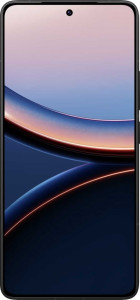
The rear camera systems take noticeably different approaches. The Poco F7 Ultra goes wide with high-resolution sensors across the board — 50 & 50 & 32 MP — and pairs them with wider maximum apertures (f/1.6, f/2.0, f/2.2), meaning each lens gathers more light than its Galaxy S25 counterpart. The Galaxy S25 opts for a more varied resolution spread of 50 & 12 & 10 MP with slightly narrower apertures (f/1.8, f/2.2, f/2.4), but compensates with a longer optical zoom reach of 3x versus the F7 Ultra's 2.5x, and a wider focal range — topping out at 67 mm equivalent versus 60 mm. For telephoto shooting and versatility at distance, the S25 edges ahead.
Several feature-level differentiators tilt further in the S25's favor. It supports RAW capture, manual shutter speed, 8K video at 30 fps, and HDR10 video recording — none of which are available on the F7 Ultra. The absence of RAW shooting on the F7 Ultra is a meaningful limitation for photography enthusiasts who process images in post. The S25 also carries a BSI sensor on its main camera, which is engineered for improved low-light performance. The F7 Ultra's higher front camera resolution (32 MP vs 12 MP) is its clearest win for selfie-focused users.
The Samsung Galaxy S25 holds the broader camera advantage in this group, offering greater telephoto reach, RAW support, more manual controls, and superior video feature depth. The Poco F7 Ultra's wider apertures and higher secondary sensor resolutions are genuine strengths, particularly for still photography in good light, but the S25's overall camera versatility gives it the edge for users who demand more from their imaging system.