Samsung Galaxy Tab A11
TCL NxtPaper 11 Gen 2

Samsung Galaxy Tab A11 TCL NxtPaper 11 Gen 2

Overview

Welcome to our in-depth comparison of the Samsung Galaxy Tab A11 and the TCL NxtPaper 11 Gen 2. These two tablets take notably different approaches to the mid-range market, with key battlegrounds spanning display technology, overall portability, processor performance, and battery capacity. Whether you prioritize a compact and responsive experience or a larger, more immersive screen, this side-by-side breakdown of their full specifications will help you make the most informed decision possible.

Common Features

  • Neither product includes a stylus.
  • Neither product has a detachable keyboard.
  • Neither product has a backlit keyboard.
  • Neither product has tilt sensitivity.
  • Neither product has branded damage-resistant glass.
  • HDR10 support is not available on either product.
  • Both products have a touch screen.
  • Neither product has a sapphire glass display.
  • HDR10+ support is not available on either product.
  • Dolby Vision support is not available on either product.
  • Both products have 128GB of internal storage.
  • Both products have 8GB of RAM.
  • Both products have an external memory slot.
  • Both products support 64-bit processing.
  • Both products have integrated LTE.
  • Both products use big.LITTLE technology.
  • Both products have integrated graphics.
  • Both products have a GPU clock speed of 950 MHz.
  • Both products have an 8 MP main camera and a 5 MP front camera.
  • Both products can record main camera video at 1080p 30fps.
  • Both products have a flash.
  • Both products have a front camera.
  • Both products have a built-in HDR mode.
  • Neither product can create panoramas in-camera.
  • Both products have touch autofocus.
  • Both products have stereo speakers.
  • Neither product has a 3.5mm audio jack.
  • Neither product has a radio.
  • Both products support fast charging.
  • Neither product has wireless charging.
  • Both products have a battery level indicator.
  • Both products have a rechargeable battery.
  • Neither product has a removable battery.
  • Both products support Wi-Fi 4 (802.11n) and Wi-Fi 5 (802.11ac).
  • Neither product has Mail Privacy Protection.
  • Both products have on-device machine learning.
  • Both products have clipboard warnings.
  • Both products have location privacy options.
  • Both products have camera and microphone privacy options.
  • Both products can block app tracking.
  • Neither product blocks cross-site tracking.
  • Both products use DDR4 memory.

Main Differences

  • Weight is 337g on Samsung Galaxy Tab A11 and 500g on TCL NxtPaper 11 Gen 2.
  • Thickness is 8mm on Samsung Galaxy Tab A11 and 7.3mm on TCL NxtPaper 11 Gen 2.
  • Width is 211mm on Samsung Galaxy Tab A11 and 253.6mm on TCL NxtPaper 11 Gen 2.
  • Height is 124.7mm on Samsung Galaxy Tab A11 and 165.4mm on TCL NxtPaper 11 Gen 2.
  • Volume is 210.49 cm³ on Samsung Galaxy Tab A11 and 306.20 cm³ on TCL NxtPaper 11 Gen 2.
  • Water resistance is not present on Samsung Galaxy Tab A11, while TCL NxtPaper 11 Gen 2 is water resistant.
  • Screen size is 8.7″ on Samsung Galaxy Tab A11 and 10.95″ on TCL NxtPaper 11 Gen 2.
  • Resolution is 1340x800px on Samsung Galaxy Tab A11 and 1920x1200px on TCL NxtPaper 11 Gen 2.
  • Pixel density is 179 ppi on Samsung Galaxy Tab A11 and 206.77 ppi on TCL NxtPaper 11 Gen 2.
  • Display type is LCD on Samsung Galaxy Tab A11 and LCD IPS on TCL NxtPaper 11 Gen 2.
  • Refresh rate is 90Hz on Samsung Galaxy Tab A11 and 60Hz on TCL NxtPaper 11 Gen 2.
  • Anti-reflection coating is not present on Samsung Galaxy Tab A11, but is available on TCL NxtPaper 11 Gen 2.
  • An e-paper display is not featured on Samsung Galaxy Tab A11, but is present on TCL NxtPaper 11 Gen 2.
  • GPU is Mali G57 on Samsung Galaxy Tab A11 and Mali-G52 MP2 on TCL NxtPaper 11 Gen 2.
  • CPU speed is 2x2.2GHz and 6x2GHz on Samsung Galaxy Tab A11, and 2x2GHz and 6x1.8GHz on TCL NxtPaper 11 Gen 2.
  • Semiconductor size is 6nm on Samsung Galaxy Tab A11 and 12nm on TCL NxtPaper 11 Gen 2.
  • RAM speed is 4266MHz on Samsung Galaxy Tab A11 and 1800MHz on TCL NxtPaper 11 Gen 2.
  • Maximum memory amount is 12GB on Samsung Galaxy Tab A11 and 8GB on TCL NxtPaper 11 Gen 2.
  • eMMC version is 5.2 on Samsung Galaxy Tab A11 and 5.1 on TCL NxtPaper 11 Gen 2.
  • Slow-motion video recording is supported on Samsung Galaxy Tab A11 but not available on TCL NxtPaper 11 Gen 2.
  • Battery power is 5100 mAh on Samsung Galaxy Tab A11 and 8000 mAh on TCL NxtPaper 11 Gen 2.
  • A cellular module is present on Samsung Galaxy Tab A11 but not available on TCL NxtPaper 11 Gen 2.
Specs Comparison
Samsung Galaxy Tab A11

Samsung Galaxy Tab A11

TCL NxtPaper 11 Gen 2

TCL NxtPaper 11 Gen 2

Design:
weight 337 g 500 g
thickness 8 mm 7.3 mm
width 211 mm 253.6 mm
height 124.7 mm 165.4 mm
volume 210.4936 cm³ 306.201712 cm³
Stylus included
Has a detachable keyboard
Has a backlit keyboard
water resistance None Water resistant
Has tilt sensitivity

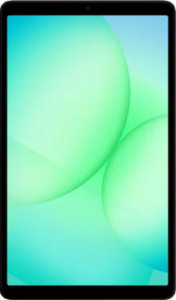
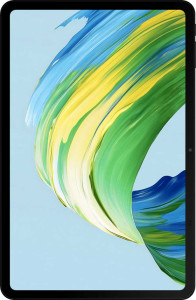
The most striking physical difference between these two tablets is size and weight. The Samsung Galaxy Tab A11 is considerably more compact — 211 × 124.7 mm and 337 g — making it closer to a large-screen phone in terms of one-handed holdability and bag footprint. The TCL NxtPaper 11 Gen 2, at 253.6 × 165.4 mm and 500 g, is nearly 50% heavier and occupies roughly 46% more volume. In practice, that weight gap becomes very noticeable during extended reading sessions or handheld use: the TCL will fatigue the wrist significantly faster and is much less suited for prolonged use without a surface to rest it on.

Thickness tells a slightly different story: the TCL edges out the Samsung at 7.3 mm versus 8 mm, meaning it is marginally more pocketable in a sleeve despite its larger footprint. However, this is a minor advantage that does little to offset the bulk difference overall.

The single most meaningful functional differentiator in this group is water resistance: the TCL NxtPaper 11 Gen 2 carries a water-resistant rating while the Samsung offers none. This makes the TCL a safer companion in kitchens, outdoor settings, or around liquids. Both tablets lack a stylus, detachable keyboard, and tilt sensitivity, so those are non-factors. On balance, the Samsung Galaxy Tab A11 has a clear design edge for portability and comfort, while the TCL NxtPaper 11 Gen 2 wins on durability — the right choice depends on whether the user prioritizes lightweight handling or added protection against moisture.

Display:
screen size 8.7" 10.95"
resolution 1340 x 800 px 1920 x 1200 px
pixel density 179 ppi 206.77 ppi
Display type LCD LCD, IPS
refresh rate 90Hz 60Hz
has branded damage-resistant glass
has anti-reflection coating
supports HDR10
has a touch screen
Has sapphire glass display
supports HDR10+
supports Dolby Vision
Has an e-paper display

Screen size and resolution separate these two tablets significantly. The TCL NxtPaper 11 Gen 2 offers a larger 10.95″ panel at 1920 × 1200 px, yielding a pixel density of roughly 207 ppi — comfortably sharp for reading, browsing, and media. The Samsung Galaxy Tab A11 works with a smaller 8.7″ screen at 1340 × 800 px and only 179 ppi, a noticeably lower density that can make fine text and detailed images appear slightly softer, especially when holding the display close.

Where the Samsung reclaims ground is refresh rate: its 90 Hz panel produces visibly smoother scrolling and animations compared to the TCL's 60 Hz display. For everyday UI navigation this difference is tangible — content feels more fluid on the Samsung despite its lower resolution. The TCL counters with two display-quality features absent on the Samsung: an anti-reflection coating, which meaningfully reduces glare in bright or outdoor environments, and an e-paper display mode, which simulates the low-strain, paper-like look of e-ink screens — a genuine differentiator for readers or prolonged document work.

Both panels are LCD-based and share the same lack of HDR support or damage-resistant glass, so neither holds an edge on those fronts. Overall, the TCL NxtPaper 11 Gen 2 has the stronger display for content consumption and eye-comfort, thanks to its higher resolution, anti-reflection coating, and e-paper mode. The Samsung's advantage is its smoother refresh rate, which suits users who prioritize responsive, fluid interaction over raw screen quality.

Performance:
internal storage 128GB 128GB
RAM 8GB 8GB
GPU name Mali G57 Mali-G52 MP2
CPU speed 2 x 2.2 & 6 x 2 GHz 2 x 2 & 6 x 1.8 GHz
has an external memory slot
semiconductor size 6 nm 12 nm
Supports 64-bit
Has integrated LTE
Uses big.LITTLE technology
Has integrated graphics
GPU clock speed 950 MHz 950 MHz
CPU threads 8 threads 8 threads
RAM speed 4266 MHz 1800 MHz
maximum memory amount 12GB 8GB
Android version Android 15 Android 15
memory channels 2 2
eMMC version 5.2 5.1
OpenCL version 2 2

Under the hood, the Samsung Galaxy Tab A11 holds a meaningful advantage rooted in its chip manufacturing process. Built on a 6 nm node versus the TCL NxtPaper 11 Gen 2's older 12 nm node, Samsung's processor is more power-efficient by design — the smaller the node, the less energy is wasted as heat, which translates to better sustained performance and longer battery life under load. Paired with that is a higher CPU clock ceiling: Samsung's performance cores run at 2.2 GHz compared to the TCL's 2.0 GHz, and its efficiency cores also run faster at 2.0 GHz versus 1.8 GHz — a consistent edge across all workloads, light or heavy.

RAM bandwidth is where the gap widens most sharply. The Samsung's memory operates at 4266 MHz, more than double the TCL's 1800 MHz. In practice, faster RAM directly benefits multitasking, app switching, and any memory-intensive task like photo editing or running multiple browser tabs. Compounding this, the Samsung supports a maximum of 12 GB of RAM versus the TCL's cap of 8 GB, giving it more headroom for demanding or future workloads. Both tablets ship with 8 GB and 128 GB of storage today, but only the Samsung can be configured higher. GPU clock speeds are identical at 950 MHz, though the differing GPU architectures mean real-world graphics performance may still diverge.

Both devices run Android 15, support expandable storage, and include LTE — so for everyday connectivity and software, they are on equal footing. But taken as a whole, the Samsung Galaxy Tab A11 has a clear performance edge: the more modern chip node, faster CPU clocks, significantly higher RAM bandwidth, and greater maximum memory all point to a snappier, more future-proof experience.
Cameras:
megapixels (main camera) 8 MP 8 MP
megapixels (front camera) 5MP 5MP
video recording (main camera) 1080 x 30 fps 1080 x 30 fps
has a flash
has a front camera
has a built-in HDR mode
can create panoramas in-camera
supports slow-motion video recording
has touch autofocus
has manual white balance
has continuous autofocus when recording movies
Has a front-facing LED flash
has manual ISO
Shoots 360° panorama
has a serial shot mode
has built-in optical image stabilization
has 3D photo/video recording capabilities
Has a dual-tone LED flash
has manual focus
Has a RGB LED flash
has manual exposure
has manual shutter speed

Camera hardware is remarkably uniform across these two tablets. Both ship with an 8 MP rear camera and a 5 MP front camera, cap video recording at 1080p at 30 fps, and share an identical feature set spanning HDR mode, touch autofocus, continuous autofocus during video, manual white balance, manual ISO, manual focus, and manual exposure. For tablets in this class, that manual control suite is a reasonable offering — it gives users meaningful input over still photography without requiring a third-party app.

The only functional difference the data reveals is slow-motion video recording, which the Samsung Galaxy Tab A11 supports and the TCL NxtPaper 11 Gen 2 does not. While slow-motion is rarely a primary use case on a tablet, its absence on the TCL is a minor but real omission for anyone who occasionally captures fast-moving subjects.

Absent that single distinction, this is essentially a tie. Neither tablet offers optical image stabilization, panorama modes, or any advanced video capability beyond standard 1080p. The Samsung Galaxy Tab A11 holds a narrow edge solely due to slow-motion support, but users who have no interest in that feature will find the camera experience indistinguishable between the two devices.

Audio:
has stereo speakers
has a socket for a 3.5 mm audio jack
Has a radio

Audio is a straightforward draw between these two tablets — every spec in this group is identical. Both offer stereo speakers, omit a 3.5 mm headphone jack, and include no FM radio. Stereo speakers are a meaningful baseline for media consumption, providing at least some sense of width and separation compared to a mono setup, and both tablets deliver that.

The missing headphone jack is the one point worth flagging for prospective buyers. Users who prefer wired headphones will need a USB-C to 3.5 mm adapter on either device — a small but real inconvenience that applies equally to both. Bluetooth audio remains the practical default for personal listening on either tablet.

With no differentiating data points whatsoever, this category is a complete tie. Neither tablet holds any audio advantage over the other based on the available specifications.

Battery:
battery power 5100 mAh 8000 mAh
Supports fast charging
has wireless charging
has a battery level indicator
has a rechargeable battery
has a removable battery

Battery capacity is where the TCL NxtPaper 11 Gen 2 asserts its most decisive advantage in this comparison. Its 8000 mAh cell dwarfs the Samsung Galaxy Tab A11's 5100 mAh — a difference of nearly 57%. In real-world terms, that gap translates directly to substantially more screen time between charges, whether for reading, streaming, or browsing. For a tablet used heavily away from a power outlet, this is a significant practical edge.

It is worth noting that the TCL's larger battery also has to power a bigger, higher-resolution display, which draws more power. Even accounting for that, the raw capacity headroom is large enough that the TCL is very likely to outlast the Samsung in everyday use scenarios. The Samsung's more efficient 6 nm chip — noted in the Performance group — partially offsets its smaller battery, but a ~2900 mAh deficit is difficult to close through efficiency alone.

Both tablets support fast charging and lack wireless charging, so the charging experience itself is evenly matched. Overall, the TCL NxtPaper 11 Gen 2 has a clear battery advantage — users who prioritize all-day or multi-day endurance will find it the stronger choice on this spec group alone.

Connectivity & Features:
release date September 2025 September 2025
Wi-Fi version Wi-Fi 4 (802.11n), Wi-Fi 5 (802.11ac) Wi-Fi 4 (802.11n), Wi-Fi 5 (802.11ac)
has Mail Privacy Protection
has on-device machine learning
has clipboard warnings
has location privacy options
has camera/microphone privacy options
can block app tracking
blocks cross-site tracking
supports split screen
has Live Text
has notification permissions
has full-page screenshots
has Quick Start
has theme customization
has Wi-Fi password sharing
has PiP
Can play games while they download
has an extra dim mode
can offload apps
has focus modes
has media picker
has dynamic theming
has dark mode
has battery health check
Has USB Type-C
has a cellular module
has 5G support
is a multi-user system
gets direct OS updates
has GPS
has a child lock
has an HDMI output
has NFC
Has a fingerprint scanner
USB version 2 2
Supports widgets
Is free and open source
Has offline voice recognition
supports Wi-Fi
Has sharing intents
Has customizable notifications
Uses 3D facial recognition
has an accelerometer
has voice commands
Has an iris scanner
Has a built-in projector
supports Ethernet
Has an infrared sensor
Tracks the current position of a mobile device

Across this extensive feature set, these two tablets are remarkably aligned — same Wi-Fi standards, same USB version, identical software privacy controls, the same productivity and UI features like split screen, Picture-in-Picture, dark mode, dynamic theming, and offline voice recognition. For the vast majority of buyers, the day-to-day feature experience will feel essentially indistinguishable between the two.

The one concrete differentiator is connectivity: the Samsung Galaxy Tab A11 includes a cellular module, while the TCL NxtPaper 11 Gen 2 is Wi-Fi only. This is a meaningful practical distinction — a cellular-capable tablet can connect to mobile data networks independently, making it usable on the go without a hotspot. For users who need reliable connectivity outside the home or office, the Samsung's cellular support is a genuine advantage. Neither device supports 5G, so LTE is the ceiling for mobile data on the Samsung, but that still covers the vast majority of real-world use cases.

Both tablets share the same notable absences — no NFC, no fingerprint scanner, no HDMI output — so neither gains ground on those fronts. The verdict here is a narrow but clear edge to the Samsung Galaxy Tab A11, entirely on the strength of its built-in cellular module. If cellular connectivity is not a priority and the tablet will live mostly on Wi-Fi, this category is effectively a tie.

Miscellaneous:
DDR memory version 4 4

This group contains a single data point: both the Samsung Galaxy Tab A11 and the TCL NxtPaper 11 Gen 2 use DDR4 memory. DDR4 is a mature, widely adopted standard that offers a solid balance of bandwidth and power efficiency for mid-range devices. There is nothing to differentiate the two tablets here.

This is a complete tie — with one shared spec and no diverging data points, neither product holds any advantage in this category.

Comparison Summary & Verdict

After examining the full specification set, both tablets serve distinct user profiles. The Samsung Galaxy Tab A11 stands out with its lighter 337g build, faster 90Hz refresh rate, superior CPU and RAM speeds, a 6nm processor, and built-in cellular connectivity, making it a strong pick for users who value portability and performance on the go. The TCL NxtPaper 11 Gen 2, on the other hand, counters with a significantly larger 10.95″ screen, a higher-resolution 1920x1200 display featuring an anti-reflection coating and e-paper technology, water resistance, and a massive 8000 mAh battery that dwarfs the Tab A11s 5100 mAh cell. If extended reading, eye-friendly screen use, and long battery endurance are your priorities, the TCL is the clear choice. If you need a nimble, well-connected daily tablet with snappier internals, the Samsung earns the edge.

Samsung Galaxy Tab A11
Buy Samsung Galaxy Tab A11 if...

Buy the Samsung Galaxy Tab A11 if you want a lighter, more portable tablet with faster processing speeds, a 90Hz display, and built-in cellular connectivity for use on the go.

TCL NxtPaper 11 Gen 2
Buy TCL NxtPaper 11 Gen 2 if...

Buy the TCL NxtPaper 11 Gen 2 if you prioritize a larger screen with e-paper technology and anti-reflection coating, water resistance, and a much bigger battery for extended daily use.