Samsung Galaxy Tab S10 FE Plus
Samsung Galaxy Tab S11

Samsung Galaxy Tab S10 FE Plus Samsung Galaxy Tab S11

Overview

Welcome to our detailed specification comparison between the Samsung Galaxy Tab S10 FE Plus and the Samsung Galaxy Tab S11. These two Android tablets share a common foundation — including a bundled stylus, IP68 waterproofing, and 12 GB of RAM — yet take notably different approaches when it comes to display technology, raw processing power, and overall form factor. Whether you value screen real estate and battery endurance or a more compact design with cutting-edge performance, this comparison breaks down every key specification to help you make the right choice.

Common Features

  • Both tablets include a stylus in the box.
  • Neither tablet has a detachable keyboard.
  • Both tablets are waterproof with an IP68 rating and a depth rating of 1.5 m.
  • Both tablets feature a touchscreen display.
  • Neither tablet has a sapphire glass or e-paper display.
  • Both tablets come with 12 GB of RAM.
  • Both tablets support external memory expansion.
  • Both tablets support 64-bit processing and use big.LITTLE CPU technology.
  • Both tablets have integrated LTE and integrated graphics with a GPU clock speed of 1300 MHz.
  • Both tablets have an 8-thread CPU.
  • Both tablets feature a 13 MP main camera capable of 4K video recording at 30 fps.
  • Both tablets have a front camera and support built-in HDR mode.
  • Both tablets support touch autofocus and manual white balance, and use a CMOS sensor.
  • Neither tablet can create panoramas in-camera.
  • Both tablets have stereo speakers but no 3.5 mm audio jack and no radio.
  • Both tablets support fast charging but do not support wireless charging.
  • Both tablets have a rechargeable, non-removable battery with a battery level indicator.
  • Both tablets support on-device machine learning, clipboard warnings, location privacy options, camera and microphone privacy options, and the ability to block app tracking.
  • Neither tablet has Mail Privacy Protection or blocks cross-site tracking.
  • Both tablets support split screen, use DDR5 memory, and support multithreading.

Main Differences

  • Weight is 668 g on Samsung Galaxy Tab S10 FE Plus and 471 g on Samsung Galaxy Tab S11.
  • Thickness is 6 mm on Samsung Galaxy Tab S10 FE Plus and 5.5 mm on Samsung Galaxy Tab S11.
  • Screen size is 13.1″ on Samsung Galaxy Tab S10 FE Plus and 11″ on Samsung Galaxy Tab S11.
  • Resolution is 2880 x 1800 px on Samsung Galaxy Tab S10 FE Plus and 2560 x 1600 px on Samsung Galaxy Tab S11.
  • Pixel density is 259 ppi on Samsung Galaxy Tab S10 FE Plus and 274 ppi on Samsung Galaxy Tab S11.
  • The display type is LCD on Samsung Galaxy Tab S10 FE Plus and OLED/AMOLED on Samsung Galaxy Tab S11.
  • Refresh rate is 90 Hz on Samsung Galaxy Tab S10 FE Plus and 120 Hz on Samsung Galaxy Tab S11.
  • Damage-resistant glass is present on Samsung Galaxy Tab S10 FE Plus but not on Samsung Galaxy Tab S11.
  • An anti-reflection coating is available on Samsung Galaxy Tab S11 but not on Samsung Galaxy Tab S10 FE Plus.
  • HDR10 and HDR10+ support are present on Samsung Galaxy Tab S11 but not available on Samsung Galaxy Tab S10 FE Plus.
  • Typical brightness is 600 nits on Samsung Galaxy Tab S10 FE Plus and 1000 nits on Samsung Galaxy Tab S11.
  • The chipset is Samsung Exynos 1580 on Samsung Galaxy Tab S10 FE Plus and MediaTek Dimensity 9400 Plus on Samsung Galaxy Tab S11.
  • Geekbench 6 multi-core score is 3893 on Samsung Galaxy Tab S10 FE Plus and 8969 on Samsung Galaxy Tab S11.
  • Geekbench 6 single-core score is 1360 on Samsung Galaxy Tab S10 FE Plus and 2874 on Samsung Galaxy Tab S11.
  • Internal storage is 256 GB on Samsung Galaxy Tab S10 FE Plus and 512 GB on Samsung Galaxy Tab S11.
  • Maximum external memory supported is 2000 GB on Samsung Galaxy Tab S10 FE Plus and 1500 GB on Samsung Galaxy Tab S11.
  • Battery capacity is 10090 mAh on Samsung Galaxy Tab S10 FE Plus and 8400 mAh on Samsung Galaxy Tab S11.
  • A flash and video light are present on Samsung Galaxy Tab S11 but not available on Samsung Galaxy Tab S10 FE Plus.
  • Slow-motion video recording is supported on Samsung Galaxy Tab S11 but not on Samsung Galaxy Tab S10 FE Plus.
  • NFC is available on Samsung Galaxy Tab S10 FE Plus but not on Samsung Galaxy Tab S11.
  • USB version is 2.0 on Samsung Galaxy Tab S10 FE Plus and 3.2 on Samsung Galaxy Tab S11.
  • Bluetooth version is 5.3 on Samsung Galaxy Tab S10 FE Plus and 5.4 on Samsung Galaxy Tab S11.
  • LTE download speed is 5100 Mbits/s on Samsung Galaxy Tab S10 FE Plus and 7300 Mbits/s on Samsung Galaxy Tab S11.
  • A gyroscope and compass are present on Samsung Galaxy Tab S11 but not available on Samsung Galaxy Tab S10 FE Plus.
Specs Comparison
Samsung Galaxy Tab S10 FE Plus

Samsung Galaxy Tab S10 FE Plus

Samsung Galaxy Tab S11

Samsung Galaxy Tab S11

Design:
weight 668 g 471 g
thickness 6 mm 5.5 mm
width 300.6 mm 253.8 mm
height 194.7 mm 165.3 mm
volume 351.16092 cm³ 230.74227 cm³
Stylus included
Has a detachable keyboard
Has a backlit keyboard
water resistance Waterproof Waterproof
Has tilt sensitivity
waterproof depth rating 1.5 m 1.5 m
Ingress Protection (IP) rating IP68 IP68

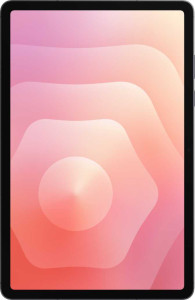
The most striking design difference between these two tablets is sheer size and weight. The Galaxy Tab S10 FE Plus is a large-format device measuring 300.6 × 194.7 mm and weighing 668 g, while the Galaxy Tab S11 is considerably more compact at 253.8 × 165.3 mm and just 471 g. That is nearly a 200-gram difference — roughly the weight of a large smartphone — which has a direct real-world impact on extended handheld use, portability, and overall fatigue during long sessions. The volume difference reinforces this: the Tab S10 FE Plus occupies over 351 cm³ versus the Tab S11's 230 cm³, meaning the S11 is roughly one-third smaller by volume.

Both tablets share a nearly identical accessory profile: a stylus is included with each, neither offers a detachable or backlit keyboard in the box, and neither supports tilt sensitivity on the stylus. On the durability front, both carry a full IP68 rating with a waterproof depth of 1.5 m, so neither has an advantage in water or dust resistance. The Tab S11 is marginally thinner at 5.5 mm versus 6 mm, a subtle but real refinement that contributes to its more pocket-friendly and premium-feeling form factor.

For design, the Galaxy Tab S11 holds a clear edge in portability and everyday ergonomics. Its significantly lower weight and smaller footprint make it far easier to hold one-handed or carry in a bag, without sacrificing any meaningful durability or accessory feature relative to the Tab S10 FE Plus. The Tab S10 FE Plus's larger dimensions may appeal to users who prioritize screen real estate over portability, but purely from a design and handling standpoint, the S11 is the more refined and manageable device.

Display:
screen size 13.1" 11"
resolution 2880 x 1800 px 2560 x 1600 px
pixel density 259 ppi 274 ppi
Display type LCD OLED/AMOLED
refresh rate 90Hz 120Hz
has branded damage-resistant glass
has anti-reflection coating
supports HDR10
brightness (typical) 600 nits 1000 nits
has a touch screen
Has sapphire glass display
supports HDR10+
Has an e-paper display

Panel technology is where these two tablets diverge most dramatically. The Galaxy Tab S10 FE Plus uses an LCD panel on its large 13.1″ screen, while the Galaxy Tab S11 employs an OLED/AMOLED display at 11″. In practice, OLED delivers true blacks, superior contrast, and more vivid colors by lighting pixels individually — advantages that LCD fundamentally cannot match regardless of screen size. The Tab S11 also pulls ahead on brightness at 1000 nits versus 600 nits, which translates to meaningfully better legibility in direct sunlight or bright indoor environments.

The Tab S11 further extends its lead with a 120Hz refresh rate compared to 90Hz on the Tab S10 FE Plus — a difference that makes scrolling, animations, and stylus input feel noticeably smoother. Despite having a smaller and lower-resolution panel, the Tab S11 actually achieves a slightly higher pixel density of 274 ppi versus 259 ppi, so text and fine detail remain sharp. It also supports both HDR10 and HDR10+, enabling richer dynamic range in compatible streaming content — a capability the Tab S10 FE Plus lacks entirely. An anti-reflection coating on the Tab S11 reduces glare in challenging lighting conditions, partly compensating for its smaller size in outdoor scenarios. The Tab S10 FE Plus counters with branded damage-resistant glass, which the S11 does not list.

Across nearly every meaningful display metric — panel technology, peak brightness, refresh rate, HDR support, and glare handling — the Galaxy Tab S11 holds a decisive advantage. The Tab S10 FE Plus offers a larger physical canvas, which suits users who prioritize screen real estate for productivity or split-screen multitasking, but in terms of raw display quality, the S11's OLED panel represents a generational step above its LCD counterpart.

Performance:
internal storage 256GB 512GB
RAM 12GB 12GB
Chipset (SoC) name Samsung Exynos 1580 MediaTek Dimensity 9400 Plus
GPU name Xclipse 530 Immortalis G925
CPU speed 1 x 2.9 & 3 x 2.6 & 4 x 1.95 GHz 1 x 3.73 & 4 x 3.3 & 3 x 2.4 GHz
Geekbench 6 result (multi) 3893 8969
Geekbench 6 result (single) 1360 2874
has an external memory slot
semiconductor size 4 nm 3 nm
Supports 64-bit
maximum amount of external memory supported 2000GB 1500GB
Has integrated LTE
Uses big.LITTLE technology
Has integrated graphics
GPU clock speed 1300 MHz 1300 MHz
CPU threads 8 threads 8 threads
RAM speed 3200 MHz 10667 MHz
maximum memory amount 12GB 24GB
Uses HMP
L3 cache 4 MB 12 MB
maximum memory bandwidth 51.2 GB/s 85.3 GB/s

The chipset gap between these two tablets is substantial. The Galaxy Tab S10 FE Plus runs on Samsung's Exynos 1580 built on a 4 nm process, while the Galaxy Tab S11 is powered by the MediaTek Dimensity 9400 Plus on a cutting-edge 3 nm node. That smaller fabrication process allows the S11's chip to deliver more performance per watt — and the Geekbench 6 scores make the difference impossible to ignore: the Tab S11 achieves a multi-core score of 8969 versus just 3893 on the Tab S10 FE Plus, and a single-core score of 2874 against 1360. In real-world terms, this means the Tab S11 handles demanding workloads — heavy multitasking, video editing, gaming, and AI-driven features — at roughly twice the pace of the Tab S10 FE Plus.

Beyond raw CPU output, the memory subsystem tells a similar story. Both tablets carry 12 GB of RAM, but the Tab S11's RAM operates at 10,667 MHz compared to 3,200 MHz on the Tab S10 FE Plus — over three times faster. Its memory bandwidth of 85.3 GB/s versus 51.2 GB/s, and a much larger 12 MB L3 cache versus 4 MB, further reduce bottlenecks when the processor is under sustained load. The Tab S11 also supports up to 24 GB of RAM in higher-tier configurations, whereas the Tab S10 FE Plus tops out at 12 GB. On storage, the Tab S11 ships with 512 GB of internal flash versus 256 GB, though the Tab S10 FE Plus can expand further via microSD up to 2000 GB compared to the S11's 1500 GB ceiling.

The Galaxy Tab S11 wins the performance category decisively. Its Dimensity 9400 Plus chip outpaces the Exynos 1580 by a wide margin across every measurable CPU and memory metric, making it the clear choice for users who demand sustained performance for demanding applications or future-proofing. The Tab S10 FE Plus remains capable for everyday tasks and casual use, but it cannot compete at the same performance tier.

Cameras:
megapixels (main camera) 13 MP 13 MP
video recording (main camera) 2160 x 30 fps 2160 x 30 fps
has a flash
has a front camera
has a built-in HDR mode
can create panoramas in-camera
supports slow-motion video recording
has touch autofocus
has manual white balance
has a CMOS sensor
has continuous autofocus when recording movies
Has a front-facing LED flash
has manual ISO
has a video light
Shoots 360° panorama
has a serial shot mode
has built-in optical image stabilization
has 3D photo/video recording capabilities
Has a dual-tone LED flash
has manual focus
Has a RGB LED flash
has manual exposure
has manual shutter speed

Tablet cameras are rarely a primary purchasing consideration, and these two devices reflect that reality — their camera specs are nearly identical across the board. Both the Galaxy Tab S10 FE Plus and the Galaxy Tab S11 shoot at 13 MP on the main camera with a maximum video resolution of 2160p at 30 fps, and both share the same manual control set: touch autofocus, manual ISO, manual white balance, manual focus, and manual exposure. Continuous autofocus during video recording and HDR mode are also present on both, rounding out a feature set that is competent for a tablet but not particularly advanced by smartphone standards.

Where the two diverge is in a handful of video-oriented features exclusive to the Tab S11: it includes a flash, a video light, and support for slow-motion video recording — none of which are available on the Tab S10 FE Plus. A video light is useful for illuminating subjects in low-light conditions during recording, and slow-motion capture adds a creative option for casual videographers. These are not transformative features for a tablet camera, but they do represent a broader capability set for users who occasionally lean on their tablet for video work.

Given that the core camera hardware is identical, the Galaxy Tab S11 earns a narrow edge in this category purely on the strength of its additional video features. For most users, the cameras on both tablets will perform equivalently day-to-day — but the S11's flash, video light, and slow-motion support give it a modest but real functional advantage over the Tab S10 FE Plus.

Audio:
has stereo speakers
has a socket for a 3.5 mm audio jack
Has a radio

On audio hardware, the Samsung Galaxy Tab S10 FE Plus and Galaxy Tab S11 are a perfect match. Both feature stereo speakers, omit a 3.5 mm headphone jack, and lack a built-in radio — making this the most evenly matched category in the entire comparison. Stereo speakers are a meaningful inclusion for tablet users who consume video content or use their device for video calls, as they deliver directional audio that a mono setup cannot replicate.

The absence of a headphone jack on both devices means wired audio requires a USB-C adapter, which is now a common trade-off across the premium tablet segment. Users who prefer wired headphones should factor in that neither tablet accommodates them natively. There are no differentiating audio specs available for this group — this is a straightforward tie.

Battery:
battery power 10090 mAh 8400 mAh
Supports fast charging
has wireless charging
has a battery level indicator
has a rechargeable battery
has a removable battery

Battery capacity is one of the few categories where the Galaxy Tab S10 FE Plus holds a clear numerical advantage, packing a 10,090 mAh cell compared to 8,400 mAh in the Galaxy Tab S11. That is roughly a 20% larger reservoir of energy on paper. However, raw capacity alone does not tell the full story — the Tab S10 FE Plus also drives a significantly larger 13.1″ LCD screen, which consumes more power than the S11's smaller 11″ OLED panel. OLED displays are inherently more power-efficient, particularly with dark content, which means the real-world battery life gap between these two tablets is likely narrower than the mAh difference suggests.

Both tablets support fast charging and share the same structural limitations: no wireless charging and a non-removable battery. Neither detail differentiates them, but the absence of wireless charging is a notable omission for users who have invested in wireless charging ecosystems.

On balance, this category is a conditional edge for the Tab S10 FE Plus. Its larger battery gives it a meaningful capacity advantage that should translate to longer endurance during sustained, high-brightness use. But users who favor the Tab S11 can take some comfort in its more efficient display technology, which partially offsets the smaller cell in everyday scenarios.

Connectivity & Features:
release date April 2025 September 2025
Wi-Fi version Wi-Fi 4 (802.11n), Wi-Fi 6 (802.11ax), Wi-Fi 5 (802.11ac), Wi-Fi 6E (802.11ax) Wi-Fi 4 (802.11n), Wi-Fi 6E (802.11ax), Wi-Fi 6 (802.11ax), Wi-Fi 5 (802.11ac)
SIM cards 1 eSIM, 1 SIM 1 SIM, 1 eSIM
has Mail Privacy Protection
has on-device machine learning
has clipboard warnings
has location privacy options
has camera/microphone privacy options
can block app tracking
blocks cross-site tracking
supports split screen
has Live Text
has notification permissions
has full-page screenshots
has Quick Start
has theme customization
has Wi-Fi password sharing
has PiP
Can play games while they download
has an extra dim mode
can offload apps
has focus modes
has media picker
has dynamic theming
has dark mode
has battery health check
Has USB Type-C
has a cellular module
has 5G support
is a multi-user system
gets direct OS updates
has a child lock
has an HDMI output
has NFC
Has a fingerprint scanner
USB version 2 3.2
Supports widgets
Bluetooth version 5.3 5.4
download speed 5100 MBits/s 7300 MBits/s
has a gyroscope
Is free and open source
Has offline voice recognition
has a compass
supports Wi-Fi
Has sharing intents
Has customizable notifications
Uses 3D facial recognition
has an accelerometer
has voice commands
Has an iris scanner
Has a built-in projector
supports Ethernet
Has an infrared sensor
Tracks the current position of a mobile device

Across the broad sweep of connectivity and software features, these two tablets are remarkably similar — both support Wi-Fi 6E, 5G, Bluetooth 5.x, USB-C, fingerprint scanning, and an identical software feature set covering split-screen, PiP, dark mode, and on-device machine learning. The meaningful differences are concentrated in a few specific areas. Most significantly, the Galaxy Tab S11 uses USB 3.2 versus the slower USB 2.0 port on the Galaxy Tab S10 FE Plus — a difference that matters considerably for anyone transferring large files, connecting external drives, or potentially driving an external display. USB 3.2 delivers data transfer speeds orders of magnitude faster than USB 2.0, making it a practical upgrade for productivity-oriented users.

The Tab S11 also adds a gyroscope and compass — sensors absent on the Tab S10 FE Plus. A gyroscope enables accurate motion-based interactions, including augmented reality apps and precise screen rotation, while a compass supports proper directional navigation. Conversely, the Tab S10 FE Plus retains NFC, which the Tab S11 lacks entirely. NFC enables contactless payments, quick Bluetooth pairing, and tag reading — a tangible loss for users who rely on these workflows. The Tab S11 also edges ahead on peak download speed at 7,300 Mbits/s versus 5,100 Mbits/s, and carries a marginally newer Bluetooth 5.4 versus 5.3, though both differences have limited practical impact in everyday use.

Weighing the trade-offs, the Galaxy Tab S11 holds a modest overall edge in connectivity. Its USB 3.2 port is the most consequential upgrade for a tablet used in productivity or creative workflows, and the addition of a gyroscope and compass broadens its sensor capabilities. The Tab S10 FE Plus's NFC support is a genuine differentiator for users who need it, making this category a split decision that hinges on which connectivity features align with individual usage patterns.

Miscellaneous:
DDR memory version 5 5
uses multithreading

The Miscellaneous group contains just two data points, and both are identical across the Galaxy Tab S10 FE Plus and the Galaxy Tab S11. Both devices use DDR5 memory and both support multithreading — meaning their processors can handle multiple instruction threads simultaneously, which contributes to smoother multitasking and more responsive performance under concurrent workloads. This is a complete tie with no differentiating information available in this category.

Comparison Summary & Verdict

After examining the full specification breakdown, it is clear that these two tablets target different priorities. The Samsung Galaxy Tab S10 FE Plus stands out with its larger 13.1-inch LCD screen, a significantly bigger 10090 mAh battery, NFC support, and a higher external storage ceiling of 2000 GB — making it an appealing choice for users who want more screen space and longer battery endurance on a larger chassis. The Samsung Galaxy Tab S11, on the other hand, delivers a more refined experience in a lighter and more portable body, backed by a far more powerful MediaTek Dimensity 9400 Plus chipset, a vibrant OLED display with 120 Hz refresh rate, HDR10+ support, 1000 nits brightness, USB 3.2 connectivity, and a superior camera setup with flash and slow-motion video. Users who demand top-tier performance, display quality, and portability will find the Tab S11 the stronger all-around performer.

Samsung Galaxy Tab S10 FE Plus
Buy Samsung Galaxy Tab S10 FE Plus if...

Buy the Samsung Galaxy Tab S10 FE Plus if you want a larger 13.1-inch screen and a bigger battery for all-day use, and value NFC support or a higher external storage limit.

Samsung Galaxy Tab S11
Buy Samsung Galaxy Tab S11 if...

Buy the Samsung Galaxy Tab S11 if you prioritize top-tier performance, a vivid OLED display with HDR10+ and 120 Hz, and a lighter, more portable design with a superior camera setup.