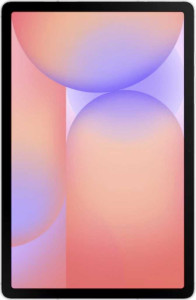
Samsung Galaxy Tab S10 FE
Samsung Galaxy Tab S10 Lite

Samsung Galaxy Tab S10 FE Samsung Galaxy Tab S10 Lite

Overview

Welcome to our in-depth spec comparison between the Samsung Galaxy Tab S10 FE and the Samsung Galaxy Tab S10 Lite. Both tablets share the same screen size, battery capacity, and stylus support, yet they diverge in some meaningful ways. From performance and camera quality to build features and connectivity, this side-by-side breakdown will help you understand which of these two Samsung mid-range tablets best fits your needs.

Common Features

  • Both tablets share the same width of 254.3 mm.
  • Both tablets share the same height of 165.8 mm.
  • A stylus is included with both products.
  • Neither product has a detachable keyboard.
  • Both tablets feature a 10.9″ screen size.
  • Both tablets have a 90Hz refresh rate.
  • Damage-resistant glass is present on both products.
  • HDR10 support is not available on either product.
  • HDR10+ support is not available on either product.
  • A touchscreen is present on both products.
  • Neither product has a sapphire glass display.
  • Neither product has an e-paper display.
  • Both tablets come with 256GB of internal storage.
  • Both tablets support 64-bit processing.
  • Both tablets have integrated LTE.
  • Both tablets use big.LITTLE technology.
  • Both tablets support DirectX 12.
  • Both tablets have integrated graphics.
  • Both tablets have 8 CPU threads.
  • Both tablets have a RAM speed of 3200 MHz.
  • Neither product has a camera flash.
  • Both tablets have a front camera.
  • Both tablets have a built-in HDR mode.
  • Neither product can create panoramas in-camera.
  • Neither product supports slow-motion video recording.
  • Both tablets have touch autofocus.
  • Both tablets support manual white balance.
  • Both tablets have a CMOS sensor.
  • Both tablets feature stereo speakers.
  • Neither product has a 3.5 mm audio jack.
  • Neither product has a radio.
  • Both tablets have an 8000 mAh battery.
  • Fast charging is supported on both products.
  • Wireless charging is not available on either product.
  • Both tablets have a battery level indicator.
  • Both tablets have a rechargeable battery.
  • Neither product has a removable battery.
  • Mail Privacy Protection is not available on either product.
  • On-device machine learning is present on both products.
  • Clipboard warnings are available on both products.
  • Location privacy options are available on both products.
  • Camera and microphone privacy options are available on both products.
  • App tracking can be blocked on both products.
  • Cross-site tracking blocking is not available on either product.
  • Split screen is supported on both products.
  • Both tablets use DDR5 memory.
  • Both tablets use multithreading.

Main Differences

  • Weight is 500 g on Samsung Galaxy Tab S10 FE and 524 g on Samsung Galaxy Tab S10 Lite.
  • Thickness is 6 mm on Samsung Galaxy Tab S10 FE and 6.6 mm on Samsung Galaxy Tab S10 Lite.
  • Volume is 252.97764 cm³ on Samsung Galaxy Tab S10 FE and 278.275404 cm³ on Samsung Galaxy Tab S10 Lite.
  • Water resistance is present on Samsung Galaxy Tab S10 FE but not available on Samsung Galaxy Tab S10 Lite.
  • Resolution is 2304 x 1440 px on Samsung Galaxy Tab S10 FE and 2112 x 1320 px on Samsung Galaxy Tab S10 Lite.
  • Pixel density is 249 ppi on Samsung Galaxy Tab S10 FE and 228 ppi on Samsung Galaxy Tab S10 Lite.
  • Display type is LCD on Samsung Galaxy Tab S10 FE and LCD, IPS on Samsung Galaxy Tab S10 Lite.
  • An anti-reflection coating is present on Samsung Galaxy Tab S10 Lite but not available on Samsung Galaxy Tab S10 FE.
  • RAM is 12GB on Samsung Galaxy Tab S10 FE and 8GB on Samsung Galaxy Tab S10 Lite.
  • GPU is Xclipse 530 on Samsung Galaxy Tab S10 FE and Mali G68 MP5 on Samsung Galaxy Tab S10 Lite.
  • CPU speed is 1 x 2.9 & 3 x 2.6 & 4 x 1.95 GHz on Samsung Galaxy Tab S10 FE and 4 x 2.4 & 4 x 2 GHz on Samsung Galaxy Tab S10 Lite.
  • Geekbench 6 multi-core score is 3893 on Samsung Galaxy Tab S10 FE and 2758 on Samsung Galaxy Tab S10 Lite.
  • Geekbench 6 single-core score is 1360 on Samsung Galaxy Tab S10 FE and 1007 on Samsung Galaxy Tab S10 Lite.
  • An external memory slot is present on Samsung Galaxy Tab S10 FE but not available on Samsung Galaxy Tab S10 Lite.
  • Semiconductor size is 4 nm on Samsung Galaxy Tab S10 FE and 5 nm on Samsung Galaxy Tab S10 Lite.
  • GPU clock speed is 1300 MHz on Samsung Galaxy Tab S10 FE and 950 MHz on Samsung Galaxy Tab S10 Lite.
  • Main camera resolution is 13 MP on Samsung Galaxy Tab S10 FE and 8 MP on Samsung Galaxy Tab S10 Lite.
  • Front camera resolution is 12 MP on Samsung Galaxy Tab S10 FE and 5 MP on Samsung Galaxy Tab S10 Lite.
  • Main camera video recording is 2160 x 30 fps on Samsung Galaxy Tab S10 FE and 1080 x 30 fps on Samsung Galaxy Tab S10 Lite.
  • Wi-Fi 6E (802.11ax) support is present on Samsung Galaxy Tab S10 FE but not available on Samsung Galaxy Tab S10 Lite.
  • NFC is present on Samsung Galaxy Tab S10 FE but not available on Samsung Galaxy Tab S10 Lite.
  • A fingerprint scanner is present on Samsung Galaxy Tab S10 FE but not available on Samsung Galaxy Tab S10 Lite.
  • Download speed is 5100 MBits/s on Samsung Galaxy Tab S10 FE and 3790 MBits/s on Samsung Galaxy Tab S10 Lite.
  • A gyroscope is present on Samsung Galaxy Tab S10 Lite but not available on Samsung Galaxy Tab S10 FE.
  • A compass is present on Samsung Galaxy Tab S10 Lite but not available on Samsung Galaxy Tab S10 FE.
Specs Comparison
Samsung Galaxy Tab S10 FE

Samsung Galaxy Tab S10 FE

Samsung Galaxy Tab S10 Lite

Samsung Galaxy Tab S10 Lite

Design:
weight 500 g 524 g
thickness 6 mm 6.6 mm
width 254.3 mm 254.3 mm
height 165.8 mm 165.8 mm
volume 252.97764 cm³ 278.275404 cm³
Stylus included
Has a detachable keyboard
Has a backlit keyboard
water resistance Waterproof None

The two tablets share identical footprints — same 254.3 × 165.8 mm dimensions — so neither has an edge in screen real estate or one-handed reach. The differences emerge in the third dimension: the Tab S10 FE is measurably slimmer at 6 mm versus the Tab S10 Lite's 6.6 mm, and lighter at 500 g versus 524 g. A 24-gram gap may sound trivial on paper, but over extended reading or drawing sessions it translates to noticeably less fatigue, and the slimmer profile makes it easier to slip into a bag or hold at an angle.

The most consequential design difference, however, is water resistance. The Tab S10 FE carries a waterproof rating, while the Tab S10 Lite has none. For everyday use this means the FE can survive a poolside splash, a bathroom counter, or an accidental drink spill — scenarios where the Lite would be at serious risk. Both tablets include a stylus and lack a detachable or backlit keyboard, so accessory parity is complete on those fronts.

Overall, the Tab S10 FE holds a clear design advantage: it is lighter, thinner, and — critically — meaningfully more durable thanks to its waterproof construction. Unless the 24-gram weight difference is somehow a drawback for a specific use case, the FE is the stronger physical package by every measurable metric in this category.

Display:
screen size 10.9" 10.9"
resolution 2304 x 1440 px 2112 x 1320 px
pixel density 249 ppi 228 ppi
Display type LCD LCD, IPS
refresh rate 90Hz 90Hz
has branded damage-resistant glass
has anti-reflection coating
supports HDR10
has a touch screen
Has sapphire glass display
supports HDR10+
Has an e-paper display

Both tablets share the same 10.9″ screen size and 90Hz refresh rate, so motion smoothness and panel real estate are equal. Where they diverge is sharpness: the Tab S10 FE resolves at 2304 × 1440 px — yielding 249 ppi — while the Tab S10 Lite lands at 2112 × 1320 px and 228 ppi. That 21-ppi gap is perceptible when reading small text or examining fine detail up close, giving the FE a crisper image overall.

The trade-off flips when it comes to usability in bright environments. The Tab S10 Lite carries an anti-reflection coating that the FE lacks entirely. In practice, this means the Lite will produce less distracting glare under office lighting or near windows — a meaningful advantage for anyone who frequently uses their tablet outdoors or in variable lighting. Both panels are LCD-based and both feature branded damage-resistant glass, so durability and color-technology parity hold across the board.

There is no clean winner here — the choice depends on use case. The Tab S10 FE has the sharper screen, which benefits content creation, reading, and detail-oriented work. The Tab S10 Lite counters with its anti-reflection coating, making it the more versatile display in mixed or high-ambient-light settings. Users who primarily work indoors in controlled lighting should lean toward the FE; those who frequently move between environments will find the Lite's coating a more practical daily advantage.

Performance:
internal storage 256GB 256GB
RAM 12GB 8GB
GPU name Xclipse 530 Mali G68 MP5
CPU speed 1 x 2.9 & 3 x 2.6 & 4 x 1.95 GHz 4 x 2.4 & 4 x 2 GHz
Geekbench 6 result (multi) 3893 2758
Geekbench 6 result (single) 1360 1007
has an external memory slot
semiconductor size 4 nm 5 nm
Supports 64-bit
Has integrated LTE
Uses big.LITTLE technology
DirectX version DirectX 12 DirectX 12
Has integrated graphics
GPU clock speed 1300 MHz 950 MHz
CPU threads 8 threads 8 threads
RAM speed 3200 MHz 3200 MHz
maximum memory amount 12GB 8GB
Android version Android 15 Android 15
Uses HMP
L3 cache 4 MB 4 MB
maximum memory bandwidth 51.2 GB/s 51.2 GB/s
memory channels 4 4
OpenCL version 2 2

The performance gap between these two tablets is substantial and consistent across every meaningful metric. The Tab S10 FE is built on a 4 nm chip versus the Tab S10 Lite's 5 nm process — a smaller node generally translates to better power efficiency and thermal headroom. That advantage compounds in the benchmark results: the FE scores 3893 (multi-core) and 1360 (single-core) in Geekbench 6, compared to the Lite's 2758 and 1007 respectively. A ~41% multi-core lead means the FE handles demanding workloads — video editing, multitasking, heavier apps — with considerably more headroom before slowdown sets in.

GPU performance tells a similar story. The FE's Xclipse 530 runs at 1300 MHz, while the Lite's Mali G68 MP5 clocks in at 950 MHz — a 37% clock speed advantage that will be felt in graphically intensive tasks and games. The FE also pairs its faster chip with 12 GB of RAM, versus the Lite's 8 GB, giving it more capacity to keep multiple apps active in the background without reloading. One additional practical differentiator: only the FE offers an external memory slot, so Lite users are strictly limited to its 256 GB of onboard storage with no upgrade path.

The Tab S10 FE is the clear winner in this category — and it is not particularly close. Faster chip architecture, a commanding benchmark lead, a higher-clocked GPU, more RAM, and expandable storage all point decisively in its favor. The Tab S10 Lite is not underpowered for casual use, but anyone prioritizing sustained performance, gaming, or long-term usability should strongly prefer the FE.

Cameras:
megapixels (main camera) 13 MP 8 MP
megapixels (front camera) 12MP 5MP
video recording (main camera) 2160 x 30 fps 1080 x 30 fps
has a flash
has a front camera
has a built-in HDR mode
can create panoramas in-camera
supports slow-motion video recording
has touch autofocus
has manual white balance
has a CMOS sensor
has continuous autofocus when recording movies
Has a front-facing LED flash
has manual ISO
has a video light
Shoots 360° panorama
has a serial shot mode
has built-in optical image stabilization
has 3D photo/video recording capabilities
Has a dual-tone LED flash
has manual focus
Has a RGB LED flash
has manual exposure
has manual shutter speed

Tablet cameras are rarely a primary purchase driver, but the gap here is wide enough to matter. The Tab S10 FE shoots with a 13 MP main sensor capable of 4K (2160p) video at 30 fps, while the Tab S10 Lite tops out at 8 MP and 1080p at 30 fps. The resolution difference means the FE captures significantly more detail in both photos and video — relevant for document scanning, whiteboarding, or any scenario where clarity at a distance counts. The front camera gap is equally pronounced: 12 MP on the FE versus 5 MP on the Lite, which translates directly to sharper video calls and selfies.

Where the two tablets converge is in manual controls and shooting features. Both offer manual ISO, white balance, exposure, and focus, along with touch autofocus, continuous autofocus during video, and built-in HDR — a respectable set of controls for a tablet. Neither includes optical image stabilization, a flash, or slow-motion video, so those shared limitations apply equally to both devices.

The Tab S10 FE wins this category outright. Its advantages span both cameras and extend to video resolution — areas where the Lite offers no compensating feature. For users who rely on their tablet for video conferencing, content capture, or document digitization, the FE's camera system is the more capable tool by a clear margin.

Audio:
has stereo speakers
has a socket for a 3.5 mm audio jack
Has a radio

Audio is a straight tie. Both the Tab S10 FE and Tab S10 Lite feature stereo speakers, omit a 3.5 mm headphone jack, and include no radio — the spec sheet is identical in every respect. Wired headphone users will need to rely on a USB-C adapter or go wireless on either device.

Based strictly on the provided data, neither tablet holds any audio advantage over the other. This is one category where the choice between the two comes down entirely to the other specification groups.

Battery:
battery power 8000 mAh 8000 mAh
Supports fast charging
has wireless charging
has a battery level indicator
has a rechargeable battery
has a removable battery

Battery is another category where both tablets are perfectly matched. Each carries an 8000 mAh cell, supports fast charging, and skips wireless charging entirely — there is not a single differentiating data point between them. An 8000 mAh capacity is a respectable size for a 10.9″ tablet, generally supporting a full day of mixed use without needing a top-up.

This is a complete tie by every available metric. As with audio, battery should play no role in deciding between these two devices — look to the other specification groups where real differences exist.

Connectivity & Features:
release date April 2025 August 2025
Wi-Fi version Wi-Fi 4 (802.11n), Wi-Fi 6 (802.11ax), Wi-Fi 5 (802.11ac), Wi-Fi 6E (802.11ax) Wi-Fi 4 (802.11n), Wi-Fi 6 (802.11ax), Wi-Fi 5 (802.11ac)
SIM cards 1 eSIM, 1 SIM 1 SIM, 1 eSIM
has Mail Privacy Protection
has on-device machine learning
has clipboard warnings
has location privacy options
has camera/microphone privacy options
can block app tracking
blocks cross-site tracking
supports split screen
has Live Text
has notification permissions
has full-page screenshots
has Quick Start
has theme customization
has Wi-Fi password sharing
has PiP
Can play games while they download
has an extra dim mode
can offload apps
has focus modes
has media picker
has dynamic theming
has dark mode
has battery health check
Has USB Type-C
has a cellular module
has 5G support
is a multi-user system
gets direct OS updates
has a child lock
has an HDMI output
has NFC
Has a fingerprint scanner
USB version 2 2
Supports widgets
Bluetooth version 5.3 5.3
download speed 5100 MBits/s 3790 MBits/s
has a gyroscope
Is free and open source
Has offline voice recognition
has a compass
upload speed 1280 MBits/s 1280 MBits/s
supports Wi-Fi
Has sharing intents
Has customizable notifications
Uses 3D facial recognition
has an accelerometer
has voice commands
Has an iris scanner
Has a built-in projector
supports Ethernet
Has an infrared sensor
Tracks the current position of a mobile device

Connectivity is where some of the more consequential differences between these two tablets surface. The Tab S10 FE supports Wi-Fi 6E in addition to Wi-Fi 6, 5, and 4 — the Lite stops at Wi-Fi 6. Wi-Fi 6E unlocks the less congested 6 GHz band, which can mean faster, more stable connections in dense environments like offices or apartments with many competing devices. That advantage is reinforced by a higher peak download speed of 5100 Mbits/s on the FE, versus 3790 Mbits/s on the Lite — a gap that matters most on fast 5G networks. Both tablets share identical upload speeds, Bluetooth 5.3, and 5G support.

Two other FE-exclusive features stand out: NFC and a fingerprint scanner. NFC enables contactless payments and fast pairing with compatible accessories — the Lite has neither. The fingerprint scanner adds a convenient, secure biometric unlock option that the Lite entirely lacks. The Lite does counter with a gyroscope and compass that the FE omits, which are useful for navigation apps and augmented reality experiences — but for most users these are niche advantages compared to what the FE brings.

The Tab S10 FE holds a clear edge in this category. Wi-Fi 6E, faster download speeds, NFC, and a fingerprint scanner collectively represent a more feature-complete connectivity package. The Lite's gyroscope and compass are real additions, but they serve a narrower set of use cases and do not offset the FE's broader advantages for everyday connectivity and security.

Miscellaneous:
DDR memory version 5 5
uses multithreading

The miscellaneous group contains just two data points — DDR5 memory and multithreading support — and both are identical across the Tab S10 FE and Tab S10 Lite. There is nothing to differentiate here, and this category has no bearing on the choice between the two devices.

Comparison Summary & Verdict

After reviewing every specification, a clear picture emerges for each device. The Samsung Galaxy Tab S10 FE stands out with its higher-resolution display, greater pixel density, larger 12GB RAM, stronger Geekbench scores, superior camera system with 4K video recording, water resistance, NFC, a fingerprint scanner, an external memory slot, and faster Wi-Fi 6E support — making it the stronger all-round performer for power users. The Samsung Galaxy Tab S10 Lite, on the other hand, offers an IPS LCD panel with an anti-reflection coating, a built-in gyroscope and compass, and a slightly lighter feature set that may appeal to users seeking a more straightforward tablet experience. Both share the same battery, storage, and stylus inclusion. Ultimately, if raw performance, connectivity, and versatility matter most, the Tab S10 FE is the clear choice, while the Tab S10 Lite suits those who prioritize sensor variety and glare-free viewing in a slightly larger chassis.

Samsung Galaxy Tab S10 FE
Buy Samsung Galaxy Tab S10 FE if...

Buy the Samsung Galaxy Tab S10 FE if you want stronger performance, better cameras with 4K video, water resistance, NFC, a fingerprint scanner, and expandable storage.

Samsung Galaxy Tab S10 Lite
Buy Samsung Galaxy Tab S10 Lite if...

Buy the Samsung Galaxy Tab S10 Lite if you prefer an IPS display with an anti-reflection coating and need a built-in gyroscope and compass for navigation or motion-sensitive apps.