Samsung Galaxy Tab S11 Ultra
Ulefone Armor Pad 3 Pro

Samsung Galaxy Tab S11 Ultra Ulefone Armor Pad 3 Pro

Overview

When comparing the Samsung Galaxy Tab S11 Ultra and the Ulefone Armor Pad 3 Pro, two very different tablet philosophies come into focus. One pushes the boundaries of premium performance and display quality, while the other prioritizes rugged durability and endurance. From their contrasting display technologies and sizes to their wildly different battery capacities and build profiles, this comparison will help you understand which device truly fits your needs.

Common Features

  • Neither product has a detachable keyboard.
  • Neither product has a backlit keyboard.
  • Both products are waterproof with a depth rating of 1.5 m.
  • Neither product has tilt sensitivity.
  • Neither product has branded damage-resistant glass.
  • Both products have a touch screen.
  • Neither product has a sapphire glass display.
  • Neither product supports Dolby Vision.
  • Neither product has an e-paper display.
  • Both products have an external memory slot.
  • Both products support 64-bit processing.
  • Both products have integrated LTE.
  • Both products have integrated graphics.
  • Both products have a flash.
  • Both products have a front camera.
  • Both products have a built-in HDR mode.
  • Neither product can create panoramas in-camera.
  • Both products support slow-motion video recording.
  • Both products have touch autofocus.
  • Neither product has optical zoom.
  • Both products support manual white balance.
  • Neither product supports aptX, aptX HD, LDAC, aptX Low Latency, aptX Adaptive, or aptX Lossless.
  • Both products have stereo speakers.
  • Neither product supports wireless charging.
  • Both products support fast charging.
  • Both products have a battery level indicator.
  • Both products have a rechargeable battery.
  • Neither product has a removable battery.
  • Neither product has Mail Privacy Protection.
  • Both products have on-device machine learning.
  • Both products have clipboard warnings.
  • Both products have location privacy options.
  • Both products have camera and microphone privacy options.
  • Both products can block app tracking.
  • Neither product blocks cross-site tracking.
  • Both products support split screen.

Main Differences

  • Weight is 695 g on Samsung Galaxy Tab S11 Ultra and 1243 g on Ulefone Armor Pad 3 Pro.
  • Thickness is 5.1 mm on Samsung Galaxy Tab S11 Ultra and 21.2 mm on Ulefone Armor Pad 3 Pro.
  • Width is 326.3 mm on Samsung Galaxy Tab S11 Ultra and 261.7 mm on Ulefone Armor Pad 3 Pro.
  • Height is 208.5 mm on Samsung Galaxy Tab S11 Ultra and 166.8 mm on Ulefone Armor Pad 3 Pro.
  • Volume is 346.971105 cm³ on Samsung Galaxy Tab S11 Ultra and 925.413072 cm³ on Ulefone Armor Pad 3 Pro.
  • A stylus is included with Samsung Galaxy Tab S11 Ultra but not with Ulefone Armor Pad 3 Pro.
  • IP rating is IP68 on Samsung Galaxy Tab S11 Ultra and IP57 on Ulefone Armor Pad 3 Pro.
  • Screen size is 14.6″ on Samsung Galaxy Tab S11 Ultra and 10.36″ on Ulefone Armor Pad 3 Pro.
  • Resolution is 2960 x 1848 px on Samsung Galaxy Tab S11 Ultra and 2000 x 1200 px on Ulefone Armor Pad 3 Pro.
  • Pixel density is 239 ppi on Samsung Galaxy Tab S11 Ultra and 225 ppi on Ulefone Armor Pad 3 Pro.
  • Display type is OLED/AMOLED on Samsung Galaxy Tab S11 Ultra and LCD IPS on Ulefone Armor Pad 3 Pro.
  • HDR10 support is present on Samsung Galaxy Tab S11 Ultra but not available on Ulefone Armor Pad 3 Pro.
  • HDR10+ support is present on Samsung Galaxy Tab S11 Ultra but not available on Ulefone Armor Pad 3 Pro.
  • Internal storage is 1024 GB on Samsung Galaxy Tab S11 Ultra and 256 GB on Ulefone Armor Pad 3 Pro.
  • RAM is 16 GB on Samsung Galaxy Tab S11 Ultra and 8 GB on Ulefone Armor Pad 3 Pro.
  • Chipset is MediaTek Dimensity 9400 Plus on Samsung Galaxy Tab S11 Ultra and MediaTek MT8788 on Ulefone Armor Pad 3 Pro.
  • GPU is Immortalis G925 on Samsung Galaxy Tab S11 Ultra and Mali G72 MP3 on Ulefone Armor Pad 3 Pro.
  • CPU speed is 1 x 3.73 & 4 x 3.3 & 3 x 2.4 GHz on Samsung Galaxy Tab S11 Ultra and 8 x 2 GHz on Ulefone Armor Pad 3 Pro.
  • Semiconductor size is 3 nm on Samsung Galaxy Tab S11 Ultra and 12 nm on Ulefone Armor Pad 3 Pro.
  • Maximum external memory supported is 1500 GB on Samsung Galaxy Tab S11 Ultra and 2048 GB on Ulefone Armor Pad 3 Pro.
  • big.LITTLE technology is used on Samsung Galaxy Tab S11 Ultra but not on Ulefone Armor Pad 3 Pro.
  • GPU clock speed is 1300 MHz on Samsung Galaxy Tab S11 Ultra and 900 MHz on Ulefone Armor Pad 3 Pro.
  • Maximum memory amount is 24 GB on Samsung Galaxy Tab S11 Ultra and 8 GB on Ulefone Armor Pad 3 Pro.
  • Main camera resolution is 13 & 8 MP on Samsung Galaxy Tab S11 Ultra and 50 MP on Ulefone Armor Pad 3 Pro.
  • Front camera resolution is 12 & 12 MP on Samsung Galaxy Tab S11 Ultra and 32 MP on Ulefone Armor Pad 3 Pro.
  • Main camera video recording is 2160 x 30 fps on Samsung Galaxy Tab S11 Ultra and 1080 x 30 fps on Ulefone Armor Pad 3 Pro.
  • A 3.5 mm audio jack is available on Ulefone Armor Pad 3 Pro but not on Samsung Galaxy Tab S11 Ultra.
  • A radio is available on Ulefone Armor Pad 3 Pro but not on Samsung Galaxy Tab S11 Ultra.
  • Battery power is 11600 mAh on Samsung Galaxy Tab S11 Ultra and 33280 mAh on Ulefone Armor Pad 3 Pro.
  • Wi-Fi versions supported include Wi-Fi 4, 5, 6, 6E, and 7 on Samsung Galaxy Tab S11 Ultra, while Ulefone Armor Pad 3 Pro supports only Wi-Fi 4 and 5.
  • SIM configuration is 1 SIM and 1 eSIM on Samsung Galaxy Tab S11 Ultra and 2 physical SIMs on Ulefone Armor Pad 3 Pro.
  • App offloading is supported on Samsung Galaxy Tab S11 Ultra but not on Ulefone Armor Pad 3 Pro.
  • Battery health check is available on Samsung Galaxy Tab S11 Ultra but not on Ulefone Armor Pad 3 Pro.
  • 5G support is present on Samsung Galaxy Tab S11 Ultra but not available on Ulefone Armor Pad 3 Pro.
  • NFC is available on Ulefone Armor Pad 3 Pro but not on Samsung Galaxy Tab S11 Ultra.
  • USB version is 3.2 on Samsung Galaxy Tab S11 Ultra and 2.0 on Ulefone Armor Pad 3 Pro.
  • Bluetooth version is 5.4 on Samsung Galaxy Tab S11 Ultra and 4.2 on Ulefone Armor Pad 3 Pro.
  • DDR memory version is DDR5 on Samsung Galaxy Tab S11 Ultra and DDR4 on Ulefone Armor Pad 3 Pro.
Specs Comparison
Samsung Galaxy Tab S11 Ultra

Samsung Galaxy Tab S11 Ultra

Ulefone Armor Pad 3 Pro

Ulefone Armor Pad 3 Pro

Design:
weight 695 g 1243 g
thickness 5.1 mm 21.2 mm
width 326.3 mm 261.7 mm
height 208.5 mm 166.8 mm
volume 346.971105 cm³ 925.413072 cm³
Stylus included
Has a detachable keyboard
Has a backlit keyboard
water resistance Waterproof Waterproof
Has tilt sensitivity
waterproof depth rating 1.5 m 1.5 m
Ingress Protection (IP) rating IP68 IP57

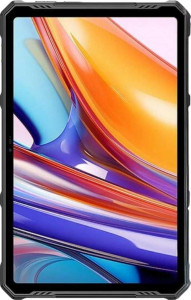
The two tablets represent fundamentally different design philosophies. The Samsung Galaxy Tab S11 Ultra is a slim, large-canvas device at just 5.1 mm thick and 695 g, while the Ulefone Armor Pad 3 Pro is a rugged slab measuring 21.2 mm thick and weighing a substantial 1,243 g — nearly 80% heavier and over four times thicker. That extra bulk on the Armor Pad reflects its hardened, ruggedized construction, but it comes at a real cost: holding it one-handed for extended periods will be noticeably fatiguing, and portability is significantly reduced. The Tab S11 Ultra, despite having a physically larger screen footprint, occupies less than half the volume (347 cm³ vs. 925 cm³), making it the dramatically more portable device.

On water resistance, both tablets share a 1.5 m waterproof depth rating, but the Tab S11 Ultra holds an IP68 certification versus the Armor Pad's IP57. The difference lies in dust protection: IP6x means fully dust-tight, while IP5x only guarantees resistance to dust ingress under pressure — not complete exclusion. For a device marketed on ruggedness, the Armor Pad's lower dust rating is a notable trade-off. The Tab S11 Ultra's IP68 is the stronger all-around environmental certification.

The Tab S11 Ultra also ships with a stylus included, adding creative and productivity value out of the box that the Armor Pad does not offer. Overall, the Samsung Galaxy Tab S11 Ultra holds a clear design advantage: it is thinner, lighter, better dust-sealed, and ships with an included stylus. The Armor Pad 3 Pro's only design rationale is its ruggedized build for demanding physical environments, but even its IP rating falls short of its rival's.
Display:
screen size 14.6" 10.36"
resolution 2960 x 1848 px 2000 x 1200 px
pixel density 239 ppi 225 ppi
Display type OLED/AMOLED LCD, IPS
has branded damage-resistant glass
supports HDR10
has a touch screen
Has sapphire glass display
supports HDR10+
supports Dolby Vision
Has an e-paper display

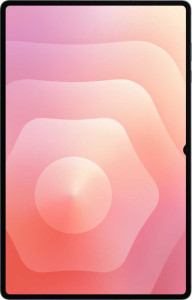
Screen size is the most immediate differentiator here: the Samsung Galaxy Tab S11 Ultra offers a sweeping 14.6″ OLED/AMOLED panel, while the Ulefone Armor Pad 3 Pro provides a more modest 10.36″ IPS LCD. That gap is not just cosmetic — it translates directly into how usable each device is for media consumption, multitasking, and creative work. More importantly, the panel technology diverges sharply. AMOLED delivers true blacks, superior contrast ratios, and more vibrant colors because each pixel is self-emissive, whereas IPS LCD relies on a backlight that limits contrast depth and color saturation by comparison.

Resolution tells a more nuanced story. The Tab S11 Ultra's 2960 x 1848 px at 239 ppi versus the Armor Pad's 2000 x 1200 px at 225 ppi means the pixel density gap is relatively modest — both screens should appear reasonably sharp at normal viewing distances. However, the Tab S11 Ultra additionally supports HDR10+, the dynamic metadata upgrade to standard HDR10, enabling scene-by-scene tone mapping for compatible content. The Armor Pad supports neither HDR standard, meaning high-dynamic-range video will be tone-mapped or displayed without HDR enhancement entirely.

For display quality, the Samsung Galaxy Tab S11 Ultra wins this category decisively. The combination of a vastly larger canvas, superior AMOLED panel technology, and HDR10+ support creates a viewing experience the Armor Pad 3 Pro simply cannot match on any technical dimension provided. The Armor Pad's IPS LCD is functional for field or utilitarian use, but it is outclassed across every meaningful display metric here.

Performance:
internal storage 1024GB 256GB
RAM 16GB 8GB
Chipset (SoC) name MediaTek Dimensity 9400 Plus MediaTek MT8788
GPU name Immortalis G925 Mali G72 MP3
CPU speed 1 x 3.73 & 4 x 3.3 & 3 x 2.4 GHz 8 x 2 GHz
has an external memory slot
semiconductor size 3 nm 12 nm
Supports 64-bit
maximum amount of external memory supported 1500GB 2048GB
Has integrated LTE
Uses big.LITTLE technology
Has integrated graphics
GPU clock speed 1300 MHz 900 MHz
maximum memory amount 24GB 8GB

The silicon gap between these two tablets is enormous. Samsung's Tab S11 Ultra runs on the MediaTek Dimensity 9400 Plus built on a cutting-edge 3 nm process, while the Ulefone Armor Pad 3 Pro relies on the MediaTek MT8788 manufactured at 12 nm. Process node matters for two reasons: a smaller node means more transistors per unit area, enabling vastly higher computational throughput, and it does so with significantly lower power draw and heat generation. The MT8788 is a mid-range chip from several generations ago, and the performance chasm in everyday tasks — app loading, multitasking, rendering — will be immediately perceptible.

That advantage extends across every performance dimension. The Tab S11 Ultra pairs its flagship SoC with up to 16 GB of RAM (expandable to 24 GB) and 1 TB of internal storage, against the Armor Pad's 8 GB RAM ceiling and 256 GB storage. The Tab S11 Ultra also employs big.LITTLE technology, meaning its CPU intelligently distributes workloads across high-performance and efficiency cores — the Armor Pad's uniform 8-core configuration lacks this architectural sophistication. On the GPU side, the Immortalis G925 at 1300 MHz is a flagship-class graphics core capable of hardware ray tracing, whereas the Mali G72 MP3 at 900 MHz is a considerably older and less capable design, making graphically intensive applications and gaming a one-sided comparison.

There is no competitive framing to apply here: the Samsung Galaxy Tab S11 Ultra holds an overwhelming and unambiguous performance advantage across raw compute, memory capacity, storage, and graphics. The Armor Pad 3 Pro's hardware is adequate for basic productivity and field data tasks, but users with any demanding workload will find it falls far short of what the Tab S11 Ultra can deliver.

Cameras:
megapixels (main camera) 13 & 8 MP 50 MP
megapixels (front camera) 12 & 12MP 32MP
video recording (main camera) 2160 x 30 fps 1080 x 30 fps
has a flash
has a front camera
has a built-in HDR mode
can create panoramas in-camera
supports slow-motion video recording
has touch autofocus
optical zoom 0x 0x
has manual white balance
has a CMOS sensor
has continuous autofocus when recording movies
supports Dolby Vision recording
Has a front-facing LED flash
number of flash LEDs 1 1
has manual ISO
has a video light
Shoots 360° panorama
has a serial shot mode
has built-in optical image stabilization
has 3D photo/video recording capabilities
Has a dual-tone LED flash
has manual focus
Has a RGB LED flash
has manual exposure
has manual shutter speed

Megapixel counts create a deceptive first impression here. The Ulefone Armor Pad 3 Pro leads on raw resolution with a 50 MP main camera and 32 MP front camera, compared to the Samsung Galaxy Tab S11 Ultra's 13 + 8 MP dual rear and 12 + 12 MP dual front setup. However, megapixels alone do not determine image quality — and crucially, the Tab S11 Ultra's dual-camera configuration on both front and rear provides shooting versatility that a single-lens system cannot replicate regardless of its pixel count.

Where the gap becomes unambiguous is video. The Tab S11 Ultra records at 2160p (4K) at 30 fps, while the Armor Pad tops out at 1080p at 30 fps. For anyone capturing video — whether for documentation, content creation, or video calls — 4K delivers four times the pixel information of 1080p, with dramatically more detail and flexibility for cropping or reframing in post. Both devices share an otherwise near-identical feature set: HDR mode, slow-motion, touch autofocus, continuous autofocus during recording, manual ISO, white balance, exposure, and focus controls are present on both.

Despite the Armor Pad's megapixel advantage on paper, the Samsung Galaxy Tab S11 Ultra holds the stronger camera position overall, driven by its 4K video capability and dual-lens versatility on both sides. The Armor Pad's higher-resolution sensors are its only differentiator in this category, and that single advantage does not outweigh the Tab S11 Ultra's broader imaging capabilities as defined by the available specs.

Audio:
has aptX
has aptX HD
has LDAC
has aptX Low Latency
has aptX Adaptive
has aptX Lossless
has stereo speakers
has a socket for a 3.5 mm audio jack
Has a radio

Audio is one of the few categories in this comparison where the Ulefone Armor Pad 3 Pro holds a genuine practical edge. Both tablets offer stereo speakers and neither supports any high-resolution Bluetooth audio codec — no aptX, LDAC, or any variant — meaning wireless audio quality is on equal footing for both. The meaningful divergence comes from wired and analog connectivity.

The Armor Pad 3 Pro includes a 3.5 mm headphone jack, which the Tab S11 Ultra omits entirely. For users who rely on wired headphones — whether for audio fidelity, zero-latency monitoring, or simply not wanting to manage Bluetooth pairing — this is a tangible daily convenience the Samsung cannot offer. The Armor Pad also includes an FM radio receiver, a feature that may matter in field or emergency-use contexts where the Armor Pad's ruggedized profile is most relevant.

On balance, the Ulefone Armor Pad 3 Pro takes a narrow but real advantage in this category. The headphone jack alone addresses a genuine connectivity gap that the Tab S11 Ultra leaves open, and the FM radio adds marginal utility in specific use cases. Neither device distinguishes itself in wireless audio quality, so wired connectivity becomes the deciding factor here.

Battery:
battery power 11600 mAh 33280 mAh
Supports fast charging
has wireless charging
has a battery level indicator
has a rechargeable battery
has a removable battery

Battery capacity is where the Ulefone Armor Pad 3 Pro makes its most striking statement. Its 33,280 mAh cell is nearly three times larger than the Samsung Galaxy Tab S11 Ultra's already-generous 11,600 mAh pack. To put that in perspective, the Armor Pad's battery is larger than most laptop batteries and could theoretically charge a typical smartphone from zero multiple times over. For extended off-grid deployments, field work, or any scenario where power access is unreliable, this capacity advantage is substantial and practical.

It is worth contextualizing that capacity against consumption, however. The Tab S11 Ultra drives a large, power-hungry 14.6″ AMOLED display and a flagship-tier SoC, while the Armor Pad runs a smaller, less demanding LCD panel and a more power-efficient chipset — factors that partially offset the raw mAh gap in real-world endurance. Still, the sheer size of the Armor Pad's battery means it retains a commanding autonomy lead even accounting for these differences. Both tablets support fast charging and neither offers wireless charging, leaving them on equal footing for those features.

The Ulefone Armor Pad 3 Pro wins this category decisively on capacity alone. For users who prioritize time away from a power outlet — a core use case for a rugged tablet — its 33,280 mAh battery represents a genuine and significant real-world advantage that the Tab S11 Ultra cannot match.

Connectivity & Features:
release date September 2025 April 2025
Wi-Fi version Wi-Fi 4 (802.11n), Wi-Fi 6E (802.11ax), Wi-Fi 6 (802.11ax), Wi-Fi 5 (802.11ac), Wi-Fi 7 (802.11be) Wi-Fi 4 (802.11n), Wi-Fi 5 (802.11ac)
SIM cards 1 SIM, 1 eSIM 2 SIM
has Mail Privacy Protection
has on-device machine learning
has clipboard warnings
has location privacy options
has camera/microphone privacy options
can block app tracking
blocks cross-site tracking
supports split screen
has Live Text
has notification permissions
has full-page screenshots
has Quick Start
has theme customization
has Wi-Fi password sharing
has PiP
Can play games while they download
has an extra dim mode
can offload apps
has focus modes
has media picker
has dynamic theming
has dark mode
has battery health check
Has USB Type-C
has a cellular module
has 5G support
is a multi-user system
gets direct OS updates
has GPS
has a child lock
has an HDMI output
has NFC
Has a fingerprint scanner
USB version 3.2 2
Supports widgets
Bluetooth version 5.4 4.2
has a gyroscope
Is free and open source
Has offline voice recognition
has a compass
supports Wi-Fi
Has sharing intents
Has customizable notifications
Uses 3D facial recognition
supports Galileo
Has a barometer
has an accelerometer
has voice commands
Has an iris scanner
Has a built-in projector
supports Ethernet
Has an infrared sensor
Tracks the current position of a mobile device

Wireless connectivity tells a clear generational story. The Samsung Galaxy Tab S11 Ultra supports Wi-Fi 7 (802.11be) and Wi-Fi 6E, delivering access to the latest wireless standards with higher throughput, lower latency, and better performance in congested environments. The Ulefone Armor Pad 3 Pro tops out at Wi-Fi 5 (802.11ac) — two full generations behind — meaning it will bottleneck on modern routers and cannot benefit from newer spectrum bands. Similarly, Bluetooth 5.4 on the Tab S11 Ultra versus 4.2 on the Armor Pad represents a meaningful gap in connection stability, range, and power efficiency for wireless peripherals.

Cellular and data transfer specs reinforce the Tab S11 Ultra's lead. It supports 5G where the Armor Pad is limited to LTE, and its USB 3.2 port enables fast wired data transfers and display output at speeds the Armor Pad's USB 2.0 connection cannot approach. The one notable reversal is NFC: the Armor Pad includes it while the Tab S11 Ultra does not, which matters for contactless payments, quick device pairing, or NFC-based workflows in the field — a relevant consideration given the Armor Pad's rugged use case. The Armor Pad also offers dual physical SIM slots versus the Tab S11 Ultra's single SIM plus eSIM configuration, which may suit users needing two active carrier lines simultaneously without relying on eSIM provisioning.

Across the breadth of this category, the Samsung Galaxy Tab S11 Ultra holds a substantial overall advantage — particularly in Wi-Fi generation, 5G support, Bluetooth version, and USB speed. The Armor Pad's NFC inclusion and dual physical SIM are practical wins for specific workflows, but they do not close the wide connectivity gap that separates the two devices.

Miscellaneous:
DDR memory version 5 4

This group contains a single but meaningful data point. The Samsung Galaxy Tab S11 Ultra uses LPDDR5 memory, while the Ulefone Armor Pad 3 Pro runs on LPDDR4. LPDDR5 offers higher peak bandwidth and improved power efficiency compared to LPDDR4 — in practical terms, this means the Tab S11 Ultra's memory subsystem can feed its processor data faster, which compounds the performance advantages already established by its flagship SoC. The Armor Pad's LPDDR4, while a capable and widely-used standard, represents the older generation and cannot match those throughput figures. The Samsung Galaxy Tab S11 Ultra holds the clear edge here, and while RAM generation alone rarely defines user experience in isolation, it reinforces the broader performance gap between these two devices.

Comparison Summary & Verdict

After examining every specification, these two tablets serve clearly distinct audiences. The Samsung Galaxy Tab S11 Ultra is the standout choice for users who demand top-tier performance, offering a stunning 14.6″ OLED display, the powerful MediaTek Dimensity 9400 Plus chipset, up to 24 GB of RAM, HDR10+ support, Wi-Fi 7, and a bundled stylus — all in a remarkably slim 5.1 mm body. The Ulefone Armor Pad 3 Pro, on the other hand, is purpose-built for users who need extreme endurance and resilience, delivering a massive 33280 mAh battery, dual physical SIM slots, a 50 MP main camera, NFC, a 3.5 mm audio jack, and support for up to 2048 GB of external storage. If raw power and media consumption define your use case, the Samsung wins decisively. If longevity in the field and rugged reliability matter most, the Ulefone stands in a class of its own.

Samsung Galaxy Tab S11 Ultra
Buy Samsung Galaxy Tab S11 Ultra if...

Buy the Samsung Galaxy Tab S11 Ultra if you want a high-performance tablet with a large OLED display, cutting-edge chipset, HDR10+ support, Wi-Fi 7, and an included stylus in an ultra-slim design.

Ulefone Armor Pad 3 Pro
Buy Ulefone Armor Pad 3 Pro if...

Buy the Ulefone Armor Pad 3 Pro if you need a rugged tablet with an extraordinarily large battery, dual SIM support, NFC, a 3.5 mm audio jack, and a higher-resolution main camera for demanding field use.