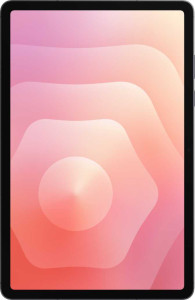
Samsung Galaxy Tab S11
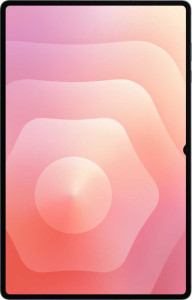
Samsung Galaxy Tab S11 Ultra

Samsung Galaxy Tab S11 Samsung Galaxy Tab S11 Ultra

Overview

Welcome to our in-depth comparison of the Samsung Galaxy Tab S11 and the Samsung Galaxy Tab S11 Ultra. Both tablets share the same powerful MediaTek Dimensity 9400 Plus chipset and stunning OLED display technology, yet they diverge significantly when it comes to screen size, battery capacity, and overall dimensions. Whether portability or raw power is your priority, this comparison will help you find the right fit.

Common Features

  • Both tablets include a stylus in the box.
  • Neither tablet has a detachable keyboard.
  • Neither tablet has a backlit keyboard.
  • Both tablets are waterproof with an IP68 rating and a depth rating of 1.5 m.
  • Neither tablet has tilt sensitivity.
  • Both tablets feature an OLED/AMOLED display.
  • Both tablets have a 120Hz refresh rate.
  • Neither tablet has branded damage-resistant glass.
  • Both tablets have an anti-reflection coating on the display.
  • HDR10 support is available on both tablets.
  • Both tablets have a typical brightness of 1000 nits.
  • Both tablets have a touchscreen.
  • Neither tablet has a sapphire glass display.
  • Both tablets are powered by the MediaTek Dimensity 9400 Plus chipset with an Immortalis G925 GPU.
  • Both tablets share the same CPU speed of 1 x 3.73 & 4 x 3.3 & 3 x 2.4 GHz.
  • Both tablets score 8969 (multi) and 2874 (single) in Geekbench 6.
  • Both tablets support external memory via a memory card slot.
  • Both tablets use a 3 nm semiconductor and support 64-bit processing.
  • Both tablets support 4K video recording at 30 fps on the main camera.
  • Flash is available on both tablets.
  • Both tablets have a front camera.
  • A built-in HDR mode is available on both tablets.
  • Neither tablet can create panoramas in-camera.
  • Both tablets support slow-motion video recording.
  • Both tablets support touch autofocus.
  • Neither tablet has optical zoom.
  • aptX, aptX HD, aptX Adaptive, aptX Low Latency, aptX Lossless, and LDAC audio codecs are not supported on either tablet.
  • Both tablets have stereo speakers.
  • Neither tablet has a 3.5 mm audio jack.
  • Both tablets support fast charging.
  • Wireless charging is not available on either tablet.
  • Both tablets have a battery level indicator and a rechargeable, non-removable battery.
  • Both tablets support 1 SIM and 1 eSIM.
  • On-device machine learning is available on both tablets.
  • Both tablets have clipboard warnings, location privacy options, and camera/microphone privacy options.
  • App tracking can be blocked on both tablets.
  • Cross-site tracking blocking is not available on either tablet.
  • Both tablets use DDR5 memory and support multithreading.

Main Differences

  • Weight is 471 g on Samsung Galaxy Tab S11 and 695 g on Samsung Galaxy Tab S11 Ultra.
  • Thickness is 5.5 mm on Samsung Galaxy Tab S11 and 5.1 mm on Samsung Galaxy Tab S11 Ultra.
  • Width is 253.8 mm on Samsung Galaxy Tab S11 and 326.3 mm on Samsung Galaxy Tab S11 Ultra.
  • Height is 165.3 mm on Samsung Galaxy Tab S11 and 208.5 mm on Samsung Galaxy Tab S11 Ultra.
  • Volume is 230.74 cm³ on Samsung Galaxy Tab S11 and 346.97 cm³ on Samsung Galaxy Tab S11 Ultra.
  • Screen size is 11″ on Samsung Galaxy Tab S11 and 14.6″ on Samsung Galaxy Tab S11 Ultra.
  • Resolution is 2560 x 1600 px on Samsung Galaxy Tab S11 and 2960 x 1848 px on Samsung Galaxy Tab S11 Ultra.
  • Pixel density is 274 ppi on Samsung Galaxy Tab S11 and 239 ppi on Samsung Galaxy Tab S11 Ultra.
  • Internal storage is 512 GB on Samsung Galaxy Tab S11 and 1024 GB on Samsung Galaxy Tab S11 Ultra.
  • RAM is 12 GB on Samsung Galaxy Tab S11 and 16 GB on Samsung Galaxy Tab S11 Ultra.
  • The main camera is 13 MP on Samsung Galaxy Tab S11, while Samsung Galaxy Tab S11 Ultra has a dual rear camera setup of 13 MP and 8 MP.
  • Battery capacity is 8400 mAh on Samsung Galaxy Tab S11 and 11600 mAh on Samsung Galaxy Tab S11 Ultra.
  • Wi-Fi 7 (802.11be) support is present on Samsung Galaxy Tab S11 Ultra but not available on Samsung Galaxy Tab S11.
Specs Comparison
Samsung Galaxy Tab S11

Samsung Galaxy Tab S11

Samsung Galaxy Tab S11 Ultra

Samsung Galaxy Tab S11 Ultra

Design:
weight 471 g 695 g
thickness 5.5 mm 5.1 mm
width 253.8 mm 326.3 mm
height 165.3 mm 208.5 mm
volume 230.74227 cm³ 346.971105 cm³
Stylus included
Has a detachable keyboard
Has a backlit keyboard
water resistance Waterproof Waterproof
Has tilt sensitivity
waterproof depth rating 1.5 m 1.5 m
Ingress Protection (IP) rating IP68 IP68

The most defining design difference between these two tablets is sheer size. The Tab S11 Ultra measures 326.3 × 208.5 mm against the standard Tab S11's 253.8 × 165.3 mm, giving it roughly 50% more volume. That translates directly into a much larger display footprint — ideal for productivity, creative work, or media consumption where screen real estate matters. However, this comes at a cost: at 695 g, the Ultra is nearly 224 g heavier than the Tab S11's 471 g. In practice, that gap is very noticeable during extended handheld use — the Tab S11 is meaningfully easier to hold for long sessions, while the Ultra is better suited to lap or desk use.

Interestingly, the Ultra is actually 0.4 mm thinner (5.1 mm vs 5.5 mm), which is a minor engineering achievement given its larger chassis. In everyday handling though, this difference is imperceptible — neither device would be considered thick by any modern standard.

On shared features, both tablets are well-matched: each includes a stylus in the box, carries an IP68 rating with a 1.5 m waterproof depth, and neither offers a detachable or backlit keyboard. The edge here depends entirely on use case — the Tab S11 wins on portability and one-handed comfort, while the Tab S11 Ultra wins for users who prioritize a larger working surface and don't mind the added weight.

Display:
screen size 11" 14.6"
resolution 2560 x 1600 px 2960 x 1848 px
pixel density 274 ppi 239 ppi
Display type OLED/AMOLED OLED/AMOLED
refresh rate 120Hz 120Hz
has branded damage-resistant glass
has anti-reflection coating
supports HDR10
brightness (typical) 1000 nits 1000 nits
has a touch screen
Has sapphire glass display
supports HDR10+
contrast ratio 1000000:1 1000000:1
supports Dolby Vision
Has an e-paper display

Screen size is the headline story here. The Tab S11 Ultra's 14.6″ panel dwarfs the Tab S11's 11″, and for productivity tasks — split-screen multitasking, document editing, or drawing with the included stylus — that extra real estate is genuinely transformative rather than just a numbers game. The Ultra's higher absolute resolution (2960 × 1848 px vs 2560 × 1600 px) ensures that text and fine detail remain crisp across that larger canvas.

One nuance worth noting: despite having more pixels, the Ultra's pixel density is actually lower at 239 ppi compared to the Tab S11's 274 ppi. This is a natural consequence of spreading those pixels across a much bigger panel. In practice, both figures sit comfortably above the threshold where individual pixels become indistinguishable at typical viewing distances, so neither display will look soft — but the Tab S11 does render slightly sharper content up close, which matters for detailed illustration or small text.

Where they are evenly matched is significant: both use OLED/AMOLED panels with a 120Hz refresh rate, 1,000,000:1 contrast ratio, 1000 nits typical brightness, anti-reflection coating, and HDR10+ support. These are premium display traits across the board, meaning neither buyer is compromising on panel quality. The edge ultimately comes down to intent — the Tab S11 delivers a sharper, more portable screen, while the Tab S11 Ultra offers a larger stage that suits power users who treat their tablet as a primary computing device.

Performance:
internal storage 512GB 1024GB
RAM 12GB 16GB
Chipset (SoC) name MediaTek Dimensity 9400 Plus MediaTek Dimensity 9400 Plus
GPU name Immortalis G925 Immortalis G925
CPU speed 1 x 3.73 & 4 x 3.3 & 3 x 2.4 GHz 1 x 3.73 & 4 x 3.3 & 3 x 2.4 GHz
Geekbench 6 result (multi) 8969 8969
Geekbench 6 result (single) 2874 2874
has an external memory slot
semiconductor size 3 nm 3 nm
Supports 64-bit
maximum amount of external memory supported 1500GB 1500GB
Has integrated LTE
Uses big.LITTLE technology
Has integrated graphics
GPU clock speed 1300 MHz 1300 MHz
CPU threads 8 threads 8 threads
Supports ECC memory
RAM speed 10667 MHz 10667 MHz
maximum memory amount 24GB 24GB
Uses HMP
L3 cache 12 MB 12 MB
maximum memory bandwidth 85.3 GB/s 85.3 GB/s

At their core, these two tablets are performance twins. Both run on the MediaTek Dimensity 9400 Plus chipset built on a 3 nm process, pair it with the Immortalis G925 GPU, and post identical benchmark results — 8969 multi-core and 2874 single-core on Geekbench 6. This means day-to-day responsiveness, app launch speeds, and gaming performance are functionally indistinguishable between the two devices.

The only meaningful differentiators within this group are RAM and storage. The Tab S11 Ultra ships with 16GB of RAM versus the Tab S11's 12GB, and offers 1TB of internal storage compared to 512GB. The RAM advantage becomes relevant under heavy multitasking — keeping more apps suspended in memory simultaneously, or handling large creative files without performance degradation. It's a meaningful buffer for power users, though the 12GB in the Tab S11 is still a generous allocation by any current standard. The doubled storage in the Ultra matters primarily for users who work with large video files or extensive local media libraries, especially since both tablets support up to 1500GB of external storage via a memory card slot, partially offsetting the gap.

For raw processing power, this group is a dead tie. The Tab S11 Ultra holds a practical edge in RAM and storage headroom, making it the stronger choice for users who push their devices hard — but buyers prioritizing core performance alone will find no difference between the two.

Cameras:
megapixels (main camera) 13 MP 13 & 8 MP
video recording (main camera) 2160 x 30 fps 2160 x 30 fps
has a flash
has a front camera
has a built-in HDR mode
can create panoramas in-camera
supports slow-motion video recording
has touch autofocus
optical zoom 0x 0x
has manual white balance
has a CMOS sensor
has continuous autofocus when recording movies
supports Dolby Vision recording
Has a front-facing LED flash
number of flash LEDs 1 1
has manual ISO
has a video light
Shoots 360° panorama
has a serial shot mode
has built-in optical image stabilization
has 3D photo/video recording capabilities
Has a dual-tone LED flash
has manual focus
Has a RGB LED flash
has manual exposure
has manual shutter speed

Camera systems are rarely a primary reason to choose a tablet, and these specs reinforce that notion — neither device is built around photography. That said, the one tangible differentiator here is that the Tab S11 Ultra features a dual rear camera setup (13 MP + 8 MP), while the Tab S11 carries a single 13 MP rear shooter. The additional 8 MP sensor on the Ultra likely serves as an ultrawide lens, offering a broader field of view for scanning documents, capturing whiteboards, or framing group shots — use cases that are actually practical on a large-format tablet.

Beyond that distinction, the two devices are otherwise identical across every camera specification provided. Both shoot 4K video at 30fps, support slow-motion recording, offer manual controls for ISO, white balance, exposure, and focus, and include continuous autofocus during video. Neither has optical image stabilization, optical zoom, or panorama shooting — notable absences that confirm cameras are a secondary consideration in the design of both products.

The Tab S11 Ultra takes a narrow but real edge in this category purely by virtue of its second rear camera, which adds versatility the Tab S11 cannot match. However, given how closely matched everything else is, this advantage will only matter to a specific subset of users. For the majority, camera performance is effectively a tie.

Audio:
has aptX
has aptX HD
has LDAC
has aptX Low Latency
has aptX Adaptive
has aptX Lossless
has stereo speakers
has a socket for a 3.5 mm audio jack
Has a radio

Audio is the rare category where these two tablets are in absolute lockstep — every single specification is identical. Both feature stereo speakers, omit a 3.5 mm headphone jack, and lack support for any high-resolution Bluetooth audio codec, including aptX, aptX HD, LDAC, and aptX Adaptive. Users who rely on wired headphones will need a USB-C adapter on either device.

The absence of advanced Bluetooth audio codecs is worth flagging for audiophiles. Without LDAC or aptX HD, wireless audio is limited to standard quality — sufficient for casual listening, but not ideal for those who invest in high-end wireless headphones capable of lossless or near-lossless transmission. Again, this applies equally to both tablets.

This group is an unambiguous tie. There is not a single audio-related specification that separates the Tab S11 from the Tab S11 Ultra — a user's audio experience will be determined entirely by the accessories they pair with either device, not by any difference between the two tablets themselves.

Battery:
battery power 8400 mAh 11600 mAh
Supports fast charging
has wireless charging
has a battery level indicator
has a rechargeable battery
has a removable battery

Battery capacity is one of the more consequential differences between these two tablets. The Tab S11 Ultra packs an 11600 mAh cell — roughly 38% larger than the Tab S11's 8400 mAh. On paper, that gap is substantial, but real-world battery life depends heavily on screen-on time and workload. The Ultra's significantly larger and higher-resolution display will draw more power, meaning the capacity advantage partially offsets the increased consumption rather than translating directly into proportionally longer usage. Still, the larger battery provides a meaningful buffer for all-day or multi-day use without reaching for a charger.

Both tablets share the same supporting traits: fast charging is supported on each, neither offers wireless charging, and neither has a removable battery. The lack of wireless charging is a notable omission at the premium end of the tablet market, equally affecting both buyers.

On balance, the Tab S11 Ultra holds the edge in this category by sheer capacity, and even accounting for its larger display's power demands, it is well-positioned to outlast the Tab S11 under equivalent workloads. For users who spend long stretches away from a power source, the Ultra's bigger battery is a genuine practical advantage.

Connectivity & Features:
release date September 2025 September 2025
Wi-Fi version Wi-Fi 4 (802.11n), Wi-Fi 6E (802.11ax), Wi-Fi 6 (802.11ax), Wi-Fi 5 (802.11ac) Wi-Fi 4 (802.11n), Wi-Fi 6E (802.11ax), Wi-Fi 6 (802.11ax), Wi-Fi 5 (802.11ac), Wi-Fi 7 (802.11be)
SIM cards 1 SIM, 1 eSIM 1 SIM, 1 eSIM
has Mail Privacy Protection
has on-device machine learning
has clipboard warnings
has location privacy options
has camera/microphone privacy options
can block app tracking
blocks cross-site tracking
supports split screen
has Live Text
has notification permissions
has full-page screenshots
has Quick Start
has theme customization
has Wi-Fi password sharing
has PiP
Can play games while they download
has an extra dim mode
can offload apps
has focus modes
has media picker
has dynamic theming
has dark mode
has battery health check
Has USB Type-C
has a cellular module
has 5G support
is a multi-user system
gets direct OS updates
has GPS
has a child lock
has an HDMI output
has NFC
Has a fingerprint scanner
USB version 3.2 3.2
Supports widgets
Bluetooth version 5.4 5.4
download speed 7300 MBits/s 7300 MBits/s
has a gyroscope
Is free and open source
Has offline voice recognition
has a compass
supports Wi-Fi
Has sharing intents
Has customizable notifications
Uses 3D facial recognition
supports Galileo
Has a barometer
has an accelerometer
has voice commands
Has an iris scanner
Has a built-in projector
supports Ethernet
Has an infrared sensor
Tracks the current position of a mobile device

The Samsung Galaxy Tab S11 and Galaxy Tab S11 Ultra share most of their connectivity and feature specifications, but the Ultra model offers a slight advantage with support for the newer Wi-Fi 7 (802.11be) in addition to Wi-Fi 4, 5, and 6E, while the Tab S11 supports only Wi-Fi 4, 5, and 6E. Both tablets support 5G, come with a cellular module, and include features like GPS, NFC, and Bluetooth 5.4.

Both devices are equipped with a USB Type-C port (USB version 3.2) and support a variety of useful features such as split screen, PiP, full-page screenshots, dynamic theming, dark mode, and customizable notifications. They also offer offline voice recognition, sharing intents, and the ability to track the device's position. Privacy features, including location privacy options, camera/microphone privacy, clipboard warnings, and app tracking blocking, are available on both devices.

However, while both models have similar features overall, the Tab S11 Ultra stands out with Wi-Fi 7 support, which may offer faster wireless speeds in the future, while both tablets share similar other specifications, including the lack of HDMI output, infrared sensor, and built-in projector. They also both lack 3D facial recognition and an iris scanner.

Miscellaneous:
DDR memory version 5 5
uses multithreading

The Samsung Galaxy Tab S11 and Galaxy Tab S11 Ultra share identical specifications in the Miscellaneous category. Both devices use DDR5 memory and support multithreading, ensuring efficient performance during multitasking and demanding tasks.

There are no differences between the two models in this group, as both feature the same memory version and multithreading capability.

Overall, in terms of memory and processing features, both tablets are equally equipped, offering the same technical foundation for smooth performance.

Comparison Summary & Verdict

After examining every specification, the choice between the Samsung Galaxy Tab S11 and the Samsung Galaxy Tab S11 Ultra comes down to how you intend to use your tablet. The Samsung Galaxy Tab S11 is the more compact and lighter option at 471 g with an 11-inch display, making it ideal for everyday users who value portability and a higher pixel density of 274 ppi. The Samsung Galaxy Tab S11 Ultra, on the other hand, caters to power users with its expansive 14.6-inch screen, larger 11600 mAh battery, 16 GB of RAM, 1 TB of storage, and Wi-Fi 7 support. If you need a content creation or productivity powerhouse, the Ultra delivers; if a sleek, manageable daily driver is what you seek, the standard Tab S11 is the smarter choice.

Samsung Galaxy Tab S11
Buy Samsung Galaxy Tab S11 if...

Buy the Samsung Galaxy Tab S11 if you prefer a lighter, more portable tablet with a sharper pixel density and a compact 11-inch form factor that is easier to carry daily.

Samsung Galaxy Tab S11 Ultra
Buy Samsung Galaxy Tab S11 Ultra if...

Buy the Samsung Galaxy Tab S11 Ultra if you need a larger 14.6-inch display, a bigger battery, more RAM and storage, and the latest Wi-Fi 7 connectivity for demanding productivity or creative workloads.