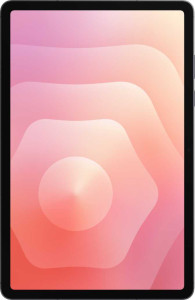
Samsung Galaxy Tab S11
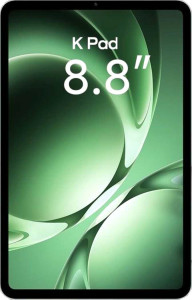
Xiaomi Redmi K Pad

Samsung Galaxy Tab S11 Xiaomi Redmi K Pad

Common Features

  • Both products have a MediaTek Dimensity 9400 Plus chipset.
  • Both products have an Immortalis G925 GPU.
  • Both products have a CPU with 1 x 3.73 GHz, 4 x 3.3 GHz, and 3 x 2.4 GHz cores.
  • Both products support 64-bit architecture.
  • Both products have integrated LTE support.
  • Both products have stereo speakers.
  • Both products do not have a socket for a 3.5 mm audio jack.
  • Both products have a rechargeable battery.
  • Both products have a battery level indicator.
  • Both products support fast charging.
  • Both products have Wi-Fi 4 (802.11n) support.
  • Both products support Wi-Fi 5 (802.11ac).
  • Both products support Wi-Fi 6 (802.11ax).
  • Both products have a touchscreen display.
  • Both products support split screen functionality.
  • Both products have location privacy options.
  • Both products have camera and microphone privacy options.
  • Both products support blocking app tracking.
  • Both products have on-device machine learning.

Main Differences

  • Samsung Galaxy Tab S11 weighs 471 g, while Xiaomi Redmi K Pad weighs 326 g.
  • Samsung Galaxy Tab S11 has a thickness of 5.5 mm, while Xiaomi Redmi K Pad is 6.5 mm thick.
  • Samsung Galaxy Tab S11 is 253.8 mm wide, while Xiaomi Redmi K Pad is 205.1 mm wide.
  • Samsung Galaxy Tab S11 has a height of 165.3 mm, while Xiaomi Redmi K Pad is 132 mm high.
  • Samsung Galaxy Tab S11 has a volume of 230.74227 cm³, while Xiaomi Redmi K Pad has a volume of 175.9758 cm³.
  • Samsung Galaxy Tab S11 includes a stylus, while Xiaomi Redmi K Pad does not include a stylus.
  • Samsung Galaxy Tab S11 is waterproof, while Xiaomi Redmi K Pad has no water resistance.
  • Samsung Galaxy Tab S11 has an OLED/AMOLED display, while Xiaomi Redmi K Pad has an LCD, IPS display.
  • Samsung Galaxy Tab S11 has a screen size of 11″, while Xiaomi Redmi K Pad has a screen size of 8.8″.
  • Samsung Galaxy Tab S11 has a resolution of 2560 x 1600 px, while Xiaomi Redmi K Pad has a resolution of 3008 x 1880 px.
  • Samsung Galaxy Tab S11 has a pixel density of 274 ppi, while Xiaomi Redmi K Pad has a pixel density of 403 ppi.
  • Samsung Galaxy Tab S11 has a refresh rate of 120Hz, while Xiaomi Redmi K Pad has a refresh rate of 165Hz.
  • Samsung Galaxy Tab S11 does not have branded damage-resistant glass, while Xiaomi Redmi K Pad has branded damage-resistant glass.
  • Samsung Galaxy Tab S11 has a brightness of 1000 nits, while Xiaomi Redmi K Pad has a brightness of 700 nits.
  • Samsung Galaxy Tab S11 supports HDR10+, while Xiaomi Redmi K Pad does not support HDR10+.
  • Samsung Galaxy Tab S11 does not support Dolby Vision, while Xiaomi Redmi K Pad supports Dolby Vision.
  • Samsung Galaxy Tab S11 has 512GB of internal storage, while Xiaomi Redmi K Pad has 1024GB of internal storage.
  • Samsung Galaxy Tab S11 has 12GB of RAM, while Xiaomi Redmi K Pad has 16GB of RAM.
  • Samsung Galaxy Tab S11 has an external memory slot, while Xiaomi Redmi K Pad does not have an external memory slot.
  • Samsung Galaxy Tab S11 does not have LDAC support, while Xiaomi Redmi K Pad has LDAC support.
  • Samsung Galaxy Tab S11 has a battery power of 8400 mAh, while Xiaomi Redmi K Pad has a battery power of 7500 mAh.
  • Samsung Galaxy Tab S11 supports 5G, while Xiaomi Redmi K Pad does not support 5G.
  • Samsung Galaxy Tab S11 has GPS, while Xiaomi Redmi K Pad does not have GPS.
  • Samsung Galaxy Tab S11 does not have an infrared sensor, while Xiaomi Redmi K Pad has an infrared sensor.
Specs Comparison
Samsung Galaxy Tab S11

Samsung Galaxy Tab S11

Xiaomi Redmi K Pad

Xiaomi Redmi K Pad

Design:
weight 471 g 326 g
thickness 5.5 mm 6.5 mm
width 253.8 mm 205.1 mm
height 165.3 mm 132 mm
volume 230.74227 cm³ 175.9758 cm³
Stylus included
Has a detachable keyboard
Has a backlit keyboard
water resistance Waterproof None
Has tilt sensitivity

The Samsung Galaxy Tab S11 and the Xiaomi Redmi K Pad differ in several design specifications. The Tab S11 is noticeably larger and heavier, with a weight of 471 g, a thickness of 5.5 mm, and dimensions of 253.8 mm in width and 165.3 mm in height. In comparison, the Redmi K Pad is lighter at 326 g and thicker at 6.5 mm, with smaller dimensions of 205.1 mm in width and 132 mm in height. This makes the Tab S11 more substantial in size, while the K Pad is more compact and portable.

When it comes to accessories, the Tab S11 includes a stylus, whereas the K Pad does not. Neither tablet has a detachable or backlit keyboard, and neither features tilt sensitivity. The Tab S11 also boasts waterproofing, a feature not present in the K Pad, which lacks water resistance altogether.

In terms of internal volume, the Tab S11 has a larger volume of 230.74227 cm³, compared to the K Pad's 175.9758 cm³. This reflects the Tab S11’s larger overall size and may offer more space for internal components, although the K Pad's smaller volume might contribute to its lighter, more portable feel.

Display:
screen size 11" 8.8"
resolution 2560 x 1600 px 3008 x 1880 px
pixel density 274 ppi 403 ppi
Display type OLED/AMOLED LCD, IPS
refresh rate 120Hz 165Hz
has branded damage-resistant glass
has anti-reflection coating
supports HDR10
brightness (typical) 1000 nits 700 nits
has a touch screen
Has sapphire glass display
supports HDR10+
supports Dolby Vision
Has an e-paper display

The Samsung Galaxy Tab S11 and the Xiaomi Redmi K Pad both offer impressive displays, but with some notable differences. The Tab S11 features an 11″ OLED/AMOLED screen with a resolution of 2560 x 1600 px, resulting in a pixel density of 274 ppi. In contrast, the K Pad has a smaller 8.8″ LCD IPS display with a higher resolution of 3008 x 1880 px, which provides a pixel density of 403 ppi. This gives the K Pad a sharper screen in terms of pixel density, but the Tab S11 benefits from the richer colors and deeper blacks typical of OLED displays.

When it comes to refresh rate, the K Pad supports a faster 165Hz refresh rate, while the Tab S11 has a 120Hz refresh rate. Both devices support HDR10, but the Tab S11 also supports HDR10+ for an enhanced HDR experience, while the K Pad does not. Additionally, the K Pad supports Dolby Vision, a feature the Tab S11 lacks.

In terms of brightness, the Tab S11 outshines the K Pad with a typical brightness of 1000 nits compared to the K Pad’s 700 nits. Both devices have anti-reflection coatings, and both are touch-enabled. The Tab S11, however, does not feature branded damage-resistant glass, unlike the K Pad, which does. Neither device has a sapphire glass display or an e-paper display.

Performance:
internal storage 512GB 1024GB
RAM 12GB 16GB
Chipset (SoC) name MediaTek Dimensity 9400 Plus MediaTek Dimensity 9400 Plus
GPU name Immortalis G925 Immortalis G925
CPU speed 1 x 3.73 & 4 x 3.3 & 3 x 2.4 GHz 1 x 3.73 & 4 x 3.3 & 3 x 2.4 GHz
Geekbench 6 result (multi) 8969 8969
Geekbench 6 result (single) 2874 2874
has an external memory slot
semiconductor size 3 nm 3 nm
Supports 64-bit
Has integrated LTE
Uses big.LITTLE technology
Has integrated graphics
GPU clock speed 1300 MHz 1300 MHz
CPU threads 8 threads 8 threads
Supports ECC memory
RAM speed 10667 MHz 10667 MHz
maximum memory amount 24GB 24GB
Uses HMP
L3 cache 12 MB 12 MB
maximum memory bandwidth 85.3 GB/s 85.3 GB/s

The Samsung Galaxy Tab S11 and the Xiaomi Redmi K Pad are both powered by the same MediaTek Dimensity 9400 Plus chipset, paired with the Immortalis G925 GPU. They both have the same CPU configuration with 1 x 3.73 GHz, 4 x 3.3 GHz, and 3 x 2.4 GHz cores, as well as 8 CPU threads. Their Geekbench 6 results also match, with a multi-core score of 8969 and a single-core score of 2874. This means their overall processing power is identical in terms of raw performance.

In terms of RAM, the Tab S11 has 12GB, while the K Pad comes with 16GB. However, both devices support a maximum of 24GB of RAM. The Tab S11 includes an external memory slot, whereas the K Pad does not. Both devices have the same RAM speed of 10667 MHz, and both use big.LITTLE technology, support 64-bit architecture, and feature integrated LTE and integrated graphics. Their GPU clock speed is also identical at 1300 MHz.

Other shared specs include the semiconductor size of 3 nm, the use of HMP (Heterogeneous Multi-Processing), and both devices having an L3 cache of 12 MB. They also have the same maximum memory bandwidth of 85.3 GB/s. Neither device supports ECC memory, and neither features an e-paper display. Overall, the two devices are nearly identical in core performance, with the main difference being the RAM and external storage options.

Cameras:
megapixels (main camera) 13 MP 13 MP
video recording (main camera) 2160 x 30 fps 2160 x 30 fps
has a flash
has a front camera
has a built-in HDR mode
can create panoramas in-camera
supports slow-motion video recording
has touch autofocus
has manual white balance
has a CMOS sensor
has continuous autofocus when recording movies
Has a front-facing LED flash
number of flash LEDs 1 1
has manual ISO
has a video light
Shoots 360° panorama
has a serial shot mode
has built-in optical image stabilization
Has a dual-tone LED flash
has manual focus
Has a RGB LED flash
has manual exposure

Both the Samsung Galaxy Tab S11 and the Xiaomi Redmi K Pad feature a 13 MP main camera with video recording capabilities at 2160 x 30 fps. They both support HDR mode and slow-motion video recording. Additionally, both have touch autofocus, manual white balance, a CMOS sensor, continuous autofocus when recording movies, manual ISO, video light, manual focus, and manual exposure.

While the core camera features are similar, there are a few differences. The Tab S11 does not support creating panoramas in-camera, while the K Pad does. The K Pad also offers a serial shot mode, which the Tab S11 lacks. Additionally, the K Pad has a dual-tone LED flash, whereas the Tab S11 does not. Both tablets use a single flash LED, but the K Pad’s dual-tone flash provides a more varied lighting option for better photo results in some situations.

Neither device includes a front-facing LED flash, and neither supports shooting 360° panoramas. Both tablets also feature a front camera, though specific details for the front camera are not provided for either device.

Audio:
has LDAC
has stereo speakers
has a socket for a 3.5 mm audio jack
Has a radio

Both the Samsung Galaxy Tab S11 and the Xiaomi Redmi K Pad come equipped with stereo speakers, ensuring enhanced audio output. However, they differ in a few audio-related features. The Tab S11 does not support LDAC, a high-definition audio codec, while the K Pad does. This makes the K Pad better suited for high-quality wireless audio streaming with compatible devices.

Neither device includes a 3.5 mm audio jack, meaning both rely on wireless or USB-C audio options. Additionally, neither tablet has a built-in radio feature, so users will need alternative methods for listening to FM radio.

Battery:
battery power 8400 mAh 7500 mAh
Supports fast charging
has wireless charging
has a battery level indicator
has a rechargeable battery
has a removable battery

The Samsung Galaxy Tab S11 and the Xiaomi Redmi K Pad both feature rechargeable batteries, with non-removable designs. The Tab S11 has a larger battery, with a capacity of 8400 mAh, compared to the K Pad's 7500 mAh. Both devices support fast charging and include a battery level indicator, but neither supports wireless charging.

Both tablets are equipped with rechargeable batteries, ensuring convenience for daily use, but neither offers a removable battery option.

Connectivity & Features:
release date September 2025 June 2025
Wi-Fi version Wi-Fi 4 (802.11n), Wi-Fi 6E (802.11ax), Wi-Fi 6 (802.11ax), Wi-Fi 5 (802.11ac) Wi-Fi 4 (802.11n), Wi-Fi 5 (802.11ac), Wi-Fi 6 (802.11ax), Wi-Fi 7 (802.11be)
has Mail Privacy Protection
has on-device machine learning
has clipboard warnings
has location privacy options
has camera/microphone privacy options
can block app tracking
blocks cross-site tracking
supports split screen
has Live Text
has notification permissions
has full-page screenshots
has Quick Start
has theme customization
has Wi-Fi password sharing
has PiP
Can play games while they download
has an extra dim mode
can offload apps
has focus modes
has media picker
has dynamic theming
has dark mode
has battery health check
Has USB Type-C
has a cellular module
has 5G support
is a multi-user system
gets direct OS updates
has GPS
has a child lock
has an HDMI output
has NFC
Has a fingerprint scanner
USB version 3.2 3.2
Supports widgets
Bluetooth version 5.4 5.4
download speed 7300 MBits/s 7300 MBits/s
has a gyroscope
Is free and open source
Has offline voice recognition
has a compass
supports Wi-Fi
Has sharing intents
Has customizable notifications
Uses 3D facial recognition
has an accelerometer
has voice commands
Has an iris scanner
Has a built-in projector
supports Ethernet
Has an infrared sensor
Tracks the current position of a mobile device

The Samsung Galaxy Tab S11 and the Xiaomi Redmi K Pad are similar in many connectivity and feature aspects, but there are some key differences. Both devices support Wi-Fi versions Wi-Fi 4 (802.11n), Wi-Fi 5 (802.11ac), and Wi-Fi 6 (802.11ax). However, the K Pad also supports Wi-Fi 7 (802.11be), which is not available on the Tab S11. Both tablets offer Bluetooth 5.4, USB Type-C, and support for widgets, PiP (Picture-in-Picture), and dynamic theming, among other features.

In terms of cellular connectivity, the Tab S11 has a cellular module with 5G support, while the K Pad lacks a cellular module and does not support 5G. The Tab S11 also includes GPS and tracks the device’s current position, features not available on the K Pad. The K Pad, however, does have an infrared sensor, a feature not found on the Tab S11.

Both devices have various privacy and customization options, including location privacy, camera/microphone privacy settings, clipboard warnings, and manual blocking of app tracking. They both support split screen, full-page screenshots, customizable notifications, and have a fingerprint scanner. Neither device supports 3D facial recognition, an iris scanner, or a built-in projector. Additionally, the K Pad supports NFC, while the Tab S11 does not, and neither device has an HDMI output or Ethernet support.

Miscellaneous:
DDR memory version 5 5
uses multithreading

The Samsung Galaxy Tab S11 and the Xiaomi Redmi K Pad both feature DDR5 memory and support multithreading. These similarities indicate that both devices are equipped with modern memory and processing capabilities to handle multiple tasks efficiently. There are no differences between the two products in this category, as both share the same memory version and multithreading support.

Comparison Summary

This is a specification comparison between the Samsung Galaxy Tab S11 and Xiaomi Redmi K Pad. Both devices share features such as MediaTek Dimensity 9400 Plus chipset, stereo speakers, and support for fast charging. However, they differ in key areas: the Samsung Galaxy Tab S11 has an 11-inch OLED display with 120Hz refresh rate, while the Xiaomi Redmi K Pad has an 8.8-inch LCD screen with a higher 165Hz refresh rate. The Samsung tablet includes a stylus and has waterproof design, while the Xiaomi tablet lacks these features. Additionally, the Samsung model has 512GB of storage, while the Xiaomi offers 1024GB.