Samsung Galaxy Watch8 LTE 44mm
Samsung Galaxy Watch8 LTE Classic

Samsung Galaxy Watch8 LTE 44mm Samsung Galaxy Watch8 LTE Classic

Overview

Welcome to our in-depth spec comparison between the Samsung Galaxy Watch8 LTE 44mm and the Samsung Galaxy Watch8 LTE Classic. While both watches share a strong foundation of health sensors, connectivity features, and Samsung's core software experience, they diverge in meaningful ways across design and form factor, storage capacity, and battery size. Whether you value a slim, lightweight build or a more robust, feature-rich package will likely define which of these two smartwatches suits you best.

Common Features

  • Both watches feature an OLED/AMOLED display type.
  • Both watches are water resistant with a 5 ATM rating and IP68 ingress protection up to 50 m.
  • Always-On Display is available on both watches.
  • Both watches share a pixel density of 327 ppi.
  • The watch band is replaceable on both models.
  • Both watches monitor blood oxygenation levels.
  • A heart rate monitor is included on both watches.
  • GPS is available on both watches.
  • Both watches include an accelerometer, gyroscope, compass, barometer, and temperature sensor.
  • Both watches track sleep, distance, steps, pace, elevation, and provide sleep reports.
  • Automatic activity detection is available on both watches.
  • A route tracker is included on both watches.
  • Both watches include a cellular module with 1 eSIM slot.
  • Neither watch is compatible with iOS; both are compatible with Android.
  • Both watches support Bluetooth 5.3 and Wi-Fi 4 (802.11n).
  • Battery life is rated at 2 days on both watches.
  • Wireless charging is available on both watches, and neither has a removable or solar-powered battery.
  • Both watches support HRV tracking, VO2 max measurement, resting heart rate, and fast/slow heart rate notifications.
  • Both watches can be used to answer calls and have call control.
  • Both watches offer activity reports, inactivity alerts, calorie tracking, goal setting, achievements, an exercise diary, and an ad-free free app.

Main Differences

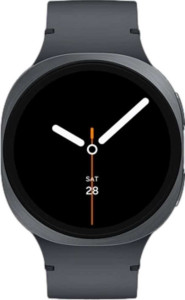
  • Screen size is 1.47″ on the Samsung Galaxy Watch8 LTE 44mm and 1.34″ on the Samsung Galaxy Watch8 LTE Classic.
  • Resolution is 480 x 480 px on the Samsung Galaxy Watch8 LTE 44mm and 438 x 438 px on the Samsung Galaxy Watch8 LTE Classic.
  • Thickness is 8.6 mm on the Samsung Galaxy Watch8 LTE 44mm and 10.6 mm on the Samsung Galaxy Watch8 LTE Classic.
  • Weight is 34 g on the Samsung Galaxy Watch8 LTE 44mm and 63.5 g on the Samsung Galaxy Watch8 LTE Classic.
  • Height is 46 mm on the Samsung Galaxy Watch8 LTE 44mm and 46.4 mm on the Samsung Galaxy Watch8 LTE Classic.
  • Width is 43.7 mm on the Samsung Galaxy Watch8 LTE 44mm and 46.4 mm on the Samsung Galaxy Watch8 LTE Classic.
  • Volume is 17.29 cm³ on the Samsung Galaxy Watch8 LTE 44mm and 22.82 cm³ on the Samsung Galaxy Watch8 LTE Classic.
  • Battery capacity is 435 mAh on the Samsung Galaxy Watch8 LTE 44mm and 445 mAh on the Samsung Galaxy Watch8 LTE Classic.
  • Internal storage is 32 GB on the Samsung Galaxy Watch8 LTE 44mm and 64 GB on the Samsung Galaxy Watch8 LTE Classic.
Specs Comparison
Samsung Galaxy Watch8 LTE 44mm

Samsung Galaxy Watch8 LTE 44mm

Samsung Galaxy Watch8 LTE Classic

Samsung Galaxy Watch8 LTE Classic

Design:
screen size 1.47" 1.34"
Display type OLED/AMOLED OLED/AMOLED
water resistance Water resistant Water resistant
ATM rating 5 ATM 5 ATM
Ingress Protection (IP) rating IP68 IP68
waterproof depth rating 50 m 50 m
Always-On Display
pixel density 327 ppi 327 ppi
resolution 480 x 480 px 438 x 438 px
Watch band is replaceable
has branded damage-resistant glass
thickness 8.6 mm 10.6 mm
weight 34 g 63.5 g
height 46 mm 46.4 mm
width 43.7 mm 46.4 mm
maximum operating temperature 35 °C 35 °C
lowest potential operating temperature 0 °C 0 °C
Has a display
has a touch screen
Has sapphire glass display
volume 17.28772 cm³ 22.821376 cm³
is designed for kids
width of band 20 mm 20 mm

Both the Samsung Galaxy Watch8 LTE 44mm and the Watch8 Classic share a strong design foundation: OLED/AMOLED displays with identical 327 ppi pixel density, sapphire glass protection, Always-On Display support, and the same IP68 / 5 ATM water resistance rated to 50 m. Their band width is also identical at 20 mm and both support band replacement, so accessory compatibility is a non-issue between the two.

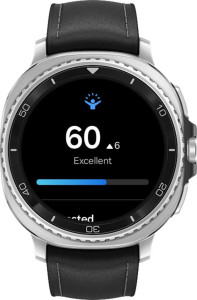
Where the two diverge meaningfully is in physical form factor. The Watch8 44mm carries a notably larger 1.47″ screen at 480 x 480 px resolution, yet it is considerably slimmer at 8.6 mm thick and weighs just 34 g. The Classic, by contrast, has a smaller 1.34″ screen at 438 x 438 px, yet is 10.6 mm thick and weighs a substantial 63.5 g — nearly twice as heavy. The Classic's larger overall volume (22.82 cm³ vs 17.29 cm³) reflects its bulkier chassis, likely driven by its traditional rotating bezel design.

From a pure design standpoint, the Watch8 44mm holds a clear advantage for users who prioritize wearability: it delivers a bigger, sharper canvas in a lighter, thinner package. The Classic's added bulk and weight may appeal to those who prefer a more traditional, substantial watch feel on the wrist, but users sensitive to long-term comfort — especially during sleep tracking or all-day wear — will find the Watch8 44mm considerably easier to forget they're wearing.

Sensors:
Monitors blood oxygenation levels
Has a heart rate monitor
has GPS
has an accelerometer
Has a temperature sensor
has a compass
Has a barometer
has a gyroscope
Has a cadence sensor
Monitors perspiration

Across every sensor listed, the Samsung Galaxy Watch8 LTE 44mm and the Watch8 Classic are in complete lockstep. Both carry a comprehensive health and navigation suite: heart rate monitor, SpO2 blood oxygen tracking, GPS, accelerometer, gyroscope, barometer, compass, and a temperature sensor. This is a well-rounded package that covers the essentials for fitness tracking, outdoor navigation, and continuous health monitoring.

The presence of a barometer is worth highlighting — it enables altitude tracking and weather trend detection, which is genuinely useful for hikers and runners. The temperature sensor adds a layer of passive health awareness, and combined with SpO2 and heart rate, the two watches are equally capable of surfacing meaningful wellness insights around the clock. Neither watch includes a cadence sensor or perspiration monitor, so dedicated cyclists or sweat-rate-focused athletes may feel a gap, but these omissions are consistent across both models.

This is a straightforward tie: the sensor hardware is identical between the two. A buyer's decision in this category comes down to zero differentiation — whichever model wins on other criteria like design or battery life, it will deliver the exact same sensing capabilities on the wrist.

Activity tracking:
Tracks your sleep
Tracks distance
Tracks steps taken
Measures pace
Provides sleep reports
Detects activities automatically
Has a route tracker
Tracks elevation
Has multi-sport mode
Has exercise tagging
Has a stroke counter for swimming
Tracks calorie intake
Designed for diving
Designed for golf

Activity tracking is another area where the Samsung Galaxy Watch8 LTE 44mm and the Watch8 Classic offer no daylight between them. Both cover the core fitness bases confidently — sleep tracking with reports, step counting, distance, pace, elevation, and route tracking form a solid foundation for everyday athletes and casual movers alike. The inclusion of automatic activity detection means neither watch requires the user to manually start a workout session, which is a practical convenience that reduces friction during spontaneous exercise.

A few capabilities stand out as noteworthy for specific user groups. The swim stroke counter makes both watches genuinely useful in the pool, going beyond simple lap timing to provide meaningful technique data. Calorie intake tracking — a feature not universally found in smartwatches — rounds out a more holistic health picture by pairing output metrics with consumption. On the flip side, neither model supports multi-sport mode, which may be a limiting factor for triathletes or users who frequently switch between sports in a single session without stopping to manually log each one.

Once again, this group is a complete tie. Every tracked activity feature is shared identically across both models, so this dimension offers no basis for choosing one over the other. Users should weigh these activity capabilities against the real differentiators found in other spec groups, such as design and battery life.

Connectivity:
has a cellular module
Is compatible with iOS
Is compatible with Android
Bluetooth version 5.3 5.3
supports Wi-Fi
Wi-Fi version Wi-Fi 4 (802.11n) Wi-Fi 4 (802.11n)
supports ANT+
SIM cards 1 eSIM 1 eSIM
has NFC
supports Galileo

Connectivity is a strength shared equally by both models. The Watch8 LTE 44mm and the Watch8 Classic both pack a cellular module with an eSIM, meaning calls, messages, and data work independently of a paired phone — a meaningful freedom for runners or commuters who prefer to leave their smartphone behind. Bluetooth 5.3 underpins the phone connection when nearby, offering stable pairing with low energy overhead, while NFC enables contactless payments directly from the wrist.

A few connectivity details are worth contextualizing. Wi-Fi 4 (802.11n) is sufficient for watch-class tasks like syncing data or streaming music, even if it is not the latest standard. The addition of Galileo satellite support alongside GPS broadens positional accuracy, particularly in dense urban environments or areas where GPS signal alone can be inconsistent. Notably, neither watch supports ANT+, which rules out direct pairing with certain third-party cycling sensors and fitness equipment — a consideration for dedicated cyclists already invested in that ecosystem.

Both watches are also strictly Android-only, with no iOS compatibility — a hard boundary that prospective buyers should be aware of upfront. As with sensors and activity tracking, connectivity in this group is a complete tie: the two models are spec-for-spec identical, and no advantage exists on either side.

Battery:
battery life 2 days 2 days
battery power 435 mAh 445 mAh
has wireless charging
has a rechargeable battery
Has a solar power battery
has a removable battery

Battery is perhaps the most practically scrutinized spec for any smartwatch, and here the two models are nearly indistinguishable. The Watch8 LTE 44mm carries a 435 mAh cell while the Watch8 Classic edges it with 445 mAh — a difference of just 10 mAh, or roughly 2%. In real-world terms, that gap is imperceptible and will not translate to any noticeable difference in daily endurance. Both watches are rated for the same 2-day battery life, reinforcing that the marginal capacity delta has no meaningful practical impact.

Both models support wireless charging with a non-removable, rechargeable battery — standard for the category and convenient for nightly top-ups. The absence of solar charging is worth noting for users hoping to stretch longevity during extended outdoor use, though neither model offers it, so it is an equal limitation. A 2-day rated lifespan is modest by smartwatch standards and will require users to build a charging habit, particularly if Always-On Display and LTE are used heavily throughout the day.

This group is effectively a tie. The Classic's fractionally larger battery is entirely offset by its identical real-world rating, and neither watch distinguishes itself with extended endurance or unique charging technology. Battery life should not be a deciding factor between these two models.

Features:
release date July 2025 July 2025
has HRV tracking
measures VO2 max
measures resting heart rate
has fast/slow heart rate notifications
shows readiness level
Can be used to answer calls
Locates your phone
Has call control
Has notifications
has irregular heart rate warnings
Has ECG technology
Has silent alarm
Has vibrating alerts
has fall detection
Has a stopwatch
Has smart alarm
has voice commands
RAM 2GB 2GB
internal storage 32GB 64GB
Has a built-in camera remote control function
Acquires GPS faster

Feature parity between the Watch8 LTE 44mm and the Watch8 Classic is remarkably high. Both deliver a strong health monitoring stack — ECG, HRV tracking, VO2 max, irregular heart rate warnings, and fall detection — alongside a full suite of smartwatch conveniences like call handling, notifications, voice commands, and a camera remote. With 2GB of RAM shared across both, day-to-day performance and app responsiveness should feel identical on either model.

The sole differentiator in this group is internal storage: the Watch8 Classic ships with 64GB compared to the Watch8 44mm's 32GB. For most users, 32GB is more than adequate for watch faces, apps, and cached music playlists. However, the Classic's doubled storage becomes a tangible advantage for users who store large offline music libraries or anticipate heavier local data usage — effectively future-proofing the device for that use case without requiring constant library management.

On the strength of its 64GB storage, the Watch8 Classic holds a narrow but real edge in this group. It is the only spec difference across an otherwise identical feature set, and while it will not matter to the average user, it is a meaningful bonus for media-heavy users at no functional cost.

App & Software:
Provides activity reports
Has inactivity alerts
Counts how many calories you've burned
Has goal setting
Has achievements
Free app
Has exercise diary
Ad-free
Has coaching
Has temperature tracking
Has period notifications
Supports routes
Has voice feedback
Has music playback
Has food diary
Includes maps
Predicts start date
Supports widgets
Can be personalised
Has barcode scanner on app
Tracks water intake
Has weight tracking
Tracks BMI

When it comes to software and companion app capabilities, the Watch8 LTE 44mm and the Watch8 Classic are mirror images of each other. Both benefit from a remarkably deep app ecosystem covering fitness, nutrition, and wellness in one place — food diary, water intake, weight, and BMI tracking combine with an exercise diary, coaching, and goal setting to form a genuinely comprehensive health management platform, all without ads and at no cost to the user.

A few inclusions stand out as particularly valuable. Menstrual cycle tracking with period notifications and start date prediction addresses a meaningful segment of users seeking holistic health monitoring beyond pure fitness metrics. Maps and route support with voice feedback elevate outdoor workout utility, while music playback and widget support round out the day-to-day smartwatch experience. The one notable absence is a barcode scanner in the app — useful for effortless food logging — but since neither model has it, it is a shared limitation rather than a differentiating weakness.

This group is an unambiguous tie: every single software feature is identical across both models. The companion app experience will be indistinguishable regardless of which watch a user chooses, so software should carry no weight in the buying decision between these two.

Miscellaneous:
has a battery level indicator
Has auto pause
Has passcode
Compatible with smart scales
Compatible with external heart rate monitors
Is compatible with Windows
has an external memory slot
Is compatible with Mac OS X
has a socket for a 3.5 mm audio jack

The miscellaneous spec group wraps up the comparison with yet another identical result. Both the Watch8 LTE 44mm and the Watch8 Classic share the same set of utility features: auto pause, a battery level indicator, passcode security, and compatibility with both smart scales and external heart rate monitors. The smart scale and external monitor compatibility is worth flagging for fitness-focused users, as it allows both watches to slot into a broader connected health ecosystem rather than operating in isolation.

The shared limitations are equally consistent. Neither model supports Windows or Mac OS X, reinforcing the Android-only ecosystem noted in the connectivity group. There is no external memory slot, meaning users are bound to the onboard storage — a point that makes the Classic's 64GB advantage from the Features group all the more relevant for heavy users. The absence of a 3.5mm audio jack is unsurprising for modern smartwatches and poses no real-world disadvantage given the prevalence of wireless audio.

This group is a complete tie with no differentiators between the two models. The miscellaneous specs confirm a consistent pattern across this comparison: outside of design dimensions and internal storage, the Watch8 44mm and Watch8 Classic are functionally equivalent watches wearing different physical forms.

Comparison Summary & Verdict

After a thorough side-by-side analysis, both watches prove to be highly capable companions, sharing identical sensor suites, activity tracking, connectivity, and app ecosystems. The key differentiators come down to physical design and storage. The Samsung Galaxy Watch8 LTE 44mm stands out for its notably lighter 34 g build and slimmer 8.6 mm profile, making it the more comfortable choice for all-day and all-night wear. On the other hand, the Samsung Galaxy Watch8 LTE Classic offers a larger 64 GB internal storage, a slightly bigger battery at 445 mAh, and a more substantial look that may appeal to those who prefer a traditional watch aesthetic. Neither model is a clear-cut winner; the right choice depends entirely on your lifestyle priorities.

Samsung Galaxy Watch8 LTE 44mm
Buy Samsung Galaxy Watch8 LTE 44mm if...

Buy the Samsung Galaxy Watch8 LTE 44mm if you prioritize a lightweight, slim watch for comfortable extended wear, and a larger 1.47″ display with higher resolution.

Samsung Galaxy Watch8 LTE Classic
Buy Samsung Galaxy Watch8 LTE Classic if...

Buy the Samsung Galaxy Watch8 LTE Classic if you want double the internal storage at 64 GB and prefer a more substantial, classic watch aesthetic despite the added weight.