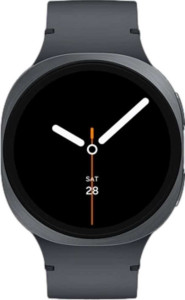
Samsung Galaxy Watch8 LTE 44mm
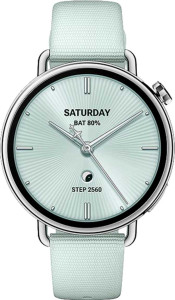
Xiaomi Watch S4 41mm

Samsung Galaxy Watch8 LTE 44mm Xiaomi Watch S4 41mm

Overview

Welcome to our in-depth comparison of the Samsung Galaxy Watch8 LTE 44mm and the Xiaomi Watch S4 41mm. Both smartwatches share a strong foundation — OLED displays, sapphire glass, full sensor suites, and LTE connectivity — yet they diverge sharply when it comes to battery life, health monitoring depth, and software ecosystem compatibility. Read on to discover which watch best fits your lifestyle and priorities.

Common Features

  • Both watches feature an OLED/AMOLED display.
  • Both watches have a 5 ATM water resistance rating.
  • Always-On Display is available on both watches.
  • The watch band is replaceable on both watches.
  • Neither watch has branded damage-resistant glass.
  • Both watches have a sapphire glass display.
  • Both watches have a touch screen.
  • Blood oxygenation level monitoring is available on both watches.
  • A heart rate monitor is present on both watches.
  • GPS is available on both watches.
  • An accelerometer is present on both watches.
  • A temperature sensor is available on both watches.
  • A compass is present on both watches.
  • A barometer is available on both watches.
  • A gyroscope is present on both watches.
  • Sleep tracking is available on both watches.
  • Both watches track distance, steps taken, pace, and elevation.
  • Sleep reports and automatic activity detection are available on both watches.
  • A route tracker is available on both watches.
  • Both watches support cellular connectivity with 1 eSIM.
  • Both watches are compatible with Android.
  • ANT+ support is not available on either watch.
  • NFC is present on both watches.
  • Galileo satellite system is supported on both watches.
  • Wireless charging is available on both watches.
  • Neither watch has a solar power battery or a removable battery.
  • HRV tracking is available on both watches.
  • VO2 max measurement is available on both watches.
  • Resting heart rate measurement is present on both watches.
  • Fast and slow heart rate notifications are available on both watches.
  • Readiness level is shown on both watches.
  • Both watches can be used to answer calls and have call control.
  • A phone locator feature is available on both watches.
  • Activity reports, inactivity alerts, and calorie tracking are available on both watches.
  • Goal setting, achievements, and an exercise diary are available on both watches.
  • The companion app is free and ad-free on both watches.
  • A battery level indicator is present on both watches.
  • Passcode protection is available on both watches.
  • Neither watch is compatible with Windows or Mac OS X.
  • Neither watch has an external memory slot or a 3.5 mm audio jack.

Main Differences

  • Screen size is 1.47″ on Samsung Galaxy Watch8 LTE 44mm and 1.32″ on Xiaomi Watch S4 41mm.
  • Water resistance is rated as water resistant on Samsung Galaxy Watch8 LTE 44mm and waterproof on Xiaomi Watch S4 41mm.
  • Pixel density is 327 ppi on Samsung Galaxy Watch8 LTE 44mm and 320 ppi on Xiaomi Watch S4 41mm.
  • Resolution is 480 x 480 px on Samsung Galaxy Watch8 LTE 44mm and 466 x 466 px on Xiaomi Watch S4 41mm.
  • Thickness is 8.6 mm on Samsung Galaxy Watch8 LTE 44mm and 9.5 mm on Xiaomi Watch S4 41mm.
  • Weight is 34 g on Samsung Galaxy Watch8 LTE 44mm and 32 g on Xiaomi Watch S4 41mm.
  • Height is 46 mm on Samsung Galaxy Watch8 LTE 44mm and 41.2 mm on Xiaomi Watch S4 41mm.
  • Width is 43.7 mm on Samsung Galaxy Watch8 LTE 44mm and 41.2 mm on Xiaomi Watch S4 41mm.
  • Volume is 17.29 cm³ on Samsung Galaxy Watch8 LTE 44mm and 16.13 cm³ on Xiaomi Watch S4 41mm.
  • iOS compatibility is available on Xiaomi Watch S4 41mm but not on Samsung Galaxy Watch8 LTE 44mm.
  • Bluetooth version is 5.3 on Samsung Galaxy Watch8 LTE 44mm and 5.4 on Xiaomi Watch S4 41mm.
  • Wi-Fi support is available on Samsung Galaxy Watch8 LTE 44mm but not on Xiaomi Watch S4 41mm.
  • Battery life is 2 days on Samsung Galaxy Watch8 LTE 44mm and 8 days on Xiaomi Watch S4 41mm.
  • Battery capacity is 435 mAh on Samsung Galaxy Watch8 LTE 44mm and 320 mAh on Xiaomi Watch S4 41mm.
  • Irregular heart rate warnings are available on Samsung Galaxy Watch8 LTE 44mm but not on Xiaomi Watch S4 41mm.
  • ECG technology is present on Samsung Galaxy Watch8 LTE 44mm but not on Xiaomi Watch S4 41mm.
  • Coaching features are available in the app on Samsung Galaxy Watch8 LTE 44mm but not on Xiaomi Watch S4 41mm.
  • Route support in the app is available on Samsung Galaxy Watch8 LTE 44mm but not on Xiaomi Watch S4 41mm.
Specs Comparison
Samsung Galaxy Watch8 LTE 44mm

Samsung Galaxy Watch8 LTE 44mm

Xiaomi Watch S4 41mm

Xiaomi Watch S4 41mm

Design:
screen size 1.47" 1.32"
Display type OLED/AMOLED OLED/AMOLED
water resistance Water resistant Waterproof
ATM rating 5 ATM 5 ATM
Always-On Display
pixel density 327 ppi 320 ppi
resolution 480 x 480 px 466 x 466 px
Watch band is replaceable
has branded damage-resistant glass
thickness 8.6 mm 9.5 mm
weight 34 g 32 g
height 46 mm 41.2 mm
width 43.7 mm 41.2 mm
Has a display
has a touch screen
Has sapphire glass display
volume 17.28772 cm³ 16.12568 cm³
is designed for kids

Both watches share a strong design foundation: OLED/AMOLED displays, sapphire glass, always-on display support, and replaceable bands. However, the most immediately noticeable difference is screen size. The Samsung Galaxy Watch8 44mm features a larger 1.47″ panel at 480 × 480 px and 327 ppi, while the Xiaomi Watch S4 offers a more compact 1.32″ screen at 466 × 466 px and 320 ppi. In practice, Samsung's larger canvas means more readable text, bigger tap targets, and a more immersive glance experience — though the pixel density gap is negligible and both will appear sharp to the naked eye.

The physical profile tells an interesting story. The Samsung is wider and taller (46 × 43.7 mm vs. 41.2 × 41.2 mm), but it is notably thinner at 8.6 mm compared to the Xiaomi's 9.5 mm. The Xiaomi, despite being a smaller watch overall, is actually the thicker of the two — which can affect how it sits under a shirt cuff. On the wrist weight front, the Xiaomi edges ahead at 32 g versus Samsung's 34 g, a 2 g difference that is unlikely to be felt during daily wear but may matter during extended workouts or sleep tracking.

One subtle but meaningful distinction lies in water protection terminology: the Samsung is rated ″water resistant″ while the Xiaomi is classified as ″waterproof″ — both sharing the same 5 ATM rating. This suggests the Xiaomi may hold a slight practical edge in submersion confidence, despite identical pressure ratings. Overall, the Samsung holds the design advantage for users who prioritize a larger, slimmer display experience, while the Xiaomi appeals to those seeking a lighter, more compact, and marginally more water-secure package.
Sensors:
Monitors blood oxygenation levels
Has a heart rate monitor
has GPS
has an accelerometer
Has a temperature sensor
has a compass
Has a barometer
has a gyroscope
Has a cadence sensor
Monitors perspiration

Across the entire sensor suite, the Samsung Galaxy Watch8 44mm and the Xiaomi Watch S4 are in complete lockstep. Both pack the core health trinity — heart rate monitor, SpO2 (blood oxygen), and temperature sensor — alongside motion hardware including an accelerometer and gyroscope. For everyday users, this means both watches are equally capable of tracking sleep quality, detecting irregular heart rhythms, and monitoring exertion during workouts.

On the navigation and environmental side, both watches include GPS, a compass, and a barometer. The barometer is particularly valuable for hikers and runners, as it enables altitude tracking and weather trend detection — capabilities that go well beyond what a GPS signal alone can provide. The compass rounds out the outdoor utility, making both watches genuinely functional for trail and adventure use cases without relying on a paired phone.

Neither watch includes a cadence sensor or perspiration monitoring, so cyclists who rely on step-rate data and advanced sweat-based hydration metrics will find the same gap in both options. With no differentiating specs anywhere in this category, the sensor comparison is a complete tie — the decision between these two watches cannot be made on sensor capability alone.

Activity tracking:
Tracks your sleep
Tracks distance
Tracks steps taken
Measures pace
Provides sleep reports
Detects activities automatically
Has a route tracker
Tracks elevation
Has exercise tagging
Has a stroke counter for swimming
Tracks calorie intake
Designed for diving

Activity tracking is another category where the Samsung Galaxy Watch8 44mm and the Xiaomi Watch S4 arrive at exactly the same destination. The fundamentals — step counting, distance, pace, and calorie intake tracking — are all present on both, covering the needs of casual fitness users and more dedicated athletes alike. Equally important is automatic activity detection, which removes the friction of manually starting a workout session and ensures that spontaneous exercise still gets logged accurately.

Where the feature set gets more interesting is in the specifics. Both watches offer a route tracker and elevation tracking, making them credible companions for trail runners and hikers who want a post-workout map alongside altitude data. The inclusion of a stroke counter for swimming on both devices is a notable highlight — this goes beyond simple lap counting and provides meaningful feedback for swimmers looking to refine their technique. Rounding things out, sleep tracking with reports and exercise tagging are also matched across the board.

Neither watch is designed for diving, which is a consistent and expected limitation at this product tier. With every tracked activity feature mirrored identically between the two, this group results in another complete tie — prospective buyers will need to look to other specification groups, such as design, battery, or connectivity, to find meaningful differentiators.

Connectivity:
has a cellular module
Is compatible with iOS
Is compatible with Android
Bluetooth version 5.3 5.4
supports Wi-Fi
supports ANT+
SIM cards 1 eSIM 1 eSIM
has NFC
supports Galileo

Connectivity is where these two watches finally diverge in ways that could be decisive for certain buyers. The most significant split is platform compatibility: the Xiaomi Watch S4 works with both Android and iOS, while the Samsung Galaxy Watch8 44mm is Android-only. For anyone in the Apple ecosystem considering a cross-brand watch, Samsung is immediately off the table — the Xiaomi's cross-platform support is a tangible, practical advantage that opens it to a much broader audience.

The wireless picture is more nuanced. Samsung counters with Wi-Fi support, which the Xiaomi lacks entirely. This matters more than it might seem — Wi-Fi connectivity allows the watch to sync data, receive notifications, and perform updates independently of a paired phone when on a known network. The Xiaomi, without Wi-Fi, relies entirely on Bluetooth or its cellular connection for all data exchange. On Bluetooth specifically, the Xiaomi holds a slight technical edge with version 5.4 versus Samsung's 5.3, though the real-world difference in range or stability between these two consecutive versions is minimal for most users.

Both watches share eSIM cellular, NFC for contactless payments, and Galileo satellite support — a solid shared baseline. Weighing the trade-offs, the verdict depends heavily on use case: the Xiaomi has a clear edge for iPhone users and anyone who prioritizes cross-platform flexibility, while the Samsung's Wi-Fi capability gives it an advantage for Android users who want richer standalone connectivity. Neither watch dominates outright, but the Xiaomi's iOS compatibility makes it the more universally accessible option.

Battery:
battery life 2 days 8 days
battery power 435 mAh 320 mAh
has wireless charging
has a rechargeable battery
Has a solar power battery
has a removable battery

Battery life is the most lopsided category in this entire comparison, and the numbers demand attention. The Xiaomi Watch S4 is rated for 8 days of battery life, while the Samsung Galaxy Watch8 44mm manages just 2 days. That is not a marginal gap — it is a fourfold difference that fundamentally changes the ownership experience. Samsung users will be reaching for a charger roughly every other day, while Xiaomi users can comfortably wear through a full work week and into the weekend without interruption.

What makes this result particularly striking is that the Xiaomi achieves its superior endurance with a smaller battery320 mAh versus Samsung's 435 mAh. Raw capacity alone clearly does not tell the full story; software optimization, display management, and feature overhead all play a role in how efficiently a watch deploys its charge. The Samsung's larger cell is evidently taxed harder by its feature set, resulting in a net runtime that trails considerably despite the capacity advantage.

Both watches support wireless charging, which softens the blow of frequent top-ups on the Samsung side — at least the process is cable-free. Neither offers solar charging or a removable battery, so there are no additional contingency options to consider. The Xiaomi Watch S4 holds a decisive and clear advantage in this category; for users who travel frequently, dislike daily charging routines, or simply want a watch that stays on their wrist through multi-day trips, the Xiaomi's battery longevity is a compelling differentiator.

Features:
release date July 2025 June 2025
has HRV tracking
measures VO2 max
measures resting heart rate
has fast/slow heart rate notifications
shows readiness level
Can be used to answer calls
Locates your phone
Has call control
Has notifications
has irregular heart rate warnings
Has ECG technology
Has silent alarm
Has vibrating alerts
has fall detection
Has a stopwatch
Has smart alarm
has voice commands
internal storage 32GB 32GB
Has a built-in camera remote control function
Acquires GPS faster

For the vast majority of smartwatch features, these two devices are functionally identical — both offer HRV tracking, VO2 max measurement, readiness scores, fall detection, voice commands, call handling, and 32GB of internal storage. That is a genuinely strong shared baseline that covers the needs of most health-conscious and productivity-oriented users without compromise on either side.

The gap that matters, however, is squarely in cardiac health monitoring. The Samsung Galaxy Watch8 44mm includes ECG technology and irregular heart rate warnings — two features entirely absent on the Xiaomi Watch S4. ECG capability allows the watch to generate a single-lead electrocardiogram, which can help detect signs of atrial fibrillation — a condition that often goes unnoticed but carries serious health risks. Irregular heart rate warnings complement this by passively alerting the user during everyday wear, even when no active ECG reading has been taken. Together, these two features meaningfully elevate the Samsung's cardiac monitoring depth beyond what the Xiaomi can offer.

For users who treat their smartwatch primarily as a fitness and productivity tool, the shared feature set makes the gap feel manageable. But for anyone with a personal or family history of heart conditions, or those who simply want a more clinically oriented health companion, the Samsung's ECG and arrhythmia detection give it a clear and significant advantage in this category that the Xiaomi cannot match.

App & Software:
Provides activity reports
Has inactivity alerts
Counts how many calories you've burned
Has goal setting
Has achievements
Free app
Has exercise diary
Ad-free
Has coaching
Has temperature tracking
Has period notifications
Supports routes
Has music playback
Includes maps
Predicts start date
Supports widgets
Can be personalised
Has barcode scanner on app
Tracks water intake
Has weight tracking

The software experience on both watches is built on a rich and largely equivalent foundation. Activity reports, goal setting, exercise diary, inactivity alerts, calorie tracking, water intake, weight tracking, temperature, and women's health features including period notifications and cycle prediction — all present on both platforms, free of charge and ad-free. For the overwhelming majority of users, this shared core covers daily health and fitness needs comprehensively without requiring any premium subscription.

Two differences break the symmetry. The Samsung Galaxy Watch8 44mm includes in-app coaching and route support, neither of which appears on the Xiaomi Watch S4. Coaching provides structured, adaptive guidance during workouts — a meaningful step up from passive tracking for users who want accountability and progression built into their training. Route support, meanwhile, allows users to plan and follow pre-mapped courses directly through the app, which is particularly valuable for runners and cyclists who train on specific paths or want turn-by-turn navigation cues during outdoor sessions.

These two absences on the Xiaomi side are not trivial omissions for active users — they represent a qualitative difference in how engaged and guided the overall training experience feels. For casual users content with self-directed workouts, the gap will barely register. But for those who rely on structured programming or route-based outdoor activity, the Samsung Galaxy Watch8 holds a meaningful software advantage, making it the stronger choice in this category.

Miscellaneous:
has a battery level indicator
Has passcode
Is compatible with Windows
has an external memory slot
Is compatible with Mac OS X
has a socket for a 3.5 mm audio jack

The miscellaneous category for these two watches is notable mostly for what it confirms rather than what it reveals. Both the Samsung Galaxy Watch8 44mm and the Xiaomi Watch S4 include a battery level indicator and passcode protection — the former a basic usability essential, the latter an important privacy safeguard given how much personal health and payment data a modern smartwatch holds.

The shared limitations are equally consistent: no external memory slot, no 3.5mm audio jack, and no compatibility with Windows or Mac OS. The absence of a desktop OS connection is standard practice for smartwatches in this segment, which rely entirely on mobile app ecosystems for setup and data management rather than direct PC tethering. The lack of expandable storage is similarly expected at this tier, and both watches offset it with 32GB of built-in storage as noted in the Features category.

With every single data point in this group matching identically, the result is an unambiguous complete tie. Nothing here shifts the overall balance between the two devices — buyers should weigh this category as neutral and focus their decision on the more differentiating groups such as battery life, connectivity, or health features.

Comparison Summary & Verdict

After a thorough review of the specs, both watches prove to be capable smartwatches with shared strengths in sensors, activity tracking, and build quality. However, their differences are meaningful. The Samsung Galaxy Watch8 LTE 44mm stands out with its larger display, ECG technology, irregular heart rate warnings, Wi-Fi support, coaching features, and a more comprehensive app experience — making it the stronger choice for health-conscious users and those within the Samsung or Android ecosystem. On the other hand, the Xiaomi Watch S4 41mm excels with a remarkable 8-day battery life, a lighter and slimmer form factor, iOS compatibility, and a newer Bluetooth 5.4 standard, making it ideal for users who prioritize endurance, cross-platform flexibility, and everyday wearability.

Samsung Galaxy Watch8 LTE 44mm
Buy Samsung Galaxy Watch8 LTE 44mm if...

Buy the Samsung Galaxy Watch8 LTE 44mm if you want advanced health monitoring with ECG technology and irregular heart rate warnings, Wi-Fi support, coaching features, and a larger display — especially if you are an Android user.

Xiaomi Watch S4 41mm
Buy Xiaomi Watch S4 41mm if...

Buy the Xiaomi Watch S4 41mm if long battery life, a lighter and more compact design, iOS compatibility, and Bluetooth 5.4 are your top priorities.