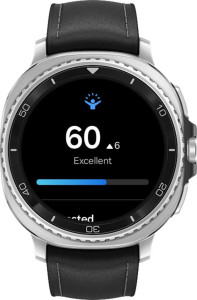
Samsung Galaxy Watch8 LTE Classic
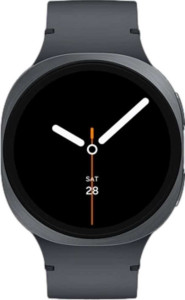
Samsung Galaxy Watch8 Wi-Fi 44mm

Samsung Galaxy Watch8 LTE Classic Samsung Galaxy Watch8 Wi-Fi 44mm

Overview

When choosing between the Samsung Galaxy Watch8 LTE Classic and the Samsung Galaxy Watch8 Wi-Fi 44mm, the decision comes down to more than just connectivity. These two smartwatches share a strong common foundation in sensors, activity tracking, and software, yet differ meaningfully in areas like physical dimensions, cellular capability, and internal storage. Read on to discover which model best suits your lifestyle.

Common Features

  • Both watches feature an OLED/AMOLED display type.
  • Both watches are water resistant with a 5 ATM rating and IP68 ingress protection up to 50 m depth.
  • Always-On Display is available on both watches.
  • Both watches have a pixel density of 327 ppi.
  • Watch band is replaceable on both watches.
  • Blood oxygenation level monitoring is available on both watches.
  • A heart rate monitor is present on both watches.
  • GPS is available on both watches.
  • An accelerometer is present on both watches.
  • A temperature sensor is available on both watches.
  • A compass is present on both watches.
  • A barometer is present on both watches.
  • A gyroscope is present on both watches.
  • Sleep tracking and sleep reports are available on both watches.
  • Distance, steps, pace, elevation, and route tracking are all supported on both watches.
  • Both watches are compatible with Android but not with iOS.
  • Both watches use Bluetooth 5.3 and support Wi-Fi 4 (802.11n).
  • Both watches include 1 eSIM slot and have NFC.
  • Battery life is rated at 2 days on both watches, with wireless charging supported and no removable or solar battery.
  • Both watches support HRV tracking, VO2 max measurement, resting heart rate measurement, and fast/slow heart rate notifications.
  • Call answering, call control, and phone locating are available on both watches.
  • Both watches offer activity reports, inactivity alerts, calorie tracking, goal setting, achievements, an exercise diary, and an ad-free free app.
  • A battery level indicator, auto pause, passcode, smart scale compatibility, and external heart rate monitor compatibility are present on both watches.
  • Neither watch is compatible with Windows or Mac OS X, and neither has an external memory slot.

Main Differences

  • Screen size is 1.34″ on Samsung Galaxy Watch8 LTE Classic and 1.47″ on Samsung Galaxy Watch8 Wi-Fi 44mm.
  • Resolution is 438 x 438 px on Samsung Galaxy Watch8 LTE Classic and 480 x 480 px on Samsung Galaxy Watch8 Wi-Fi 44mm.
  • Thickness is 10.6 mm on Samsung Galaxy Watch8 LTE Classic and 8.6 mm on Samsung Galaxy Watch8 Wi-Fi 44mm.
  • Weight is 63.5 g on Samsung Galaxy Watch8 LTE Classic and 34 g on Samsung Galaxy Watch8 Wi-Fi 44mm.
  • Height is 46.4 mm on Samsung Galaxy Watch8 LTE Classic and 46 mm on Samsung Galaxy Watch8 Wi-Fi 44mm.
  • Width is 46.4 mm on Samsung Galaxy Watch8 LTE Classic and 43.7 mm on Samsung Galaxy Watch8 Wi-Fi 44mm.
  • Volume is 22.821376 cm³ on Samsung Galaxy Watch8 LTE Classic and 17.28772 cm³ on Samsung Galaxy Watch8 Wi-Fi 44mm.
  • A cellular module is present on Samsung Galaxy Watch8 LTE Classic but not available on Samsung Galaxy Watch8 Wi-Fi 44mm.
  • Battery power is 445 mAh on Samsung Galaxy Watch8 LTE Classic and 435 mAh on Samsung Galaxy Watch8 Wi-Fi 44mm.
  • Internal storage is 64 GB on Samsung Galaxy Watch8 LTE Classic and 32 GB on Samsung Galaxy Watch8 Wi-Fi 44mm.
Specs Comparison
Samsung Galaxy Watch8 LTE Classic

Samsung Galaxy Watch8 LTE Classic

Samsung Galaxy Watch8 Wi-Fi 44mm

Samsung Galaxy Watch8 Wi-Fi 44mm

Design:
screen size 1.34" 1.47"
Display type OLED/AMOLED OLED/AMOLED
water resistance Water resistant Water resistant
ATM rating 5 ATM 5 ATM
Ingress Protection (IP) rating IP68 IP68
waterproof depth rating 50 m 50 m
Always-On Display
pixel density 327 ppi 327 ppi
resolution 438 x 438 px 480 x 480 px
Watch band is replaceable
has branded damage-resistant glass
thickness 10.6 mm 8.6 mm
weight 63.5 g 34 g
height 46.4 mm 46 mm
width 46.4 mm 43.7 mm
maximum operating temperature 35 °C 35 °C
lowest potential operating temperature 0 °C 0 °C
Has a display
has a touch screen
Has sapphire glass display
volume 22.821376 cm³ 17.28772 cm³
is designed for kids
width of band 20 mm 20 mm

Both the Samsung Galaxy Watch8 LTE Classic and the Galaxy Watch8 Wi-Fi 44mm share the same core display technology — OLED/AMOLED with Always-On Display, identical 327 ppi pixel density, sapphire glass protection, and equivalent water resistance credentials (IP68 / 5 ATM / 50 m). From a durability and visibility standpoint, neither watch has a meaningful edge over the other.

Where the two diverge significantly is in physical form factor. The Wi-Fi 44mm offers a larger 1.47″ screen with a higher 480 x 480 px resolution versus the Classic's 1.34″ panel at 438 x 438 px — meaning more screen real estate and sharper content rendering in practice. Yet the Classic is paradoxically bulkier: at 10.6 mm thick and 63.5 g, it is 2 mm thicker and nearly double the weight of the Wi-Fi 44mm, which comes in at just 8.6 mm and 34 g. This weight gap is substantial for all-day and sleep tracking wear comfort.

For users who prioritize a light, slim profile that disappears on the wrist, the Wi-Fi 44mm holds a clear design advantage — it delivers a larger, sharper display in a dramatically lighter and thinner chassis. The Classic's added bulk does not translate into any display or durability benefit visible in these specs, making the Wi-Fi 44mm the stronger choice purely on wearability and screen size.

Sensors:
Monitors blood oxygenation levels
Has a heart rate monitor
has GPS
has an accelerometer
Has a temperature sensor
has a compass
Has a barometer
has a gyroscope
Has a cadence sensor
Monitors perspiration

Across every sensor listed, the Samsung Galaxy Watch8 LTE Classic and the Galaxy Watch8 Wi-Fi 44mm are an exact match. Both pack a comprehensive health and navigation suite: heart rate monitor, SpO2 (blood oxygen), temperature sensor, accelerometer, gyroscope, barometer, compass, and GPS — covering the full range of what most fitness and wellness users would expect from a premium smartwatch.

The practical value of this sensor set is meaningful. The barometer enables altitude tracking and weather trend detection, the gyroscope pairs with the accelerometer for precise motion and fall detection, and onboard GPS means workout routes can be logged without needing a paired phone nearby. The temperature sensor adds a layer of passive health monitoring useful for cycle tracking and general wellness trends.

Since neither watch omits or adds a single sensor relative to the other, this category is a complete tie. Sensor capability should not factor into a decision between these two models — any difference in your choice should rest on design, connectivity, or other specification groups.

Activity tracking:
Tracks your sleep
Tracks distance
Tracks steps taken
Measures pace
Provides sleep reports
Detects activities automatically
Has a route tracker
Tracks elevation
Has multi-sport mode
Has exercise tagging
Has a stroke counter for swimming
Tracks calorie intake
Designed for diving
Designed for golf

Activity tracking is another area where the Samsung Galaxy Watch8 LTE Classic and the Galaxy Watch8 Wi-Fi 44mm are functionally identical. Both cover the essentials that everyday athletes and casual fitness users care about most: sleep tracking with reports, step counting, distance, pace, elevation, and route tracking — a well-rounded package for runners, hikers, and general wellness monitoring alike.

A few capabilities here are worth calling out for their practical value. Automatic activity detection removes the friction of manually starting a workout, while the swim stroke counter shows meaningful depth for pool swimmers — not just basic water resistance. Calorie intake tracking rounds out the picture for users managing nutrition alongside their activity data. On the flip side, the absence of multi-sport mode on both watches is a notable gap for triathlon-style athletes who need seamless transitions between disciplines in a single session.

With every tracked feature and every omission mirrored perfectly between the two models, this category is again a complete tie. Activity tracking offers no basis for choosing one over the other — your decision should hinge on the differences surfaced in other specification groups.

Connectivity:
has a cellular module
Is compatible with iOS
Is compatible with Android
Bluetooth version 5.3 5.3
supports Wi-Fi
Wi-Fi version Wi-Fi 4 (802.11n) Wi-Fi 4 (802.11n)
supports ANT+
SIM cards 1 eSIM 1 eSIM
has NFC
supports Galileo

The shared connectivity foundation between these two watches is solid: both run Bluetooth 5.3 and Wi-Fi 4 (802.11n), support NFC for contactless payments, and include Galileo satellite support for improved positioning accuracy. Both are Android-only and neither supports ANT+, so the playing field is level on those fronts.

The single but decisive difference is cellular capability. The Galaxy Watch8 LTE Classic includes a cellular module with an eSIM, enabling it to make calls, stream music, receive notifications, and use data-dependent features entirely independently of a smartphone. The Galaxy Watch8 Wi-Fi 44mm lists an eSIM as well but has no cellular module — meaning that eSIM entry is non-functional for standalone connectivity, and the watch depends on a paired phone or Wi-Fi network to stay connected.

For users who want true phone-free freedom — whether on a run, commute, or anywhere without their phone — the LTE Classic holds a clear and meaningful advantage. The Wi-Fi 44mm is well-connected within range of a known network or a nearby phone, but it cannot operate independently in the same way. This distinction alone may be the most practically significant split between these two models.

Battery:
battery life 2 days 2 days
battery power 445 mAh 435 mAh
has wireless charging
has a rechargeable battery
Has a solar power battery
has a removable battery

Battery is perhaps the most straightforward category to compare here. The Galaxy Watch8 LTE Classic carries a 445 mAh cell versus the Galaxy Watch8 Wi-Fi 44mm's 435 mAh — a 10 mAh difference that is negligible in any real-world scenario. Both watches are rated for the same 2-day battery life, both support wireless charging, and neither offers a removable battery or solar charging.

The 2-day rating is worth contextualizing: for most smartwatch users, this means a nightly or every-other-night charge cadence. It is a pragmatic figure, though users coming from more traditional watches or GPS-focused wearables with multi-day endurance may find it limiting. Wireless charging on both models at least keeps the charging experience convenient and cable-free.

Given identical rated battery life and a trivial capacity gap, this category is effectively a tie. One nuance worth keeping in mind, however, is that the LTE Classic's cellular radio — when actively in use — will draw more power than the Wi-Fi model's radio stack, potentially pushing real-world endurance below the rated figure more readily. But since the specs as provided show equal battery life, no advantage can be formally assigned to either model on that basis alone.

Features:
release date July 2025 July 2025
has HRV tracking
measures VO2 max
measures resting heart rate
has fast/slow heart rate notifications
shows readiness level
Can be used to answer calls
Locates your phone
Has call control
Has notifications
has irregular heart rate warnings
Has ECG technology
Has silent alarm
Has vibrating alerts
has fall detection
Has a stopwatch
Has smart alarm
has voice commands
RAM 2GB 2GB
internal storage 64GB 32GB
Has a built-in camera remote control function
Acquires GPS faster

Feature parity between these two watches is remarkably high. Both carry the same 2GB RAM, support ECG monitoring, HRV tracking, VO2 max measurement, fall detection, and a full suite of heart rate alerts including irregular rhythm warnings — a health monitoring package that rivals dedicated medical-grade wearables. Call handling, voice commands, notifications, and a camera remote round out an equally matched smart feature set on both sides.

The only concrete differentiator in this group is internal storage: the LTE Classic ships with 64GB while the Wi-Fi 44mm offers 32GB. On a smartwatch, storage primarily matters for offline music and app data. With LTE connectivity enabling on-demand streaming, the Classic's larger storage is a complementary advantage — but for the Wi-Fi 44mm, which relies more on local content when away from a network, having half the storage is a more tangible limitation.

The LTE Classic edges ahead in this category purely on the strength of its doubled internal storage. For users who load music locally, download maps, or install multiple apps, 64GB provides noticeably more headroom. That said, for light users who stream rather than store, the 32GB on the Wi-Fi 44mm will likely be sufficient, making this gap meaningful only depending on usage habits.

App & Software:
Provides activity reports
Has inactivity alerts
Counts how many calories you've burned
Has goal setting
Has achievements
Free app
Has exercise diary
Ad-free
Has coaching
Has temperature tracking
Has period notifications
Supports routes
Has voice feedback
Has music playback
Has food diary
Includes maps
Predicts start date
Supports widgets
Can be personalised
Has barcode scanner on app
Tracks water intake
Has weight tracking
Tracks BMI

When it comes to app and software capabilities, the Samsung Galaxy Watch8 LTE Classic and the Galaxy Watch8 Wi-Fi 44mm are indistinguishable. Every single feature — from food and exercise diaries to BMI and water intake tracking, coaching, maps, routes, widgets, and personalization — is present on both, and absent features like the barcode scanner are equally missing from each.

The breadth of the shared software suite is genuinely impressive. The inclusion of period tracking with start date prediction, temperature tracking, and voice feedback alongside more standard tools like goal setting and inactivity alerts positions both watches as comprehensive wellness platforms rather than simple fitness trackers. The fact that the companion app is both free and ad-free adds further value without differentiation between models.

This category is a complete tie — not a single software or app feature separates these two watches. Users should weigh their decision entirely on hardware and connectivity differences covered in other groups, as the software experience they receive will be identical regardless of which model they choose.

Miscellaneous:
has a battery level indicator
Has auto pause
Has passcode
Compatible with smart scales
Compatible with external heart rate monitors
Is compatible with Windows
has an external memory slot
Is compatible with Mac OS X
has a socket for a 3.5 mm audio jack

Rounding out the comparison, the miscellaneous specs confirm what has become a familiar pattern: the Samsung Galaxy Watch8 LTE Classic and the Galaxy Watch8 Wi-Fi 44mm are identical across every point in this category. Both offer auto pause, a passcode lock, a battery level indicator, and compatibility with smart scales and external heart rate monitors — useful for users who want to integrate their watch into a broader connected fitness ecosystem.

The shared limitations are equally worth noting. Neither watch supports Windows or Mac OS X pairing, there is no external memory slot on either model, and both omit a 3.5mm audio jack — none of which are surprising omissions for modern smartwatches, but relevant for users with specific peripheral expectations.

With no divergence on any spec in this group, the result is a complete tie. The miscellaneous category adds nothing to differentiate these two models, and any purchasing decision should continue to rest on the meaningful distinctions found in design, connectivity, and storage — the areas where these two watches actually part ways.

Comparison Summary & Verdict

Both watches deliver an impressive and nearly identical feature set, covering advanced health sensors, comprehensive activity tracking, NFC, and a shared 2-day battery life. The Samsung Galaxy Watch8 LTE Classic stands out with its built-in cellular module, larger 64 GB internal storage, and bigger 445 mAh battery, making it the stronger choice for users who want independence from their smartphone. However, it is noticeably heavier at 63.5 g and bulkier at 10.6 mm thick. In contrast, the Samsung Galaxy Watch8 Wi-Fi 44mm wins on wearability, coming in at just 34 g and 8.6 mm thin, while also offering a larger 1.47″ display with a sharper 480 x 480 px resolution. Choose accordingly based on your daily priorities.

Samsung Galaxy Watch8 LTE Classic
Buy Samsung Galaxy Watch8 LTE Classic if...

Buy the Samsung Galaxy Watch8 LTE Classic if you want built-in cellular connectivity and more internal storage, so you can stay connected without relying on your phone.

Samsung Galaxy Watch8 Wi-Fi 44mm
Buy Samsung Galaxy Watch8 Wi-Fi 44mm if...

Buy the Samsung Galaxy Watch8 Wi-Fi 44mm if you prefer a lighter, slimmer watch with a larger and sharper display for maximum everyday comfort.