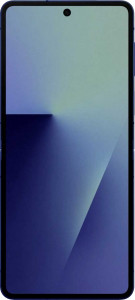
Across most connectivity specs, these two devices are evenly matched — both support 5G, Bluetooth 5.4, NFC, Wi-Fi 6E, GPS with Galileo, and an identical suite of sensors including gyroscope, accelerometer, barometer, and compass. Cellular speeds are also identical at 9640 Mbps download and 2550 Mbps upload. For the vast majority of daily connectivity tasks, users will experience no difference whatsoever between the two.
Two specifications, however, break that parity in the Flip 7's favor. First, the Flip 7 adds support for Wi-Fi 7 (802.11be), the latest wireless standard, while the FE tops out at Wi-Fi 6E. Wi-Fi 7 delivers significantly higher theoretical throughput and lower latency on compatible routers — a future-proofing advantage that becomes more relevant as Wi-Fi 7 infrastructure becomes mainstream. Second, and more immediately impactful, the Flip 7 features USB 3.2 compared to the FE's USB 2.0. This is a substantial gap: USB 3.2 enables dramatically faster wired data transfers when moving large files like videos or backups to a PC, whereas USB 2.0 bottlenecks transfer speeds considerably.
The Samsung Galaxy Z Flip 7 holds a clear connectivity edge in this category. Wi-Fi 7 support is a meaningful future-proofing advantage, but the USB version gap is the more tangible day-to-day differentiator for anyone who regularly transfers large files via cable. The FE's USB 2.0 is a notable step down for wired data workflows.