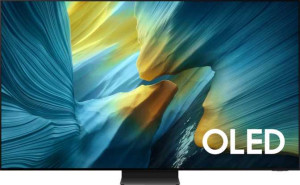
Samsung QA77S95FAWXXY 77"
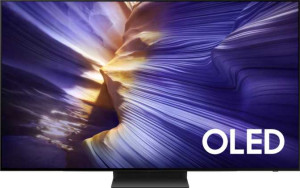
Samsung QN83S90FAE 83"

Samsung QA77S95FAWXXY 77" Samsung QN83S90FAE 83"

Overview

Welcome to our in-depth specification comparison between the Samsung QA77S95FAWXXY 77″ and the Samsung QN83S90FAE 83″ — two premium OLED televisions from Samsung's flagship lineup. While both share the same stunning 4K OLED panel technology and a rich feature set, key battlegrounds emerge around refresh rate and pixel density, physical design and thickness, tuner versatility, and power consumption. Read on to see how these two sets stack up across every major category.

Common Features

  • Both TVs have a 4K (UHD) display resolution of 3840 x 2160 px.
  • Both TVs use an OLED/AMOLED display type.
  • Both TVs support 1070 million display colors with a 10-bit bit depth.
  • HDR10 support is available on both products.
  • HDR10+ support is available on both products.
  • Dolby Vision support is not available on either product.
  • Bluetooth is available on both products at version 5.3.
  • Both TVs support Wi-Fi, including Wi-Fi 4 (802.11n) and Wi-Fi 5 (802.11ac).
  • Both TVs feature 4 HDMI ports with HDMI 2.1 version.
  • Both TVs include 1 RJ45 port.
  • Miracast support is available on both products.
  • Digital audio output is supported on both products.
  • Both TVs feature stereo speakers, Dolby Atmos, and Dolby Audio.
  • Both TVs include a subwoofer.
  • Dolby Virtual support is not available on either product.
  • Both TVs support HDMI ARC and HDMI eARC.
  • VESA mount support is available on both products.
  • AirPlay is available on both products.
  • Both TVs have a built-in smart TV platform and are compatible with Google Assistant and Alexa.
  • Siri and Apple HomeKit compatibility is not available on either product.
  • Both TVs support remote smartphone control, a rechargeable remote control, and USB recording.

Main Differences

  • Screen size is 76.77″ on Samsung QA77S95FAWXXY 77″ and 82.5″ on Samsung QN83S90FAE 83″.
  • Pixel density is 57 ppi on Samsung QA77S95FAWXXY 77″ and 53 ppi on Samsung QN83S90FAE 83″.
  • Refresh rate is 165Hz on Samsung QA77S95FAWXXY 77″ and 144Hz on Samsung QN83S90FAE 83″.
  • USB ports number 4 on Samsung QA77S95FAWXXY 77″ and 3 on Samsung QN83S90FAE 83″.
  • DVB standards include DVB-T and DVB-T2 on Samsung QA77S95FAWXXY 77″, while Samsung QN83S90FAE 83″ also adds DVB-C, DVB-S, and DVB-S2.
  • Width is 1716.6 mm on Samsung QA77S95FAWXXY 77″ and 1851 mm on Samsung QN83S90FAE 83″.
  • Height is 984.1 mm on Samsung QA77S95FAWXXY 77″ and 1062.8 mm on Samsung QN83S90FAE 83″.
  • Thickness is 11.2 mm on Samsung QA77S95FAWXXY 77″ and 44.9 mm on Samsung QN83S90FAE 83″.
  • Weight is 40000 g on Samsung QA77S95FAWXXY 77″ and 37600 g on Samsung QN83S90FAE 83″.
  • Volume is 18920.227872 cm³ on Samsung QA77S95FAWXXY 77″ and 88329.20172 cm³ on Samsung QN83S90FAE 83″.
  • Operating power consumption is 216W on Samsung QA77S95FAWXXY 77″ and 237W on Samsung QN83S90FAE 83″.
Specs Comparison
Samsung QA77S95FAWXXY 77"

Samsung QA77S95FAWXXY 77"

Samsung QN83S90FAE 83"

Samsung QN83S90FAE 83"

Display:
display resolution 4K (UHD) 4K (UHD)
Display type OLED/AMOLED OLED/AMOLED
screen size 76.77" 82.5"
resolution 3840 x 2160 px 3840 x 2160 px
pixel density 57 ppi 53 ppi
display colors 1070 million 1070 million
bit depth 10-bit 10-bit
refresh rate 165Hz 144Hz
supports HDR10
supports HDR10+
supports Dolby Vision
supports HLG
Adaptive synchronization AMD FreeSync, AMD FreeSync Premium, AMD FreeSync Premium Pro AMD FreeSync, AMD FreeSync Premium, AMD FreeSync Premium Pro
has anti-reflection coating
has an ambient light sensor
maximum horizontal viewing angle 178º 178º
maximum vertical viewing angle 178º 178º

Both the Samsung QA77S95FAWXXY 77″ and the Samsung QN83S90FAE 83″ share the same fundamental display DNA: OLED/AMOLED panels running at 4K (3840 x 2160) resolution with 10-bit color depth and 1.07 billion colors. Their HDR support is identical — HDR10, HDR10+, and HLG are all present on both, while neither supports Dolby Vision. Viewing angles, anti-reflection coating, ambient light sensor, and AMD FreeSync Premium Pro adaptive sync are likewise shared across both models, meaning the core image quality foundation is very similar.

Where the two diverge meaningfully is in screen size, pixel density, and refresh rate. The QN83S90FAE's larger 82.5″ panel naturally commands more physical presence, but its pixel density drops to 53 ppi versus the QA77S95FAWXXY's 57 ppi — a difference that becomes perceptible at closer viewing distances, where the 77″ will render fine detail and text with slightly more crispness. On the motion side, the 77″ holds a notable advantage with a 165Hz refresh rate compared to the 83″'s 144Hz. In practice, both are well above the threshold where most content looks fluid, but 165Hz provides a tangible edge for fast-paced gaming, where every frame counts.

In summary, the QA77S95FAWXXY 77″ has a clear edge in display sharpness and refresh rate — making it the stronger pick for gaming and closer-proximity viewing. The QN83S90FAE 83″ trades those advantages for a larger screen surface, which suits dedicated home-theater setups where viewing distance naturally offsets the lower pixel density. Neither product supports Dolby Vision, so that is not a differentiator here.
Connectivity:
Has Bluetooth
HDMI version HDMI 2.1 HDMI 2.1
HDMI ports 4 4
supports Wi-Fi
Wi-Fi version Wi-Fi 4 (802.11n), Wi-Fi 5 (802.11ac) Wi-Fi 4 (802.11n), Wi-Fi 5 (802.11ac)
Bluetooth version 5.3 5.3
USB ports 4 3
RJ45 ports 1 1
supports Miracast
has a socket for a 3.5 mm audio jack
has an external memory slot
has a VGA connector
DVB standards DVB-T, DVB-T2 DVB-T, DVB-T2, DVB-C, DVB-S, DVB-S2
has a DVI connector

The connectivity foundations of both TVs are nearly identical and solidly modern: four HDMI 2.1 ports, a wired RJ45 ethernet port, Wi-Fi 5 (802.11ac), Bluetooth 5.3, and Miracast wireless mirroring are all present on both models. HDMI 2.1 is particularly important at this screen size and refresh rate tier, as it supports the bandwidth needed for 4K high-frame-rate signals from gaming consoles and PCs without compromise.

Two differences are worth noting. First, the QA77S95FAWXXY 77″ edges ahead with 4 USB ports versus 3 on the QN83S90FAE 83″ — a small but practical advantage when juggling multiple peripherals like USB storage drives, keyboards, or streaming sticks simultaneously. Second, and more significantly, the QN83S90FAE 83″ supports a broader set of DVB tuner standards: in addition to the DVB-T/T2 terrestrial tuners both share, it adds DVB-C, DVB-S, and DVB-S2 — enabling direct connection to cable and satellite antenna systems without an external set-top box. For users in regions where cable or satellite is the primary broadcast medium, this is a meaningful built-in capability.

Overall, connectivity is a near-tie, but the edge shifts depending on use case: the 77″ QA77S95FAWXXY wins marginally on USB flexibility, while the 83″ QN83S90FAE holds a clear advantage for anyone relying on cable or satellite broadcast reception.

Audio:
supports Digital Out
has SRS TheaterSound HD
has stereo speakers
has Dolby Atmos
has Dolby Audio
supports Dolby Virtual
has a subwoofer
HDMI ARC / eARC HDMI ARC, HDMI eARC HDMI ARC, HDMI eARC

Audio is the one specification group where these two TVs are in complete lockstep — every single provided spec is identical. Both feature stereo speakers, a built-in subwoofer, Dolby Atmos and Dolby Audio support, digital audio output, and both HDMI ARC and eARC. The presence of eARC is particularly relevant for home theater setups, as it carries enough bandwidth to pass lossless audio formats like Dolby TrueHD and DTS:X to a compatible soundbar or AV receiver without compression — something the older ARC standard cannot do.

Neither model supports Dolby Virtual or SRS TheaterSound HD, so neither has a spatial audio processing advantage over the other on the software side either. The subwoofer inclusion suggests both are tuned for fuller low-frequency response out of the box, which benefits bass-heavy content like action films and music without requiring an external speaker system.

This group is a complete tie. There is no audio specification in the provided data that distinguishes the QA77S95FAWXXY 77″ from the QN83S90FAE 83″, and neither product holds any advantage here. Audio performance should not be a factor in choosing between these two models.

Design:
width 1716.6 mm 1851 mm
weight 40000 g 37600 g
thickness 11.2 mm 44.9 mm
height 984.1 mm 1062.8 mm
volume 18920.227872 cm³ 88329.20172 cm³
Supports VESA mount

The most striking physical difference between these two TVs is thickness. The QA77S95FAWXXY 77″ measures just 11.2 mm thin — an exceptionally svelte profile that makes it a strong candidate for flush wall mounting, where it will sit almost flush against the surface like a framed canvas. The QN83S90FAE 83″, by contrast, is 44.9 mm thick — four times deeper. This directly explains the volume gap: the 83″ displaces over 88,000 cm³ versus roughly 18,900 cm³ for the 77″, meaning the larger TV has a far more conventional, box-like physical presence that will be noticeable both on a stand and when wall-mounted.

Weight tells an interesting counter-intuitive story. Despite its smaller screen, the QA77S95FAWXXY 77″ is actually heavier at 40 kg compared to the QN83S90FAE 83″'s 37.6 kg. This likely reflects differences in internal construction and panel technology between the two models. In practical terms, both are heavy enough that professional installation is advisable, though the 83″ offers a slight handling advantage. Both support VESA mounting, so third-party wall bracket compatibility is ensured for either.

For design, the QA77S95FAWXXY 77″ holds a clear advantage for anyone prioritizing a sleek, low-profile aesthetic — particularly for wall installations where minimal depth is a priority. The QN83S90FAE 83″ wins on raw screen footprint and is marginally easier to maneuver, but its substantially greater thickness makes it less suited to minimalist or flush-mount setups.

Features:
release date March 2025 April 2025
has AirPlay
has built-in smart TV
compatible with Google Assistant
works with Alexa
works with Siri/Apple HomeKit
supports a remote smartphone
has a rechargeable remote control
supports USB recording
operating power consumption 216W 237W
standby power consumption 0.5W 0.5W
has a search browser
has a sleep timer
has a child lock
warranty period 1 years 1 years
has voice commands

Feature parity between these two TVs is remarkably high. Both run a full smart TV platform with AirPlay, Google Assistant, and Alexa voice control built in — though neither supports Siri or Apple HomeKit, which is worth noting for users deeply embedded in the Apple ecosystem. Smartphone remote support, USB recording, a rechargeable remote, and a standard one-year warranty are also shared across both models, leaving virtually no daylight between them on the smart features front.

The only measurable differentiator in this group is power consumption. The QA77S95FAWXXY 77″ draws 216W during operation, while the larger QN83S90FAE 83″ consumes 237W — a difference of 21W. Over extended daily use, that gap accumulates: assuming five hours of viewing per day, the 83″ would consume roughly an additional 38 kWh per year compared to the 77″. Standby draw is identical at 0.5W for both, so the difference is purely in active use.

This group is essentially a tie on features, with the QA77S95FAWXXY 77″ holding a minor edge in energy efficiency. Unless long-term electricity cost is a deciding factor, neither TV offers a meaningful functional advantage over the other here — the smart platform, voice assistant ecosystem, and usability tools are identical in every practical respect.

Comparison Summary & Verdict

Both the Samsung QA77S95FAWXXY 77″ and the Samsung QN83S90FAE 83″ deliver an exceptional OLED viewing experience with identical 4K resolution, HDR10+ support, Dolby Atmos audio, and a comprehensive smart platform. However, the differences matter depending on your priorities. The Samsung QA77S95FAWXXY 77″ stands out with its superior 165Hz refresh rate, higher pixel density, an impressively slim 11.2 mm profile, and one extra USB port — making it the stronger choice for gaming and wall-mounted installations where aesthetics count. The Samsung QN83S90FAE 83″, on the other hand, offers a larger 82.5-inch screen, broader DVB tuner compatibility including satellite and cable standards, and a lighter overall weight, making it ideal for dedicated home cinema rooms and users needing versatile broadcast reception.

Samsung QA77S95FAWXXY 77
Buy Samsung QA77S95FAWXXY 77" if...

Buy the Samsung QA77S95FAWXXY 77″ if you prioritize a faster 165Hz refresh rate for gaming, a remarkably slim 11.2 mm design for sleek wall mounting, and an extra USB port.

Samsung QN83S90FAE 83
Buy Samsung QN83S90FAE 83" if...

Buy the Samsung QN83S90FAE 83″ if you want a larger 82.5-inch screen for immersive home cinema viewing and need broader broadcast tuner support including DVB-C, DVB-S, and DVB-S2.