Samsung QA83S95FAEXXY 83"
Samsung QN83S90FAE 83"

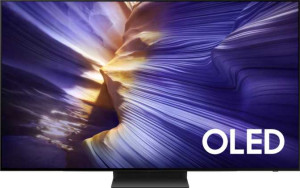
Samsung QA83S95FAEXXY 83" Samsung QN83S90FAE 83"

Overview

Choosing between two flagship 83-inch OLED televisions from Samsung is no small task. The Samsung QA83S95FAEXXY 83″ and the Samsung QN83S90FAE 83″ share a premium 4K OLED foundation with Dolby Atmos, smart TV features, and HDMI 2.1 connectivity, yet they diverge in meaningful ways. Key battlegrounds include refresh rate performance, physical design and weight, USB port count, and broadcast tuner compatibility. Explore the full specification breakdown below to determine which model truly fits your setup.

Common Features

  • Both TVs have a 4K (UHD) display resolution.
  • Both TVs use an OLED/AMOLED display type.
  • Both TVs share a resolution of 3840 x 2160 px.
  • Both TVs have a pixel density of 53 ppi.
  • Both TVs support 1070 million display colors with 10-bit depth.
  • HDR10 support is available on both products.
  • HDR10+ support is available on both products.
  • Bluetooth is available on both TVs.
  • Both TVs use HDMI 2.1 and include 4 HDMI ports.
  • Wi-Fi is supported on both TVs, with Wi-Fi 4 (802.11n) and Wi-Fi 5 (802.11ac).
  • Both TVs use Bluetooth version 5.3.
  • Both TVs include 1 RJ45 port.
  • Miracast support is available on both products.
  • Stereo speakers are present on both TVs.
  • Dolby Atmos and Dolby Audio support are available on both TVs.
  • A subwoofer is built into both TVs.
  • Both TVs support Digital Out and include HDMI ARC and HDMI eARC.
  • Dolby Virtual support is not available on either product.
  • Both TVs support VESA mounting.
  • AirPlay, built-in smart TV functionality, Google Assistant compatibility, and Alexa support are all present on both TVs.
  • A rechargeable remote control is included with both TVs.
  • USB recording is supported on both TVs.

Main Differences

  • Screen size is 83.5″ on Samsung QA83S95FAEXXY 83″ and 82.5″ on Samsung QN83S90FAE 83″.
  • Refresh rate is 165Hz on Samsung QA83S95FAEXXY 83″ and 144Hz on Samsung QN83S90FAE 83″.
  • USB ports number 4 on Samsung QA83S95FAEXXY 83″ and 3 on Samsung QN83S90FAE 83″.
  • DVB standards include DVB-T and DVB-T2 on Samsung QA83S95FAEXXY 83″, while Samsung QN83S90FAE 83″ additionally supports DVB-C, DVB-S, and DVB-S2.
  • Width is 1844.2 mm on Samsung QA83S95FAEXXY 83″ and 1851 mm on Samsung QN83S90FAE 83″.
  • Weight is 51900 g on Samsung QA83S95FAEXXY 83″ and 37600 g on Samsung QN83S90FAE 83″.
  • Thickness is 12.6 mm on Samsung QA83S95FAEXXY 83″ and 44.9 mm on Samsung QN83S90FAE 83″.
  • Height is 1056.8 mm on Samsung QA83S95FAEXXY 83″ and 1062.8 mm on Samsung QN83S90FAE 83″.
  • Volume is 24556.777056 cm³ on Samsung QA83S95FAEXXY 83″ and 88329.20172 cm³ on Samsung QN83S90FAE 83″.
  • Operating power consumption is 248W on Samsung QA83S95FAEXXY 83″ and 237W on Samsung QN83S90FAE 83″.
Specs Comparison
Samsung QA83S95FAEXXY 83"

Samsung QA83S95FAEXXY 83"

Samsung QN83S90FAE 83"

Samsung QN83S90FAE 83"

Display:
display resolution 4K (UHD) 4K (UHD)
Display type OLED/AMOLED OLED/AMOLED
screen size 83.5" 82.5"
resolution 3840 x 2160 px 3840 x 2160 px
pixel density 53 ppi 53 ppi
display colors 1070 million 1070 million
bit depth 10-bit 10-bit
refresh rate 165Hz 144Hz
supports HDR10
supports HDR10+
supports Dolby Vision
supports HLG
Adaptive synchronization AMD FreeSync, AMD FreeSync Premium, AMD FreeSync Premium Pro AMD FreeSync, AMD FreeSync Premium, AMD FreeSync Premium Pro
has anti-reflection coating
has an ambient light sensor
maximum horizontal viewing angle 178º 178º
maximum vertical viewing angle 178º 178º

Both the QA83S95FAEXXY and the QN83S90FAE share the same fundamental display DNA: OLED/AMOLED panels at 4K (3840 x 2160) resolution, a 53 ppi pixel density, 10-bit color depth rendering over 1.07 billion colors, and identical 178° viewing angles in both directions. In practice, this means both TVs deliver the hallmark OLED experience — perfect blacks, infinite contrast, and accurate color uniformity even when viewed off-axis — with no meaningful distinction in picture quality from a pure panel-spec standpoint.

The one spec that sets them apart is the refresh rate: the QA83S95FAEXXY reaches 165Hz, while the QN83S90FAE tops out at 144Hz. For most movie and TV content — which runs at 24, 30, or 60fps — this difference is entirely invisible. However, for fast-motion gaming or high-frame-rate content, the extra headroom of 165Hz translates to marginally smoother motion cadence and slightly reduced motion blur. Both models support the same AMD FreeSync Premium Pro adaptive sync stack, so gamers benefit from tear-free output on either set; the QA83S95FAEXXY simply unlocks a higher ceiling for compatible sources. The screen size difference (83.5″ vs 82.5″) is a single inch and imperceptible in real-world use.

For everyday viewers, the two displays are effectively tied — HDR support (HDR10, HDR10+, HLG), anti-reflection coating, and ambient light sensing are identical across both. The QA83S95FAEXXY holds a narrow but real edge for gaming-focused buyers who can drive content above 144fps, but for cinephiles and general home theater use, neither panel offers a meaningful advantage over the other.

Connectivity:
Has Bluetooth
HDMI version HDMI 2.1 HDMI 2.1
HDMI ports 4 4
supports Wi-Fi
Wi-Fi version Wi-Fi 4 (802.11n), Wi-Fi 5 (802.11ac) Wi-Fi 4 (802.11n), Wi-Fi 5 (802.11ac)
Bluetooth version 5.3 5.3
USB ports 4 3
RJ45 ports 1 1
supports Miracast
has a socket for a 3.5 mm audio jack
has an external memory slot
has a VGA connector
DVB standards DVB-T, DVB-T2 DVB-T, DVB-T2, DVB-C, DVB-S, DVB-S2
has a DVI connector

The connectivity foundations of both TVs are nearly identical and genuinely well-specified: 4x HDMI 2.1 ports cover every modern console, PC, and AV receiver at full bandwidth, while Bluetooth 5.3 and dual-band Wi-Fi (up to Wi-Fi 5) ensure stable wireless peripherals and network streaming. A dedicated RJ45 ethernet port rounds out the wired networking side for those who prefer a reliable hardline connection.

Two differences are worth flagging. First, the QA83S95FAEXXY ships with 4 USB ports versus the QN83S90FAE's 3 — a minor but practical advantage when juggling hard drives, media sticks, and service dongles simultaneously. Second, and more significantly for certain households, the QN83S90FAE supports a considerably broader tuner suite: DVB-C, DVB-S, and DVB-S2 are added on top of the DVB-T/T2 that both models share. In plain terms, this means the QN83S90FAE can connect directly to cable TV infrastructure and satellite dishes without an external set-top box, whereas the QA83S95FAEXXY is limited to over-the-air terrestrial broadcasts.

The verdict depends entirely on your setup. For cord-cutters and streaming-first users, the connectivity specs are a practical tie. But for anyone on a cable or satellite subscription looking to reduce box clutter, the QN83S90FAE holds a clear advantage thanks to its expanded tuner support — a feature the QA83S95FAEXXY simply cannot replicate.

Audio:
supports Digital Out
has SRS TheaterSound HD
has stereo speakers
has Dolby Atmos
has Dolby Audio
supports Dolby Virtual
has a subwoofer
HDMI ARC / eARC HDMI ARC, HDMI eARC HDMI ARC, HDMI eARC

Across every audio specification provided, the QA83S95FAEXXY and QN83S90FAE are a perfect match. Both carry Dolby Atmos and Dolby Audio support, meaning object-based surround sound from compatible streaming services, Blu-ray discs, and broadcast sources is handled natively on either set — no external decoder required.

The shared inclusion of a built-in subwoofer alongside stereo speakers signals that Samsung has equipped both models for low-frequency reinforcement out of the box, which is meaningful on a TV at this size and price tier. For those who want to expand into a full home theater setup, both TVs offer HDMI ARC and eARC — eARC in particular carries enough bandwidth to pass lossless audio formats like Dolby TrueHD to a compatible soundbar or AV receiver without compression.

There is no differentiator to call out here. On audio specifications alone, these two TVs are completely tied — a buyer choosing between them based on sound capability will find no grounds for preference either way.

Design:
width 1844.2 mm 1851 mm
weight 51900 g 37600 g
thickness 12.6 mm 44.9 mm
height 1056.8 mm 1062.8 mm
volume 24556.777056 cm³ 88329.20172 cm³
Supports VESA mount

Despite covering virtually the same footprint — widths of 1844 mm and 1851 mm respectively, with heights within 6 mm of each other — these two TVs diverge sharply in the two physical specs that matter most for installation: thickness and weight. The QA83S95FAEXXY is a remarkably slim 12.6 mm thick, compared to the QN83S90FAE's 44.9 mm. That is not a subtle difference; the QA83S95FAEXXY is nearly four times thinner, which translates directly into a far more flush, architectural look when wall-mounted.

The weight story cuts the other way. At 51,900 g (~51.9 kg), the QA83S95FAEXXY is substantially heavier than the QN83S90FAE's 37,600 g (~37.6 kg) — a difference of over 14 kg. For wall mounting, this means the QA83S95FAEXXY demands a more robust wall bracket and ideally a two-person installation, while the QN83S90FAE is comparatively easier to maneuver and places less stress on the mounting surface. Both support VESA mounting, so the hardware compatibility is equal; it is purely the load that differs.

Which design edge matters more depends on the use case. For a clean, gallery-style wall installation where aesthetics are paramount, the QA83S95FAEXXY's ultra-slim profile is a decisive advantage. For those prioritizing easier handling during setup or working with lighter wall structures, the QN83S90FAE's lower weight is the practical winner. Neither product dominates outright — the two specs trade off directly against each other.

Features:
release date March 2025 April 2025
has AirPlay
has built-in smart TV
compatible with Google Assistant
works with Alexa
works with Siri/Apple HomeKit
supports a remote smartphone
has a rechargeable remote control
supports USB recording
operating power consumption 248W 237W
standby power consumption 0.5W 0.5W
has a search browser
has a sleep timer
has a child lock
warranty period 1 years 1 years
has voice commands

From a smart platform and ecosystem standpoint, these two TVs are functionally identical. Both run a built-in smart TV system with Google Assistant and Alexa voice control, support AirPlay for Apple device mirroring, include a rechargeable remote, and allow USB recording — a useful feature for capturing live broadcasts directly to an external drive. Neither supports Apple HomeKit/Siri integration, so users deep in the Apple smart home ecosystem will need to rely on AirPlay alone for both sets equally.

The only numerical difference across all features is operating power consumption: 248W for the QA83S95FAEXXY versus 237W for the QN83S90FAE. The 11W gap is modest — over 1,000 hours of viewing it amounts to roughly 11 kWh of additional energy use, which is a negligible cost difference for most households. Standby consumption is identical at 0.5W on both.

Across this entire feature set, the verdict is a complete tie. Every smart feature, voice assistant integration, utility function, and warranty term is mirrored exactly between the two models. The power draw difference is too small to influence a purchasing decision on its own.

Comparison Summary & Verdict

Both televisions deliver an outstanding 4K OLED experience with identical color depth, HDR10+ support, Dolby Atmos audio, and a full smart platform including AirPlay and Google Assistant. However, the differences shape two distinct use cases. The Samsung QA83S95FAEXXY 83″ stands out with its superior 165Hz refresh rate, an additional USB port, and a remarkably slim 12.6mm thickness, making it ideal for cinephiles and gamers who demand fluid motion and a minimalist wall-mount installation. In contrast, the Samsung QN83S90FAE 83″ is considerably lighter at 37,600g versus 51,900g, draws slightly less power at 237W, and crucially supports a wider range of DVB tuner standards including DVB-C, DVB-S, and DVB-S2, suiting viewers who rely on cable or satellite broadcast reception. Neither is a poor choice, but your priorities around design, motion handling, and tuner needs will point clearly to one over the other.

Samsung QA83S95FAEXXY 83
Buy Samsung QA83S95FAEXXY 83" if...

Buy the Samsung QA83S95FAEXXY 83″ if you prioritize a faster 165Hz refresh rate, an ultra-slim 12.6mm profile for wall mounting, and an extra USB port for a cleaner, more capable setup.

Samsung QN83S90FAE 83
Buy Samsung QN83S90FAE 83" if...

Choose the Samsung QN83S90FAE 83″ if you need broad broadcast tuner support covering cable and satellite signals, and prefer a noticeably lighter television with slightly lower power consumption.