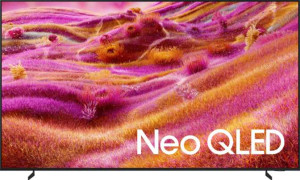
Samsung QN115QN90FFXZA 115"
TCL 115C7K 115"

Samsung QN115QN90FFXZA 115" TCL 115C7K 115"

Overview

When two 115-inch QLED powerhouses compete for your living room, the differences go well beyond screen size. This head-to-head comparison between the Samsung QN115QN90FFXZA 115″ and the TCL 115C7K 115″ examines their display technologies, connectivity arsenals, physical design, and smart platform features to help you identify which of these giants truly fits your home theater vision.

Common Features

  • Both TVs have a 4K (UHD) display resolution.
  • Both TVs use a QLED, LED-backlit, LCD, Mini-LED display type.
  • Both TVs have a screen size of 114.5″.
  • Both TVs have a resolution of 3840 x 2160 px.
  • Both TVs have a pixel density of 38 ppi.
  • Both TVs support 1070 million display colors.
  • Both TVs have a 10-bit color bit depth.
  • Both TVs have a 144Hz refresh rate.
  • Bluetooth connectivity is available on both TVs.
  • Both TVs use HDMI 2.1 ports.
  • Both TVs include 4 HDMI ports.
  • Wi-Fi support is available on both TVs.
  • Both TVs include 1 RJ45 port.
  • Miracast support is available on both TVs.
  • Neither TV has an external memory slot.
  • Neither TV has a VGA connector.
  • Dolby Digital support is available on both TVs.
  • Digital Out support is available on both TVs.
  • Dolby Digital Plus support is available on both TVs.
  • SRS TheaterSound HD is not available on either TV.
  • Both TVs have stereo speakers.
  • Dolby Atmos is available on both TVs.
  • Dolby Audio is available on both TVs.
  • Dolby Virtual support is not available on either TV.
  • Both TVs support VESA mounting.
  • AirPlay is available on both TVs.
  • Both TVs have a built-in smart TV platform.
  • Google Assistant compatibility is available on both TVs.
  • Neither TV works with Siri or Apple HomeKit.
  • Both TVs support remote smartphone control.
  • Both TVs support USB recording.
  • Both TVs have a standby power consumption of 0.5W.
  • A search browser is available on both TVs.

Main Differences

  • Dolby Vision support is present on TCL 115C7K 115″ but not available on Samsung QN115QN90FFXZA 115″.
  • Wi-Fi version on Samsung QN115QN90FFXZA 115″ is Wi-Fi 4 and Wi-Fi 5, while TCL 115C7K 115″ also adds Wi-Fi 6 (802.11ax) support.
  • Bluetooth version is 5.3 on Samsung QN115QN90FFXZA 115″ and 5.4 on TCL 115C7K 115″.
  • USB ports number 2 on Samsung QN115QN90FFXZA 115″ and 3 on TCL 115C7K 115″.
  • A 3.5 mm audio jack socket is present on TCL 115C7K 115″ but not available on Samsung QN115QN90FFXZA 115″.
  • Width is 2565.4 mm on Samsung QN115QN90FFXZA 115″ and 2566 mm on TCL 115C7K 115″.
  • Weight is 86001 g on Samsung QN115QN90FFXZA 115″ and 99800 g on TCL 115C7K 115″.
  • Thickness is 33 mm on Samsung QN115QN90FFXZA 115″ and 57 mm on TCL 115C7K 115″.
  • Height is 1468.1 mm on Samsung QN115QN90FFXZA 115″ and 1471 mm on TCL 115C7K 115″.
  • Volume is 124286.70342 cm³ on Samsung QN115QN90FFXZA 115″ and 215151.402 cm³ on TCL 115C7K 115″.
  • Maximum operating temperature is 40 °C on Samsung QN115QN90FFXZA 115″ and 35 °C on TCL 115C7K 115″.
  • Lowest potential operating temperature is 10 °C on Samsung QN115QN90FFXZA 115″ and 5 °C on TCL 115C7K 115″.
  • Alexa support is present on Samsung QN115QN90FFXZA 115″ but not available on TCL 115C7K 115″.
  • A rechargeable remote control is included with Samsung QN115QN90FFXZA 115″ but not with TCL 115C7K 115″.
  • Operating power consumption is 404W on Samsung QN115QN90FFXZA 115″ and 180W on TCL 115C7K 115″.
Specs Comparison
Samsung QN115QN90FFXZA 115"

Samsung QN115QN90FFXZA 115"

TCL 115C7K 115"

TCL 115C7K 115"

Display:
display resolution 4K (UHD) 4K (UHD)
Display type QLED, LED-backlit, LCD, Mini-LED QLED, LED-backlit, LCD, Mini-LED
screen size 114.5" 114.5"
resolution 3840 x 2160 px 3840 x 2160 px
pixel density 38 ppi 38 ppi
display colors 1070 million 1070 million
bit depth 10-bit 10-bit
refresh rate 144Hz 144Hz
supports HDR10
supports HDR10+
supports Dolby Vision
supports HLG
Adaptive synchronization AMD FreeSync, AMD FreeSync Premium, AMD FreeSync Premium Pro AMD FreeSync, AMD FreeSync Premium, AMD FreeSync Premium Pro
has anti-reflection coating
has an ambient light sensor
maximum horizontal viewing angle 178º 178º
maximum vertical viewing angle 178º 178º

At the panel level, the Samsung QN115QN90FFXZA and the TCL 115C7K are near-identical: both are 114.5″ QLED Mini-LED LCD panels running at 4K (3840 x 2160) resolution with a 38 ppi pixel density, 10-bit color depth capable of rendering 1.07 billion colors, and a 144Hz refresh rate. Viewing angles max out at 178° horizontally and vertically on both, and both include anti-reflection coating and an ambient light sensor — meaning neither has a structural advantage in brightness adaptation or glare control.

For HDR, both support HDR10, HDR10+, and HLG, and both carry the full AMD FreeSync Premium Pro suite for adaptive sync — relevant for gaming use cases where variable refresh rate and low framerate compensation matter. The one meaningful differentiator is Dolby Vision: the TCL 115C7K supports it, while the Samsung does not. Dolby Vision uses dynamic, scene-by-scene metadata to optimize HDR rendering, and is widely used by Netflix, Apple TV+, and Disney+. In practice, content that is mastered in Dolby Vision will display with more precise tone-mapping on the TCL.

Overall, these two displays are remarkably evenly matched — sharing the same panel class, resolution, refresh rate, color depth, and sync technology. The TCL 115C7K holds a narrow but real edge in HDR ecosystem coverage due to its Dolby Vision support, which matters for streaming-heavy users. For buyers who primarily consume HDR10+ content or use the TV for gaming, the Samsung is functionally equivalent in this category.

Connectivity:
Has Bluetooth
HDMI version HDMI 2.1 HDMI 2.1
HDMI ports 4 4
supports Wi-Fi
Wi-Fi version Wi-Fi 4 (802.11n), Wi-Fi 5 (802.11ac) Wi-Fi 4 (802.11n), Wi-Fi 5 (802.11ac), Wi-Fi 6 (802.11ax)
Bluetooth version 5.3 5.4
USB ports 2 3
RJ45 ports 1 1
supports Miracast
has a socket for a 3.5 mm audio jack
has an external memory slot
has a VGA connector
has a DVI connector

The wired connectivity foundation is identical between the two TVs: both offer 4x HDMI 2.1 ports — enough for full-bandwidth 4K/144Hz and eARC support across all inputs — plus a single RJ45 ethernet port for stable wired networking. Where the two begin to diverge is in USB and wireless capabilities. The TCL 115C7K provides 3 USB ports versus the Samsung's 2, a small but practical difference for users who want to connect multiple storage drives, keyboards, or peripherals simultaneously without a hub.

The more consequential wireless gap is Wi-Fi. Both support Wi-Fi 4 and Wi-Fi 5, but the TCL adds Wi-Fi 6 (802.11ax) — a standard that delivers meaningfully higher throughput, lower latency, and better performance in congested network environments (such as homes with many connected devices). For a TV this size likely to be the centerpiece of a smart home setup, Wi-Fi 6 is a genuine future-proofing advantage. Bluetooth follows the same pattern: the TCL's Bluetooth 5.4 edges out the Samsung's 5.3, bringing incremental improvements in connection stability and efficiency, though the real-world difference here is minor.

The TCL also includes a 3.5mm audio jack, which the Samsung omits entirely — useful for directly connecting headphones without relying on Bluetooth or an external DAC. Taken together, the TCL 115C7K holds a clear connectivity edge: it matches the Samsung on all shared specs while adding Wi-Fi 6, a third USB port, a newer Bluetooth version, and a headphone output — making it the more versatile option for users who prioritize flexible device connectivity.

Audio:
supports Dolby Digital
supports Digital Out
supports Dolby Digital Plus
has SRS TheaterSound HD
has stereo speakers
has Dolby Atmos
has Dolby Audio
supports Dolby Virtual
has a subwoofer
HDMI ARC / eARC HDMI ARC, HDMI eARC HDMI ARC, HDMI eARC

Across every audio specification provided, the Samsung QN115QN90FFXZA and the TCL 115C7K are a perfect match. Both carry Dolby Atmos and the full Dolby audio stack — including Dolby Digital, Dolby Digital Plus, and Dolby Audio — which means both can decode and render object-based spatial audio from streaming services and physical media without relying on an external receiver. That is a meaningful capability at this screen size, where immersive audio is expected to complement the large-format picture.

Hardware-wise, both include built-in stereo speakers with a subwoofer, providing a bass foundation that purely stereo setups lack. For users who want to extend to an external sound system, both offer HDMI ARC and eARC — with eARC being the critical one, as it supports lossless and object-based audio formats (like Dolby TrueHD with Atmos) passthrough to a soundbar or AV receiver at full quality, rather than the compressed formats ARC is limited to.

Since every data point in this category is identical, audio is a complete tie. Neither TV holds any advantage here based on the provided specifications — buyers should consider audio output wattage or proprietary sound processing features, which fall outside the data provided, if this category is a deciding factor for them.

Design:
width 2565.4 mm 2566 mm
weight 86001 g 99800 g
thickness 33 mm 57 mm
height 1468.1 mm 1471 mm
volume 124286.70342 cm³ 215151.402 cm³
Supports VESA mount
maximum operating temperature 40 °C 35 °C
lowest potential operating temperature 10 °C 5 °C

Width and height are virtually identical across both TVs — as expected for the same screen size — but the physical profile tells a very different story. The Samsung QN115QN90FFXZA measures just 33mm thick, while the TCL 115C7K comes in at 57mm, nearly 73% deeper. That gap translates directly into how each unit sits in a room: the Samsung will hug a wall mount more flush and look more architectural, while the TCL's additional bulk will be more apparent, especially from the side.

Weight is equally significant at this scale. The Samsung weighs approximately 86kg, while the TCL tips the scales at nearly 100kg — a difference of roughly 14kg. For a panel this large, both will require professional installation and reinforced mounting hardware regardless, but the Samsung's lower mass reduces structural stress on wall mounts and simplifies logistics during installation. Both units support VESA mounting, so neither is limited to a stand-only setup.

On operating temperature range, the Samsung tolerates up to 40°C before exceeding spec, versus the TCL's ceiling of 35°C — a minor advantage for installations in warmer environments like sunrooms or non-air-conditioned spaces. Overall, the Samsung holds a clear design edge, being substantially thinner, lighter, and slightly more thermally tolerant — all of which matter for large-format installation scenarios.

Features:
release date August 2025 March 2025
has AirPlay
has built-in smart TV
compatible with Google Assistant
works with Alexa
works with Siri/Apple HomeKit
supports a remote smartphone
has a rechargeable remote control
supports USB recording
operating power consumption 404W 180W
standby power consumption 0.5W 0.5W
has a search browser
has a sleep timer
has a child lock
has voice commands

Both TVs share a solid smart feature baseline — built-in smart TV platforms, Google Assistant, AirPlay, smartphone remote support, USB recording, and voice commands are all present on each. The Samsung pulls ahead in voice ecosystem coverage by also supporting Amazon Alexa, which the TCL lacks. For households already invested in Alexa-based smart home routines, that integration can be meaningful for controlling the TV hands-free within a broader automation setup. Neither TV supports Apple HomeKit or Siri natively.

Two practical differentiators stand out beyond software features. First, the Samsung includes a rechargeable remote control while the TCL does not — a convenience advantage that eliminates disposable battery replacements over the TV's lifetime. Second, and more substantially, power consumption diverges sharply: the Samsung draws 404W under operation versus the TCL's 180W — more than double. At heavy usage levels, that gap compounds into a notable difference in electricity costs over time, and it may also reflect differences in backlighting intensity or processing overhead not captured elsewhere in the spec data.

Weighing these factors, the two TVs trade advantages: the Samsung wins on voice assistant breadth and remote convenience, while the TCL has a commanding lead in energy efficiency. For users in Alexa-centric households, the Samsung has the feature edge; for those prioritizing lower running costs, the TCL's power efficiency is a meaningful long-term advantage that the Samsung cannot match in this category.

Comparison Summary & Verdict

Both the Samsung QN115QN90FFXZA 115″ and the TCL 115C7K 115″ share an impressive common foundation, including identical 4K 144Hz QLED panels, Dolby Atmos, and a robust smart TV experience. Yet their differences carve out clear identities. The Samsung QN115QN90FFXZA 115″ wins on physical elegance with its slimmer 33mm chassis and lighter 86kg body, and adds convenience through a rechargeable remote and built-in Alexa support. The TCL 115C7K 115″ fights back with Dolby Vision HDR, the faster Wi-Fi 6 standard, a more energy-efficient 180W operating consumption, an extra USB port, and a 3.5mm audio jack for wired headphones. Choose Samsung for a sleeker install; choose TCL for broader HDR compatibility and modern connectivity.

Samsung QN115QN90FFXZA 115
Buy Samsung QN115QN90FFXZA 115" if...

Buy the Samsung QN115QN90FFXZA 115″ if a slim, lightweight design is a priority and you want a built-in rechargeable remote alongside native Alexa voice control.

TCL 115C7K 115
Buy TCL 115C7K 115" if...

Buy the TCL 115C7K 115″ if you want Dolby Vision HDR support, Wi-Fi 6 connectivity, lower energy consumption, and broader wired audio and USB options.