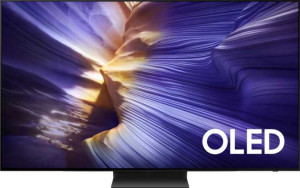
Samsung QN42S90FAE 42"
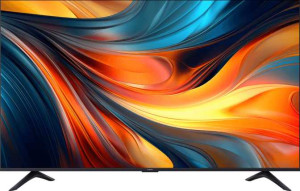
Xiaomi TV A 2026 43"

Samsung QN42S90FAE 42" Xiaomi TV A 2026 43"

Overview

Welcome to our in-depth spec comparison between the Samsung QN42S90FAE 42″ and the Xiaomi TV A 2026 43″ — two compact 4K smart TVs that take very different approaches to picture technology, design, and feature sets. From display panel type and refresh rate to connectivity options and audio capabilities, these two sets offer distinct experiences worth examining closely before you decide which belongs in your living room.

Common Features

  • Both TVs offer 4K UHD resolution at 3840 x 2160 px.
  • Both TVs support 1070 million display colors at 10-bit depth.
  • HDR10 support is available on both products.
  • Dolby Vision support is not available on either product.
  • HLG support is available on both products.
  • An anti-reflection coating is present on both products.
  • Both TVs include Bluetooth connectivity.
  • Both TVs use HDMI 2.1 ports.
  • Both TVs support Wi-Fi 4 (802.11n) and Wi-Fi 5 (802.11ac).
  • Both TVs include one RJ45 ethernet port.
  • Miracast support is available on both products.
  • Neither TV has an external memory slot.
  • Neither TV has a VGA connector.
  • Digital audio output is supported on both products.
  • SRS TheaterSound HD is not available on either product.
  • Both TVs feature stereo speakers.
  • Dolby Audio support is available on both products.
  • Dolby Virtual support is not available on either product.
  • Both TVs support HDMI ARC and HDMI eARC.
  • VESA mount support is available on both products.
  • AirPlay support is available on both products.
  • Both TVs have a built-in smart TV platform.
  • Google Assistant compatibility is available on both products.
  • Neither TV is compatible with Siri or Apple HomeKit.
  • Remote smartphone control is supported on both products.
  • USB recording is supported on both products.
  • Standby power consumption is 0.5W on both products.
  • A search browser is available on both products.

Main Differences

  • The display type is OLED/AMOLED on Samsung QN42S90FAE 42″ and LED-backlit LCD on Xiaomi TV A 2026 43″.
  • Screen size is 41.5″ on Samsung QN42S90FAE 42″ and 43″ on Xiaomi TV A 2026 43″.
  • Pixel density is 106 ppi on Samsung QN42S90FAE 42″ and 102 ppi on Xiaomi TV A 2026 43″.
  • Refresh rate is 144Hz on Samsung QN42S90FAE 42″ and 60Hz on Xiaomi TV A 2026 43″.
  • HDR10+ support is present on Samsung QN42S90FAE 42″ but not available on Xiaomi TV A 2026 43″.
  • HDMI port count is 4 on Samsung QN42S90FAE 42″ and 3 on Xiaomi TV A 2026 43″.
  • Bluetooth version is 5.3 on Samsung QN42S90FAE 42″ and 5.0 on Xiaomi TV A 2026 43″.
  • USB port count is 3 on Samsung QN42S90FAE 42″ and 1 on Xiaomi TV A 2026 43″.
  • A 3.5mm audio jack socket is present on Xiaomi TV A 2026 43″ but not available on Samsung QN42S90FAE 42″.
  • Dolby Atmos support is present on Samsung QN42S90FAE 42″ but not available on Xiaomi TV A 2026 43″.
  • A built-in subwoofer is present on Samsung QN42S90FAE 42″ but not included on Xiaomi TV A 2026 43″.
  • Width is 934.4 mm on Samsung QN42S90FAE 42″ and 957 mm on Xiaomi TV A 2026 43″.
  • Weight is 3946 g on Samsung QN42S90FAE 42″ and 6000 g on Xiaomi TV A 2026 43″.
  • Thickness is 39.5 mm on Samsung QN42S90FAE 42″ and 72 mm on Xiaomi TV A 2026 43″.
  • Height is 542.6 mm on Samsung QN42S90FAE 42″ and 563 mm on Xiaomi TV A 2026 43″.
  • Total volume is 20026.71 cm³ on Samsung QN42S90FAE 42″ and 38792.95 cm³ on Xiaomi TV A 2026 43″.
  • Alexa compatibility is present on Samsung QN42S90FAE 42″ but not available on Xiaomi TV A 2026 43″.
  • A rechargeable remote control is included with Samsung QN42S90FAE 42″ but not with Xiaomi TV A 2026 43″.
  • Operating power consumption is 80W on Samsung QN42S90FAE 42″ and 75W on Xiaomi TV A 2026 43″.
Specs Comparison
Samsung QN42S90FAE 42"

Samsung QN42S90FAE 42"

Xiaomi TV A 2026 43"

Xiaomi TV A 2026 43"

Display:
display resolution 4K (UHD) 4K (UHD)
Display type OLED/AMOLED LED-backlit, LCD
screen size 41.5" 43"
resolution 3840 x 2160 px 3840 x 2160 px
pixel density 106 ppi 102 ppi
display colors 1070 million 1070 million
bit depth 10-bit 10-bit
refresh rate 144Hz 60Hz
supports HDR10
supports HDR10+
supports Dolby Vision
supports HLG
has anti-reflection coating
has an ambient light sensor
maximum horizontal viewing angle 178º 178º
maximum vertical viewing angle 178º 178º

The most fundamental difference here is panel technology. The Samsung QN42S90FAE uses an OLED/AMOLED panel, where each pixel produces its own light and can switch off completely, delivering true blacks and virtually infinite contrast. The Xiaomi TV A 2026 relies on LED-backlit LCD, where a backlight illuminates the entire screen — a technology that simply cannot match OLED for contrast depth or local dimming precision. In everyday viewing, this gap is most visible in dark scenes, where the Samsung will show near-perfect shadow detail while the Xiaomi may exhibit backlight blooming around bright objects.

The refresh rate gap is equally significant. The Samsung's 144Hz panel versus the Xiaomi's 60Hz means noticeably smoother motion in sports, action films, and especially gaming, where higher frame rates translate directly to reduced blur and input lag. For a viewer who primarily watches standard broadcast content this matters less, but for gaming or high-frame-rate streaming it is a meaningful real-world advantage. On HDR support, the Samsung additionally covers HDR10+ — which adds dynamic metadata for scene-by-scene tone mapping — while the Xiaomi tops out at HDR10 with static metadata. Neither supports Dolby Vision. Both share identical 3840 x 2160 resolution, 10-bit color depth, 1070 million colors, anti-reflection coating, an ambient light sensor, and full 178° viewing angles in both directions.

The Samsung QN42S90FAE has a clear and substantial advantage in this group. Its OLED panel and 144Hz refresh rate address the two most impactful display qualities — contrast and motion clarity — in ways the Xiaomi's LCD panel at 60Hz structurally cannot match, regardless of the similar pixel counts and color depth figures the two share.

Connectivity:
Has Bluetooth
HDMI version HDMI 2.1 HDMI 2.1
HDMI ports 4 3
supports Wi-Fi
Wi-Fi version Wi-Fi 4 (802.11n), Wi-Fi 5 (802.11ac) Wi-Fi 4 (802.11n), Wi-Fi 5 (802.11ac)
Bluetooth version 5.3 5
USB ports 3 1
RJ45 ports 1 1
supports Miracast
has a socket for a 3.5 mm audio jack
has an external memory slot
has a VGA connector
DVB standards DVB-T, DVB-T2, DVB-C, DVB-S, DVB-S2 DVB-T, DVB-T2, DVB-C, DVB-S, DVB-S2
has a DVI connector

Both TVs share a solid connectivity foundation — HDMI 2.1, matching Wi-Fi standards (Wi-Fi 4 and Wi-Fi 5), a wired RJ45 port, Miracast support, and identical DVB tuner coverage. Where they diverge is in the quantity and variety of ports. The Samsung offers 4 HDMI ports and 3 USB ports, versus the Xiaomi's 3 HDMI and a single USB port. For users with multiple devices — a soundbar, game console, streaming stick, and Blu-ray player — the Samsung's extra HDMI and USB ports reduce the need for switchers or unplugging devices entirely.

Bluetooth tells a smaller but still relevant story. The Samsung's Bluetooth 5.3 versus the Xiaomi's Bluetooth 5.0 brings incremental improvements in connection stability and power efficiency, which matters most for wireless headphones or speakers used over extended periods. One point in the Xiaomi's favor: it includes a 3.5mm audio jack, which the Samsung omits entirely — a practical outlet for users who want to connect wired headphones directly to the TV without routing through a separate device.

Overall, the Samsung QN42S90FAE holds the edge in connectivity. More HDMI and USB ports plus a newer Bluetooth version give it greater flexibility for complex home setups. The Xiaomi's headphone jack is a genuine convenience for simpler use cases, but it does not offset the Samsung's broader port advantage for most living-room configurations.

Audio:
supports Digital Out
has SRS TheaterSound HD
has stereo speakers
has Dolby Atmos
has Dolby Audio
supports Dolby Virtual
has a subwoofer
HDMI ARC / eARC HDMI ARC, HDMI eARC HDMI ARC, HDMI eARC

Shared ground here includes stereo speakers, Dolby Audio, Digital Out, and full HDMI ARC/eARC support on both — the latter being important for users who want to pass high-quality audio to a soundbar with a single cable while retaining remote control functionality. Neither TV includes SRS TheaterSound HD or Dolby Virtual processing.

The two meaningful differentiators are Dolby Atmos and the presence of a subwoofer, both exclusive to the Samsung. Dolby Atmos decoding allows the Samsung to process object-based spatial audio from supported streaming content and Blu-ray discs, creating a more dimensional soundstage than standard stereo. The built-in subwoofer adds dedicated low-frequency reproduction, which typically produces more body and impact in movie soundtracks and music without requiring an external speaker. The Xiaomi, limited to Dolby Audio without Atmos, handles standard stereo and surround formats but cannot decode the height and spatial layers that Atmos content carries.

The Samsung QN42S90FAE is the clear winner in this group. Dolby Atmos support and an integrated subwoofer give it a meaningfully richer out-of-the-box audio experience — particularly relevant for users who plan to rely primarily on the TV's built-in speakers rather than a dedicated external audio system.

Design:
width 934.4 mm 957 mm
weight 3946 g 6000 g
thickness 39.5 mm 72 mm
height 542.6 mm 563 mm
volume 20026.71488 cm³ 38792.952 cm³
Supports VESA mount

Despite being within roughly an inch of each other in screen size, these two TVs differ substantially in physical form. The Samsung QN42S90FAE is significantly slimmer at 39.5 mm thick compared to the Xiaomi's 72 mm — nearly half the depth. This is a direct consequence of their panel technologies: OLED panels require no backlight assembly, allowing for much thinner chassis designs. The practical result is a TV that sits far less obtrusively on a stand or against a wall.

The weight gap is equally striking. At 3,946 g, the Samsung is roughly 2 kg lighter than the Xiaomi's 6,000 g. That difference is most relevant during installation — particularly for wall mounting, where a lighter panel reduces stress on the mounting hardware and makes single-person installation more manageable. Both TVs support VESA mounting, so neither has an inherent advantage there in terms of compatibility.

For design and form factor, the Samsung holds a clear advantage. Its dramatically thinner profile and lower weight make it easier to install, more flexible for tight spaces, and more likely to blend unobtrusively into a room — all without any trade-off in footprint relative to the similarly sized Xiaomi.

Features:
release date April 2025 August 2025
has AirPlay
has built-in smart TV
compatible with Google Assistant
works with Alexa
works with Siri/Apple HomeKit
supports a remote smartphone
has a rechargeable remote control
supports USB recording
operating power consumption 80W 75W
standby power consumption 0.5W 0.5W
has a search browser
has a sleep timer
has a child lock
warranty period 1 years 1 years
has voice commands

Functionally, these two TVs overlap heavily. Both include a built-in smart platform, AirPlay, Google Assistant, voice commands, smartphone remote support, USB recording, sleep timer, child lock, and identical standby consumption of 0.5W. Warranty periods are also the same at one year. For the majority of smart TV use cases, the feature set is effectively equivalent.

Two differentiators are worth noting. The Samsung adds Alexa compatibility, which is meaningful for households already embedded in Amazon's ecosystem — it allows the TV to participate in Alexa routines and respond to voice commands through Echo devices. The Samsung also includes a rechargeable remote control, eliminating the recurring cost and inconvenience of replacing disposable batteries. The Xiaomi, lacking both, uses a conventional battery-powered remote and is limited to Google Assistant among the major voice platforms. On power consumption, the Xiaomi draws a marginally lower 75W during operation versus the Samsung's 80W, though the real-world energy cost difference at typical viewing hours is negligible.

The Samsung QN42S90FAE has a modest edge here. Alexa support broadens its smart home integration options, and the rechargeable remote is a small but genuinely practical convenience. Neither advantage is transformative on its own, but together they tip the balance toward the Samsung for users who value ecosystem flexibility and daily usability details.
Comparison Summary & Verdict

After reviewing every specification, it is clear that both TVs serve different audiences. The Samsung QN42S90FAE 42″ stands out for viewers who demand the best picture quality, thanks to its OLED/AMOLED panel, blazing 144Hz refresh rate, and HDR10+ support, while its Dolby Atmos audio, built-in subwoofer, 4 HDMI ports, 3 USB ports, and significantly slimmer, lighter chassis make it a premium all-rounder. The Xiaomi TV A 2026 43″, on the other hand, appeals to budget-conscious buyers who still want a solid 4K UHD smart TV experience with a slightly larger 43″ screen, a 3.5mm audio jack for wired headphones, and lower power consumption — all at a more accessible price point. If picture performance and connectivity breadth are your top priorities, the Samsung wins; if value and simplicity matter more, the Xiaomi is a sensible choice.

Samsung QN42S90FAE 42
Buy Samsung QN42S90FAE 42" if...

Buy the Samsung QN42S90FAE 42″ if you want premium OLED picture quality with a 144Hz refresh rate, Dolby Atmos sound, and a wider range of connectivity options including 4 HDMI ports and 3 USB ports.

Xiaomi TV A 2026 43
Buy Xiaomi TV A 2026 43" if...

Buy the Xiaomi TV A 2026 43″ if you are looking for an affordable 4K smart TV with a slightly larger screen, a handy 3.5mm headphone jack, and lower operating power consumption.