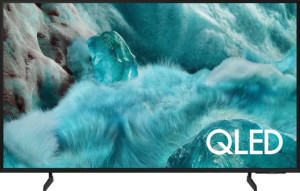
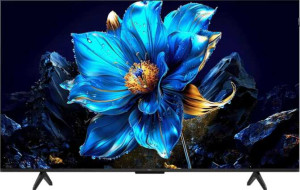
Both the Samsung QN43Q7FAAF and the TCL 85P7K share the same panel technology — QLED, LED-backlit LCD — and identical core specs: 4K (3840 x 2160) resolution, 10-bit color depth rendering 1.07 billion colors, a 60Hz refresh rate, and wide 178° viewing angles in both directions. They also both support HDR10, HDR10+, and HLG, and feature anti-reflection coatings and ambient light sensors. On these fundamental picture-quality pillars, the two sets are evenly matched.
The most consequential difference is screen size and its direct consequence: pixel density. The Samsung's 42.5″ panel achieves 104 ppi, meaning individual pixels are virtually invisible at typical viewing distances of 6–8 feet. The TCL's 84.6″ panel, sharing the exact same 4K resolution spread across twice the area, lands at only 52 ppi — exactly half. This matters most when sitting close to the screen; at larger viewing distances (12+ feet), the difference becomes negligible and the TCL's sheer size creates a more immersive experience. Choosing between them is therefore largely a function of room size and seating distance.
The TCL 85P7K holds two notable exclusive advantages: support for Dolby Vision — the most widely adopted premium HDR format in streaming content — and AMD FreeSync adaptive sync, which reduces screen tearing during gaming. The Samsung QN43Q7FAAF lacks both. For a content viewer who streams from platforms like Netflix or Disney+, Dolby Vision is a meaningful real-world perk. For gamers, FreeSync adds tangible smoothness. In terms of feature breadth, the TCL 85P7K has a clear edge, while the Samsung trades raw size for a sharper, denser image in a compact form factor.