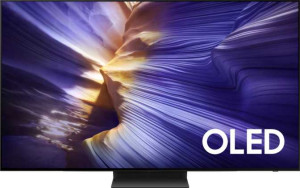
Samsung QN48S90FAE 48"
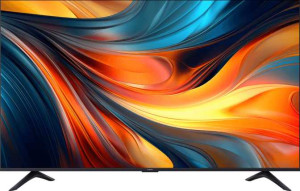
Xiaomi TV A 2026 43"

Samsung QN48S90FAE 48" Xiaomi TV A 2026 43"

Overview

Welcome to our in-depth spec comparison between the Samsung QN48S90FAE 48″ and the Xiaomi TV A 2026 43″. These two TVs take fundamentally different approaches to the living room experience, from their core display technologies to their audio capabilities and connectivity options. In this comparison, we examine key battlegrounds including panel type and refresh rate, port selection, sound performance, and overall design footprint to help you decide which television best suits your needs.

Common Features

  • Both TVs offer 4K (UHD) display resolution at 3840 x 2160 px.
  • Both TVs support 1070 million display colors at 10-bit depth.
  • HDR10 support is available on both products.
  • Dolby Vision support is not available on either product.
  • HLG support is available on both products.
  • An anti-reflection coating is present on both products.
  • Bluetooth is available on both products.
  • Both TVs feature HDMI 2.1 ports.
  • Wi-Fi is supported on both products, with Wi-Fi 4 (802.11n) and Wi-Fi 5 (802.11ac).
  • Both TVs include 1 RJ45 port.
  • Miracast support is available on both products.
  • Neither TV includes an external memory slot.
  • Neither TV has a VGA connector.
  • Digital Out support is available on both products.
  • SRS TheaterSound HD is not available on either product.
  • Stereo speakers are present on both products.
  • Dolby Audio support is available on both products.
  • Dolby Virtual support is not available on either product.
  • Both TVs support HDMI ARC and HDMI eARC.
  • VESA mount support is available on both products.
  • AirPlay is available on both products.
  • A built-in smart TV platform is present on both products.
  • Google Assistant compatibility is available on both products.
  • Siri and Apple HomeKit compatibility is not available on either product.
  • Remote smartphone control is supported on both products.
  • USB recording is supported on both products.
  • Standby power consumption is 0.5W on both products.
  • A search browser is available on both products.

Main Differences

  • The display type is OLED/AMOLED on Samsung QN48S90FAE 48″ and LED-backlit LCD on Xiaomi TV A 2026 43″.
  • Screen size is 47.5″ on Samsung QN48S90FAE 48″ and 43″ on Xiaomi TV A 2026 43″.
  • Pixel density is 93 ppi on Samsung QN48S90FAE 48″ and 102 ppi on Xiaomi TV A 2026 43″.
  • Refresh rate is 144Hz on Samsung QN48S90FAE 48″ and 60Hz on Xiaomi TV A 2026 43″.
  • HDR10+ support is present on Samsung QN48S90FAE 48″ but not available on Xiaomi TV A 2026 43″.
  • HDMI port count is 4 on Samsung QN48S90FAE 48″ and 3 on Xiaomi TV A 2026 43″.
  • Bluetooth version is 5.3 on Samsung QN48S90FAE 48″ and 5.0 on Xiaomi TV A 2026 43″.
  • USB port count is 3 on Samsung QN48S90FAE 48″ and 1 on Xiaomi TV A 2026 43″.
  • A 3.5 mm audio jack socket is present on Xiaomi TV A 2026 43″ but not available on Samsung QN48S90FAE 48″.
  • Dolby Atmos support is present on Samsung QN48S90FAE 48″ but not available on Xiaomi TV A 2026 43″.
  • A built-in subwoofer is present on Samsung QN48S90FAE 48″ but not on Xiaomi TV A 2026 43″.
  • Width is 1069.3 mm on Samsung QN48S90FAE 48″ and 957 mm on Xiaomi TV A 2026 43″.
  • Weight is 5035 g on Samsung QN48S90FAE 48″ and 6000 g on Xiaomi TV A 2026 43″.
  • Thickness is 39.6 mm on Samsung QN48S90FAE 48″ and 72 mm on Xiaomi TV A 2026 43″.
  • Height is 619.9 mm on Samsung QN48S90FAE 48″ and 563 mm on Xiaomi TV A 2026 43″.
  • Volume is 26249.22 cm³ on Samsung QN48S90FAE 48″ and 38792.95 cm³ on Xiaomi TV A 2026 43″.
  • Alexa compatibility is present on Samsung QN48S90FAE 48″ but not available on Xiaomi TV A 2026 43″.
  • A rechargeable remote control is included with Samsung QN48S90FAE 48″ but not with Xiaomi TV A 2026 43″.
  • Operating power consumption is 95W on Samsung QN48S90FAE 48″ and 75W on Xiaomi TV A 2026 43″.
Specs Comparison
Samsung QN48S90FAE 48"

Samsung QN48S90FAE 48"

Xiaomi TV A 2026 43"

Xiaomi TV A 2026 43"

Display:
display resolution 4K (UHD) 4K (UHD)
Display type OLED/AMOLED LED-backlit, LCD
screen size 47.5" 43"
resolution 3840 x 2160 px 3840 x 2160 px
pixel density 93 ppi 102 ppi
display colors 1070 million 1070 million
bit depth 10-bit 10-bit
refresh rate 144Hz 60Hz
supports HDR10
supports HDR10+
supports Dolby Vision
supports HLG
has anti-reflection coating
has an ambient light sensor
maximum horizontal viewing angle 178º 178º
maximum vertical viewing angle 178º 178º

The most fundamental difference here is panel technology. The Samsung QN48S90FAE uses an OLED/AMOLED panel, which produces light on a per-pixel basis and can switch pixels completely off to achieve true blacks and theoretically infinite contrast. The Xiaomi TV A 2026 43″, by contrast, uses a LED-backlit LCD panel, where a separate backlight layer illuminates liquid crystals — a design that structurally limits black depth and contrast compared to OLED. Both share the same 4K (3840 x 2160) resolution and 10-bit color depth supporting 1.07 billion colors, but the OLED panel's per-pixel control means those colors and that depth are rendered with greater accuracy and shadow detail in practice.

The refresh rate gap is also significant: the Samsung runs at 144Hz versus the Xiaomi's 60Hz. For fast-moving sports content or gaming, 144Hz delivers noticeably smoother motion with less blur, while 60Hz is simply the baseline standard. On HDR support, the Samsung adds HDR10+ (dynamic metadata for scene-by-scene tone mapping) on top of the shared HDR10 and HLG support, giving it a wider compatibility net with premium HDR content. Neither supports Dolby Vision. One counterpoint favoring the Xiaomi: despite its smaller 43″ screen, its 102 ppi pixel density edges out the Samsung's 93 ppi, meaning slightly sharper pixel-level detail at very close viewing distances — though at typical TV viewing distances this difference is imperceptible.

The Samsung QN48S90FAE holds a clear display advantage in every category that materially affects picture quality: superior panel technology, a significantly higher refresh rate, and broader HDR format support. The Xiaomi TV A 2026 43″ is a competent 4K LCD with solid fundamentals, but the specs show it operating in a different performance class when it comes to contrast, motion handling, and HDR versatility.

Connectivity:
Has Bluetooth
HDMI version HDMI 2.1 HDMI 2.1
HDMI ports 4 3
supports Wi-Fi
Wi-Fi version Wi-Fi 4 (802.11n), Wi-Fi 5 (802.11ac) Wi-Fi 4 (802.11n), Wi-Fi 5 (802.11ac)
Bluetooth version 5.3 5
USB ports 3 1
RJ45 ports 1 1
supports Miracast
has a socket for a 3.5 mm audio jack
has an external memory slot
has a VGA connector
DVB standards DVB-T, DVB-T2, DVB-C, DVB-S, DVB-S2 DVB-T, DVB-T2, DVB-C, DVB-S, DVB-S2
has a DVI connector

Both TVs share a solid connectivity foundation: HDMI 2.1 ports, identical Wi-Fi support (Wi-Fi 4 and Wi-Fi 5), a wired RJ45 Ethernet port, and Miracast screen mirroring. Where they diverge is in port count and Bluetooth revision. The Samsung offers 4 HDMI ports and 3 USB ports, compared to the Xiaomi's 3 HDMI ports and just 1 USB port — a meaningful practical difference for users running multiple devices like a soundbar, gaming console, streaming stick, and hard drive simultaneously. Running out of ports on the Xiaomi is a realistic scenario in a well-equipped living room setup.

On Bluetooth, the Samsung's version 5.3 versus the Xiaomi's version 5.0 represents a modest but real improvement: 5.3 brings better connection stability, reduced interference in crowded wireless environments, and more efficient power handling for connected peripherals like wireless headphones or keyboards. It is not a dramatic leap, but it is a measurable refinement. One area where the Xiaomi counters is its inclusion of a 3.5mm audio jack, which the Samsung omits entirely — useful for directly connecting wired headphones without needing an adapter or Bluetooth pairing.

Overall, the Samsung QN48S90FAE holds a connectivity edge, primarily due to its greater number of HDMI and USB ports and the newer Bluetooth version, which together make it more capable of handling complex, multi-device home theater setups. The Xiaomi's headphone jack is a genuine convenience for some users, but it does not offset the Samsung's broader port flexibility.

Audio:
supports Digital Out
has SRS TheaterSound HD
has stereo speakers
has Dolby Atmos
has Dolby Audio
supports Dolby Virtual
has a subwoofer
HDMI ARC / eARC HDMI ARC, HDMI eARC HDMI ARC, HDMI eARC

Both TVs cover the shared audio basics competently: stereo speakers, Dolby Audio processing, Digital Out, and full HDMI ARC/eARC support for connecting external soundbars with high-quality audio passthrough. Where the Samsung QN48S90FAE pulls ahead is in two areas that meaningfully affect out-of-the-box sound quality. First, it supports Dolby Atmos — the object-based surround format that adds height channels to create a more three-dimensional soundstage. The Xiaomi TV A 2026 43″ lacks this, meaning it cannot decode or present Atmos-encoded content natively. Second, the Samsung includes a built-in subwoofer, which adds dedicated low-frequency reproduction that stereo drivers alone cannot deliver — translating to more impactful bass for action sequences and music without requiring an external speaker system.

For users planning to pair either TV with a dedicated external soundbar or AV receiver, the Dolby Atmos gap becomes less critical, since the external system would handle decoding. However, for anyone relying primarily on the TV's built-in audio, the Samsung's combination of Atmos support and a subwoofer represents a noticeably fuller listening experience right out of the box.

The Samsung holds a clear audio advantage in this category. The presence of both Dolby Atmos and a dedicated subwoofer gives it a structural edge in built-in audio performance that the Xiaomi, with its standard stereo-only configuration, cannot match on paper.

Design:
width 1069.3 mm 957 mm
weight 5035 g 6000 g
thickness 39.6 mm 72 mm
height 619.9 mm 563 mm
volume 26249.219172 cm³ 38792.952 cm³
Supports VESA mount

Despite having a larger screen, the Samsung QN48S90FAE is notably lighter than the Xiaomi TV A 2026 43″ — 5,035 g versus 6,000 g, a difference of nearly 1 kg. That gap is even more striking when you consider the Samsung is a 48″ panel going up against a 43″ one. The weight advantage directly reflects the OLED panel construction, which eliminates the need for a separate backlight assembly and associated housing, resulting in a structurally leaner unit. For wall mounting or repositioning, that kilogram difference is tangible.

Thickness tells a similar story. The Samsung measures just 39.6 mm deep, while the Xiaomi comes in at 72 mm — nearly twice as thick. This has real consequences for wall-mount installations where the gap between the TV and the wall is visible, as well as for shelf or cabinet placement. The Samsung's slimmer profile also contributes to its significantly smaller overall volume (~26,250 cm³ vs ~38,790 cm³), meaning it occupies substantially less physical space despite covering more screen area. Both TVs support VESA mounting, so neither has an installation advantage on that front.

The Samsung holds a clear design edge here. Being simultaneously larger in screen size, lighter in weight, and dramatically thinner in depth is an unusual combination — one that gives it a premium, space-efficient physical footprint that the Xiaomi cannot match.

Features:
release date April 2025 August 2025
has AirPlay
has built-in smart TV
compatible with Google Assistant
works with Alexa
works with Siri/Apple HomeKit
supports a remote smartphone
has a rechargeable remote control
supports USB recording
operating power consumption 95W 75W
standby power consumption 0.5W 0.5W
has a search browser
has a sleep timer
has a child lock
warranty period 1 years 1 years
has voice commands

The feature sets of these two TVs are broadly aligned — both offer a built-in smart TV platform, AirPlay, Google Assistant, smartphone remote support, USB recording, voice commands, and identical standby consumption of 0.5W. The meaningful divergences come down to three points: Alexa compatibility, the remote control design, and power consumption. The Samsung adds Alexa support on top of Google Assistant, giving it broader smart home integration for users already embedded in Amazon's ecosystem — a genuine convenience if Alexa-controlled devices are part of the household setup.

On the remote, the Samsung includes a rechargeable remote control while the Xiaomi relies on a conventional battery-powered one. Over time, a rechargeable remote eliminates the recurring cost and hassle of replacing batteries — a small but consistently appreciated quality-of-life advantage. Power consumption runs in the opposite direction: the Xiaomi draws 75W during operation versus the Samsung's 95W. That 20W gap, accumulated over years of daily use, translates into a measurable difference in electricity costs, giving the Xiaomi a modest long-term efficiency edge.

On balance, the Samsung QN48S90FAE holds a slight features edge — its additional Alexa support and rechargeable remote add meaningful everyday convenience that the Xiaomi lacks. The Xiaomi counters with lower power consumption, which matters for running costs, but for users prioritizing smart home flexibility and remote usability, the Samsung's feature set is the more complete of the two.
Comparison Summary & Verdict

After reviewing every specification, it is clear that both TVs serve distinct audiences. The Samsung QN48S90FAE 48″ is the stronger choice for home cinema and gaming enthusiasts: its OLED panel with a 144Hz refresh rate, HDR10+ support, Dolby Atmos with a built-in subwoofer, 4 HDMI ports, and rechargeable remote make it a feature-rich, premium package. On the other hand, the Xiaomi TV A 2026 43″ appeals to budget-conscious buyers who need a compact, energy-efficient set — its 75W power consumption, lighter physical footprint, higher pixel density, and inclusion of a 3.5 mm audio jack make it a practical everyday television. Choose the Samsung if picture quality and immersive audio are your top priorities; choose the Xiaomi if you want a no-frills, efficient screen for casual viewing.

Samsung QN48S90FAE 48
Buy Samsung QN48S90FAE 48" if...

Buy the Samsung QN48S90FAE 48″ if you want a premium OLED display with a 144Hz refresh rate, HDR10+ support, Dolby Atmos audio with a subwoofer, and a richer connectivity setup including 4 HDMI ports and 3 USB ports.

Xiaomi TV A 2026 43
Buy Xiaomi TV A 2026 43" if...

Buy the Xiaomi TV A 2026 43″ if you need a compact, energy-efficient TV with lower power consumption and a 3.5 mm audio jack for a straightforward, everyday viewing setup.