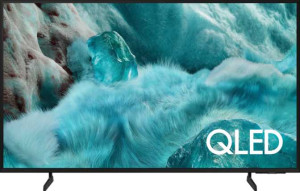
Samsung QN50Q7FAAF 50"
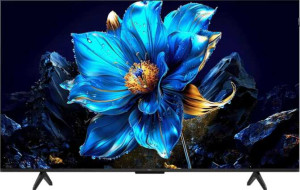
TCL 85P7K 85"

Samsung QN50Q7FAAF 50" TCL 85P7K 85"

Overview

Welcome to our in-depth spec comparison between the Samsung QN50Q7FAAF 50″ and the TCL 85P7K 85″. Both TVs share a strong foundation — QLED 4K panels, 60Hz refresh rates, and a rich smart TV ecosystem — yet they diverge sharply in screen size, audio capabilities, and gaming features. Whether you are focused on picture quality, connectivity, or finding the right fit for your living space, this comparison covers every key specification to help you make an informed decision.

Common Features

  • Both products have a 4K (UHD) display resolution.
  • Both products use QLED, LED-backlit, LCD display technology.
  • Both products have a native resolution of 3840 x 2160 px.
  • Both products support 1070 million display colors.
  • Both products have a 10-bit color bit depth.
  • Both products have a 60Hz refresh rate.
  • HDR10 support is available on both products.
  • HDR10+ support is available on both products.
  • Bluetooth connectivity is available on both products.
  • Both products have 3 HDMI ports.
  • Wi-Fi is supported on both products.
  • Both products support Wi-Fi 4 (802.11n) and Wi-Fi 5 (802.11ac).
  • Both products include 1 RJ45 port.
  • Miracast is supported on both products.
  • Neither product has an external memory slot.
  • Neither product has a VGA connector.
  • Digital Out support is available on both products.
  • SRS TheaterSound HD is not available on either product.
  • Both products have stereo speakers.
  • Dolby Virtual support is not available on either product.
  • Both products support VESA mounting.
  • AirPlay is available on both products.
  • Both products have a built-in smart TV platform.
  • Both products are compatible with Google Assistant.
  • Both products work with Alexa.
  • Neither product works with Siri or Apple HomeKit.
  • Remote smartphone control is supported on both products.
  • Neither product has a rechargeable remote control.
  • Both products have a standby power consumption of 0.5W.
  • Both products support HDMI ARC and HDMI eARC.

Main Differences

  • Screen size is 49.5″ on Samsung QN50Q7FAAF 50″ and 84.6″ on TCL 85P7K 85″.
  • Pixel density is 89 ppi on Samsung QN50Q7FAAF 50″ and 52 ppi on TCL 85P7K 85″.
  • Dolby Vision support is present on TCL 85P7K 85″ but not available on Samsung QN50Q7FAAF 50″.
  • Adaptive synchronization is not available on Samsung QN50Q7FAAF 50″, while TCL 85P7K 85″ supports AMD FreeSync.
  • HDMI version is 2.0 on Samsung QN50Q7FAAF 50″ and 2.1 on TCL 85P7K 85″.
  • Bluetooth version is 5.3 on Samsung QN50Q7FAAF 50″ and 5.4 on TCL 85P7K 85″.
  • USB ports number 1 on Samsung QN50Q7FAAF 50″ and 2 on TCL 85P7K 85″.
  • A 3.5 mm audio jack socket is present on TCL 85P7K 85″ but not available on Samsung QN50Q7FAAF 50″.
  • A subwoofer is included on TCL 85P7K 85″ but not on Samsung QN50Q7FAAF 50″.
  • Width is 1120.3 mm on Samsung QN50Q7FAAF 50″ and 1889.6 mm on TCL 85P7K 85″.
  • Weight is 9500 g on Samsung QN50Q7FAAF 50″ and 31000 g on TCL 85P7K 85″.
  • Thickness is 60 mm on Samsung QN50Q7FAAF 50″ and 63 mm on TCL 85P7K 85″.
  • Height is 647 mm on Samsung QN50Q7FAAF 50″ and 1086 mm on TCL 85P7K 85″.
  • Volume is 43490.046 cm³ on Samsung QN50Q7FAAF 50″ and 129282.6528 cm³ on TCL 85P7K 85″.
  • USB recording is supported on Samsung QN50Q7FAAF 50″ but not available on TCL 85P7K 85″.
Specs Comparison
Samsung QN50Q7FAAF 50"

Samsung QN50Q7FAAF 50"

TCL 85P7K 85"

TCL 85P7K 85"

Display:
display resolution 4K (UHD) 4K (UHD)
Display type QLED, LED-backlit, LCD QLED, LED-backlit, LCD
screen size 49.5" 84.6"
resolution 3840 x 2160 px 3840 x 2160 px
pixel density 89 ppi 52 ppi
display colors 1070 million 1070 million
bit depth 10-bit 10-bit
refresh rate 60Hz 60Hz
supports HDR10
supports HDR10+
supports Dolby Vision
supports HLG
Adaptive synchronization None AMD FreeSync
has anti-reflection coating
has an ambient light sensor
maximum horizontal viewing angle 178º 178º
maximum vertical viewing angle 178º 178º

Both the Samsung QN50Q7FAAF and the TCL 85P7K share the same fundamental display DNA: QLED, LED-backlit LCD panels running at 4K (3840 × 2160) resolution, with identical 10-bit color depth, 1070 million colors, a 60Hz refresh rate, and matching 178° viewing angles in both directions. On paper, these are closely matched displays — but the real-world experience diverges significantly once you factor in screen size and a few critical feature gaps.

The most consequential difference is pixel density. The Samsung's 49.5″ panel yields 89 ppi, while the TCL's 84.6″ panel stretches the same pixel count across nearly twice the area, dropping density to just 52 ppi. This means the Samsung will appear noticeably sharper when viewed up close — relevant for smaller rooms or desktop-distance seating. The TCL, however, is designed for larger spaces where the sheer screen size dominates the viewing experience and the lower ppi becomes imperceptible at typical living-room distances. On the HDR front, the TCL edges ahead by adding Dolby Vision support on top of the HDR10, HDR10+, and HLG formats both TVs share — giving it broader compatibility with premium streaming content. The TCL also includes AMD FreeSync adaptive sync, which reduces screen tearing for PC gamers and compatible consoles, a feature entirely absent on the Samsung.

In summary, the TCL 85P7K holds a clear display feature advantage: it covers a wider HDR ecosystem with Dolby Vision and adds adaptive sync for gaming use cases. The Samsung QN50Q7FAAF counters with a significantly higher pixel density that rewards closer viewing distances, but it trails on HDR format breadth and has no adaptive sync at all. If raw sharpness and a compact footprint are the priority, the Samsung wins; for home theater scale, Dolby Vision compatibility, and gaming flexibility, the TCL is the stronger display package.
Connectivity:
Has Bluetooth
HDMI version HDMI 2.0 HDMI 2.1
HDMI ports 3 3
supports Wi-Fi
Wi-Fi version Wi-Fi 4 (802.11n), Wi-Fi 5 (802.11ac) Wi-Fi 4 (802.11n), Wi-Fi 5 (802.11ac)
Bluetooth version 5.3 5.4
USB ports 1 2
RJ45 ports 1 1
supports Miracast
has a socket for a 3.5 mm audio jack
has an external memory slot
has a VGA connector
has a DVI connector

Wireless connectivity is a wash between the two: both TVs offer identical Wi-Fi 4/5 dual-band support, Bluetooth, a single Ethernet port, and Miracast screen mirroring. The meaningful gaps emerge on the wired and version-specific fronts. The TCL 85P7K steps ahead with HDMI 2.1 versus the Samsung's HDMI 2.0 — a difference that matters most for gaming and future-proofing. HDMI 2.1 unlocks bandwidth for 4K@120Hz signals and enhanced Variable Refresh Rate passthrough from PS5 or Xbox Series X, none of which HDMI 2.0 can handle at full spec.

The TCL also carries a slight Bluetooth edge at version 5.4 versus the Samsung's 5.3, though in practical day-to-day use — pairing soundbars, headphones, or remotes — this difference is negligible. More tangible is the TCL's 2 USB ports compared to the Samsung's single port, giving users more simultaneous connections for media drives, keyboards, or other peripherals without a hub. The TCL additionally includes a 3.5mm audio jack, a small but useful feature for directly connecting wired headphones that the Samsung lacks entirely.

The TCL 85P7K holds a clear connectivity advantage here. HDMI 2.1 alone is a meaningful upgrade for anyone connecting modern gaming hardware or planning ahead for higher-bandwidth sources, and the extras — a second USB port and a headphone jack — add practical everyday value the Samsung simply cannot match.

Audio:
supports Digital Out
has SRS TheaterSound HD
has stereo speakers
supports Dolby Virtual
has a subwoofer
HDMI ARC / eARC HDMI ARC, HDMI eARC HDMI eARC, HDMI ARC

Audio is one of the closer matchups between these two TVs, with both sharing stereo speakers, Digital Out, and identical HDMI ARC and eARC support. eARC in particular is worth noting for both — it allows high-bandwidth audio formats like Dolby Atmos and DTS:X to pass through to a compatible soundbar or AV receiver over a single HDMI cable, which is a meaningful quality-of-life advantage over older ARC connections.

The one spec that separates them is the TCL 85P7K's built-in subwoofer. A dedicated subwoofer handles low-frequency reproduction that standard stereo drivers typically struggle with, meaning the TCL should deliver noticeably more bass presence and room-filling sound straight out of the box — particularly relevant given its large 85″ cabinet, which physically accommodates a larger driver. The Samsung, by contrast, relies solely on its stereo array with no dedicated low-end support.

For users planning to pair either TV with an external soundbar or AV system, the subwoofer difference becomes irrelevant — and eARC on both makes that setup straightforward. But for anyone relying on built-in speakers alone, the TCL 85P7K holds a clear edge in audio hardware, simply by virtue of that additional subwoofer.

Design:
width 1120.3 mm 1889.6 mm
weight 9500 g 31000 g
thickness 60 mm 63 mm
height 647 mm 1086 mm
volume 43490.046 cm³ 129282.6528 cm³
Supports VESA mount

These two TVs occupy entirely different physical categories, and the numbers make that unmistakably clear. The Samsung QN50Q7FAAF measures 1120 mm wide and weighs 9.5 kg, making it a manageable one- or two-person installation that fits comfortably in mid-sized rooms and on standard furniture. The TCL 85P7K, at nearly 1890 mm wide and 31 kg, is a large-format installation that demands dedicated wall mounting hardware, a purpose-built stand, or at minimum two adults and advance planning. Its volume — nearly three times that of the Samsung — means it will dominate any room it enters.

Thickness is essentially a non-issue between the two: both panels are within 3 mm of each other (60 mm vs. 63 mm), so neither has a meaningful slim-profile advantage. Crucially, both support VESA mounting, which gives installers flexibility regardless of size — though for the TCL, wall-mount structural requirements will be considerably more demanding given the weight.

There is no design winner here in a qualitative sense — the right choice depends entirely on the installation context. The Samsung is the practical pick for tighter spaces, easier handling, and lighter furniture loads. The TCL is purpose-built for dedicated home theater setups or large living areas where its footprint and weight are acceptable trade-offs for the screen real estate it delivers.

Features:
release date April 2025 March 2025
has AirPlay
has built-in smart TV
compatible with Google Assistant
works with Alexa
works with Siri/Apple HomeKit
supports a remote smartphone
has a rechargeable remote control
supports USB recording
standby power consumption 0.5W 0.5W
has a search browser
has a sleep timer
has a child lock
has voice commands

Across the smart feature set, these two TVs are remarkably well-matched. Both carry built-in smart TV platforms, AirPlay, Google Assistant, Alexa, smartphone remote support, voice commands, and a shared 0.5W standby consumption. Neither supports Apple HomeKit or Siri, and neither ships with a rechargeable remote. For the vast majority of everyday smart TV use cases — streaming, voice control, casting — the experience on paper is essentially identical.

The single meaningful differentiator is USB recording, which the Samsung QN50Q7FAAF supports and the TCL 85P7K does not. This feature allows users to connect an external USB drive and record live broadcast content directly, functioning as a basic PVR without any additional hardware. It's a niche but genuinely useful capability for users in regions with strong over-the-air or cable broadcast ecosystems who want time-shifting without a separate recorder.

For anyone who values USB recording, the Samsung QN50Q7FAAF has a clear and exclusive advantage here. For everyone else, this group is effectively a draw — both TVs offer the same smart ecosystem breadth, the same voice assistant compatibility, and identical standby efficiency.

Comparison Summary & Verdict

After examining every specification, it is clear that these two TVs serve distinct audiences. The Samsung QN50Q7FAAF 50″ is a compact, lighter option that excels with its higher pixel density of 89 ppi and USB recording support, making it ideal for smaller rooms where sharpness and versatility matter most. The TCL 85P7K 85″, on the other hand, is built for large spaces and cinephiles, delivering a commanding 84.6-inch screen, built-in subwoofer, Dolby Vision, AMD FreeSync for smoother gaming, HDMI 2.1, and a 3.5 mm audio jack. If you want a refined, space-conscious display with solid smart features, the Samsung is the smarter pick. If sheer screen presence, richer audio, and future-proof connectivity are your priorities, the TCL is the clear choice.

Samsung QN50Q7FAAF 50
Buy Samsung QN50Q7FAAF 50" if...

Buy the Samsung QN50Q7FAAF 50″ if you need a compact, lightweight TV with a sharper pixel density and USB recording support for a smaller room or bedroom setup.

TCL 85P7K 85
Buy TCL 85P7K 85" if...

Buy the TCL 85P7K 85″ if you want a massive 84.6-inch screen with Dolby Vision, a built-in subwoofer, AMD FreeSync, and HDMI 2.1 for an immersive home cinema or gaming experience.