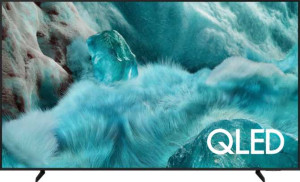
Samsung QN55Q7FAAF 55"
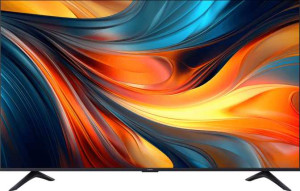
Xiaomi TV A 2026 55"

Samsung QN55Q7FAAF 55" Xiaomi TV A 2026 55"

Overview

Welcome to our in-depth spec comparison between the Samsung QN55Q7FAAF 55″ and the Xiaomi TV A 2026 55″ — two 55-inch 4K televisions that share a surprising amount of common ground yet diverge in meaningful ways. From display technology and HDR format support to connectivity standards and design dimensions, this head-to-head breakdown examines exactly where each TV pulls ahead. Read on to find out which one is the right fit for your living room setup.

Common Features

  • Both TVs have a 4K (UHD) display resolution of 3840 x 2160 px.
  • Both TVs display 1070 million colors with a 10-bit bit depth.
  • Both TVs have a 60Hz refresh rate.
  • HDR10 support is available on both TVs.
  • Dolby Vision support is not available on either TV.
  • HLG support is available on both TVs.
  • Bluetooth is available on both TVs.
  • Both TVs have 3 HDMI ports.
  • Wi-Fi is supported on both TVs, with Wi-Fi 4 (802.11n) and Wi-Fi 5 (802.11ac).
  • Both TVs have 1 USB port and 1 RJ45 port.
  • Miracast support is available on both TVs.
  • Neither TV has an external memory slot.
  • Both TVs have an audio output power of 2 x 10W.
  • Digital Out support is available on both TVs.
  • SRS TheaterSound HD is not available on either TV.
  • Stereo speakers are present on both TVs.
  • Dolby Audio is supported on both TVs.
  • Dolby Virtual support is not available on either TV.
  • Neither TV has a subwoofer.
  • Both TVs support HDMI ARC and HDMI eARC.
  • VESA mount support is available on both TVs.
  • AirPlay is available on both TVs.
  • Both TVs have a built-in smart TV platform.
  • Google Assistant compatibility is available on both TVs.
  • Apple HomeKit and Siri support is not available on either TV.
  • Remote smartphone control is supported on both TVs.
  • Neither TV has a rechargeable remote control.
  • USB recording is supported on both TVs.
  • Both TVs have a standby power consumption of 0.5W.

Main Differences

  • The display technology is QLED, LED-backlit, LCD on the Samsung QN55Q7FAAF 55″ and LED-backlit, LCD on the Xiaomi TV A 2026 55″.
  • The screen size is 54.6″ on the Samsung QN55Q7FAAF 55″ and 55″ on the Xiaomi TV A 2026 55″.
  • The pixel density is 81 ppi on the Samsung QN55Q7FAAF 55″ and 80 ppi on the Xiaomi TV A 2026 55″.
  • HDR10+ support is available on the Samsung QN55Q7FAAF 55″ but not on the Xiaomi TV A 2026 55″.
  • The HDMI version is 2.0 on the Samsung QN55Q7FAAF 55″ and 2.1 on the Xiaomi TV A 2026 55″.
  • The Bluetooth version is 5.3 on the Samsung QN55Q7FAAF 55″ and 5.0 on the Xiaomi TV A 2026 55″.
  • A 3.5 mm audio jack socket is present on the Xiaomi TV A 2026 55″ but not available on the Samsung QN55Q7FAAF 55″.
  • The width is 1234.1 mm on the Samsung QN55Q7FAAF 55″ and 1226 mm on the Xiaomi TV A 2026 55″.
  • The weight is 11100 g on the Samsung QN55Q7FAAF 55″ and 9200 g on the Xiaomi TV A 2026 55″.
  • The thickness is 60.3 mm on the Samsung QN55Q7FAAF 55″ and 76 mm on the Xiaomi TV A 2026 55″.
  • The height is 710.8 mm on the Samsung QN55Q7FAAF 55″ and 711 mm on the Xiaomi TV A 2026 55″.
  • The volume is 52895.056284 cm³ on the Samsung QN55Q7FAAF 55″ and 66248.136 cm³ on the Xiaomi TV A 2026 55″.
  • Alexa compatibility is available on the Samsung QN55Q7FAAF 55″ but not on the Xiaomi TV A 2026 55″.
  • The operating power consumption is 98W on the Samsung QN55Q7FAAF 55″ and 110W on the Xiaomi TV A 2026 55″.
Specs Comparison
Samsung QN55Q7FAAF 55"

Samsung QN55Q7FAAF 55"

Xiaomi TV A 2026 55"

Xiaomi TV A 2026 55"

Display:
display resolution 4K (UHD) 4K (UHD)
Display type QLED, LED-backlit, LCD LED-backlit, LCD
screen size 54.6" 55"
resolution 3840 x 2160 px 3840 x 2160 px
pixel density 81 ppi 80 ppi
display colors 1070 million 1070 million
bit depth 10-bit 10-bit
refresh rate 60Hz 60Hz
supports HDR10
supports HDR10+
supports Dolby Vision
supports HLG
has anti-reflection coating
has an ambient light sensor
maximum horizontal viewing angle 178º 178º
maximum vertical viewing angle 178º 178º

Both the Samsung QN55Q7FAAF and the Xiaomi TV A 2026 share the same fundamental panel resolution — 3840 x 2160 px (4K UHD) — along with identical pixel density (~80–81 ppi), 10-bit color depth, 1070 million colors, and a 60Hz refresh rate. In practice, this means both TVs will render 4K content with comparable sharpness and color volume at this screen size, and neither offers a high-refresh-rate advantage for fast-motion content.

The most meaningful differentiator lies in panel technology and HDR support. The Samsung uses a QLED panel — a quantum dot layer over an LED-backlit LCD — which is designed to produce higher peak brightness and a wider color gamut than a standard LED-backlit LCD like the one in the Xiaomi. Additionally, the Samsung supports HDR10+, a dynamic metadata HDR format that adjusts tone-mapping scene by scene, whereas the Xiaomi is limited to HDR10 (static metadata) and HLG. In real-world viewing, HDR10+ content will look more precisely graded on the Samsung, with better shadow and highlight detail per scene.

All other display characteristics — 178° viewing angles both horizontally and vertically, anti-reflection coating, and ambient light sensor — are identical, offering no differentiation. The edge in this group clearly belongs to the Samsung QN55Q7FAAF, thanks to its QLED panel technology and HDR10+ support, both of which translate to a tangibly richer and more dynamic picture quality, particularly with premium HDR content.
Connectivity:
Has Bluetooth
HDMI version HDMI 2.0 HDMI 2.1
HDMI ports 3 3
supports Wi-Fi
Wi-Fi version Wi-Fi 4 (802.11n), Wi-Fi 5 (802.11ac) Wi-Fi 4 (802.11n), Wi-Fi 5 (802.11ac)
Bluetooth version 5.3 5
USB ports 1 1
RJ45 ports 1 1
supports Miracast
has a socket for a 3.5 mm audio jack
has an external memory slot
has a VGA connector
has a DVI connector

The two TVs share a broadly similar connectivity layout — 3 HDMI ports, 1 USB, 1 RJ45 Ethernet, dual-band Wi-Fi (up to Wi-Fi 5), and Miracast screen mirroring — making them equally capable for typical home theater setups. However, two meaningful differences emerge when you look closer.

On HDMI, the Xiaomi TV A 2026 steps ahead with HDMI 2.1 versus the Samsung's HDMI 2.0. In practice, HDMI 2.1 supports higher bandwidth, enabling features like 4K@120Hz and eARC on compatible devices. Since neither TV's display exceeds 60Hz, the resolution/framerate headroom is moot here — but the eARC support on the Xiaomi is a genuine advantage for users routing audio through an HDMI-connected soundbar. The Samsung counters on the Bluetooth front: its Bluetooth 5.3 is a newer revision than the Xiaomi's Bluetooth 5.0, offering marginally better connection stability and efficiency, which matters for wireless headphones or audio accessories. The Xiaomi also includes a 3.5mm audio jack, a small but practical addition the Samsung omits, useful for directly plugging in headphones without a Bluetooth setup.

Overall, the connectivity edge leans toward the Xiaomi TV A 2026. The HDMI 2.1 port with its eARC capability is the more impactful real-world advantage, particularly for users building out a modern audio system, while the 3.5mm jack adds everyday convenience. The Samsung's newer Bluetooth version is a genuine but comparatively minor counterpoint.

Audio:
audio output power 2 x 10W 2 x 10W
supports Digital Out
has SRS TheaterSound HD
has stereo speakers
has Dolby Audio
supports Dolby Virtual
has a subwoofer
HDMI ARC / eARC HDMI ARC, HDMI eARC HDMI ARC, HDMI eARC

Across every audio specification provided, the Samsung QN55Q7FAAF and the Xiaomi TV A 2026 are a perfect match. Both deliver 2 x 10W stereo output, support Dolby Audio, offer Digital Out, and include both HDMI ARC and eARC — there is not a single differentiating data point in this group.

In real-world terms, 20W total output from a stereo pair is adequate for average room sizes but unlikely to impress in larger spaces or for cinematic content. The shared eARC support is the most practically valuable feature here, as it allows lossless high-quality audio formats to pass through to a compatible soundbar or AV receiver — making an external audio upgrade seamless on either TV. Dolby Audio adds processed surround virtualization to compatible content, though neither TV supports Dolby Virtual or includes a subwoofer, keeping the built-in sound experience at a similar baseline level.

This group is a clear tie. Audio capability provides zero differentiation between these two products; users who prioritize sound quality will want to factor in an external speaker solution regardless of which TV they choose.

Design:
width 1234.1 mm 1226 mm
weight 11100 g 9200 g
thickness 60.3 mm 76 mm
height 710.8 mm 711 mm
volume 52895.056284 cm³ 66248.136 cm³
Supports VESA mount

At this screen size, footprint dimensions are expectedly close — both TVs sit at virtually the same height (~711mm) and within 8mm of each other in width. The more telling numbers are thickness and weight, where the two diverge in opposite directions.

The Samsung QN55Q7FAAF is notably slimmer at 60.3mm deep versus the Xiaomi's 76mm — a difference of nearly 16mm that is clearly visible in person and contributes to a more contemporary, low-profile aesthetic, particularly when wall-mounted. The Xiaomi, however, fights back on handling ease: at 9,200g it is almost 1,900g lighter than the Samsung's 11,100g, which makes a practical difference during installation or repositioning. The volume figures reinforce this split — the Samsung occupies roughly 20% less total space, reflecting its thinner chassis design.

Both TVs support VESA mounting, so neither has a structural advantage for wall installation. On balance, the design edge goes to the Samsung — its significantly slimmer profile is the more impactful characteristic for everyday aesthetics, while the Xiaomi's weight advantage is a one-time convenience during setup rather than an ongoing benefit.

Features:
release date April 2025 August 2025
has AirPlay
has built-in smart TV
compatible with Google Assistant
works with Alexa
works with Siri/Apple HomeKit
supports a remote smartphone
has a rechargeable remote control
supports USB recording
operating power consumption 98W 110W
standby power consumption 0.5W 0.5W
has a search browser
has a sleep timer
has a child lock
warranty period 1 years 1 years
has voice commands

Smart platform capabilities are largely aligned between the two TVs — both offer a built-in smart TV interface, AirPlay, Google Assistant, voice commands, smartphone remote support, USB recording, and standard utility features like a sleep timer and child lock. For most users, this common ground means day-to-day smart TV usability will feel comparable on either set.

The key differentiator is Amazon Alexa support: the Samsung QN55Q7FAAF has it, the Xiaomi TV A 2026 does not. For households already embedded in the Amazon Echo ecosystem, this is a meaningful advantage — it allows the TV to act as a native node in Alexa routines, respond to voice commands through Echo devices, and integrate into smart home automations without workarounds. On the energy side, the Samsung also draws 98W during operation versus the Xiaomi's 110W, a 12W difference that adds up modestly over time for heavy daily viewers, though standby consumption is identical at 0.5W.

The edge in this group belongs to the Samsung. Alexa compatibility is a tangible ecosystem advantage for a significant portion of smart home users, and the lower operating power consumption is a quiet but consistent bonus. Neither TV supports Apple HomeKit or Siri, so Apple-centric households gain nothing from either option here.

Comparison Summary & Verdict

Both the Samsung QN55Q7FAAF 55″ and the Xiaomi TV A 2026 55″ deliver a solid 4K experience with shared fundamentals like 60Hz refresh rate, HDR10, HLG, Dolby Audio, AirPlay, and Google Assistant support. However, key differences help define their ideal audiences. The Samsung stands out with its QLED display panel, HDR10+ support, higher Bluetooth version (5.3), Alexa compatibility, and lower operating power draw at 98W — making it a strong pick for home theater enthusiasts who want richer contrast and broader smart home integration. The Xiaomi, on the other hand, offers HDMI 2.1 connectivity, a handy 3.5mm audio jack, a lighter and more compact build at 9200g, and a lower purchase price in its segment — making it an excellent choice for users who prioritize future-ready ports and a sleeker physical profile.

Samsung QN55Q7FAAF 55
Buy Samsung QN55Q7FAAF 55" if...

Buy the Samsung QN55Q7FAAF 55″ if you want a QLED display with HDR10+ support, Alexa compatibility, and a more efficient power consumption of 98W.

Xiaomi TV A 2026 55
Buy Xiaomi TV A 2026 55" if...

Buy the Xiaomi TV A 2026 55″ if you prioritize HDMI 2.1 ports, a lighter and more compact design, and the convenience of a built-in 3.5mm audio jack.