Samsung QN65LS03FAF 65"
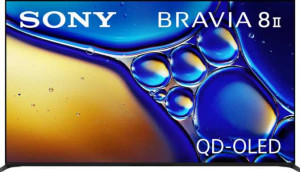
Sony Bravia K-65XR80M2 65"

Samsung QN65LS03FAF 65" Sony Bravia K-65XR80M2 65"

Overview

Welcome to our in-depth comparison of the Samsung QN65LS03FAF 65″ and the Sony Bravia K-65XR80M2 65″ — two premium 65-inch 4K televisions that take fundamentally different approaches to picture technology. While both share a strong connectivity foundation and smart TV features, the key battlegrounds lie in their display technology, HDR format support, audio capabilities, and overall design footprint. Read on to see how every specification stacks up.

Common Features

  • Both TVs have a 4K (UHD) display resolution.
  • Both TVs have a screen size of 64.5″.
  • Both TVs have a resolution of 3840 x 2160 px.
  • Both TVs have a pixel density of 68 ppi.
  • Both TVs support 1070 million display colors.
  • Both TVs have a 10-bit color depth.
  • Both TVs support HDR10.
  • Both TVs support HLG.
  • Both TVs have Bluetooth connectivity, with Bluetooth version 5.3.
  • Both TVs feature HDMI 2.1 ports, with 4 HDMI ports each.
  • Both TVs support Wi-Fi and include an RJ45 ethernet port.
  • Both TVs support Miracast.
  • Neither TV has a 3.5 mm audio jack socket.
  • Both TVs support Dolby Digital, Dolby Digital Plus, Dolby Atmos, and Dolby Audio.
  • Both TVs have stereo speakers.
  • Neither TV supports Dolby Virtual or SRS TheaterSound HD.
  • Both TVs support a VESA mount.
  • Both TVs have AirPlay, a built-in smart TV platform, Google Assistant compatibility, and Alexa support.
  • Neither TV is compatible with Siri or Apple HomeKit.
  • Both TVs support remote smartphone control, have a rechargeable remote control, and support USB recording.

Main Differences

  • The display technology is QLED, LED-backlit LCD on the Samsung QN65LS03FAF 65″ and OLED/AMOLED on the Sony Bravia K-65XR80M2 65″.
  • The refresh rate is 144Hz on the Samsung QN65LS03FAF 65″ and 120Hz on the Sony Bravia K-65XR80M2 65″.
  • HDR10+ support is available on the Samsung QN65LS03FAF 65″ but not on the Sony Bravia K-65XR80M2 65″.
  • Dolby Vision support is present on the Sony Bravia K-65XR80M2 65″ but not available on the Samsung QN65LS03FAF 65″.
  • Wi-Fi support extends to Wi-Fi 4 and Wi-Fi 5 on the Samsung QN65LS03FAF 65″, while the Sony Bravia K-65XR80M2 65″ additionally supports Wi-Fi 6 and Wi-Fi 6E.
  • The Samsung QN65LS03FAF 65″ has 3 USB ports, while the Sony Bravia K-65XR80M2 65″ has 2 USB ports.
  • DTS Surround is available on the Sony Bravia K-65XR80M2 65″ but not on the Samsung QN65LS03FAF 65″.
  • DTS-HD Master Audio is available on the Sony Bravia K-65XR80M2 65″ but not on the Samsung QN65LS03FAF 65″.
  • The width is 1456.8 mm on the Samsung QN65LS03FAF 65″ and 1443 mm on the Sony Bravia K-65XR80M2 65″.
  • The weight is 10342 g on the Samsung QN65LS03FAF 65″ and 22900 g on the Sony Bravia K-65XR80M2 65″.
  • The thickness is 24.9 mm on the Samsung QN65LS03FAF 65″ and 34 mm on the Sony Bravia K-65XR80M2 65″.
  • The height is 831.9 mm on the Samsung QN65LS03FAF 65″ and 830 mm on the Sony Bravia K-65XR80M2 65″.
  • The volume is 30176.606808 cm³ on the Samsung QN65LS03FAF 65″ and 40721.46 cm³ on the Sony Bravia K-65XR80M2 65″.
  • The operating power consumption is 183W on the Samsung QN65LS03FAF 65″ and 397W on the Sony Bravia K-65XR80M2 65″.
Specs Comparison
Samsung QN65LS03FAF 65"

Samsung QN65LS03FAF 65"

Sony Bravia K-65XR80M2 65"

Sony Bravia K-65XR80M2 65"

Display:
display resolution 4K (UHD) 4K (UHD)
Display type QLED, LED-backlit, LCD OLED/AMOLED
screen size 64.5" 64.5"
resolution 3840 x 2160 px 3840 x 2160 px
pixel density 68 ppi 68 ppi
display colors 1070 million 1070 million
bit depth 10-bit 10-bit
refresh rate 144Hz 120Hz
supports HDR10
supports HDR10+
supports Dolby Vision
supports HLG
has anti-reflection coating
has an ambient light sensor
maximum horizontal viewing angle 178º 178º
maximum vertical viewing angle 178º 178º

The most consequential difference in this group is the panel technology. The Samsung QN65LS03FAF uses a QLED LED-backlit LCD panel, while the Sony Bravia K-65XR80M2 uses an OLED panel. In practice, OLED produces true per-pixel lighting — meaning perfect blacks and theoretically infinite contrast — whereas QLED relies on a backlight that, even with local dimming, cannot fully eliminate light bleed in dark scenes. For cinematic or dark-room viewing, OLED has a structural advantage that no spec number can fully capture.

On refresh rate, the Samsung holds a clear edge at 144Hz versus the Sony's 120Hz. For fast-motion content — competitive gaming or high-frame-rate sports — 144Hz provides a measurably smoother experience. HDR ecosystem support splits the two products along studio allegiance lines: the Samsung backs HDR10+ (preferred by Amazon and Samsung content), while the Sony backs Dolby Vision (the dominant format on Netflix, Apple TV+, and Disney+). Neither format is universally superior in encoding quality, but Dolby Vision's wider streaming platform adoption gives the Sony a practical edge for most subscription-service viewers.

All remaining specs are identical: both deliver 4K at 68 ppi, 10-bit color depth, 1.07 billion colors, HLG support, anti-reflection coating, an ambient light sensor, and full 178° viewing angles in both axes. Overall, the Sony has a structural display-quality advantage through OLED and broader HDR streaming coverage, while the Samsung counters with a higher refresh rate that matters most in gaming contexts.

Connectivity:
Has Bluetooth
HDMI version HDMI 2.1 HDMI 2.1
HDMI ports 4 4
supports Wi-Fi
Wi-Fi version Wi-Fi 4 (802.11n), Wi-Fi 5 (802.11ac) Wi-Fi 4 (802.11n), Wi-Fi 5 (802.11ac), Wi-Fi 6 (802.11ax), Wi-Fi 6E (802.11ax)
Bluetooth version 5.3 5.3
USB ports 3 2
RJ45 ports 1 1
supports Miracast
has a socket for a 3.5 mm audio jack
has an external memory slot
has a VGA connector
has a DVI connector

Wireless connectivity is where these two TVs diverge most meaningfully. The Sony XR80M2 supports Wi-Fi 6 and Wi-Fi 6E in addition to the older Wi-Fi 4/5 standards, while the Samsung LS03FAF tops out at Wi-Fi 5. For most households streaming at 4K, Wi-Fi 5 is technically sufficient — but Wi-Fi 6/6E delivers lower latency, better performance in congested multi-device environments, and future-proofing for routers already on the newer standard. If your home network has already upgraded to Wi-Fi 6 or 6E hardware, the Sony will take full advantage of it; the Samsung will not.

Wired and physical connectivity tells the opposite story. The Samsung offers 3 USB ports versus the Sony's 2 — a modest but real difference for users who simultaneously connect storage drives, keyboards, or other peripherals without a hub. Everything else at the port level is evenly matched: both carry 4 HDMI 2.1 ports (enough bandwidth for 4K@120Hz or 8K signals on every input), a single RJ45 ethernet port, and Miracast wireless display support. Bluetooth 5.3 is identical on both.

On balance, the Sony holds the connectivity edge thanks to its superior Wi-Fi stack, which is the more future-relevant differentiator. The Samsung's extra USB port is a minor practical convenience but unlikely to be a deciding factor for most buyers. Users on modern Wi-Fi 6/6E networks will get a tangibly better wireless experience from the Sony.

Audio:
supports Dolby Digital
has DTS Surround
supports Digital Out
supports Dolby Digital Plus
has SRS TheaterSound HD
has stereo speakers
has Dolby Atmos
has DTS-HD Master Audio
has Dolby Audio
supports Dolby Virtual
has a subwoofer
HDMI ARC / eARC HDMI ARC, HDMI eARC HDMI ARC, HDMI eARC

For the vast majority of audio features, these two TVs are identical — both carry stereo speakers, a subwoofer, Dolby Atmos, Dolby Digital Plus, Dolby Audio, Digital Out, and full HDMI ARC/eARC support. eARC in particular is worth noting for both: it carries enough bandwidth to pass lossless audio formats to a connected soundbar, making it the right choice for anyone planning an external audio setup.

The one area where they part ways is DTS support. The Sony XR80M2 decodes both DTS Surround and DTS-HD Master Audio, while the Samsung LS03FAF supports neither. DTS is the competing surround-sound ecosystem to Dolby, and DTS-HD Master Audio specifically is a lossless format found on many Blu-ray discs. For users who play physical media or have a library of DTS-encoded content, the Samsung's omission means that content will either be downmixed or require the TV to pass the raw bitstream to an external receiver capable of decoding it — an extra dependency the Sony avoids entirely.

The Sony takes a clear edge here. For casual streaming viewers the difference is unlikely to surface day-to-day, but for home-theater enthusiasts with Blu-ray collections or DTS-heavy content libraries, the Sony's native DTS-HD Master Audio decoding is a meaningful practical advantage the Samsung cannot match.

Design:
width 1456.8 mm 1443 mm
weight 10342 g 22900 g
thickness 24.9 mm 34 mm
height 831.9 mm 830 mm
volume 30176.606808 cm³ 40721.46 cm³
Supports VESA mount

At 65 inches, both TVs occupy nearly the same wall footprint — width and height differ by less than 15 mm in either dimension — so placement and furniture compatibility will be virtually identical. What diverges dramatically is how they handle the third dimension. The Samsung LS03FAF measures just 24.9 mm thick compared to the Sony's 34 mm, and that 37% difference in depth is clearly visible when wall-mounted, with the Samsung sitting considerably flatter against the surface.

Weight is the most striking gap in this group. The Samsung comes in at 10,342 g (roughly 10.3 kg), while the Sony XR80M2 weighs 22,900 g — more than twice as heavy. This has direct practical consequences: wall-mount installations require a bracket and wall anchoring rated for the Sony's significantly higher load, and single-person installation is considerably more difficult. For stand-mounted setups, the extra mass also means more care is needed to ensure the furniture can bear the weight safely.

Both TVs support VESA mounting, so neither has an advantage in terms of compatibility with standard brackets. Overall, the Samsung holds a clear design edge — its dramatically lower weight and slimmer profile make it easier to install, safer to handle, and more visually unobtrusive when wall-mounted. The Sony's mass is a real logistical consideration that buyers should factor into their installation plans.

Features:
release date March 2025 April 2025
has AirPlay
has built-in smart TV
compatible with Google Assistant
works with Alexa
works with Siri/Apple HomeKit
supports a remote smartphone
has a rechargeable remote control
supports USB recording
operating power consumption 183W 397W
standby power consumption 0.5W 0.5W
has a search browser
has a sleep timer
has a child lock
warranty period 1 years 1 years
has voice commands

From a smart features standpoint, these two TVs are essentially identical. Both offer built-in smart TV platforms, AirPlay, Google Assistant, Alexa, smartphone remote support, rechargeable remote controls, USB recording, voice commands, and a matching one-year warranty. Neither supports Apple HomeKit/Siri, so that omission applies equally to both buyers.

The only meaningful differentiator in this group is operating power consumption, and the gap is substantial. The Samsung LS03FAF draws 183W under normal operation, while the Sony XR80M2 draws 397W — more than twice as much. For context, running the Sony for four hours a day would consume roughly double the electricity of the Samsung over the same period, which accumulates into a noticeable difference on annual energy bills. Standby consumption is identical at 0.5W for both, so the gap only matters during active use.

The Samsung holds a clear edge in this group solely on the basis of its far lower power draw. Since every smart feature, voice assistant integration, and usability convenience is matched spec-for-spec by both TVs, the Samsung is simply the more energy-efficient choice — a relevant consideration for buyers mindful of long-term running costs.

Comparison Summary & Verdict

Both TVs deliver a compelling 4K experience, but they are built for different types of buyers. The Samsung QN65LS03FAF 65″ stands out with its 144Hz refresh rate, HDR10+ support, and significantly lighter, slimmer design — making it an excellent choice for gamers and those who value a sleek, low-profile installation. It also consumes far less power at 183W. The Sony Bravia K-65XR80M2 65″, on the other hand, leverages its OLED/AMOLED panel to deliver the deep blacks and contrast that cinephiles demand, complemented by Dolby Vision, DTS Surround, DTS-HD Master Audio, and superior Wi-Fi 6E connectivity. If picture quality for movies and premium audio fidelity are your priorities, the Sony is the stronger pick. If you want a faster display, a lighter set, and lower running costs, the Samsung is the smarter buy.

Samsung QN65LS03FAF 65
Buy Samsung QN65LS03FAF 65" if...

Buy the Samsung QN65LS03FAF 65″ if you want a higher 144Hz refresh rate, a significantly lighter and slimmer design, HDR10+ support, and lower power consumption.

Sony Bravia K-65XR80M2 65
Buy Sony Bravia K-65XR80M2 65" if...

Buy the Sony Bravia K-65XR80M2 65″ if you prioritize an OLED panel for superior contrast, Dolby Vision, DTS audio formats, and future-ready Wi-Fi 6E connectivity.