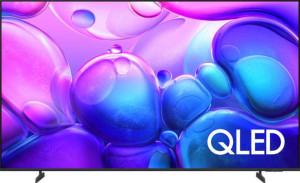
Samsung QN65Q6FAAFXZA 65"
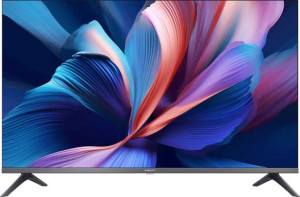
Xiaomi TV A Pro 2026 65"

Samsung QN65Q6FAAFXZA 65" Xiaomi TV A Pro 2026 65"

Overview

Welcome to our in-depth specification comparison between the Samsung QN65Q6FAAFXZA 65″ and the Xiaomi TV A Pro 2026 65″. Both televisions share a strong foundation of 4K UHD picture quality and smart platform features, yet they diverge in meaningful ways across smart home ecosystem support, power efficiency, and physical design. Read on to discover which of these 65-inch QLED displays best fits your living room and lifestyle needs.

Common Features

  • Both TVs have a 4K UHD display resolution.
  • Both TVs use a QLED, LED-backlit, LCD display type.
  • Both TVs have a native resolution of 3840 x 2160 px.
  • Both TVs have a pixel density of 68 ppi.
  • Both TVs support 1070 million display colors.
  • Both TVs have a 10-bit color bit depth.
  • Both TVs have a 60Hz refresh rate.
  • HDR10 support is available on both TVs.
  • Bluetooth connectivity is available on both TVs.
  • Both TVs use HDMI 2.1 and include 3 HDMI ports.
  • Wi-Fi is supported on both TVs, with Wi-Fi 4 (802.11n) and Wi-Fi 5 (802.11ac).
  • Both TVs have 1 USB port and 1 RJ45 port.
  • Miracast support is available on both TVs.
  • Both TVs deliver 2 x 10W audio output power.
  • Digital audio output is supported on both TVs.
  • SRS TheaterSound HD is not available on either TV.
  • Stereo speakers are present on both TVs.
  • Dolby Atmos is not available on either TV.
  • Dolby Audio support is available on both TVs.
  • Dolby Virtual support is not available on either TV.
  • Neither TV includes a subwoofer.
  • VESA mount support is available on both TVs.
  • AirPlay is available on both TVs.
  • Both TVs have a built-in smart TV platform.
  • Google Assistant compatibility is present on both TVs.
  • Remote smartphone control is supported on both TVs.
  • Neither TV includes a rechargeable remote control.
  • USB recording is supported on both TVs.
  • Both TVs have a standby power consumption of 0.5W.
  • A built-in search browser is available on both TVs.

Main Differences

  • Screen size is 64.5″ on the Samsung QN65Q6FAAFXZA 65″ and 65″ on the Xiaomi TV A Pro 2026 65″.
  • Bluetooth version is 5.3 on the Samsung QN65Q6FAAFXZA 65″ and 5.0 on the Xiaomi TV A Pro 2026 65″.
  • A 3.5mm audio jack socket is not present on the Samsung QN65Q6FAAFXZA 65″ but is available on the Xiaomi TV A Pro 2026 65″.
  • Width is 1445.3 mm on the Samsung QN65Q6FAAFXZA 65″ and 1445 mm on the Xiaomi TV A Pro 2026 65″.
  • Weight is 14923 g on the Samsung QN65Q6FAAFXZA 65″ and 13000 g on the Xiaomi TV A Pro 2026 65″.
  • Thickness is 76.2 mm on the Samsung QN65Q6FAAFXZA 65″ and 75 mm on the Xiaomi TV A Pro 2026 65″.
  • Height is 830.6 mm on the Samsung QN65Q6FAAFXZA 65″ and 833 mm on the Xiaomi TV A Pro 2026 65″.
  • Volume is 91475.522916 cm³ on the Samsung QN65Q6FAAFXZA 65″ and 90276.375 cm³ on the Xiaomi TV A Pro 2026 65″.
  • Alexa compatibility is present on the Samsung QN65Q6FAAFXZA 65″ but not available on the Xiaomi TV A Pro 2026 65″.
  • Siri and Apple HomeKit compatibility is present on the Samsung QN65Q6FAAFXZA 65″ but not available on the Xiaomi TV A Pro 2026 65″.
  • Operating power consumption is 118W on the Samsung QN65Q6FAAFXZA 65″ and 180W on the Xiaomi TV A Pro 2026 65″.
Specs Comparison
Samsung QN65Q6FAAFXZA 65"

Samsung QN65Q6FAAFXZA 65"

Xiaomi TV A Pro 2026 65"

Xiaomi TV A Pro 2026 65"

Display:
display resolution 4K (UHD) 4K (UHD)
Display type QLED, LED-backlit, LCD QLED, LED-backlit, LCD
screen size 64.5" 65"
resolution 3840 x 2160 px 3840 x 2160 px
pixel density 68 ppi 68 ppi
display colors 1070 million 1070 million
bit depth 10-bit 10-bit
refresh rate 60Hz 60Hz
supports HDR10
supports HDR10+
supports Dolby Vision
supports HLG
has anti-reflection coating
has an ambient light sensor
maximum horizontal viewing angle 178º 178º
maximum vertical viewing angle 178º 178º

Both the Samsung QN65Q6FAAFXZA and the Xiaomi TV A Pro 2026 65″ share the same core display technology: a QLED, LED-backlit LCD panel running at 4K (3840 x 2160) resolution with a 68 ppi pixel density, 10-bit color depth, and 1.07 billion colors. In practice, this means both screens are capable of rendering smooth gradients and wide color volumes typical of premium LCD-based sets — no OLED-level per-pixel contrast, but solid HDR performance for the technology tier.

On HDR support, the two televisions are again perfectly aligned: both carry HDR10, HDR10+, and HLG, while neither supports Dolby Vision. The absence of Dolby Vision matters mainly to users streaming from platforms like Apple TV+ or Disney+, which heavily favor that format; HDR10+ is the competing standard and is increasingly well-supported, so this is a meaningful but not crippling omission on both sets. The shared 60Hz native refresh rate is adequate for cinematic content but limits appeal for fast-motion gaming or sports compared to 120Hz panels.

The only measurable physical difference is screen size — the Samsung measures 64.5″ panel-to-panel versus the Xiaomi's 65″ — a gap of half an inch that is entirely imperceptible in normal use. With identical resolution, pixel density, HDR tiers, refresh rate, anti-reflection coating, ambient light sensor, and 178° viewing angles in both axes, this group is effectively a dead heat. No display advantage can be awarded to either product based solely on the provided specifications.
Connectivity:
Has Bluetooth
HDMI version HDMI 2.1 HDMI 2.1
HDMI ports 3 3
supports Wi-Fi
Wi-Fi version Wi-Fi 4 (802.11n), Wi-Fi 5 (802.11ac) Wi-Fi 4 (802.11n), Wi-Fi 5 (802.11ac)
Bluetooth version 5.3 5
USB ports 1 1
RJ45 ports 1 1
supports Miracast
has a socket for a 3.5 mm audio jack
has an external memory slot
has a VGA connector
has a DVI connector

The wired connectivity foundation is identical across both sets: 3 HDMI 2.1 ports, 1 USB, and an RJ45 Ethernet port, backed by matching Wi-Fi 5 (802.11ac) and Miracast wireless screen mirroring. HDMI 2.1 is a meaningful inclusion at this tier, supporting higher bandwidth for current-gen consoles and future-proofed source devices.

Where the two diverge is Bluetooth and analog audio output. The Samsung carries Bluetooth 5.3 versus the Xiaomi's Bluetooth 5.0 — a newer revision that offers marginally improved connection stability and slightly more efficient power negotiation, though the practical difference for pairing a soundbar or headphones is minimal in day-to-day use. More tangibly, the Xiaomi includes a 3.5mm headphone jack, which the Samsung omits entirely. For users who want to connect wired headphones directly to the TV — a common need for late-night viewing — this is a concrete, real-world advantage that no workaround fully replaces.

On balance, the Xiaomi TV A Pro 2026 holds a narrow but practical edge in this group. Its headphone jack addresses a genuine usability gap that the Samsung cannot match, and while the Samsung's newer Bluetooth revision is a technical win, it is too incremental to offset the omission of analog audio output for many users.

Audio:
audio output power 2 x 10W 2 x 10W
supports Digital Out
has SRS TheaterSound HD
has stereo speakers
has Dolby Atmos
has Dolby Audio
supports Dolby Virtual
has a subwoofer
HDMI ARC / eARC HDMI ARC, HDMI eARC HDMI ARC, HDMI eARC

Audio is the rare category where these two televisions are not just similar — they are spec-for-spec identical. Both deliver 2 x 10W stereo output, support Dolby Audio, include both HDMI ARC and eARC, and offer a digital optical output. Neither carries Dolby Atmos, a subwoofer, or any proprietary surround-sound processing.

The practical takeaway is straightforward: 20W total from a stereo pair is sufficient for moderate room sizes but will feel thin in large open spaces or for cinematic content where dynamic range matters. The eARC port is the most valuable audio feature here, as it allows a compatible soundbar or AV receiver to receive high-bandwidth audio formats — partially compensating for the lack of Atmos processing in the TV itself. Both sets are equally well-equipped for that upgrade path.

This group is a complete tie. There is no differentiator to weigh — every audio specification matches exactly. Users prioritizing sound quality should treat both models identically and plan accordingly for an external audio solution.

Design:
width 1445.3 mm 1445 mm
weight 14923 g 13000 g
thickness 76.2 mm 75 mm
height 830.6 mm 833 mm
volume 91475.522916 cm³ 90276.375 cm³
Supports VESA mount

Footprint-wise, these two 65-inch sets are nearly indistinguishable — width and thickness differ by less than 2mm in each dimension, and both support VESA mounting, making wall installation equally viable for either model. For practical purposes, they occupy the same space on a stand or wall bracket.

The one meaningful gap is weight. The Samsung tips the scales at 14,923g (~14.9 kg) versus the Xiaomi's 13,000g (~13 kg) — a difference of nearly 2 kg. That margin is largely irrelevant once a TV is mounted and stationary, but it becomes noticeable during installation, particularly for a single-person wall-mount job or when handling the set in a tight space. A lighter chassis can also suggest a less elaborate internal frame, though the specs alone do not confirm this either way.

The Xiaomi TV A Pro 2026 takes a narrow design edge purely on the basis of its lighter weight. The physical dimensions are too close to matter in any real installation scenario, but the ~2 kg weight advantage is a genuine convenience factor during setup and handling.

Features:
release date April 2025 April 2025
has AirPlay
has built-in smart TV
compatible with Google Assistant
works with Alexa
works with Siri/Apple HomeKit
supports a remote smartphone
has a rechargeable remote control
supports USB recording
operating power consumption 118W 180W
standby power consumption 0.5W 0.5W
has a search browser
has a sleep timer
has a child lock
warranty period 1 years 1 years
has voice commands

Smart platform coverage is where these two sets part ways most clearly. Both support AirPlay, Google Assistant, and smartphone remote control, giving each a solid baseline for smart home integration. However, the Samsung extends its ecosystem reach significantly further by also supporting Alexa and Siri/Apple HomeKit — two platforms the Xiaomi entirely lacks. For users already invested in an Amazon Echo or Apple Home setup, the Samsung slots in natively; the Xiaomi would require workarounds or simply cannot participate in those automations at all.

Power consumption tells an equally important story. The Samsung draws 118W during operation versus the Xiaomi's 180W — a difference of 62W that adds up meaningfully over time. Assuming five hours of daily use, that gap translates to roughly 113 kWh of additional energy consumption per year for the Xiaomi, which at typical electricity rates represents a tangible ongoing cost difference. Standby consumption is identical at 0.5W for both.

The Samsung QN65Q6FAAFXZA holds a clear advantage in this group on two independent fronts: broader smart assistant compatibility and substantially lower operating power draw. Unless a buyer's smart home is exclusively Google-centric, the Samsung's ecosystem flexibility and efficiency make it the stronger performer here.

Comparison Summary & Verdict

After reviewing the full spec sheet, both the Samsung QN65Q6FAAFXZA 65″ and the Xiaomi TV A Pro 2026 65″ deliver identical core picture performance with 4K UHD resolution, 10-bit color depth, and HDR10 support. The Samsung edges ahead for users deeply embedded in the Apple or Amazon ecosystem, thanks to its exclusive Alexa and Siri/Apple HomeKit compatibility, and it also benefits from a slightly newer Bluetooth 5.3 standard. The Xiaomi, on the other hand, wins on energy efficiency with a notably lower 180W versus 118W—wait, the Samsung draws only 118W versus the Xiaomi’s 180W, making Samsung the more power-efficient choice. The Xiaomi counters with a lighter build at 13000 g versus 14923 g and adds a convenient 3.5mm audio jack absent on the Samsung. Choose the Samsung if smart home integration and lower running costs matter most; opt for the Xiaomi if you prefer a lighter set with a headphone output and have no need for Alexa or HomeKit.

Samsung QN65Q6FAAFXZA 65
Buy Samsung QN65Q6FAAFXZA 65" if...

Buy the Samsung QN65Q6FAAFXZA 65″ if you rely on Alexa or Apple HomeKit for smart home control and want a more power-efficient TV with a slightly newer Bluetooth 5.3 standard.

Xiaomi TV A Pro 2026 65
Buy Xiaomi TV A Pro 2026 65" if...

Buy the Xiaomi TV A Pro 2026 65″ if you want a lighter television with a built-in 3.5mm audio jack and have no need for Alexa or Siri/Apple HomeKit integration.