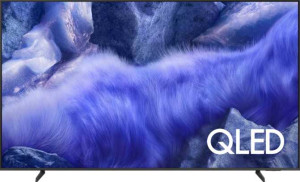
Samsung QN75QEF1AF 75"
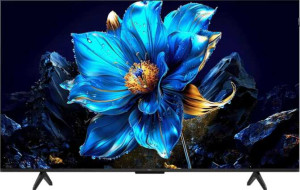
TCL 85P7K 85"

Samsung QN75QEF1AF 75" TCL 85P7K 85"

Overview

Welcome to our in-depth spec comparison between the Samsung QN75QEF1AF 75″ and the TCL 85P7K 85″. Both televisions bring 4K QLED picture quality and a rich smart TV feature set to the table, but they diverge in some meaningful ways. From screen size and pixel density to audio capabilities and connectivity options, this head-to-head breakdown will help you determine which of these two sets best fits your living room and viewing habits.

Common Features

  • Both TVs have a 4K (UHD) display resolution of 3840 x 2160 px.
  • Both TVs display 1070 million colors with a 10-bit bit depth.
  • Both TVs have a native refresh rate of 60Hz.
  • HDR10 support is available on both products.
  • HDR10+ support is available on both products.
  • HLG support is available on both products.
  • Bluetooth connectivity is available on both products.
  • Both TVs feature HDMI 2.1 ports, with 3 HDMI ports each.
  • Wi-Fi support is available on both products, with Wi-Fi 4 (802.11n) and Wi-Fi 5 (802.11ac).
  • Both TVs include 1 RJ45 (Ethernet) port.
  • Miracast support is available on both products.
  • Neither TV has an external memory slot.
  • Digital audio output is supported on both products.
  • SRS TheaterSound HD is not available on either product.
  • Both TVs include stereo speakers.
  • Both TVs support VESA mounting.
  • AirPlay is available on both products.
  • A built-in smart TV platform is present on both products.
  • Google Assistant compatibility is available on both products.
  • Alexa compatibility is available on both products.
  • Neither TV is compatible with Siri or Apple HomeKit.
  • Remote smartphone control is supported on both products.
  • Neither TV includes a rechargeable remote control.
  • Both TVs have a standby power consumption of 0.5W.

Main Differences

  • The screen size is 74.5″ on Samsung QN75QEF1AF 75″ and 84.6″ on TCL 85P7K 85″.
  • The pixel density is 59 ppi on Samsung QN75QEF1AF 75″ and 52 ppi on TCL 85P7K 85″.
  • Dolby Vision support is present on TCL 85P7K 85″ but not available on Samsung QN75QEF1AF 75″.
  • The Bluetooth version is 5.3 on Samsung QN75QEF1AF 75″ and 5.4 on TCL 85P7K 85″.
  • The number of USB ports is 1 on Samsung QN75QEF1AF 75″ and 2 on TCL 85P7K 85″.
  • A 3.5mm audio jack socket is present on TCL 85P7K 85″ but not available on Samsung QN75QEF1AF 75″.
  • A built-in subwoofer is present on TCL 85P7K 85″ but not included on Samsung QN75QEF1AF 75″.
  • The width is 1676.4 mm on Samsung QN75QEF1AF 75″ and 1889.6 mm on TCL 85P7K 85″.
  • The height is 962.7 mm on Samsung QN75QEF1AF 75″ and 1086 mm on TCL 85P7K 85″.
  • The thickness is 60.9 mm on Samsung QN75QEF1AF 75″ and 63 mm on TCL 85P7K 85″.
  • The weight is 25796 g on Samsung QN75QEF1AF 75″ and 31000 g on TCL 85P7K 85″.
  • The volume is 98284.70 cm³ on Samsung QN75QEF1AF 75″ and 129282.65 cm³ on TCL 85P7K 85″.
  • The maximum operating temperature is 40°C on Samsung QN75QEF1AF 75″ and 35°C on TCL 85P7K 85″.
  • The lowest potential operating temperature is 10°C on Samsung QN75QEF1AF 75″ and 5°C on TCL 85P7K 85″.
  • USB recording is supported on Samsung QN75QEF1AF 75″ but not available on TCL 85P7K 85″.
Specs Comparison
Samsung QN75QEF1AF 75"

Samsung QN75QEF1AF 75"

TCL 85P7K 85"

TCL 85P7K 85"

Display:
display resolution 4K (UHD) 4K (UHD)
Display type QLED, LCD, LED-backlit QLED, LED-backlit, LCD
screen size 74.5" 84.6"
resolution 3840 x 2160 px 3840 x 2160 px
pixel density 59 ppi 52 ppi
display colors 1070 million 1070 million
bit depth 10-bit 10-bit
refresh rate 60Hz 60Hz
supports HDR10
supports HDR10+
supports Dolby Vision
supports HLG
has anti-reflection coating
has an ambient light sensor
maximum horizontal viewing angle 178º 178º
maximum vertical viewing angle 178º 178º

Both the Samsung QN75QEF1AF and the TCL 85P7K share a strong display foundation: identical 4K (3840 x 2160) resolution, the same QLED, LED-backlit LCD panel technology, 10-bit color depth, 1070 million displayable colors, and a 60Hz native refresh rate. In practice, this means both TVs deliver equivalent motion handling at the panel level, and both are capable of rich, wide-gamut color reproduction suitable for HDR content.

The most meaningful differentiator in this group is HDR format support. Both sets cover HDR10, HDR10+, and HLG, but only the TCL 85P7K adds Dolby Vision. For streaming-heavy users on platforms like Netflix or Apple TV+, where Dolby Vision is the dominant premium HDR format, this is a tangible real-world advantage — the TCL will display that content with its intended dynamic tone mapping, while the Samsung will fall back to a lesser HDR tier. The second notable split is screen size vs. pixel density: the Samsung's 74.5″ panel resolves to 59 ppi, while the TCL's larger 84.6″ screen drops to 52 ppi. At typical living-room viewing distances neither difference is critically visible, but up close the Samsung will appear slightly sharper.

Overall, the TCL 85P7K holds a clear edge in this display group. The addition of Dolby Vision is a meaningful practical advantage for modern streaming content, and the significantly larger screen size compounds the value — making the ppi trade-off an acceptable compromise for most viewers. The Samsung's slight sharpness lead and equal HDR10/HDR10+ support keep it competitive, but the missing Dolby Vision support is the deciding differentiator here.
Connectivity:
Has Bluetooth
HDMI version HDMI 2.1 HDMI 2.1
HDMI ports 3 3
supports Wi-Fi
Wi-Fi version Wi-Fi 4 (802.11n), Wi-Fi 5 (802.11ac) Wi-Fi 4 (802.11n), Wi-Fi 5 (802.11ac)
Bluetooth version 5.3 5.4
USB ports 1 2
RJ45 ports 1 1
supports Miracast
has a socket for a 3.5 mm audio jack
has an external memory slot
has a VGA connector
has a DVI connector

On the wired side, the two TVs are nearly identical: both offer 3 HDMI 2.1 ports, a single RJ45 ethernet port, and the same dual-band Wi-Fi support (Wi-Fi 4 and Wi-Fi 5). HDMI 2.1 is a meaningful shared strength — it ensures full bandwidth for 4K signals and is forward-compatible with current gaming consoles and streaming devices. The matched Wi-Fi 5 ceiling means wireless streaming performance is equivalent between the two.

The differences, while not dramatic, consistently favor the TCL 85P7K. It carries 2 USB ports versus the Samsung's single port — a practical win for users who want to connect a USB drive while keeping a second port free for peripherals. The TCL also includes a 3.5mm audio jack, which the Samsung omits entirely; this matters for users who prefer wired headphones or need a direct analog audio output without relying on optical or Bluetooth. On the wireless side, the TCL edges ahead with Bluetooth 5.4 versus the Samsung's 5.3 — the newer version brings modest improvements in connection efficiency and coexistence with other wireless devices, though the real-world gap is minor.

The TCL 85P7K takes a narrow but consistent edge in connectivity. No single difference is a dealbreaker, but the extra USB port and the presence of a headphone jack add genuine flexibility that the Samsung simply does not offer in this group.

Audio:
supports Digital Out
has SRS TheaterSound HD
has stereo speakers
has a subwoofer
HDMI ARC / eARC HDMI ARC, HDMI eARC HDMI eARC, HDMI ARC

For the most part, audio capabilities here are matched: both TVs feature stereo speakers, digital audio output, and identical HDMI ARC and eARC support. The eARC port is worth noting as a shared strength — it carries enough bandwidth for lossless audio formats to pass through to a soundbar or AV receiver, making either TV a solid hub for an external audio setup.

The one meaningful split is the TCL 85P7K's built-in subwoofer, which the Samsung QN75QEF1AF lacks. A dedicated subwoofer handles low-frequency reproduction that stereo drivers alone typically struggle with — the result is fuller bass in movies, music, and action content without requiring an external speaker system. For users who plan to run the TV's built-in audio rather than pairing it with a soundbar, this is a tangible real-world advantage.

The TCL holds a clear edge in this group purely on the strength of that subwoofer. Users who intend to invest in a separate audio system will find both TVs equally capable as a signal passthrough, but for out-of-the-box sound quality, the TCL's hardware gives it a structural advantage the Samsung cannot match on specs alone.

Design:
width 1676.4 mm 1889.6 mm
weight 25796 g 31000 g
thickness 60.9 mm 63 mm
height 962.7 mm 1086 mm
volume 98284.700052 cm³ 129282.6528 cm³
Supports VESA mount
maximum operating temperature 40 °C 35 °C
lowest potential operating temperature 10 °C 5 °C

Size differences here are substantial and deliberate — the TCL 85P7K is a physically larger TV in every dimension, weighing in at 31 kg versus the Samsung's 25.8 kg, and occupying a noticeably bigger footprint at 1889.6 mm wide compared to 1676.4 mm. This is expected given the 10-inch screen size gap, but the practical implication is real: wall mounting or repositioning the TCL is a two-person job by any measure, and buyers should verify their wall studs, mount rating, and cabinet or stand dimensions before purchasing. Both TVs support VESA mounting, so wall installation is an option for either.

A less obvious but worth-noting difference lies in the operating temperature range. The Samsung tolerates up to 40 °C and operates as low as 10 °C, while the TCL caps at 35 °C on the high end but extends down to 5 °C. For most climate-controlled living rooms this is irrelevant, but for installations in garages, sunrooms, or warmer climates without air conditioning, the Samsung's higher heat tolerance gives it a meaningful edge in placement flexibility.

Neither TV has a clear overall design winner — the choice depends entirely on context. The Samsung QN75QEF1AF is easier to handle and install, and more tolerant of warm environments. The TCL's larger physical presence is simply the trade-off of its bigger screen. Buyers with constrained spaces or challenging room temperatures should factor the Samsung's dimensions and thermal specs into their decision.

Features:
release date May 2025 March 2025
has AirPlay
has built-in smart TV
compatible with Google Assistant
works with Alexa
works with Siri/Apple HomeKit
supports a remote smartphone
has a rechargeable remote control
supports USB recording
standby power consumption 0.5W 0.5W
has a search browser
has a sleep timer
has a child lock
has voice commands

Across the smart feature landscape, these two TVs are remarkably well-matched. Both carry built-in smart TV platforms, AirPlay, Google Assistant, Alexa, smartphone remote support, voice commands, and a matching 0.5W standby power draw. Neither supports Apple HomeKit or Siri, so users deep in the Apple ecosystem will find the same limitation on both sets. For most buyers, the day-to-day smart TV experience will feel functionally equivalent.

The only differentiator in this group is USB recording, supported by the Samsung QN75QEF1AF but absent on the TCL 85P7K. This feature allows users to connect a USB storage device and record live broadcast content directly — a genuinely useful capability for cord-cutters relying on an antenna who want DVR-like functionality without a separate device. It is a niche but real advantage for the right user.

This group is essentially a near-tie with a narrow Samsung edge. For the majority of users, the feature sets are indistinguishable in practice. However, for antenna-based viewers who value on-TV recording, the Samsung's USB recording support is a concrete functional advantage the TCL cannot replicate.

Comparison Summary & Verdict

After examining every specification, it is clear that both TVs share a strong foundation: 4K QLED displays, HDR10 and HDR10+ support, Wi-Fi 5, HDMI 2.1, and a full smart platform with Google Assistant and Alexa. However, their differences point them toward distinct audiences. The Samsung QN75QEF1AF 75″ wins on pixel density (59 ppi vs. 52 ppi), operates reliably at higher temperatures, and supports USB recording — making it the sharper, more versatile pick for a moderately sized room. The TCL 85P7K 85″ counters with a larger 84.6-inch screen, Dolby Vision support, a built-in subwoofer, an extra USB port, a 3.5mm audio jack, and a newer Bluetooth 5.4 radio, making it the superior choice for a dedicated home cinema setup where immersive scale and richer out-of-the-box audio matter most.

Samsung QN75QEF1AF 75
Buy Samsung QN75QEF1AF 75" if...

Buy the Samsung QN75QEF1AF 75″ if you want a sharper picture in a smaller space, need USB recording functionality, or require a TV that handles higher ambient operating temperatures.

TCL 85P7K 85
Buy TCL 85P7K 85" if...

Buy the TCL 85P7K 85″ if you want a larger 85-inch cinematic screen with Dolby Vision support, built-in subwoofer audio, and more flexible connectivity including an extra USB port and a 3.5mm audio jack.