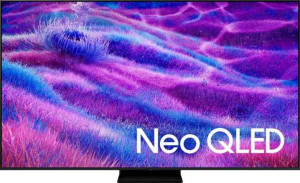
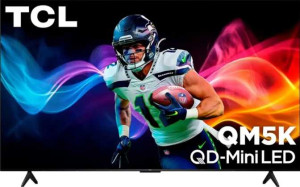
At their core, both the Samsung QN75QN80FAF and the TCL 75QM5K share an identical display foundation: the same 75″ QLED Mini-LED LCD panel with a 3840 x 2160 resolution, 59 ppi pixel density, 10-bit color depth, 1.07 billion colors, a 144Hz refresh rate, and identical 178° viewing angles in both directions. Both also include anti-reflection coatings and ambient light sensors, making their out-of-the-box panel specs effectively a draw.
The two meaningful differentiators lie in HDR format support and adaptive sync capabilities. On HDR, the TCL gains an edge by supporting Dolby Vision in addition to HDR10, HDR10+, and HLG — a format the Samsung lacks entirely. Dolby Vision delivers dynamic, scene-by-scene metadata that is widely used by streaming platforms like Netflix and Apple TV+, so its absence on the Samsung is a real-world limitation for streaming-heavy users. On the gaming side, however, the Samsung fights back: it supports AMD FreeSync Premium Pro (which includes both tear-free gaming and HDR certification for variable refresh rate content), while the TCL is limited to base-level AMD FreeSync only. This gives the Samsung a tangible advantage for PC gamers who want the smoothest, lowest-latency experience.
In summary, neither TV dominates outright in the display category — the advantage depends on use case. The TCL 75QM5K has the edge for streaming and media consumption thanks to Dolby Vision, while the Samsung QN75QN80FAF is the stronger choice for gaming thanks to its superior FreeSync Premium Pro implementation.