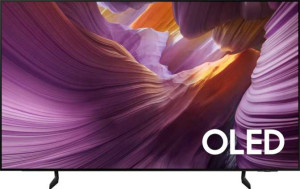
The most fundamental difference between these two TVs lies in their panel technology. The QN83S85FAE uses an OLED/AMOLED display, which means each pixel generates its own light and can switch off completely — delivering true blacks, near-infinite contrast, and exceptional shadow detail. The QN85LS03FWF, by contrast, is a QLED Mini-LED LCD panel, which relies on a backlight (albeit a very dense one) and cannot match OLED's per-pixel light control. For dark-room cinephiles or anyone prioritizing contrast and color depth, the OLED panel holds a structural advantage that no amount of backlight zoning can fully replicate.
On motion and gaming performance, the LS03FWF gains some ground. Its 144Hz refresh rate edges out the S85FAE's 120Hz, which matters for high-framerate gaming or fast-motion content — though real-world content at those frame rates remains limited. The LS03FWF also supports AMD FreeSync Premium Pro in addition to the base FreeSync tiers shared by both TVs, adding HDR support to variable refresh rate sessions — a meaningful bonus for PC gamers using compatible GPUs. Both share the same 4K resolution, 10-bit color depth, 1070 million display colors, 178° viewing angles in both axes, and identical HDR format support (HDR10, HDR10+, HLG) — neither supports Dolby Vision.
Overall, the QN83S85FAE's OLED panel gives it a clear edge in picture quality fundamentals — contrast, black levels, and per-pixel precision — which are harder to overcome than a 24Hz refresh rate gap. The QN85LS03FWF counters with a slightly larger screen, a higher refresh rate, and the added FreeSync Premium Pro tier, making it the stronger choice specifically for gaming-focused users. For home theater and general viewing, the OLED's display architecture is the more impactful differentiator based on the provided specs.