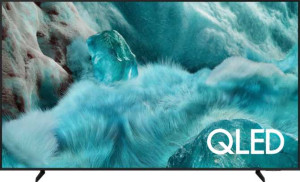
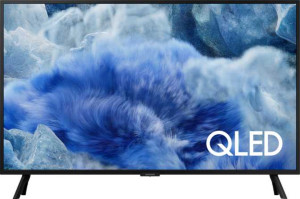
Samsung QN85Q7FAAF 85"
Samsung QN85Q8FAAF 85"

Samsung QN85Q7FAAF 85" Samsung QN85Q8FAAF 85"

Common Features

  • Both products have a 4K (UHD) display resolution.
  • Both products use QLED, LED-backlit, LCD display technology.
  • Both products have a screen size of 84.5″.
  • Both products have a resolution of 3840 x 2160 px.
  • Both products have a pixel density of 52 ppi.
  • Both products support 1070 million display colors.
  • Both products have a 10-bit bit depth.
  • Both products support HDR10.
  • Both products have Bluetooth connectivity.
  • Both products support Wi-Fi.
  • Both products support Wi-Fi 4 (802.11n) and Wi-Fi 5 (802.11ac).
  • Both products have Bluetooth version 5.3.
  • Both products have one RJ45 port.
  • Both products support Miracast.
  • Neither product has a socket for a 3.5 mm audio jack.
  • Neither product has an external memory slot.
  • Both products support Dolby Digital audio.
  • Both products have 2 x 10W audio output power.
  • Both products support Digital Out.
  • Both products have stereo speakers.

Main Differences

  • Samsung QN85Q7FAAF 85″ has a refresh rate of 60Hz while Samsung QN85Q8FAAF 85″ has a refresh rate of 144Hz.
  • Samsung QN85Q7FAAF 85″ does not have Adaptive synchronization, while Samsung QN85Q8FAAF 85″ supports AMD FreeSync and AMD FreeSync Premium.
  • Samsung QN85Q7FAAF 85″ has HDMI 2.0, while Samsung QN85Q8FAAF 85″ has HDMI 2.1.
  • Samsung QN85Q7FAAF 85″ has 3 HDMI ports, while Samsung QN85Q8FAAF 85″ has 4 HDMI ports.
  • Samsung QN85Q7FAAF 85″ has 1 USB port, while Samsung QN85Q8FAAF 85″ has 2 USB ports.
  • Samsung QN85Q7FAAF 85″ weighs 33,100 g, while Samsung QN85Q8FAAF 85″ weighs 41,322 g.
  • Samsung QN85Q7FAAF 85″ has a thickness of 61.4 mm, while Samsung QN85Q8FAAF 85″ has a thickness of 27.9 mm.
  • Samsung QN85Q7FAAF 85″ has a volume of 127,052.937312 cm³, while Samsung QN85Q8FAAF 85″ has a volume of 57,624.137991 cm³.
  • Samsung QN85Q7FAAF 85″ operates at 230W, while Samsung QN85Q8FAAF 85″ operates at 265W.
  • Samsung QN85Q7FAAF 85″ does not have a rechargeable remote control, while Samsung QN85Q8FAAF 85″ has a rechargeable remote control.
Specs Comparison
Samsung QN85Q7FAAF 85"

Samsung QN85Q7FAAF 85"

Samsung QN85Q8FAAF 85"

Samsung QN85Q8FAAF 85"

Display:
display resolution 4K (UHD) 4K (UHD)
Display type QLED, LED-backlit, LCD QLED, LED-backlit, LCD
screen size 84.5" 84.5"
resolution 3840 x 2160 px 3840 x 2160 px
pixel density 52 ppi 52 ppi
display colors 1070 million 1070 million
bit depth 10-bit 10-bit
refresh rate 60Hz 144Hz
supports HDR10
supports HDR10+
supports Dolby Vision
supports HLG
Adaptive synchronization None AMD FreeSync, AMD FreeSync Premium
has anti-reflection coating
has an ambient light sensor
maximum horizontal viewing angle 178º 178º
maximum vertical viewing angle 178º 178º

Both the Samsung QN85Q7FAAF 85″ and the Samsung QN85Q8FAAF 85″ feature a 4K UHD display resolution (3840 x 2160 px) and a QLED, LED-backlit LCD display type, with identical screen sizes of 84.5″ and pixel densities of 52 ppi. The color depth is also the same, offering 1070 million colors and 10-bit bit depth for both models. Additionally, both support HDR10, HDR10+, and HLG, with the QN85Q7FAAF having no Dolby Vision support, and the QN85Q8FAAF sharing this limitation.

While both models have anti-reflection coatings and ambient light sensors, they differ in refresh rate and adaptive synchronization. The QN85Q7FAAF is limited to a 60Hz refresh rate, while the QN85Q8FAAF has a significantly higher 144Hz refresh rate. The QN85Q8FAAF also supports AMD FreeSync and AMD FreeSync Premium for adaptive synchronization, a feature not present in the QN85Q7FAAF.

In terms of viewing angles, both models offer a maximum horizontal and vertical viewing angle of 178º, ensuring wide and consistent visibility from various positions.

Connectivity:
Has Bluetooth
HDMI version HDMI 2.0 HDMI 2.1
HDMI ports 3 4
supports Wi-Fi
Wi-Fi version Wi-Fi 4 (802.11n), Wi-Fi 5 (802.11ac) Wi-Fi 4 (802.11n), Wi-Fi 5 (802.11ac)
Bluetooth version 5.3 5.3
USB ports 1 2
RJ45 ports 1 1
supports Miracast
has a socket for a 3.5 mm audio jack
has an external memory slot
has a VGA connector
has a DVI connector

Both the Samsung QN85Q7FAAF 85″ and Samsung QN85Q8FAAF 85″ offer Bluetooth 5.3 support, Wi-Fi 4 (802.11n) and Wi-Fi 5 (802.11ac) connectivity, and Miracast compatibility. They each come with one RJ45 port for wired internet connections, and neither has a socket for a 3.5 mm audio jack, an external memory slot, a VGA connector, or a DVI connector.

However, the two models differ in HDMI features. The QN85Q7FAAF includes three HDMI 2.0 ports, while the QN85Q8FAAF provides four HDMI 2.1 ports. The QN85Q8FAAF also offers two USB ports, compared to the single USB port available on the QN85Q7FAAF.

Overall, while both models have similar core connectivity features, the QN85Q8FAAF offers additional HDMI and USB ports, which may be beneficial for users with multiple devices to connect.

Audio:
supports Dolby Digital
audio output power 2 x 10W 2 x 10W
supports Digital Out
supports Dolby Digital Plus
has SRS TheaterSound HD
has stereo speakers
has Dolby Audio
supports Dolby Virtual
has a subwoofer
HDMI ARC / eARC HDMI ARC, HDMI eARC HDMI ARC, HDMI eARC

The Samsung QN85Q7FAAF 85″ and Samsung QN85Q8FAAF 85″ have identical audio specifications. Both support Dolby Digital and Dolby Digital Plus, feature stereo speakers, and include Dolby Audio for enhanced sound processing. They each provide an audio output power of 2 x 10W and support Digital Out. Neither model includes SRS TheaterSound HD, Dolby Virtual, or a subwoofer.

Both models also support HDMI ARC and HDMI eARC for audio return channel connectivity, enabling easy connection to compatible audio systems and soundbars. Despite these similarities, there are no differences in the audio features between the two models.

Design:
width 1901.2 mm 1899.9 mm
weight 33100 g 41322 g
thickness 61.4 mm 27.9 mm
height 1088.4 mm 1087.1 mm
volume 127052.937312 cm³ 57624.137991 cm³
Supports VESA mount

The Samsung QN85Q7FAAF 85″ and Samsung QN85Q8FAAF 85″ are both designed to support a VESA mount, making them compatible with standard mounting systems. In terms of size and weight, the QN85Q7FAAF is slightly wider at 1901.2 mm and heavier at 33,100 g, while the QN85Q8FAAF is marginally narrower at 1899.9 mm and heavier at 41,322 g. The QN85Q8FAAF also has a much thinner profile, with a thickness of 27.9 mm compared to the 61.4 mm thickness of the QN85Q7FAAF.

Additionally, the QN85Q7FAAF has a greater volume at 127,052.94 cm³, while the QN85Q8FAAF has a significantly smaller volume of 57,624.14 cm³. These differences in size and thickness reflect the design choices between the two models, with the QN85Q8FAAF having a more compact form.

Despite the differences in dimensions and weight, both models share similar overall design goals, offering VESA compatibility for easy mounting and slightly differing physical attributes.

Features:
release date April 2025 April 2025
has AirPlay
has built-in smart TV
compatible with Google Assistant
works with Alexa
works with Siri/Apple HomeKit
supports a remote smartphone
has a rechargeable remote control
supports USB recording
operating power consumption 230W 265W
standby power consumption 0.5W 0.5W
has a search browser
has a sleep timer
has a child lock
warranty period 1 years 1 years
has voice commands

The Samsung QN85Q7FAAF 85″ and Samsung QN85Q8FAAF 85″ share several common features, including AirPlay support, built-in smart TV functionality, compatibility with Google Assistant, Alexa, and voice commands. Both models also support a remote smartphone, USB recording, a search browser, a sleep timer, and a child lock. Additionally, both have a 1-year warranty period, and neither works with Siri/Apple HomeKit.

There are a few key differences between the two models. The QN85Q7FAAF lacks a rechargeable remote control, whereas the QN85Q8FAAF includes one. In terms of power consumption, the QN85Q7FAAF has an operating power consumption of 230W, while the QN85Q8FAAF requires 265W for operation. Both models have the same standby power consumption of 0.5W.

Overall, the two models are quite similar in features, with the main differences being the rechargeable remote control and the higher operating power consumption of the QN85Q8FAAF.

Comparison Summary

This is a specification comparison between Samsung QN85Q7FAAF 85″ and Samsung QN85Q8FAAF 85″. Both models share a 4K (UHD) display resolution, use QLED, LED-backlit, LCD technology, and have Bluetooth and Wi-Fi connectivity. The Samsung QN85Q7FAAF 85″ has a 60Hz refresh rate, while the Samsung QN85Q8FAAF 85″ offers a 144Hz refresh rate. The QN85Q8FAAF also supports AMD FreeSync and has more HDMI ports (4 versus 3). In terms of weight, the QN85Q8FAAF is heavier at 41,322 g compared to the QN85Q7FAAF's 33,100 g. Additionally, the QN85Q8FAAF operates at 265W, while the QN85Q7FAAF operates at 230W.