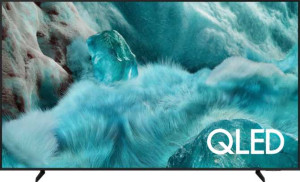
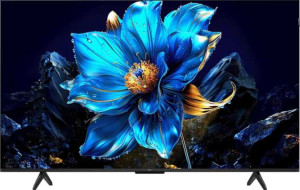
Both the Samsung QN85Q7FAAF and the TCL 50P7K share the same foundational display technology — QLED, LED-backlit LCD panels with a 4K (3840 x 2160) resolution, 10-bit color depth, 1.07 billion colors, and a 60Hz refresh rate. They also both feature anti-reflection coatings, ambient light sensors, and wide 178º viewing angles in both directions, meaning neither has a meaningful edge in color volume capacity, motion handling, or off-axis viewing.
The most impactful differentiators lie in size, pixel density, and HDR/sync support. The Samsung's 84.5″ screen versus the TCL's 49.5″ is a fundamental lifestyle choice — the Samsung fills a room while the TCL suits tighter spaces. As a direct consequence, the TCL's smaller panel yields a noticeably sharper 89 ppi pixel density compared to the Samsung's 52 ppi, which means text and fine detail appear crisper up close on the TCL. On HDR, the TCL adds Dolby Vision support that the Samsung lacks, giving it access to a wider library of premium streaming content mastered in that format. The TCL also includes AMD FreeSync adaptive sync, a meaningful advantage for gamers using compatible hardware to eliminate screen tearing — the Samsung offers no adaptive sync at all.
Overall, the TCL 50P7K holds a clear edge in display features relative to its price tier: Dolby Vision and AMD FreeSync are real-world additions the Samsung simply does not offer. The Samsung's advantage is its sheer screen size, which dominates any room but comes at the cost of lower pixel density. If picture feature completeness and gaming smoothness matter, the TCL wins on specs; if screen presence is the priority, the Samsung is in a class of its own.